



We caught up with the brilliant and insightful Gregory Carpenter a few weeks ago and have shared our conversation below.
Gregory, thanks for joining us, excited to have you contributing your stories and insights. It’s always helpful to hear about times when someone’s had to take a risk – how did they think through the decision, why did they take the risk, and what ended up happening. We’d love to hear about a risk you’ve taken.
The biggest risk I ever took was not one event. It was choosing movement over predictability, repeatedly, when predictability was available.
I began as an infantry soldier. Enlisted. Ground level. The work was physical, tactical, and immediate. You quickly learn that decisions have consequences measured in seconds, not in policy memos. I was on a strong trajectory. Fast track to Master Sergeant. Competitive for Sergeant Major. A twenty-year retirement was fully within reach.
At ten and a half years, I did something almost no one in my position did. I completed my bachelor’s degree and left active duty.
That decision was viewed as stepping off a secure path. In that culture, you do not walk away when you are progressing. I moved into the reserves and entered the civilian workforce for four years. Different tempo. Different accountability. No rank structure insulates outcomes.
Then I went back on active duty.
The Army selected me for an advanced degree in healthcare at Seton Hall. That meant transitioning from senior enlisted infantryman to commissioned officer in the Medical Service Corps. That is not a small adjustment. It is a complete identity shift. New peer group. New authority model. New expectations. I accepted.
Shortly after commissioning, an administrative requirement forced me off active duty. Not performance-related. Policy. So I pivoted again. I took a federal civilian position and accepted a promotion to Virginia. My family and I left Brooklyn. New home. New schools. New network.
Soon after relocating, I was brought back to active duty. I served as a medical service officer until the Army approached me and changed my branch to intelligence. Another reset. New doctrine. New mission set. New community. I moved units again and continued serving until retiring in 2010.
After retirement, I returned to federal civilian service. Eventually, I became a Counterintelligence Division Chief. Different battlefield. Instead of terrain and formations, it was adversarial tradecraft, insider risk, and institutional vulnerability. I saw firsthand how bureaucratic inertia can undermine operational effectiveness.
I encountered systems that were structurally failing. Excessive process. Diffused accountability. Risk avoidance slowed decision cycles to a crawl. So I left federal civil service and became a contractor. Performance driven. No protection from poor outcomes. If you misjudge, you absorb it.
In parallel, I completed my doctorate. I moved into medical research focused on medical care and medical implants at the micro- and nano-level. That work sits at the convergence of cybersecurity, biology, and engineering. Modern implants are networked. They are software-driven. They are data-producing. The security implications are profound. I began integrating national security thinking with biomedical systems at scales most people are not yet discussing.
From an infantry soldier to a commissioned officer. From healthcare to intelligence. From active duty to reserves to federal civilian to contractor. From counterintelligence leadership to doctoral-level medical research in micro- and nanosystems.
On paper, it can look nonlinear. In reality, it was a consistent pattern: when confronted with a stable, predictable lane, I chose the path that expanded capability.
The risk was not financial. It was identity. Each transition required rebuilding credibility. No one hands you authority when you change domains. You earn it again.
What that produced is something rare: operational experience at the tactical level, strategic exposure at senior levels, insight into how institutions function and decay, and technical depth spanning cyber, intelligence, and biomedical systems.
The Army moved me when it needed me. I moved myself when I saw structural limits.
The through line was simple: growth over comfort.
If I had stayed on the straight twenty-year enlisted path, I would have had a stable retirement and a single narrative.
Instead, I built breadth and depth that almost never coexist in one career.
That was the risk.
And it is the reason I can see systems: military, federal, technological, and biomedical as integrated environments rather than silos.
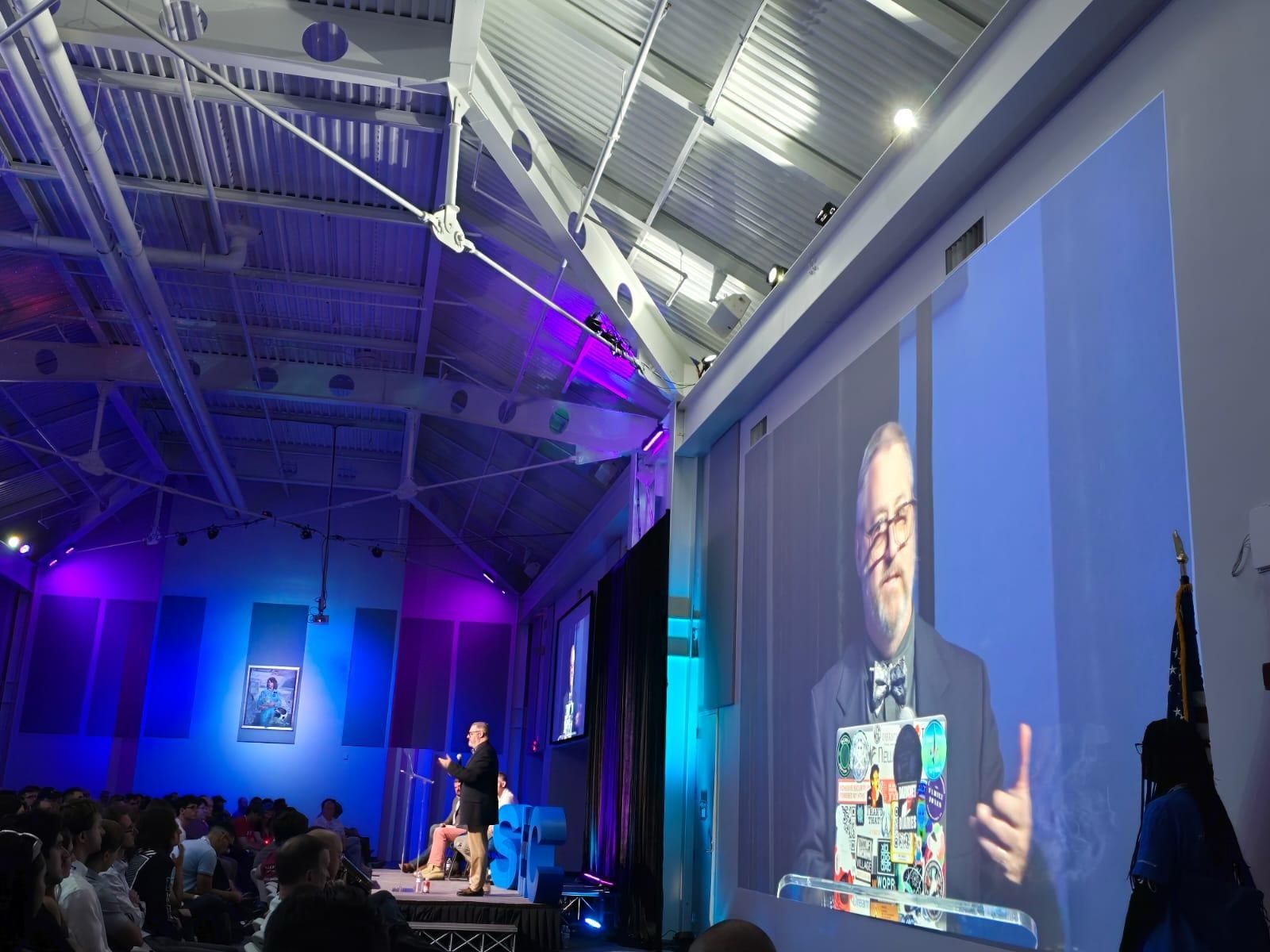
Gregory, love having you share your insights with us. Before we ask you more questions, maybe you can take a moment to introduce yourself to our readers who might have missed our earlier conversations?
I started as an enlisted infantry soldier on active duty and served for 10.5 years. While I was still in uniform, I completed my bachelor’s degree, then stepped off the active duty track into the reserves and the civilian workforce for four years. That early move mattered because it forced me to learn two operating systems at once: the military’s consequence-driven execution model and the civilian world’s performance and market accountability.
I returned to active duty and moved fast as an NCO, positioned for Master Sergeant, with a realistic path to Sergeant Major and a twenty-year retirement if I wanted it. Instead, the Army selected me for an advanced degree in healthcare at Seton Hall. That was a pivot from a combat arms identity to healthcare, and it ultimately led me into the officer corps as a Medical Service officer.
Soon after commissioning, an Army administrative requirement pushed me back off active duty. I transitioned into federal civil service and accepted a promotion that required relocating my family from Brooklyn to Virginia. Shortly after that move, I was brought back on active duty again as a Medical Service officer. Later, the Army changed my branch to intelligence. I moved units again, and I completed that phase of service before retiring in 2010.
After retirement, I returned to federal civil service for several years and became a Counterintelligence Division Chief. That role sharpened my focus on how advanced programs are targeted and how institutions leak advantage through process gaps, cultural blind spots, and poor security design. Over time, I also saw how bureaucracy can stall decision-making and normalize failure, and I made another deliberate shift into the contractor and private sector space. Along the way I have taught graduate education and taken on roles that expanded both my operational breadth and technical depth.
In parallel, I completed my doctorate and conduct medical research related to medical care and implant technologies at the micro- and nano-level. I do not treat that as a separate lane. It is the next terrain. The human body is becoming part of the digital system: embedded devices, firmware, data pipelines, remote monitoring, and all the vulnerabilities that come with that. The security implications are real, not theoretical.
That is what my work is built around now. I operate at the intersection of cybersecurity, intelligence, counterintelligence, and advanced medical technology. I provide advisory and technical leadership in cybersecurity and information warfare, including security strategy, offensive and defensive assessments, Independent Verification and Validation, and high-consequence risk analysis for complex systems. I work best where the stakes are high and the tolerance for vague answers is low: environments where communications, assurance, and decision cycles must hold under pressure, not just satisfy a compliance checklist.
The problems I solve are usually structural. I look for failure modes that occur in execution, not the ones that look clean on paper: seams between teams, gaps between policy and implementation, and security mechanisms that exist but are not actually invoked along the real request path. I also work from an adversary lens: how systems are exploited, manipulated, deceived, or degraded in ways that standard best practice language does not capture.
What differentiates me is integration across domains that are normally siloed. Most people have depth in one of the following lanes: cyber, intel, medicine, or research. My career forced depth across several, and it required operating in each under real constraints. That allows me to translate between operators, engineers, executives, and clinicians without losing technical fidelity.
What I am most proud of is the capability built across those transitions. Not a title. Not a single job. The ability to move between disciplines, keep standards high, and stay focused on the hard problems as the terrain changes.
If someone is encountering my work for the first time, I want three things to be clear. I work at the systems level, not security theater. I design for how things break, not how we wish they behaved. And I am focused on the future boundary where cyber and biomedical systems converge, including the security realities of implants and micro and nano-scale medical technologies.
That is the thread that ties my background to my work now: the mission keeps moving, and I have built a career around staying ahead of where the risk surface is going next.

Are there any books, videos, essays or other resources that have significantly impacted your management and entrepreneurial thinking and philosophy?
Yes, but not in the conventional “startup bookshelf” sense.
My management and entrepreneurial thinking has been shaped far more by philosophy, strategic theory, rhetoric, and information warfare literature than by traditional business titles. The through line across all of them is this: human behavior, power structures, and perception shape outcomes more than process diagrams ever will.
Stephen Covey’s The 7 Habits of Highly Effective People grounded me early in personal discipline and responsibility. That book reinforced the idea that effectiveness begins internally. Character precedes strategy. Lee Pritchett’s Notes to Myself reinforced similar themes of self-examination and accountability. Those two works anchored the internal side of leadership and reminded me that discipline and introspection are not optional traits; they are prerequisites.
Then the reading became less conventional.
Abbott’s Flatland shaped how I think about dimensionality, the idea that people often cannot perceive the structures operating around them because they are confined to their conceptual plane. That lesson applies directly to security, organizational blind spots, innovation resistance, and even market disruption. Many failures occur not because the data was absent but because the decision makers were operating inside the wrong dimension.
Classical Chinese strategy texts such as Sun Bin’s Art of War, the 36 Stratagems, and Guiguzi sharpened my thinking on influence, positioning, indirect action, and narrative control. Sun Bin emphasizes adaptive strategy and the exploitation of asymmetry. The 36 Stratagems teaches that advantage often comes from indirection rather than confrontation. Guiguzi, as a treatise on rhetoric and persuasion, underscores that language itself is a strategic instrument. These are not simply military texts. They are studies in leverage, timing, and human psychology. Christopher Rea and Bruce Rusk’s translation of The Book of Swindles was particularly instructive in understanding deception as a structured discipline rather than random misconduct. It reveals that fraud and manipulation follow patterns. Strategy is rarely linear. Influence is rarely symmetrical.
Michael Klein’s work on the relevance of the 36 Stratagems in modern business contexts reinforced that these ancient concepts are not theoretical curiosities. They map directly onto negotiation, market entry, competitive positioning, and signaling behavior. They also serve as a warning: if you do not understand strategic indirection, someone else will use it against you.
Rastorguev’s Information War and contemporary scholarship on information psychological operations, including the work of Kasiuk, expanded that into the modern domain. In contemporary environments, perception often precedes force. Information campaigns reshape incentives before action ever occurs. In business, in security, and in public discourse, narrative architecture is not decoration. It is infrastructure.
Western philosophy reinforced the structural side of this thinking. Plato’s Republic, Apology, Crito, and Phaedo force examination of justice, legitimacy, truth, and the responsibility of leadership. Aristotle’s Metaphysics explores causality and first principles, which are essential for systems-level thinking. Hobbes’ Leviathan examines order, authority, and the tradeoff between freedom and security. Rousseau’s Social Contract challenges assumptions about consent and governance. Machiavelli’s The Prince strips power of sentimentality and confronts the reality of political necessity. Nietzsche’s Beyond Good and Evil challenges simplistic moral binaries and forces examination of underlying drives. Simone de Beauvoir’s The Ethics of Ambiguity addresses action under uncertainty and the weight of responsibility in complex systems. Marcus Aurelius’ Meditations and Epictetus’ Discourses reinforce disciplined internal control and rational response under pressure.
Orwell’s Animal Farm and 1984 serve as permanent reminders that language, narrative, and control of definitions reshape reality itself. They illustrate how truth can be engineered or erased through repetition and institutional reinforcement. Stevenson’s Ten Theories of Human Nature provides a structured comparison of competing philosophical models of what motivates people. That work sharpened my ability to assess assumptions embedded in leadership styles, policy decisions, and organizational cultures.
Plato’s repeated exploration of justice and governance across dialogues, Aristotle’s metaphysical inquiry into causation, Hobbes’ structural view of order, and Rousseau’s critique of authority all converge on a central management lesson: legitimacy is a strategic asset. Without it, no system sustains itself.
None of these are “business playbooks.” But together they shaped how I think about leadership and enterprise:
Organizations are systems of power and perception.
Markets are arenas of influence and signaling.
Human beings act from incentives, fear, aspiration, identity, and narrative, not spreadsheets alone.
Language is a strategic instrument.
Legitimacy and structure determine whether strategy holds under stress.
Entrepreneurial thinking, at least for me, is not primarily about growth tactics or optimization frameworks. It is about understanding structure, incentives, ambiguity, adversarial behavior, and the psychology of influence and then designing systems that remain coherent under pressure.
If there is a single lesson that ties all these works together, it is this: clarity of thought is a strategic advantage. Most failure is not technical. It is conceptual. When leaders misdiagnose structure, incentives, or narrative, execution collapses regardless of effort.
That principle has influenced every leadership decision I have made.
Do you have any insights you can share related to maintaining high team morale?
High morale is not about making people comfortable. It is about making people confident.
Across infantry units, medical organizations, intelligence teams, counterintelligence divisions, research groups, and private sector cybersecurity engagements, I have found that morale rises when three things are present: clarity, fairness, and momentum.
Clarity comes first. People want to know what the objective is, what success looks like, and where the boundaries are. Ambiguity drains energy. When expectations shift without explanation, morale erodes quickly. Define the mission, define the constraints, and define what right looks like. Then repeat it consistently.
Fairness comes next. Standards must apply evenly. High performers disengage when effort is not recognized. Strong teams fracture when accountability is selective. Address underperformance early and directly. Recognize excellence without hesitation. Predictability in leadership decisions builds trust faster than personality ever will.
Momentum matters more than motivation. Teams gain morale when they see progress. Even small, visible wins create forward pressure. Break large objectives into achievable phases. Close loops quickly. Remove unnecessary bottlenecks. People feel better when they are moving.
One principle that consistently improves cohesion is simple: seek first to understand, then be understood. Before correcting behavior or redirecting effort, understand what constraints your team is actually operating under. Many morale problems are not attitude problems. They are misalignment problems. When people feel heard, resistance drops and performance improves.
I also emphasize context. People do not disengage because work is difficult. They disengage when work feels disconnected. Explain how individual contributions connect to the broader mission. Whether it was soldiers on a range, analysts reviewing threat streams, or engineers debugging architecture, performance improves when individuals see the system they are contributing to.
Resilience must be trained. Do not shield teams from all pressure. Controlled exposure to complexity builds confidence. I have operated in environments where the stakes were immediate and physical, including situations involving live fire and personal injury. In those moments, composure is not optional. It is survival. The ability to remain steady under threat is not bravado. It is internal balance. A leader’s calm in dangerous situations stabilizes everyone else.
That same principle applies in non-kinetic environments. When systems fail, when contracts are at risk, when investigations intensify, teams look to leadership for signal. If the leader becomes reactive, instability spreads. If the leader maintains internal equilibrium, analyzes the situation, and acts deliberately, stability spreads.
Composure under pressure is built long before crisis. It comes from disciplined thinking, emotional regulation, and an internal balance between urgency and control. Balance within creates balance without. Teams sense that immediately.
Finally, leaders must regulate themselves consistently. Teams mirror the emotional posture of leadership. If you are erratic, defensive, or inconsistent, that instability propagates. If you are steady, analytical, and measured, that steadiness becomes the norm.
Morale is not about perks or tone. It is about trust. Trust that the mission is clear. Trust that effort matters. Trust that leadership will not fracture under pressure.
When clarity, fairness, momentum, disciplined listening, and composure under stress are present, teams will sustain performance even in dangerous or high-consequence environments.
That has been true in every domain I have led in.
Contact Info:
- Instagram: https://www.instagram.com/junkbond123/
- Linkedin: https://www.linkedin.com/in/gcarpenter-cso-kbi
- Twitter: https://x.com/gscarp12

Image Credits
None