

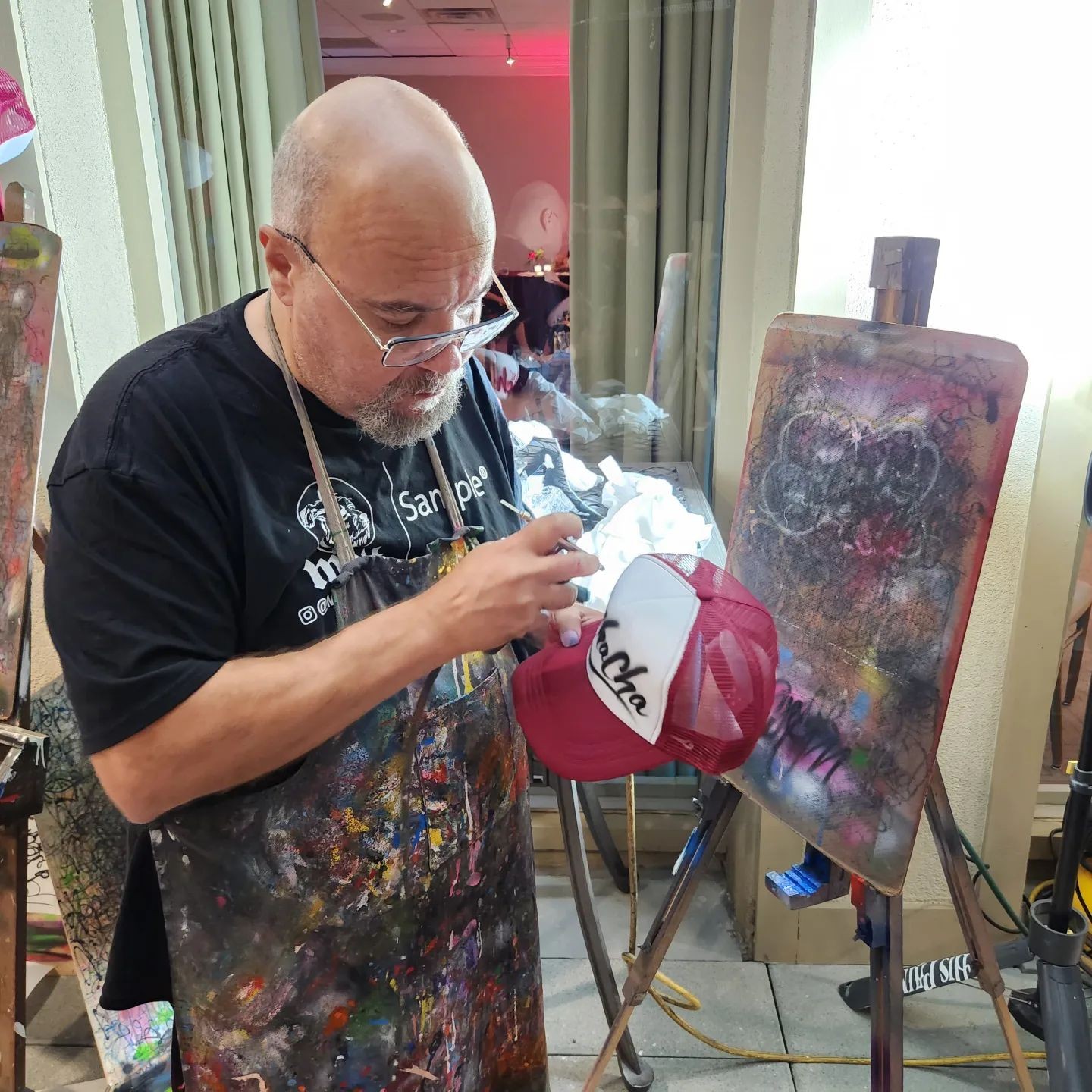

Alright – so today we’ve got the honor of introducing you to Bryon (Mutt) Wackwitz. We think you’ll enjoy our conversation, we’ve shared it below.
Bryon (Mutt), thanks for joining us, excited to have you contributing your stories and insights. It’s always helpful to hear about times when someone’s had to take a risk – how did they think through the decision, why did they take the risk, and what ended up happening. We’d love to hear about a risk you’ve taken.
From an early age, my passion for art burned brightly, fueling my desire to pursue it as a lifelong career. Throughout the 1980s, I embarked on a diverse array of occupations, spanning from movie theaters and fast-food establishments to art stores, where I acquired valuable skills such as professional picture framing. However, despite my best efforts, I perpetually felt confined within these roles, often finding myself without employment.
In the summer of 1987, shortly after parting ways with a prominent art store chain, I faced the disheartening reality of unemployment, hunger gnawing at my core, and desperation looming overhead. During my time at the Art Institute of Philadelphia, where I pursued my education, I had the opportunity to delve into the world of airbrushing, a relatively novel artistic technique that was on the cusp of skyrocketing in popularity. Oblivious to its imminent rise, I found myself destitute and famished, leading me to beseech a friend for a space in front of their store, where I could embark on my humble street airbrushing venture. Undeniably, my initial attempts were far from perfect, for we all traverse a learning curve riddled with mistakes and imperfections at the onset. Yet, undeterred, I resolved to persevere.
One fateful day, an advertisement caught my eye—an airbrush artist position was available, demanding experience. Although my expertise fell short of their expectations, I chose to embellish my qualifications and secured the coveted position at an airbrush shop nestled within a bustling mall. There, I rapidly absorbed knowledge and honed my craft with remarkable celerity. Within a mere year, the fruits of my labor materialized in the form of my very own store, nestled on 69th Street in the vibrant Upper Darby of Pennsylvania. The journey was arduous, as worthwhile endeavors seldom unfold effortlessly. However, by daring to take the initial leap, abandoning the security of a traditional 9-to-5 occupation, I unlocked a pathway that eventually led to store ownership—an achievement that, in turn, opened doors to a flourishing career in professional illustration spanning eight fruitful years. Ultimately, my journey circled back to store ownership, this time on the storied South Street in the heart of Philadelphia.
Since embarking on this creative odyssey, my artistic endeavors have attracted the attention of numerous luminaries, spanning celebrities, acclaimed clothing lines, Universal Records, and various hip-hop groups. My work has even graced the screens of popular streaming platforms such as Netflix.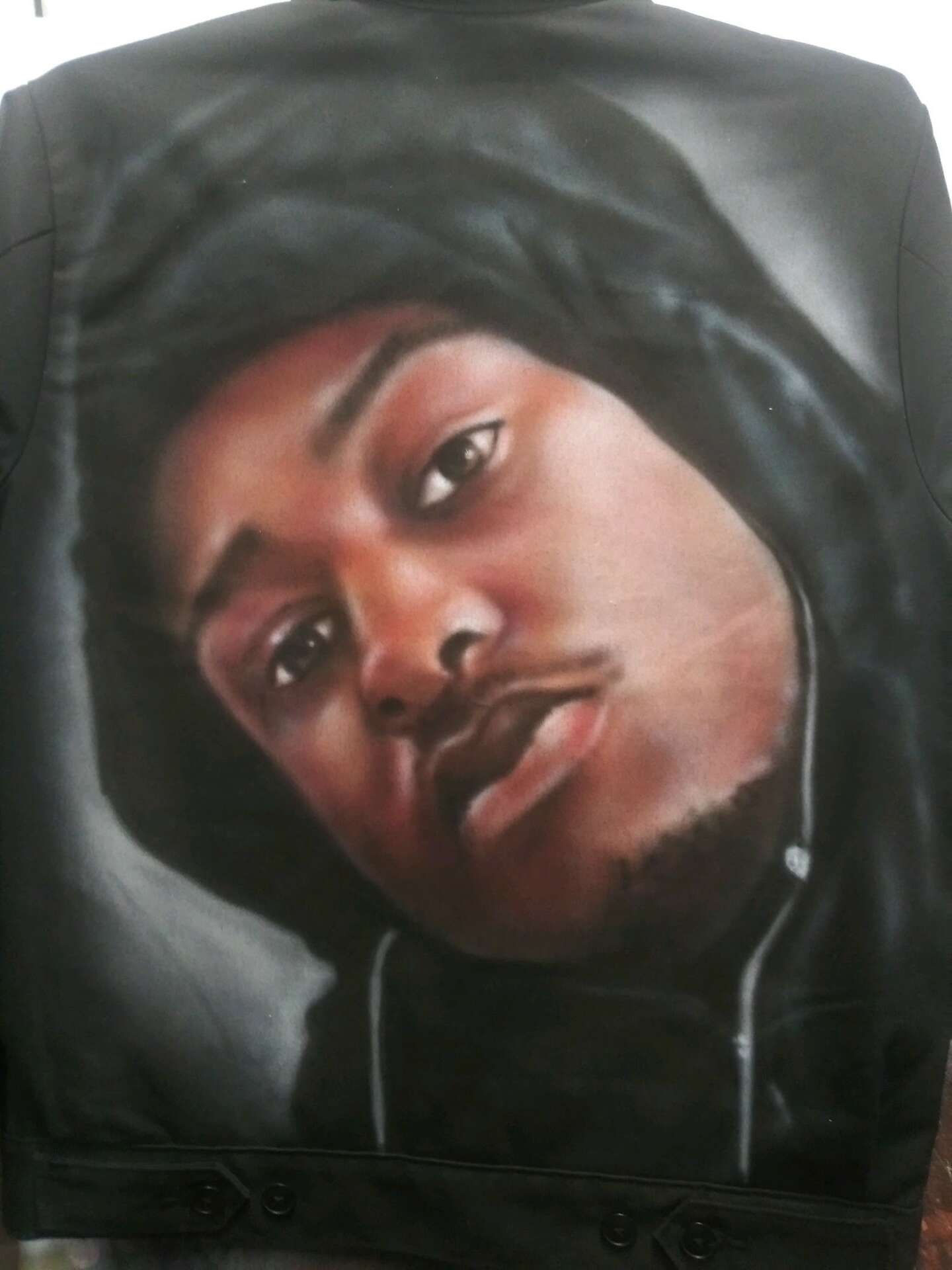
Bryon (Mutt), before we move on to more of these sorts of questions, can you take some time to bring our readers up to speed on you and what you do?
Let me introduce myself, Bryon (Mutt) Wackwitz, who embarked on two distinct career paths. In 1985, I enrolled at the Art Institute of Philadelphia with the aim of honing my illustration and graphic design skills. However, my time at the institution left me underwhelmed, prompting my departure after completing one and a half years of the intended two-year program. Seeking hands-on experience, I sought an apprenticeship with esteemed book cover artist Carl Lundgren.
During the course of my journey, a summer of unemployment in the past led me to embrace airbrushing as a means to alleviate financial distress. Setting up my airbrushing station in front of a store managed by a friend, I seized the opportunity to showcase my skills. This humble endeavor eventually led to employment with a company located in a bustling mall, where I refined my airbrushing techniques. Simultaneously, under Carl Lundgren’s guidance, he entrusted me with two illustrations for a commission from Weird Tales magazine. However, my initial attempts at painted illustrations proved lackluster, mainly due to my unfamiliarity with oil paints. Consequently, Carl redid the illustrations himself.
Alas, my tenure at the mall position was cut short due to internal politics, prompting me to establish my own airbrush store on 69th Street in Upper Darby, Pennsylvania. While operating the store, I nurtured a deep desire to illustrate for fantasy games, which aligned with my personal interests. Determined to pursue this passion, I meticulously compiled a list of art directors from various publications and diligently mailed them samples of the illustrations that Carl Lundgren had kindly redone for me. My perseverance paid off when I was subsequently hired by a company called White Wolf to create 13 chapter illustrations for a book titled Ars Magica.
Considering the challenges associated with the environment surrounding my shop in Upper Darby, which suffered from frequent robberies, I made the difficult decision to shift my focus exclusively to illustration. The success of my Ars Magica illustrations opened doors to further opportunities, including involvement in illustrating a LARP game called Werewolf: The Apocalypse. Subsequently, my talents caught the attention of Wizards of the Coast, and in 1997, I was selected as one of the first 49 artists to collaborate with them—a pivotal moment in my career trajectory. Devoting myself entirely to full-time illustration, I embarked on collaborations with numerous companies, including Magic: The Gathering, Legend of the Five Rings, and Dungeons and Dragons. Eventually, I assumed the role of Art Director for a collectible card game called Doomtown at Wizards of the Coast, a position I held from 1997 to 1999.
Regrettably, the great layoff of 1999 ensued, triggered by Hasbro’s acquisition of Wizards of the Coast. This tumultuous period left me homeless, divorced, and unemployed. Drawing upon my previous experience as a shop owner, I managed to secure a modest space within the renowned game store, Got?Game, situated on the iconic South Street. It was there that I discovered my innate talent as an exceptional airbrush artist. As demand for my work grew, I eventually outgrew the confines of that store and relocated to 4th Street.
During this phase, I had the privilege of collaborating with various hip-hop artists, including Ginuwine, G-Unit, Diplomats, and Missy Elliott, as well as renowned clothing lines such as Lot29 (where my work was prominently featured during its initial three years). Moreover, my artistic creations found their way onto screens, as my work contributed to the Netflix series “Worn Stories” and projects with Universal Music, among other notable endeavors.
At present, I continue to pursue illustration while managing my shop, which has expanded to offer street art supplies in addition to custom unique airbrush by me.
What do you find most rewarding about being a creative?
The most rewarding facet of being an artist or creative lies in the profound sense of freedom it imparts and the boundless opportunity to channel my artistic talents into transformative creations.
Do you think there is something that non-creatives might struggle to understand about your journey as a creative? Maybe you can shed some light?
Non-creatives may struggle to comprehend certain aspects of the creative journey. It is crucial to shed light on these intricacies, as the insights gained can prove invaluable to a wider audience. One such aspect that often eludes non-creatives is the arduous nature of our craft. While it may appear that we effortlessly indulge in our passion for art and creation, the truth is far from simple. Our artistic prowess and expertise are the culmination of decades of diligent practice and refinement. Mastery is not achieved overnight; it is the result of years dedicated to learning, experimentation, overcoming failures, and acquiring invaluable lessons along the way.
Just as individuals readily recognize and remunerate carpenters or doctors for their specialized skills, it is imperative to afford the same level of respect to creatives. The outward appearance of ease and grace that accompanies our work belies the effort and dedication invested. What often remains hidden from view are the countless hours spent honing our abilities, the relentless pursuit of improvement, and the unwavering commitment to our craft.
The end product of our creative journey is the culmination of countless endeavors and possesses intrinsic value that parallels that of any other professional pursuit. It is essential for non-creatives to recognize and appreciate the depth of knowledge, experience, and skill that underpin the artistic process. By embracing this understanding, a greater sense of appreciation and support can be fostered for the creative community, enabling us to continue producing meaningful and impactful work.
Contact Info:
- Website: www.muttairbrushandartsupply.com
- Instagram: muttairbrush
- Facebook: muttairbrush
Image Credits
image by Bryon wackwitz