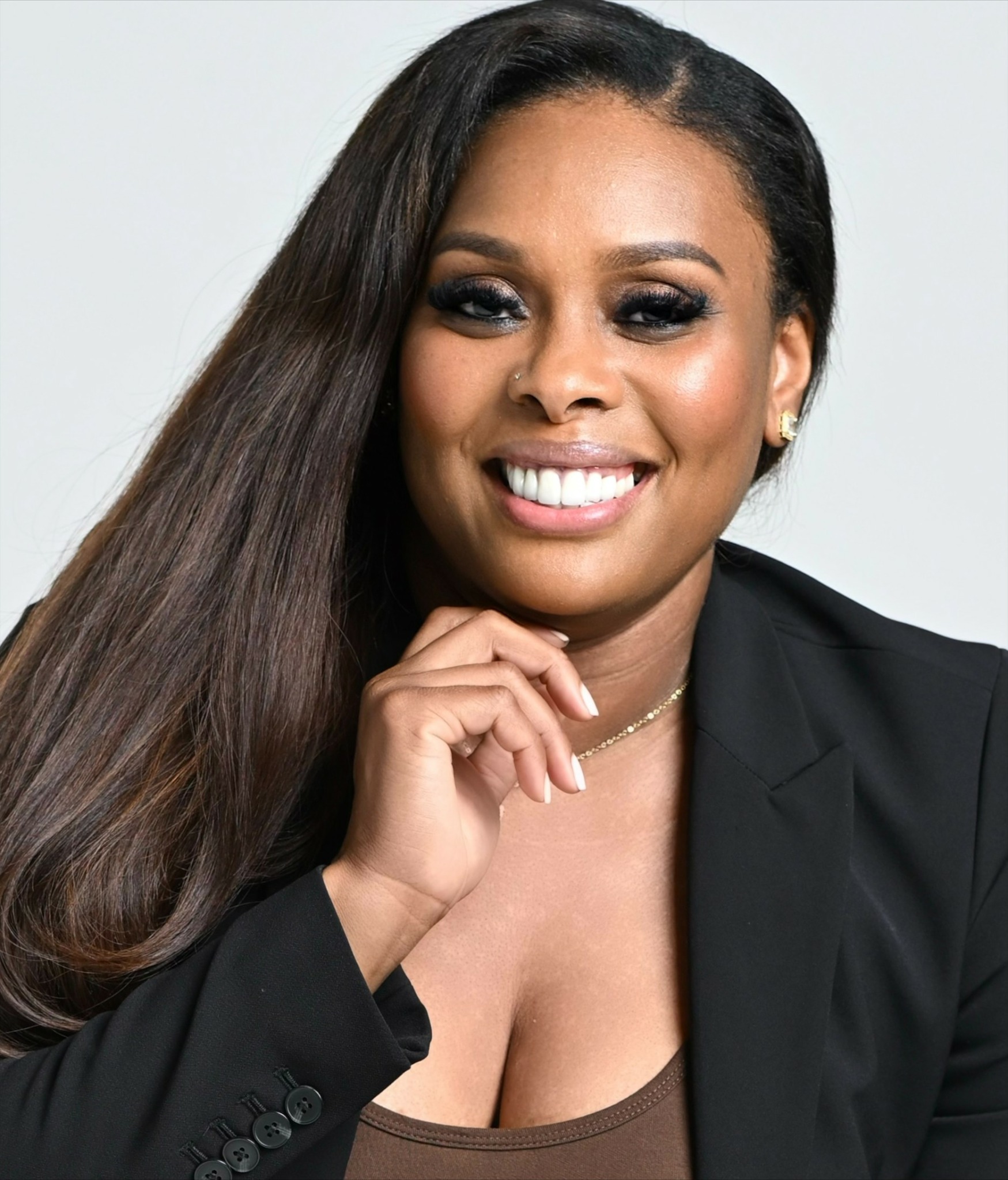

We’re excited to introduce you to the always interesting and insightful Vanessa Dessieu. We hope you’ll enjoy our conversation with Vanessa below.
Alright, Vanessa thanks for taking the time to share your stories and insights with us today. We’d love to have you retell us the story behind how you came up with the idea for your business, I think our audience would really enjoy hearing the backstory.
After years of work that felt less like a job and more like a calling, after nights when one more hour could mean the difference between a child eating, a mother receiving medication, or a community holding onto hope. I received a pink slip. In January 2025, the Trump administration dismantled USAID. With it, an entire professional ecosystem vanished almost overnight. More than 176,000 people lost their jobs. This was not a layoff. It was an erasure. One year later, 68 percent of global development professionals remained unemployed, underemployed, or pushed into early retirement.
The hardest part, a colleague told me, was not losing the job. It was being forced to walk away from the people they had committed their lives to serve.
I understood that completely.
What followed was something none of us had been prepared for.
I watched colleagues, individuals with 20, 30, even 40 years of experience in conflict zones, famine response, and post-disaster governance sit across from hiring panels and be met with blank stares. Their résumés should have commanded silence, respect, recognition. Instead, they were rejected. Ignored. Ghosted. Roles seemingly designed for them were quietly reposted and filled by candidates from the corporate sector individuals whose experience was not deeper, but simply more legible.
I lived it myself.
I walked out of one interview certain I had secured the role. I had already imagined my start date. Six weeks passed. No call. No email. The position was reposted, filled, then reposted again eventually going to someone whose career had never intersected with mine, but whose language the hiring committee already understood.
That was the moment something shifted.
This was not a failure of talent or credentials. It was a failure of translation.
International development had been our entire world, through college, graduate school, doctoral programs, and careers shaped by mission-driven work. We had never needed to translate ourselves. Our sector had its own language, its own metrics, its own definitions of impact.
I watched people try to bridge the gap. To explain that a “beneficiary” is, in fact, a client. That a “program” is a portfolio. That 15 years of work others might experience as a brief volunteer stint was not charity it was some of the most sophisticated strategic experience one could accumulate.
The rooms would fall quiet. Faces would turn politely blank.
I had struggled to explain my own work to people closest to me. If I could not make it legible to them, how could I expect a hiring committee one unfamiliar with USAID, or worse, one that believed it already understood it to see its value?
That realization was not a pivot. It was a recognition.
The skills we built in the field from crisis navigation, stakeholder management, high-stakes communication, narrative control under extreme pressure were never “development skills.” They were power skills: rare, transferable, and invaluable. We had simply been deploying them in arenas the corporate world had never thought to examine.
At the same time, I saw something else with equal clarity: the private sector was operating without them.
The market was saturated with public relations firms focused on spin, reactive, surface-level strategies designed to manage headlines rather than shape underlying perception. Crisis communications agencies entered only after damage had been done, treating reputation as something to repair rather than something to architect.
At the highest level true governance, strategic narrative design, the ability to embed within an organization before crisis emerges and construct the infrastructure that makes resilience possible there was almost nothing.
The gap was vast, but largely invisible. The leaders who needed these capabilities most did not yet have language for what was missing.
I did, because I had spent my career operating precisely in that space not after the storm, but within it. Before the world was watching. Making decisions where the stakes were not reputational, but human. Where precision and judgment were not optional, but inseparable.
That is not a skill learned in a communications program. It is not one most firms are ever asked to deploy. It is the discipline of holding systems and people together when failure carries consequences far beyond a news cycle.
That is what The Executor & Associates was built to deliver.
Not spin. Not cleanup. Governance.
The kind of counsel that operates upstream, architecting narrative, safeguarding reputation, and positioning leaders to shape outcomes rather than react to them.
Were others doing this? Not at this level. Not with this depth. Not from this vantage point.
The market has no shortage of professionals who can tell a story after the fact. I built a firm for leaders who understand that the story must be constructed long before anyone is watching and that the cost of getting it wrong is never just a headline.
I did not start this firm from ambition.
I started it from a pink slip, a collapsed industry, a ghosted interview and a refusal to let someone else write the final sentence of my story.
So I wrote it myself.
Awesome – so before we get into the rest of our questions, can you briefly introduce yourself to our readers.
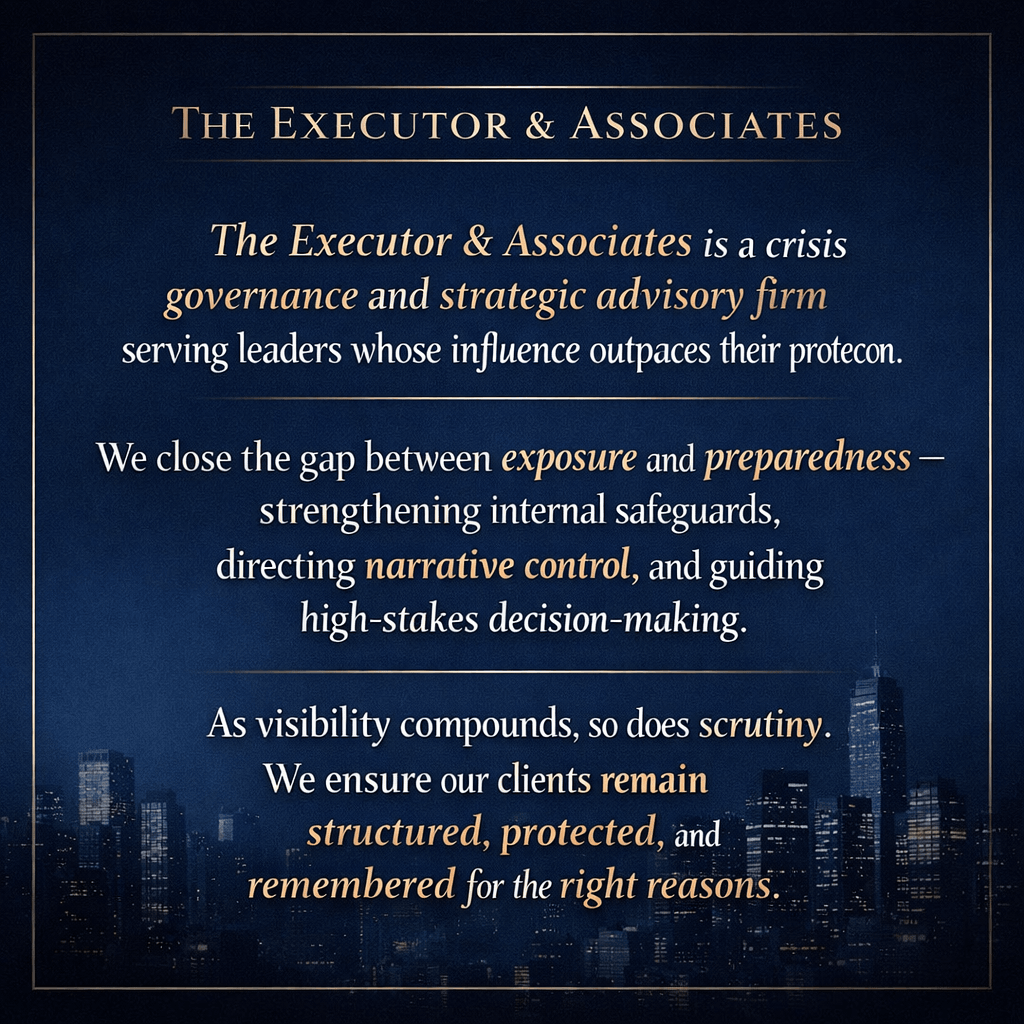
I’m Vanessa Dessieu, founder and Chief Strategic Officer of The Executor & Associates, a strategic advisory and crisis governance firm built for leaders, institutions, public figures, and high-visibility brands who cannot afford to move without discipline.
My background is not traditional PR. It is not traditional consulting either. I come from more than 15 years of work in international development, public health, governance, stabilization, and high-pressure program design. I have worked in spaces where decisions carry consequences, where communication is not just about image, and where leadership is tested in real time. I have designed programs, managed complex proposals, supported multi-stakeholder strategies, and worked across fragile, political, humanitarian, and institutional environments where clarity, timing, and judgment matter.
The idea for The Executor & Associates came from a very real observation: many leaders, businesses, and public figures do not fail because they lack talent. They fail because they are not properly positioned. They are visible, but not protected. They are influential, but not structured. They are speaking, but not always governing the message. They are moving, but without a strategy strong enough to withstand pressure.
That is the gap The Executor & Associates was created to fill.
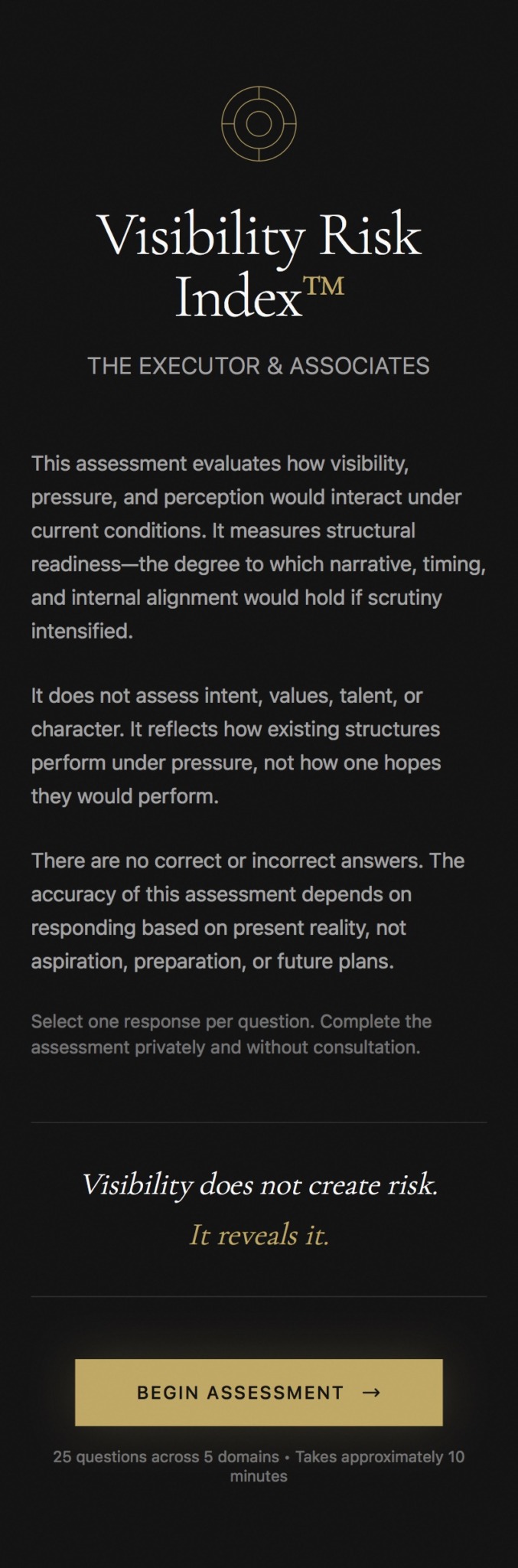
We specialize in crisis governance, executive positioning, reputation strategy, narrative control, and visibility risk management. In simple terms, we help leaders and organizations understand what their presence is saying before the public, the media, their stakeholders, their clients, or their opponents decide for them.
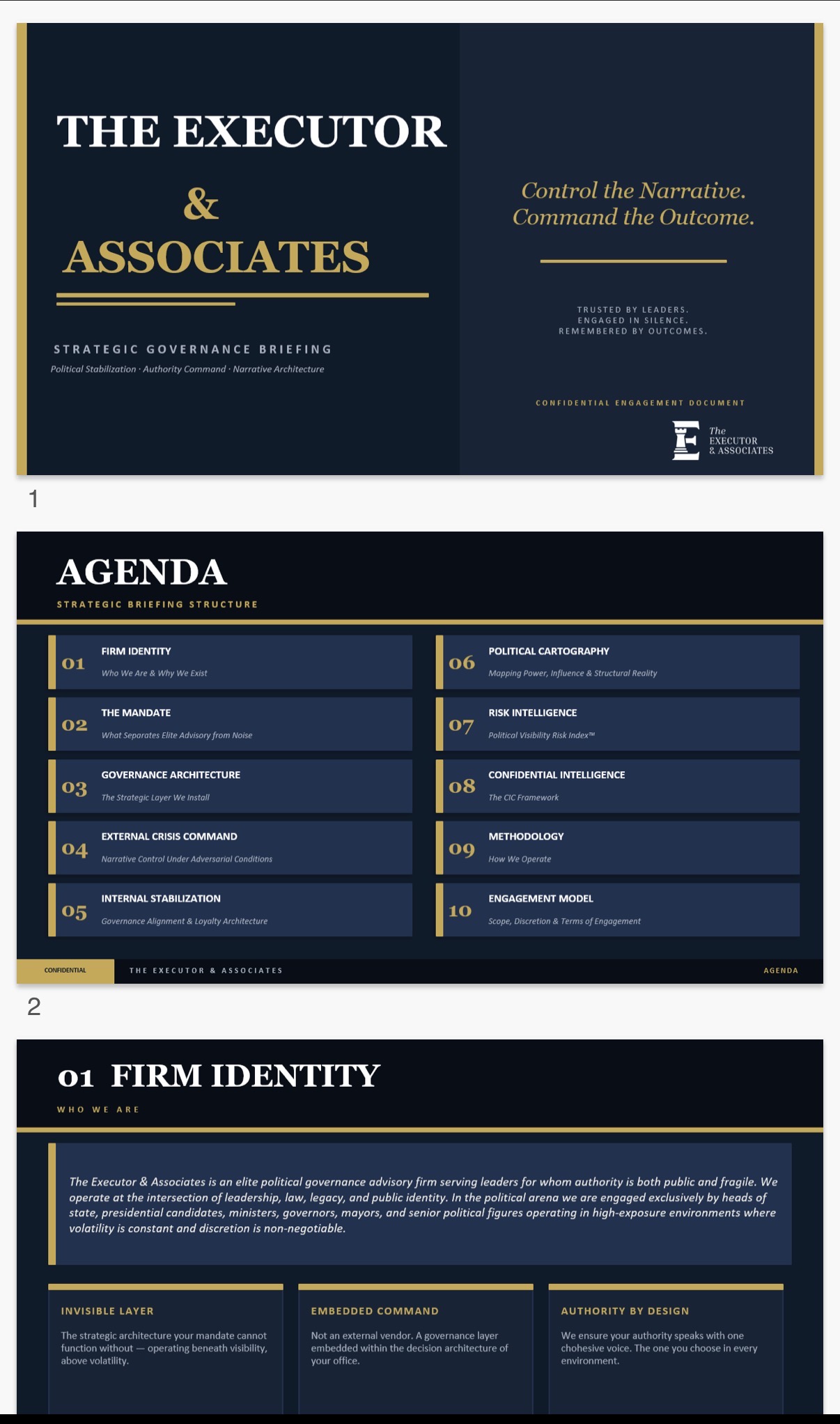
Our work includes crisis preparedness, strategic communications, reputation recovery, public figure audits, executive advisory, media and interview coaching, internal crisis simulations, visibility assessments, and brand positioning for individuals and organizations operating under scrutiny. We also work with political figures, founders, attorneys, institutions, and high-level professionals who are preparing for a major public move, transition, launch, controversy, or leadership moment.
The problems we solve are not surface-level problems. We are not simply asking, “What should you post?” or “What should your statement say?” We are asking deeper questions: What is at risk? Who is watching? What does silence communicate? What does your timing suggest? What is the public already assuming? What power are you protecting? What legacy are you building?
That is what sets us apart. The Executor & Associates is not built around panic. It is built around control. We do not believe crisis begins when the scandal breaks. By then, the damage has already started. Crisis often begins much earlier—with poor positioning, unclear leadership, weak messaging, unprotected visibility, or decisions made without a full understanding of how they will be interpreted.
Our philosophy is simple: visibility without strategy is vulnerability.
I am most proud that The Executor & Associates gives language, structure, and authority to something many leaders feel but cannot always name. They know they are exposed. They know they are being watched. They know their next move matters. What we do is bring discipline to that moment. We help them govern the narrative, protect their authority, and move with intention.
I am also proud that this firm allows me to bring the fullness of my background into one place. My public health training taught me to look at systems. My governance and international development work taught me to understand power, institutions, and behavior. My crisis management background taught me to think under pressure. My communications instincts taught me that people do not only respond to facts; they respond to framing, emotion, timing, and trust.
The Executor & Associates sits at the intersection of all of that.
What I want potential clients, followers, and future collaborators to know is this: we are not here to make noise. We are here to bring order. We are not here to chase attention. We are here to govern visibility. We are not here to make leaders look powerful for a moment. We are here to help them remain credible when the moment turns difficult.
My work is for people and institutions who understand that reputation is not decoration. It is infrastructure. Presence is not performance. It is strategy. And leadership is not only about being seen. it is about being ready for what comes with being seen.
The Executor & Associates exists for the leader, the founder, the public figure, the organization, or the institution standing at the edge of a defining moment and realizing that talent alone is not enough. You need positioning. You need discipline. You need judgment. You need someone who can see the risks before they become public, shape the message before it is misunderstood, and protect the authority you have worked too hard to build.
That is what we do.
We govern how power survives pressure.
Can you share a story from your journey that illustrates your resilience?
One story that illustrates my resilience is the moment I realized I had to stop waiting for permission to become who I already was.
For years, I worked in international development, public health, governance, and program design. I was doing work that required strategy, judgment, leadership, crisis thinking, and the ability to move through pressure with clarity. I was designing programs, managing complex proposals, working across fragile contexts, building partnerships, and translating big ideas into operational plans.
But when I started trying to move into spaces outside of that world, I realized something painful: the language I had spent years mastering did not always translate.
I remember leaving interviews feeling sure I had made the case for myself. I knew the depth of my experience. I knew what I had carried. I knew the rooms I had been in, the pressure I had worked under, the impact I had helped create. And yet, I would watch roles get reposted, filled by people whose résumés looked more familiar to corporate decision-makers, even when my experience was just as strong, if not stronger.
That moment could have made me shrink.
Instead, it made me study the problem.
I realized it was not just rejection. It was translation. It was positioning. It was the gap between having the experience and having the language, framing, and strategy to make people understand the value of that experience.
And in many ways, that became one of the seeds of The Executor & Associates.
Because I understood what it felt like to be powerful on paper, proven in practice, but misunderstood in the room. I understood what it meant to carry years of serious work and still have to fight to make people see it correctly. I understood what happens when your story is not governed well enough for the audience in front of you.
So I stopped treating those moments as personal failures and started treating them as data.
I asked myself: What is missing? What is being misunderstood? What is not being translated? What does my presence communicate before I even speak? What does my résumé say that my story does not? What power am I carrying that is not yet properly positioned?
That shift changed everything.
Resilience, for me, has not always looked like loud comebacks or dramatic reinventions. Sometimes it looked like sitting with disappointment and refusing to let it define me. Sometimes it looked like rebuilding the language around my own value. Sometimes it looked like creating the very firm I needed—one that helps people, leaders, and institutions take control of their narrative before someone else reduces it for them.
The Executor & Associates was born from that kind of resilience.
Not the kind that simply survives rejection, but the kind that studies it, learns from it, builds from it, and turns it into strategy.
Today, when I work with clients, I bring that experience with me. I know what it means to be misread. I know what it means to be underestimated. I know what it means to have substance but need sharper positioning. And I know what it means to decide that if the room does not understand your value, you do not shrink yourself to fit the room you refine the message, govern the narrative, and build a stronger table.
That is resilience to me.
Not just bouncing back.
Reclaiming the authority to define yourself.
How’d you build such a strong reputation within your market?
What helped me build my reputation within my market was the decision to enter the space with a clear point of view. I came into this business knowing I was not just defining a lane. I was creating a new one.
From the beginning, I surveyed who my competition would have been, studied the gaps in the market, and paid close attention to the clients who were most visibly at risk but did not know it yet. I understood that many leaders, organizations, and public figures were not waiting for crisis support because they did not yet recognize their visibility as a risk.
That became the foundation of The Executor & Associates.
I did not want to simply use the language that was already out there. We created our own. We built the firm around concepts like visibility risk, crisis governance, narrative control, and the belief that visibility without strategy is vulnerability. At the beginning, we published insights, expert advice, industry “need-to-know” pieces, and strategic commentary to educate the market, not just sell to it.
People beginning to understand our value helps tremendously.
The Executor & Associates is not traditional PR, nor is it general consulting. We guide leaders, institutions, and public figures govern visibility, narrative, and decision-making before pressure becomes public. My background in public health, international development, governance, stabilization, and crisis management allows me to look at reputation as more than image. I see it as infrastructure.
The Executor commands discipline. It speaks to leaders who understand that being visible is not the same as being protected. It speaks to people who want their next move to be thoughtful, not reactive and it speaks to those who understand that it is best to not have to fix your reputation after it is damaged; it is something you govern before pressure arrives.
Last but not least, ultimately, what helped me build my reputation was alignment. My background aligned with the gap I saw. My voice aligned with the problems I wanted to solve. My standards aligned with the type of clients I wanted to serve. And my brand aligned with the way I see the world: strategically, structurally, and with deep respect for the power of perception.
That is what I want my reputation to stand on.
Precision. Trust. Authority. And the discipline to move before the crisis becomes public.
Contact Info:
- Website: https://executorandco.com/
- Instagram: https://www.instagram.com/theexecutor_associates/
- Linkedin: https://www.linkedin.com/company/the-executor-and-associates/?viewAsMember=true
- Twitter: https://x.com/theexecutoandco