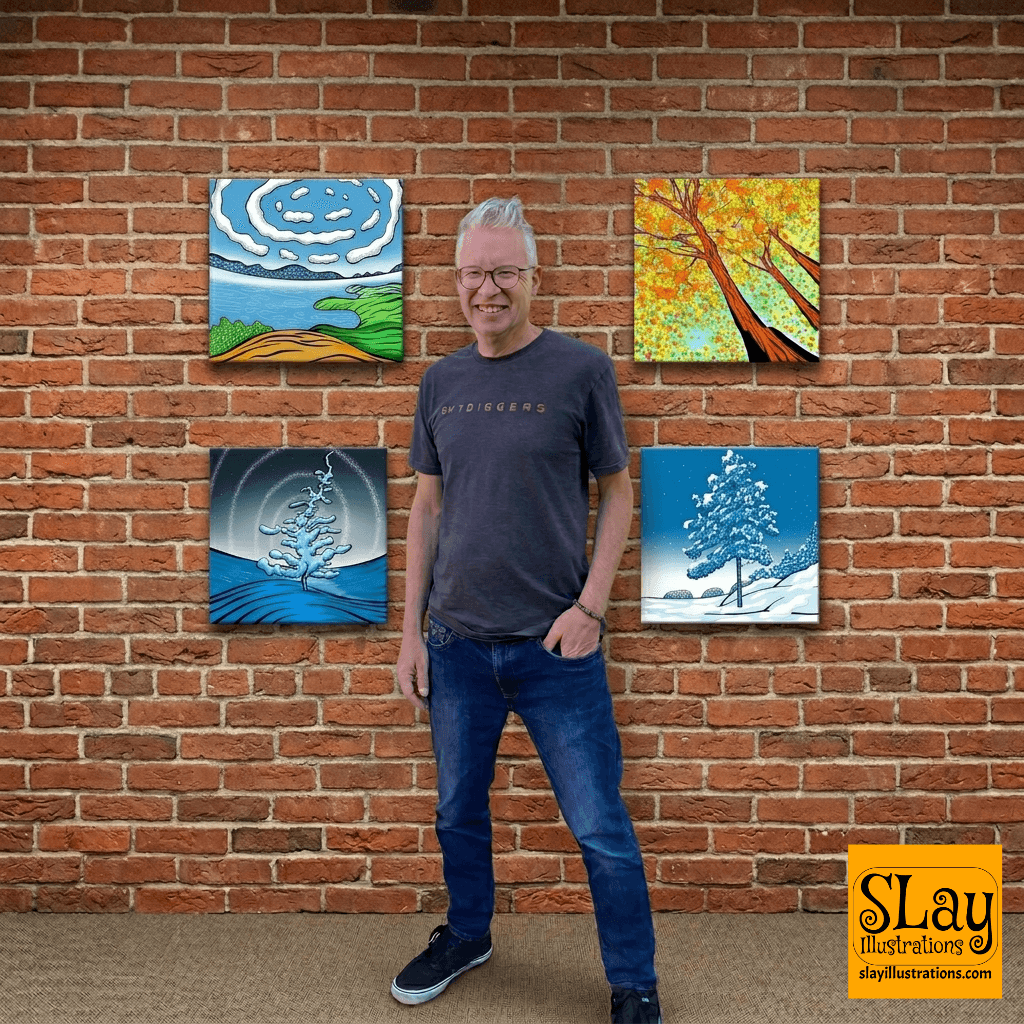

We were lucky to catch up with Stephen Lay recently and have shared our conversation below.
Stephen, thanks for taking the time to share your stories with us today When did you first know you wanted to pursue a creative/artistic path professionally?
I’ve always loved creating art. But over the course of a 20-year career in the newspaper industry, working in production, I kept telling myself I needed to make space for it. Weekends would come and go, and I’d either be too busy or too drained to create. Still, that thought stuck with me: if I ever had the opportunity, I’d pursue art in a real way. Eventually, that opportunity came—just not in the way I expected. As the newspaper industry began downsizing and outsourcing, I found myself on the receiving end of it.
My wife encouraged me to pivot—really pivot—and try something different. Something creative.
Around the same time, I was also dealing with an ailing parent, trying to process what that meant and what it was bringing up. That experience pushed me inward, and in a way, back toward art. I started experimenting with contemporary landscapes, using photography as a reference and just letting myself explore.
Somewhere in that process, a new style began to emerge. I shared a few pieces on Facebook, not expecting much—but to my surprise, people started reaching out, asking if they could buy them. A friend suggested I create a website, just to put my work out there and see what could happen. That’s how this really began.
I genuinely love the creative process—the making, the experimenting, the storytelling through these pieces. The marketing, social media, and business side of things… that’s been more of a steep climb. But I’m learning as I go.
Stephen, love having you share your insights with us. Before we ask you more questions, maybe you can take a moment to introduce yourself to our readers who might have missed our earlier conversations?
My name is Stephen Lay, and after years of signing my name as “SLay,” it felt like a natural step to carry that into my art business: SLay Illustrations.
Originally from steel town of Sault Ste. Marie (Northern. Ontario), my journey began in the fast-paced newspaper industry in Southern Ontario. I spent 20 years in production, layout, and ad creation. While my days were spent sending papers to press, I longed for a personal creative outlet that captured the “mystique” of the world around me.
In 2014, my creative path expanded with the launch of Mirror Image, a single-panel comic strip inspired by the wit of Gary Larson. Published in The Brampton Guardian and The East York Chronicle, this project led to diverse collaborations—including illustrating humorous science pieces for Secondcell Bio and political cartoons for TOTimes. These experiences taught me how to spark conversation through a single image.
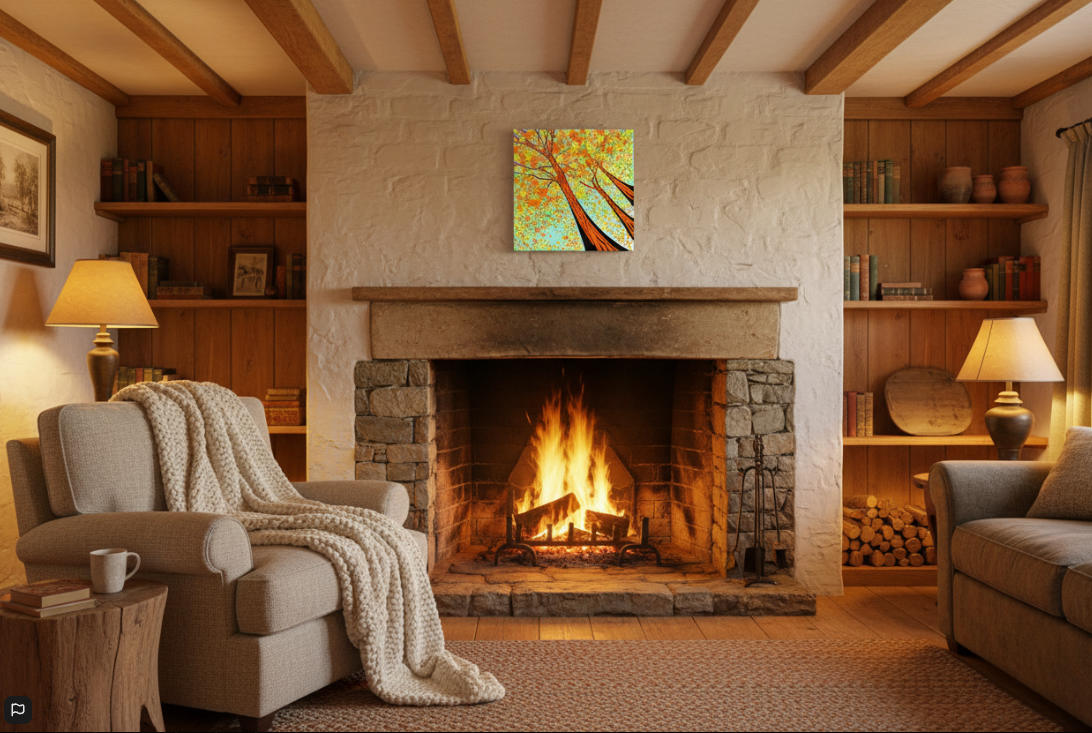
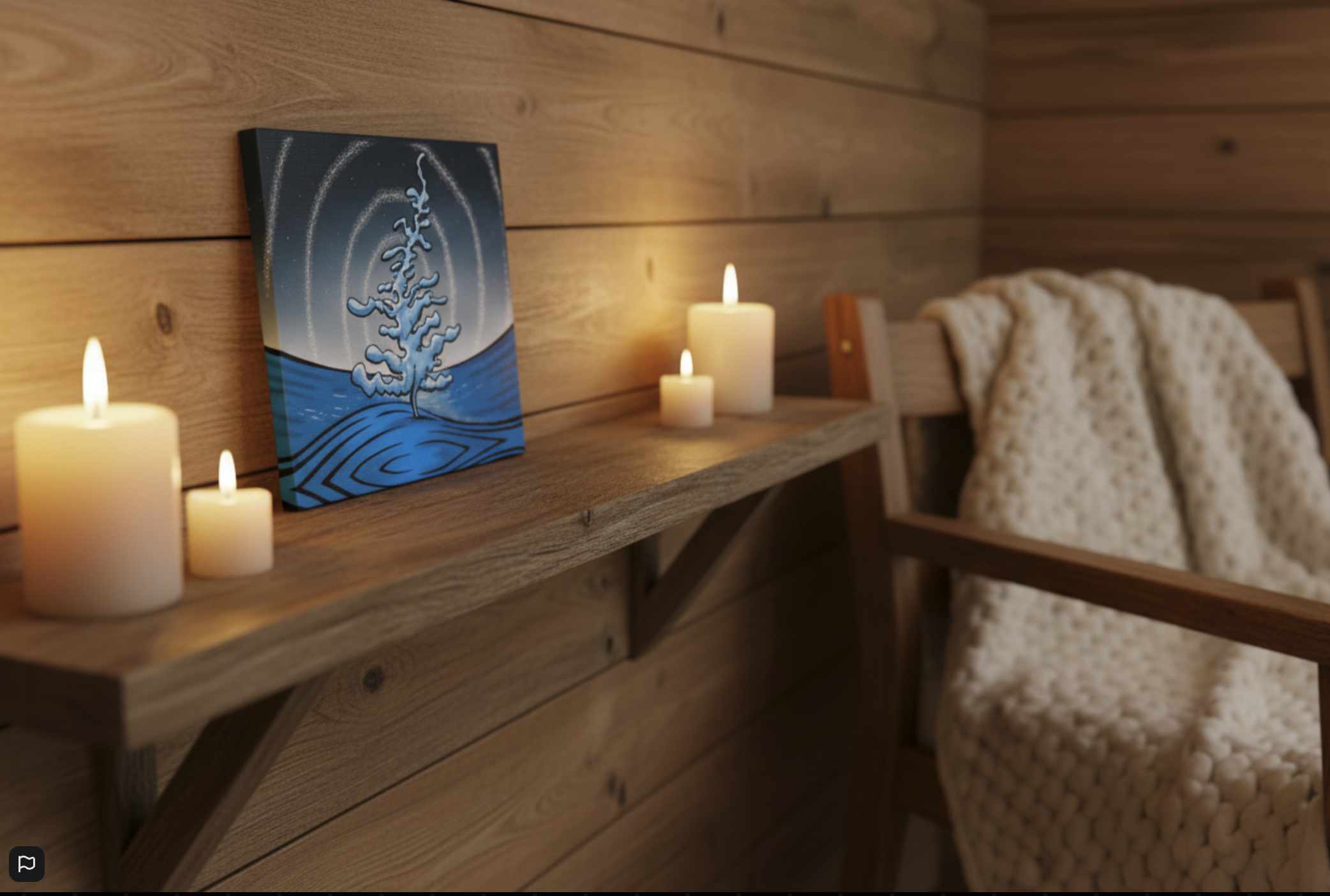
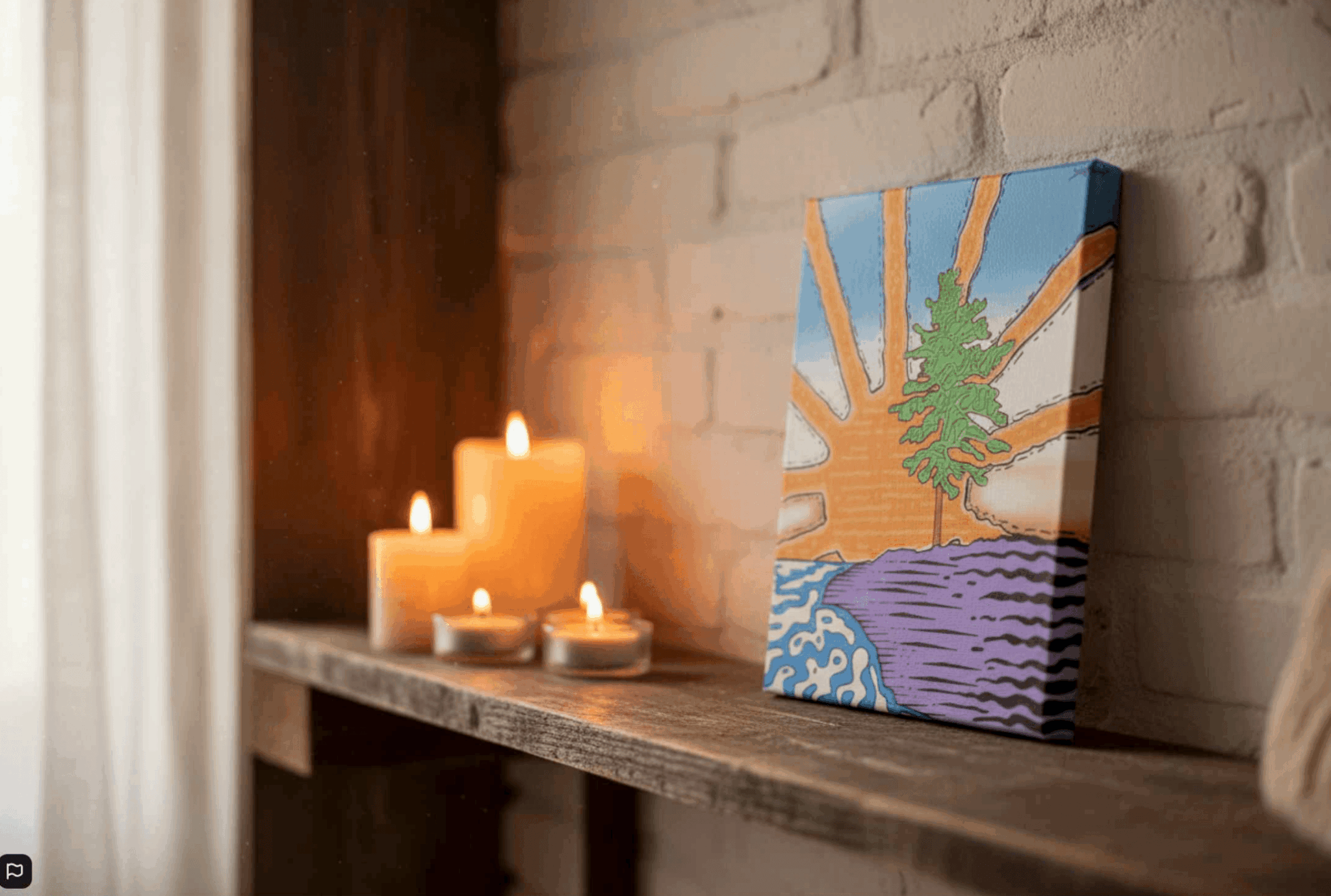
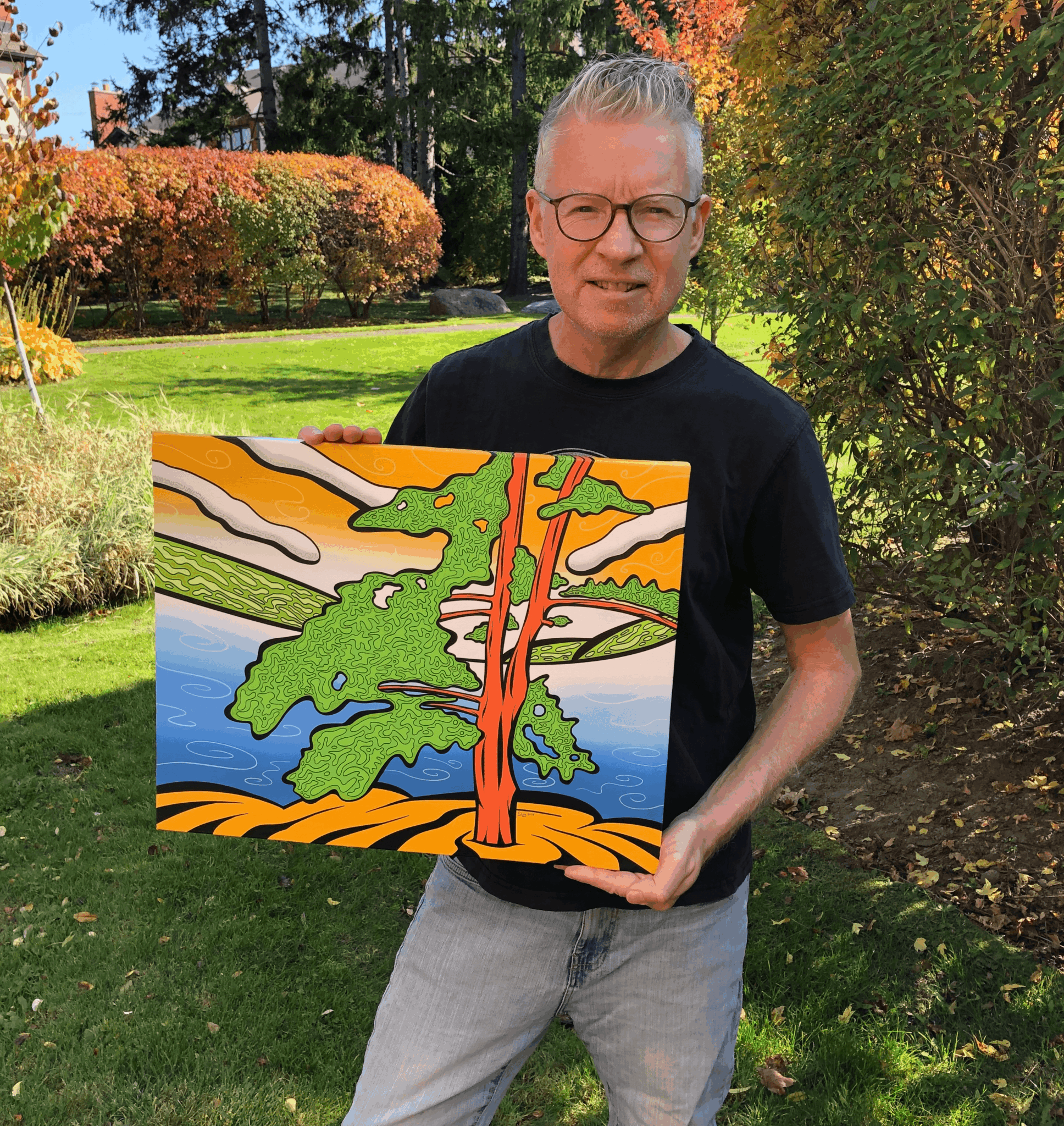
The true turning point for SLay Illustrations came during a peaceful summer on the shores of Lake Superior. Surrounded by the “quiet magic” of the Canadian wilderness, I developed my signature trippy digital illustration style. My art reimagines the traditional Canadian landscape through a bold, psychedelic lens—capturing the vibrant energy of the woods, the water, and the stars. My work is digital, however it starts off often with a sketch and then reworked in a way that I hope captures an organic feel. My work has been compared to some of the Group of Seven which I find entirely humbling (I’m not even close to being there yet!)
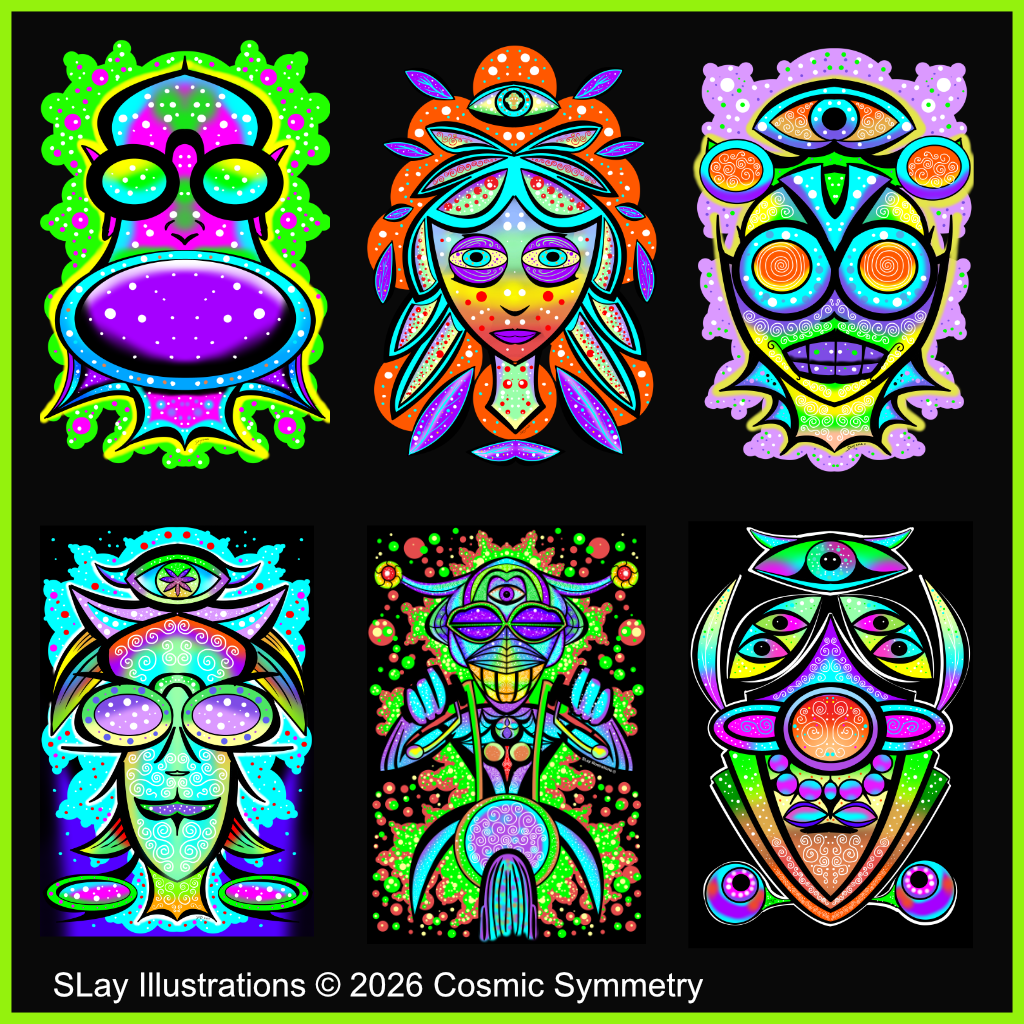
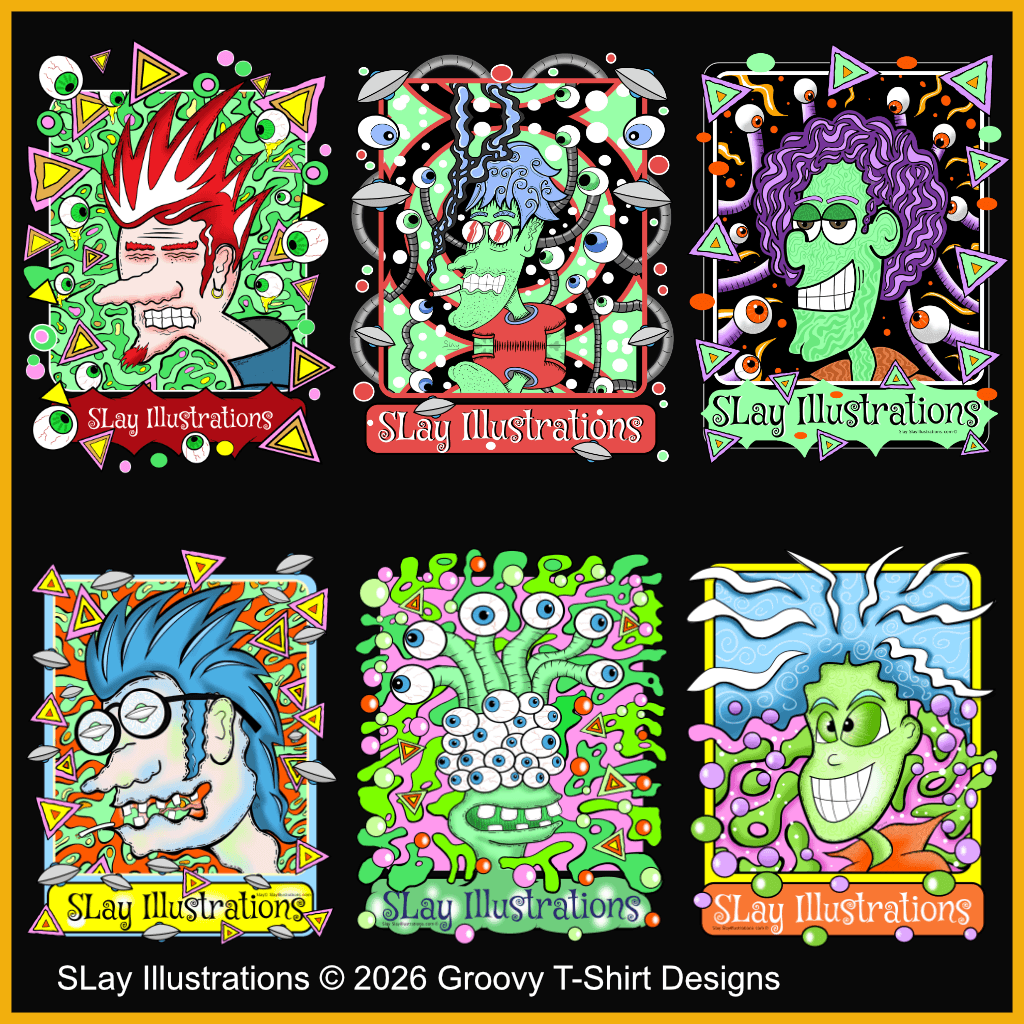
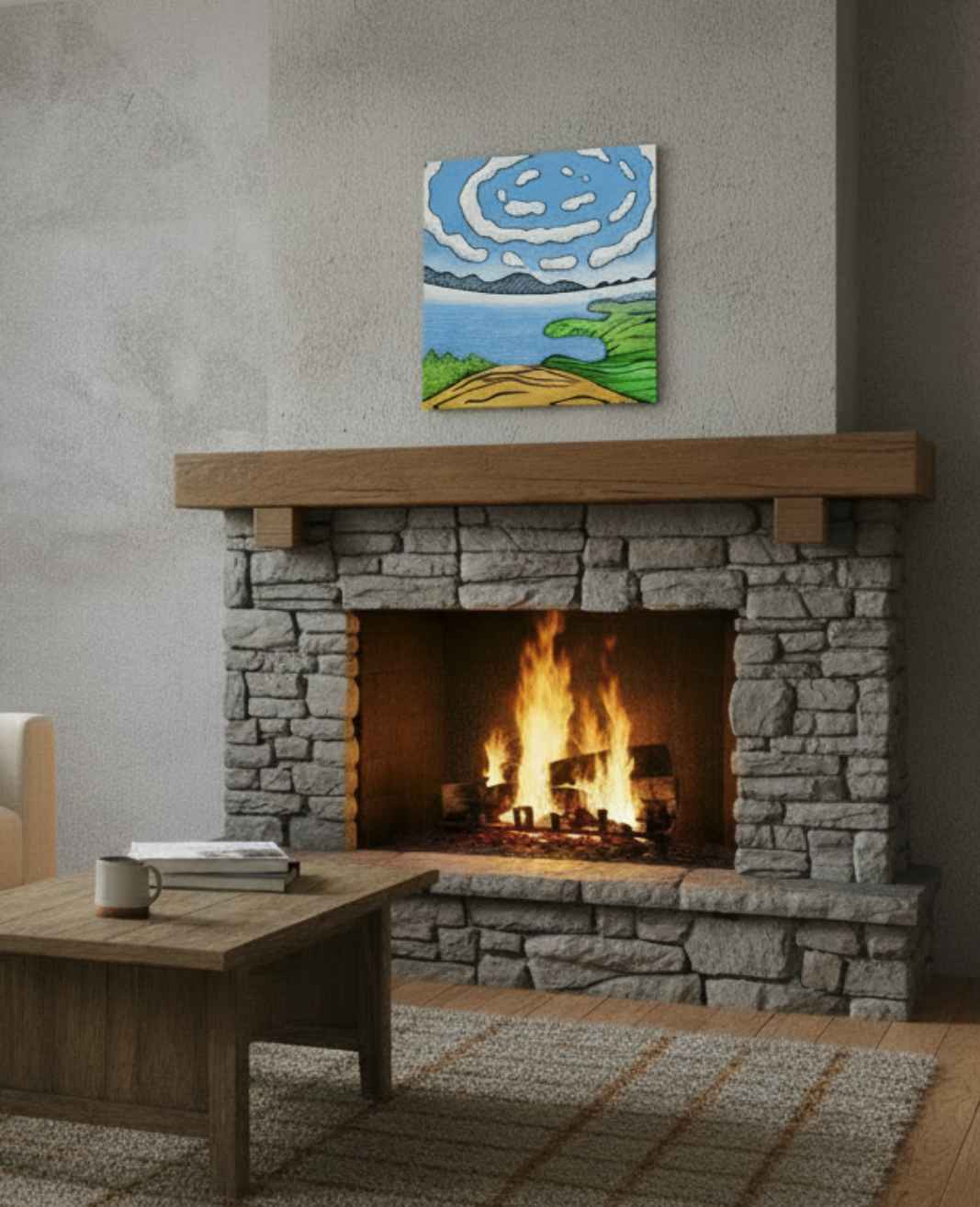
My creative practice spans a wide range of formats, from contemporary landscape canvas prints to ceramic mugs, stickers, greeting cards, drink coasters, and posters. The work itself moves fluidly between slightly trippy abstractions, playful cartoons, and psychedelic portraiture. I’ve exhibited at art and craft shows across both Northern and Southern Ontario, and along the way even found my way into creating custom family trees—helping clients preserve their personal histories through art.
At its core, my contemporary work is story-driven, grounded in a deep connection to places like Lake Superior and beyond. What I value most is the moment someone connects with a piece and says, “This reminds me of…” That emotional resonance—when the work sparks a memory, a place, or a feeling—is what I strive for. Those moments often lead to meaningful conversations, where I get to know people through the stories my work helps bring to the surface.
My goal is to bring colour and a sense of individuality into people’s homes, cottages, and offices. Whether it’s a contemporary piece or something more playful, each work carries a story waiting to be discovered.
How can we best help foster a strong, supportive environment for artists and creatives?
The “starving artist” is a tired cliché that masks a harsh reality: society consumes art greedily but supports the artist sparingly. We value the masterpieces of the dead and the logos of the powerful, yet we dismiss the labor behind them as frivolous. We treat banking and trades as essential “real-world” pillars while viewing art as a hobby, ignoring the fact that every movie, building, and product we touch began with a creative spark.
Without the support of my wife’s full-time income, my own creative path would be impossible. This raises a heartbreaking question: how many brilliant minds are silenced simply because they lack a financial safety net? In a world governed by the “fictitious” necessity of money, talent is often buried by the struggle to survive. Art is the spice of life; without it, our civilization would be a flavourless, monochrome void. To preserve this “spice,” we must move beyond passive appreciation and toward active investment.
To truly revitalize our culture, we must treat art as a vital infrastructure rather than a luxury. When we reduce the cost of survival for the artist, we increase the cultural wealth of the entire world. Here is how we can bridge the gap between appreciation and action:
The “starving artist” narrative is a systemic failure, not a romantic rite of passage. To change this, we must establish affordable housing and studio collectives with strict rent controls, ensuring that artists aren’t priced out of the very neighbourhoods they help beautify. Beyond housing, public funding needs a radical shift away from elite institutions and toward “no-name” grassroots artists and community incubators. By implementing resale royalties and stronger legal protections, we can shield creators from predatory practices and ensure that as their work gains value, they actually share in that prosperity.
In an era where digital algorithms often favour commercial trinkets over genuine craft, society must intervene to provide “algorithmic equity.” This means subsidizing marketing efforts and social media profiling for independent creators to help them break through the noise of the attention economy. Furthermore, we should mandate the integration of art into our daily lives by transforming shopping centres, condos, and libraries into subsidized exhibition spaces. Bringing art into the public square ensures that it is experienced by everyone, rather than being hidden away in exclusive, intimidating galleries.
Creativity should be a fundamental human right, not a luxury reserved for the wealthy. To ensure a diverse future for the arts, we must provide robust arts programming at every level of the public education system. However, talent alone isn’t enough to survive in a money-driven society; we must also provide creatives with specialized tax and business assistance. By helping artists navigate the “fictitious” but necessary world of finance and bureaucracy, we allow them to spend less of their cognitive energy on survival and more on the actual act of creation.
Finally, we must encourage a systemic shift in how the public consumes art, moving away from mass-produced corporate decor and toward independent creators. While indie markets and pop-up shops are a great start, the high cost of vendor fees often acts as a barrier to entry for those without existing wealth. By subsidizing these fees and expanding the reach of local markets, we can make it easier for the average person to invest in unique, handmade work. When we choose the local creator over the corporate assembly line, we are directly funding the “spice” that gives our civilization its flavour.
We often hear about learning lessons – but just as important is unlearning lessons. Have you ever had to unlearn a lesson?
I was fortunate to have two people—a small team—help me build my website. Going into it, I had no idea how much time and effort it would actually take.
We spent months meeting every Thursday evening, mapping everything out—identifying problems, working through hurdles, and setting clear goals for each stage. It wasn’t just about making something look good; we had to bring together a web platform, e-commerce functionality, and print-on-demand, and make sure everything worked seamlessly. The art, the products, the ordering process—it all had to connect and function properly.
What really surprised me was what came after.
Once the site was live, I realized the work wasn’t over—it was just beginning. There’s ongoing maintenance, positioning, SEO, updates… things I hadn’t fully considered at the start. It gave me a whole new appreciation for web builders and everything that happens behind the scenes.
These days, I often find myself spending more time refining and adjusting my website than actually creating art—which is something I’m still trying to find balance with.
I expected that once my website would be built, I would simply gain traction and my business would run! It is entirely a learning process. It’s an interesting process and requires endurance, and ongoing energy to keep everything operating. Finally, you also need to identify what art works for online, and for real life. You need to find that balance.
Contact Info:
- Website: www.slayillustrations.com
- Instagram: https://www.instagram.com/slay_illustrations_art/
- Facebook: https://www.facebook.com/SLayIllustrations
- Linkedin: https://www.linkedin.com/in/stephen-lay-6099b948/
- Other: BlueSky: https://bsky.app/profile/slayillustrations.bsky.social
Tik Tok: https://www.tiktok.com/@slayillustrations_art