

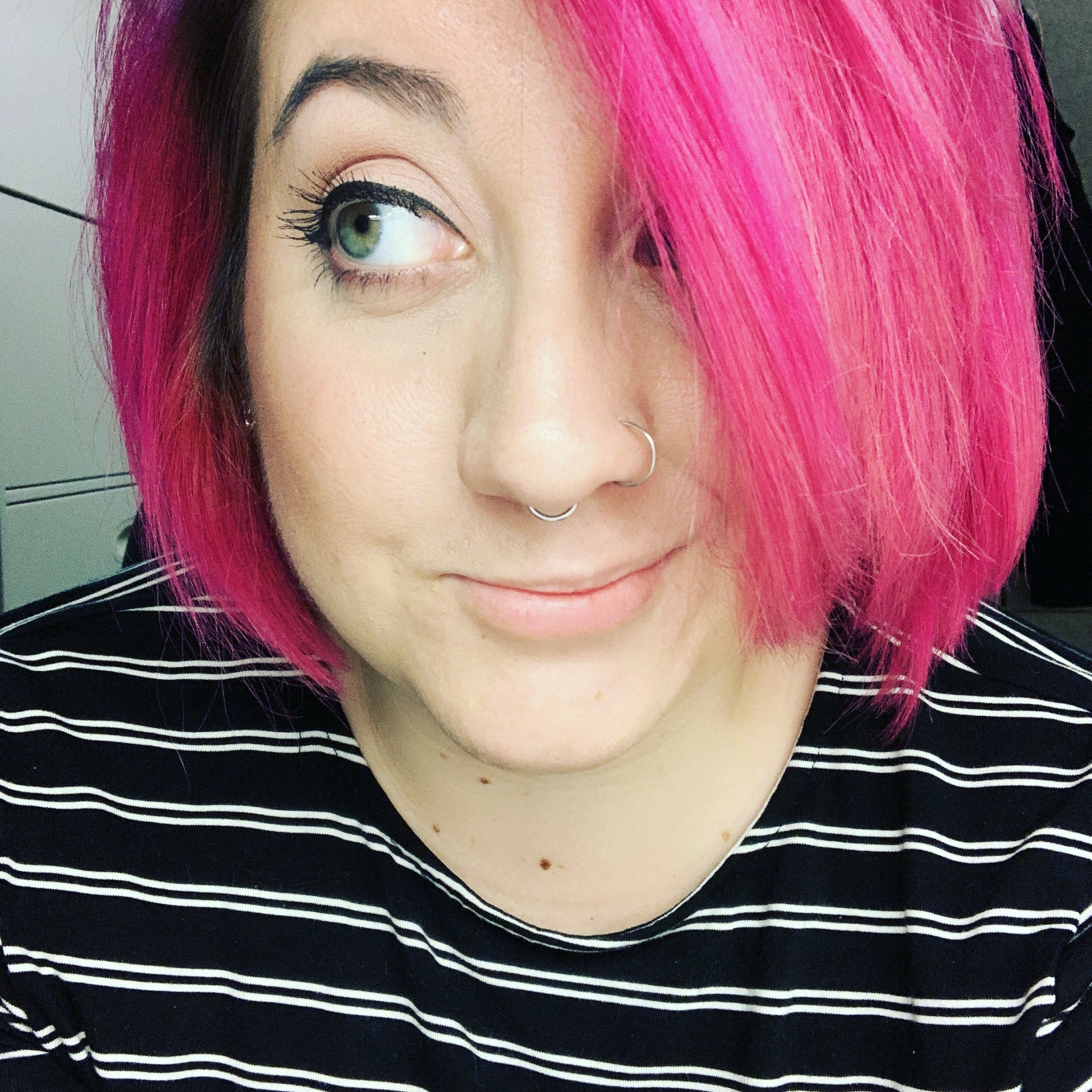

We were lucky to catch up with V.M. Marlowe recently and have shared our conversation below.
Hi V.M., thanks for joining us today. Can you talk to us about how you learned to do what you do?
Writing creatively is something that I’ve done for a long time, but something really clicked after taking a few graduate courses and participating in learning opportunities with various organizations and authors. It’s often said that good readers are good writers, and I do think there’s some truth to that. I read a lot (always have), but it was the combination of focused reading and focused inquiry that really helped me get past “aspiring writer” into “writer” territory. I started asking questions and spending time diving into the parts of writing that made me uncomfortable, since it was likely those were my weakest points.
I don’t believe there’s anything I could have done to speed up the learning process. The assembly of knowledge, for me, happened when it needed to and when I was ready for it. Writing fiction requires ego–because we need the confidence to tell the story we want to tell–but it also requires the setting aside of that ego–to collaborate with others and strengthen the story into its finest form. Knowing why, how, and when to embrace or put the ego aside is key–but I don’t know that it’s something that can be formally studied or learned, per se. At least for me, I had to experience it with all its confusion and discomfort.
Tenacity, though, is a thru-line or an anchor, you could say, for writers. It’s easy to talk about writing. It’s much more difficult to actually do it. Learning to write in the “I don’t want to” moments, then, was a key lesson for me, and it’s really a skill that’s helped me through more than one manuscript hiccup!
As always, we appreciate you sharing your insights and we’ve got a few more questions for you, but before we get to all of that can you take a minute to introduce yourself and give our readers some of your background and context?
Like many writers, I own my own company because it’s important to keep my assets as a private citizen safe from my assets as an entity/name/brand. I wasn’t a person who set out wanting to own my own business, though, so the learning curve felt really steep to me. I was lucky enough to have friends and mentors who’d gone through it first, so they could guide me through the more difficult parts of the process.
My company, Black Star Publishing, is focused on the publishing of fiction and poetry in an “indie publishing” capacity. I’m really proud of myself for getting through the tough parts of business establishment to put out high-quality work that I am proud of, that I’m happy to stand behind. While there are some misconceptions that it’s “easy” to publish stories, I can honestly say that “easy” has never been my experience. Indie publishers like me still go through rigorous editing and revision processes, which require time and often incur costs to some degree. I hope, though, that my dedication to revising my work and collaborating with fantastic editors and designers shines through and helps my writing stand out.
It’s important to me that my company aligns itself with others that have high standards and are putting work out that really deserves to be seen. I select designers and artists carefully so I make sure I’m working with individuals who have a real devotion to their craft. (No AI nonsense here.) When it comes to the editing process, I work with individuals who’ve shown themselves to be dedicated to the art of editing and who’ve taken the extra step to get themselves certified or have embraced continuing education in that area.
And while writing is such a subjective thing–I’m going to come across readers who just don’t vibe with me, and that’s fine–what I don’t want to happen is for readers to buy a product from me and feel like the quality isn’t there, so I try and prioritize that in all aspects of putting my work out into the world.
What’s the most rewarding aspect of being a creative in your experience?
This time in our world has me doing a lot of heavy thinking about art and how it appears in our lives. The most rewarding part of what I do as a creative is putting hope into the world in some way, shape, or form. My characters might not be human, they might be facing battles that are literally out of this world, but overall, they’re handling issues that are very real and well within the landscape of human experience. Having hope, finding a path forward, standing up for what we believe in–these are all parts of the creative journey, but they’re often in the output of what creatives are doing, as well. To have my stories in the hands of people who relate to the stories of my characters is incredibly meaningful and, yes, rewarding.
Can you share a story from your journey that illustrates your resilience?
The journey for writers is really varied, but I took a somewhat standard path through an undergraduate creative writing degree and into a graduate creative program. Though I chose the path, it wasn’t what was best for me, which was illustrated by a general dismissal of genre fiction in academia at the time. The program I was in had very few fiction-writing instructors, and it was made clear to those of who were writing fantasy, science fiction, romances, horror, or other types of genre fiction were not the same as others who were writing “more serious” fiction. Escapism at the time was not a term thrown around like it is now, and it certainly wasn’t something that was a goal for writers–at least not in the program I was in. In leaving that program, it would have been easy for me to turn my back on the kind of writing that moved me, stopping in my tracks entirely to abandon my dreams. But I didn’t. It did take me awhile to find my way back to writing what I wanted to, but I did find my way back to it, and now I’m writing and publishing more than ever. It just took me believing in my skills, my imagination, and having confidence that there are readers out there for the kinds of things I want to write.
Contact Info:
- Instagram: https://instagram.com/vm_marlowe