
We were lucky to catch up with Susan Bartley recently and have shared our conversation below.
Alright, Susan thanks for taking the time to share your stories and insights with us today. Have you ever had an amazing boss, mentor or leader leading you? Can you us a story or anecdote that helps illustrate why this person was such a great leader and the impact they had on you or their team?
The best boss I’ve ever had was my very first boss, Wanda, at the Southeastern Booksellers Association.
She taught me a lot, but one moment has stayed with me for years because it completely reshaped how I think about leadership, boundaries, and negotiation.
We had a long-standing contract—five or six years—with a hotel to host our main annual event. About six months before the convention, they called her in for a meeting and told her the new conference space they had promised wouldn’t be finished in time. Their solution? They planned to transform a parking lot into a makeshift convention center—carpet, walls, everything—assuring her we “wouldn’t know the difference.”
Wanda did two remarkable things.
First, she didn’t react emotionally. She said, “I hear you, and I appreciate you working toward a solution. I’d like 24 hours to think it through.” That alone was powerful—she gave herself space instead of being pressured into a decision.
Then she came back the next day and said, “Yes, I’ll agree—but here are my terms.”
Because the contract was already in place and they had put her in a difficult position, she understood she now had leverage. And she used it—thoughtfully and thoroughly. In those 24 hours, she mapped out everything needed to make the situation equitable, not just acceptable.
One of my favorite details: the hotel was exclusively a Pepsi property. Wanda negotiated for Coca-Cola products to be brought in for our entire event—every restaurant, room service, and all meeting rooms. And they did it.
That was my first real lesson in this:
If you honor your commitments and the other party doesn’t, you don’t just absorb the inconvenience—you renegotiate the terms.
She showed me that advocating for yourself (and your people) doesn’t make you difficult. It makes you effective. Wanda always found a way to create outcomes that worked for everyone—without ever sacrificing herself in the process.
Awesome – so before we get into the rest of our questions, can you briefly introduce yourself to our readers.
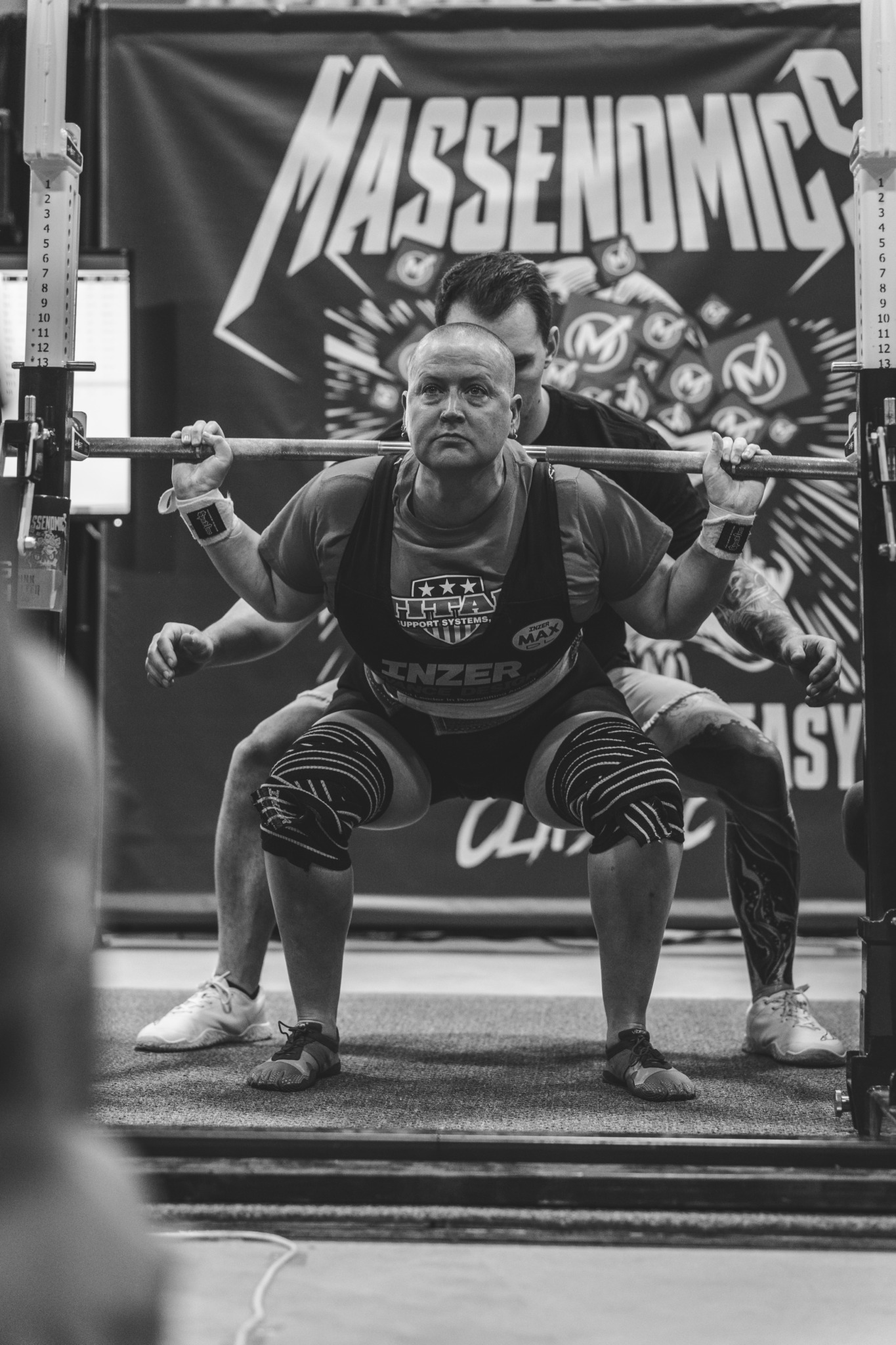
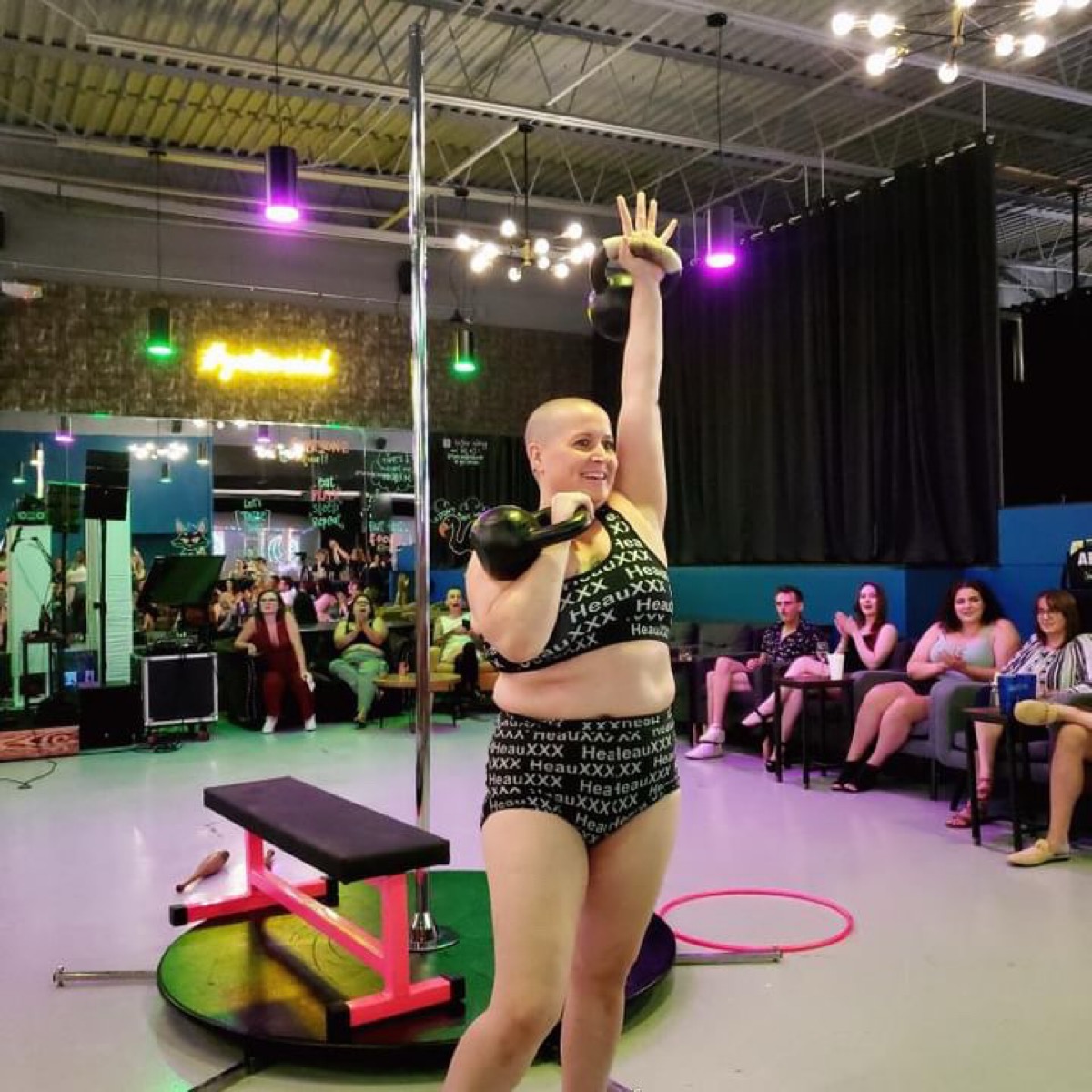
I’ve been in the strength and conditioning world since I was 24—and honestly, that was a fluke.
I was at a crossroads where I needed a major life change. It was either join the military or, as it turns out, start powerlifting. That decision set the course for the next 26 years of my life.
My ex-husband and I built a business together from the ground up. We owned a gym, several supplement stores, and eventually a global brand that sold lifting straps and accessories to some of the strongest athletes in the world. Our products showed up in places I never could have imagined—an Oikos Super Bowl commercial, an Under Armour campaign with The Rock, even on his show Ballers. There are countless moments like that, and I’m incredibly proud of what we built.
When our relationship ended at the end of COVID, I learned a hard but valuable lesson: I wasn’t actually an owner of any of it. I was the wife of the owner. So I didn’t walk away with the business—but I did walk away with 20 years of experience in how to build one. I knew how to source, manufacture, ship, market, build websites, run social media—everything.
And I also knew I didn’t want to work for anyone else.
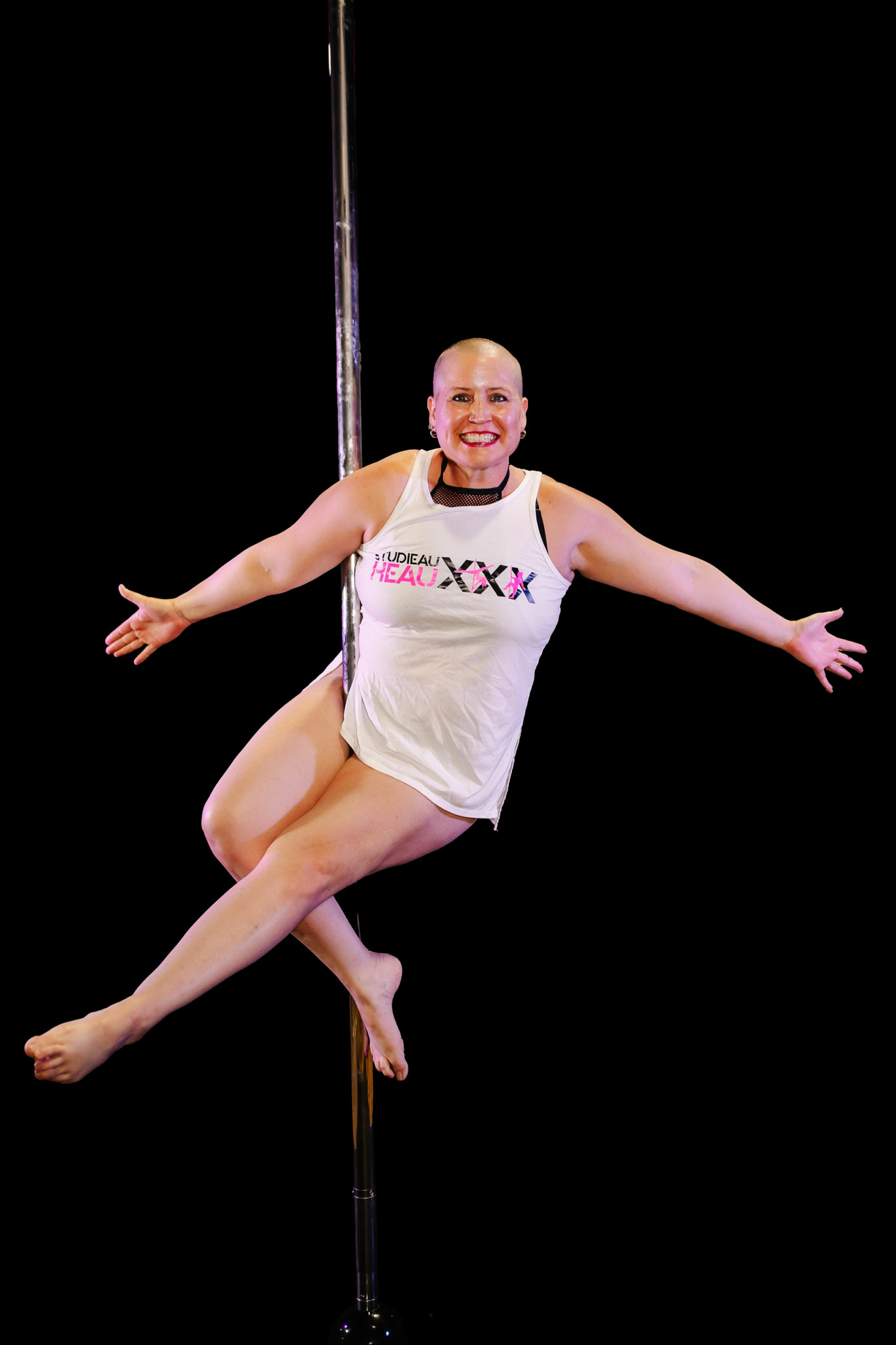
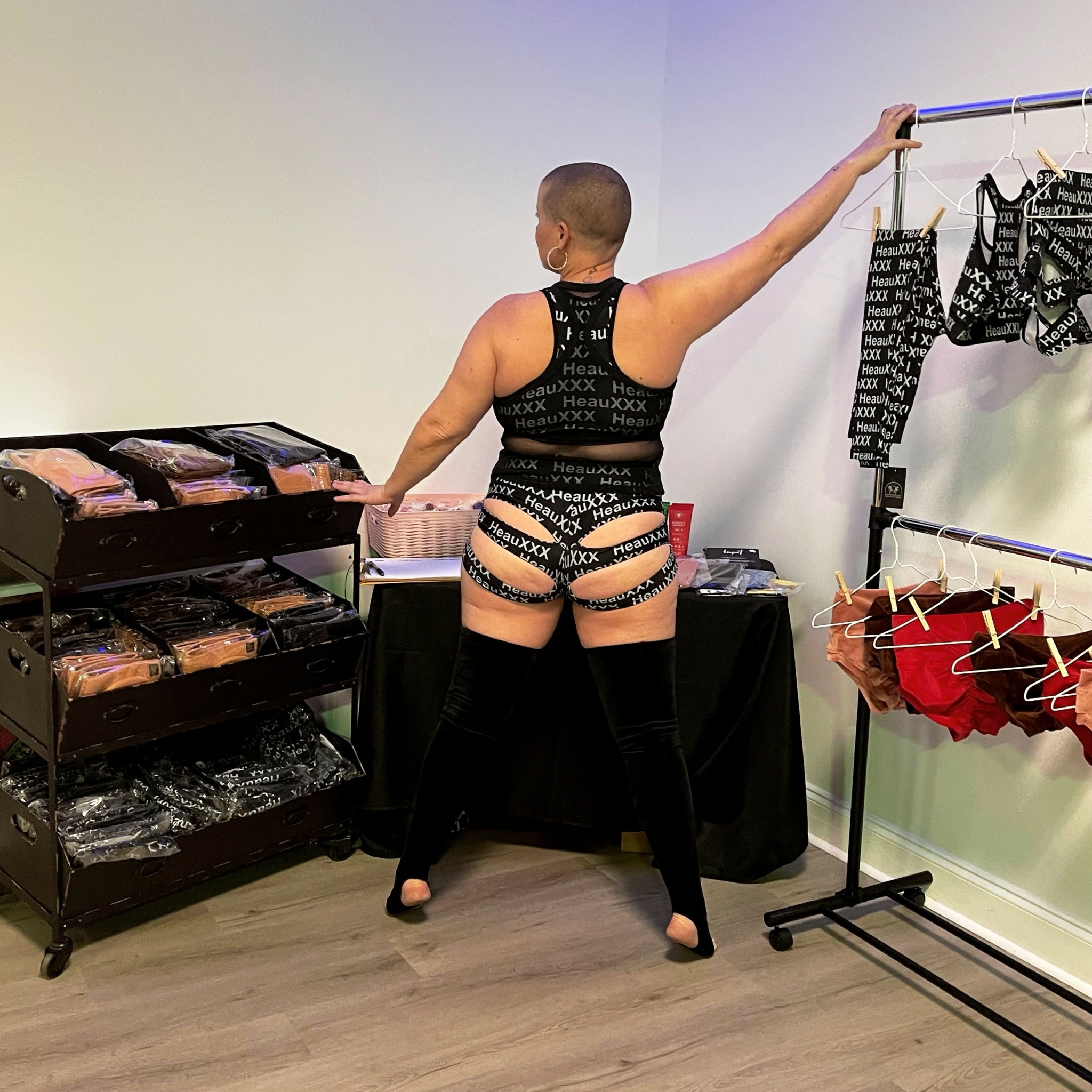
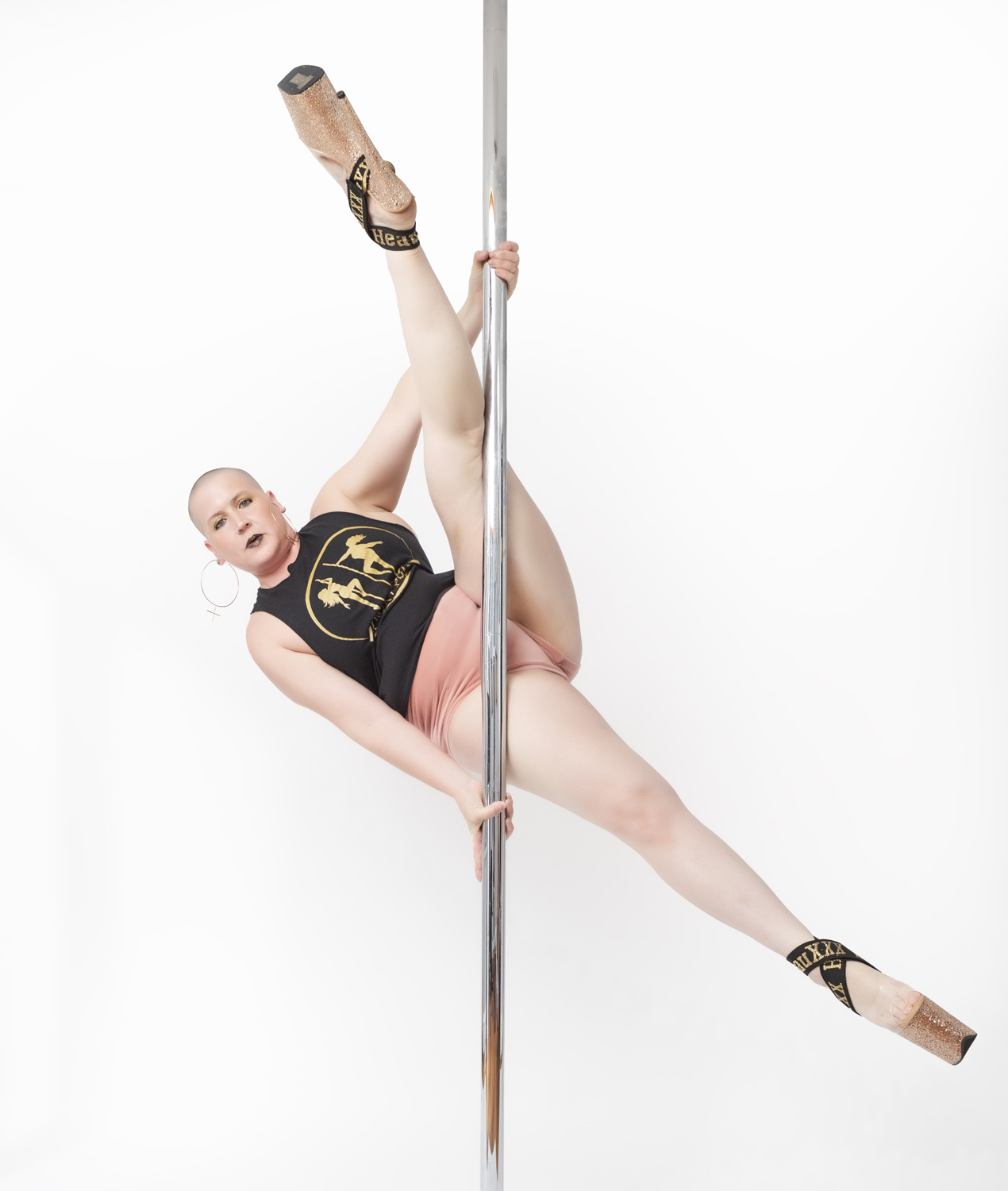
So I started Heaux Apparel, an online boutique designed to provide aerialists with the products they need to succeed. What unexpectedly made the business take off was social media. Customers would tag us in their videos, and I would repost them. What I didn’t realize at the time was that I was showcasing women of all different body types—something that wasn’t common. Women started reaching out saying, “I started pole because I saw someone who looked like me.” That became the heart of the brand: making movement feel accessible to everyone.
I also knew that to truly differentiate Heaux Apparel, I needed a physical space to anchor it. In 2023, I was given the opportunity to buy my local aerial studio. I had no money after my divorce, but I secured an SBA loan and took the leap. I built the curriculum from the ground up, created a strong culture, and today the studio thrives in a way that isn’t dependent on me—which is something I’m very proud of.
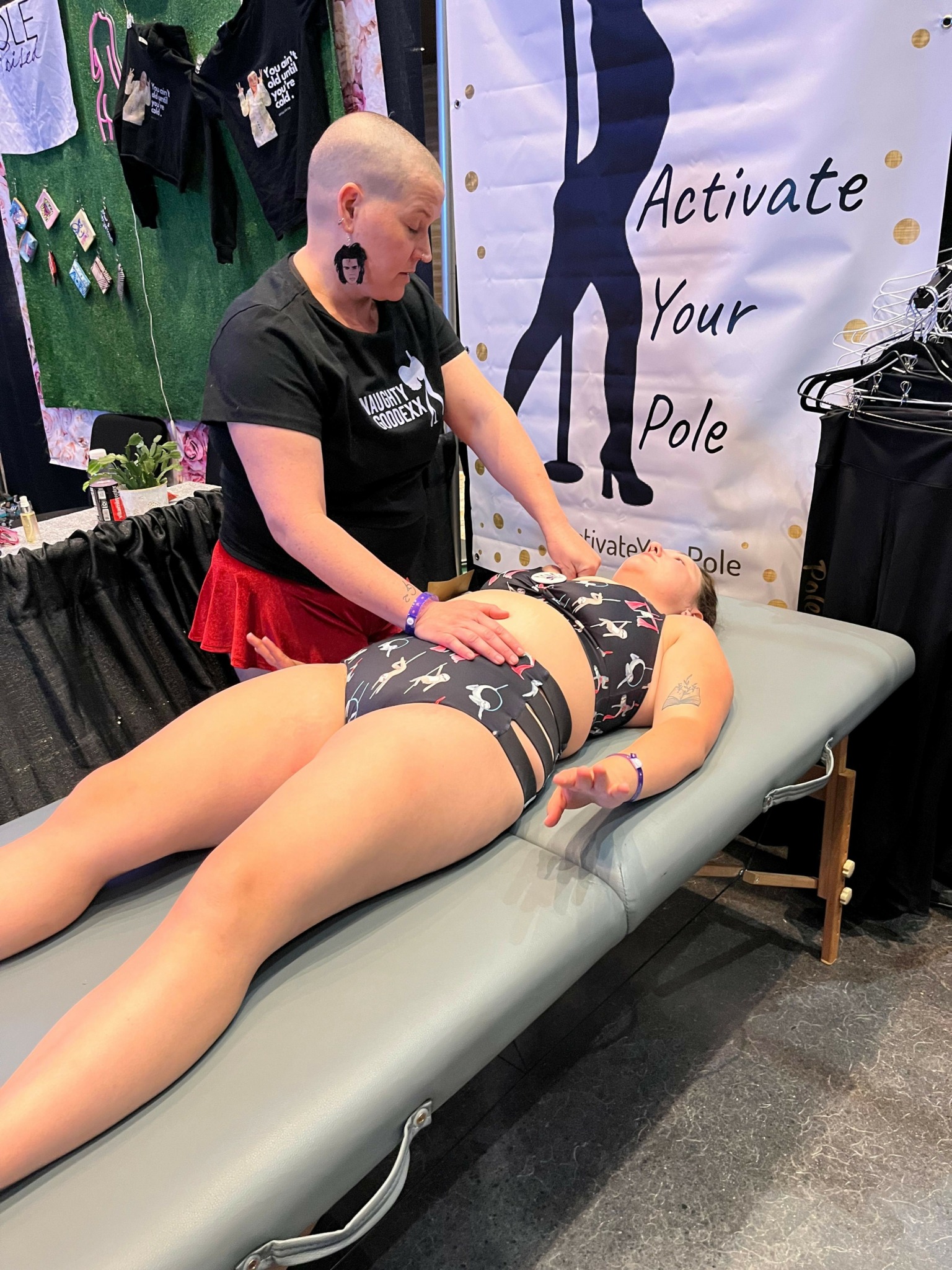
Alongside that, about 10 years ago, I was introduced to a system called Be Activated, a neurological reset method taught by Douglas Heel. I initially went to support my ex-husband, but it ended up changing me completely. Now, it’s a core part of what I offer—I teach it in my studio, use it in all of our classes, and work with clients one-on-one, both in person and virtually. My goal is simple: help people calm their nervous systems so they can actually access change.
Finally, I’ve always believed that a strong business isn’t just retail—it’s retail and wholesale. So I’ve built a wholesale arm of Heaux Apparel, supplying studios—particularly a growing franchise network—with boutique products. New studio owners are often overwhelmed, and I can step in and make that process seamless while increasing their revenue. It’s a win-win.
Today, my work spans four connected businesses:
* Heaux Apparel (retail)
* Heaux Apparel (wholesale)
* Studieaux Heaux
* My Be Activated practice
At the core of all of it is the same goal:
help people feel stronger, more capable, and more at home in their bodies.
Any stories or insights that might help us understand how you’ve built such a strong reputation?
I think what helped me grow my reputation is that I’ve always been willing to show up as I am—and to let the work speak for itself.
I didn’t build my businesses by trying to look perfect or by positioning myself as an expert from the outside. I built them by being in the trenches, doing the work, and sharing it honestly.
And honestly, that feels even more important now. It’s very easy to get caught up in social media and marketing—to present the most polished, curated, “sellable” version of yourself. I just don’t have the ability to do that. What you see is what you get. You get me, you get what I’ve learned, and sometimes it’s a little messy or unpolished. But that’s actually what people connect with. It feels real, and it feels accessible.
With Heaux Apparel, for example, I unintentionally created something powerful by simply reposting my customers. Those videos showed real people—different body types, different levels, different backgrounds—doing aerial work. That authenticity resonated. People didn’t just see a brand; they saw themselves reflected in it.
In my studio and in my Be Activated work, it’s the same principle. I focus on results and experience. I don’t overpromise, and I don’t try to sell people into something they’re not ready for. I meet them where they are, help them feel something shift, and let that speak for itself. Word of mouth from real experiences has been one of the strongest drivers of my growth.
I also think consistency matters. I’ve been doing this for over two decades in different forms—strength and conditioning, retail, wholesale, coaching—and that depth shows. People trust that I know what I’m doing because I’ve done it, not just talked about it.
At the end of the day, my reputation has grown because I’ve stayed grounded in this:
be real, do good work, and let people feel the difference.
Learning and unlearning are both critical parts of growth – can you share a story of a time when you had to unlearn a lesson?
The biggest lesson I had to unlearn was that putting myself forward was the same thing as bragging.
I was raised to believe that if you highlighted yourself—if you stepped into the spotlight or made yourself visible—you were being arrogant. So I learned to stay in the background. Even as I built businesses, I tried to keep the focus on everything except me.
For a long time, I avoided being the face of my brands. With my studio and my Be Activated work, I leaned heavily on client stories and transformations. I wanted the work to speak for itself, and I thought that was the “right” way to do it.
Then one day, I didn’t have any content.
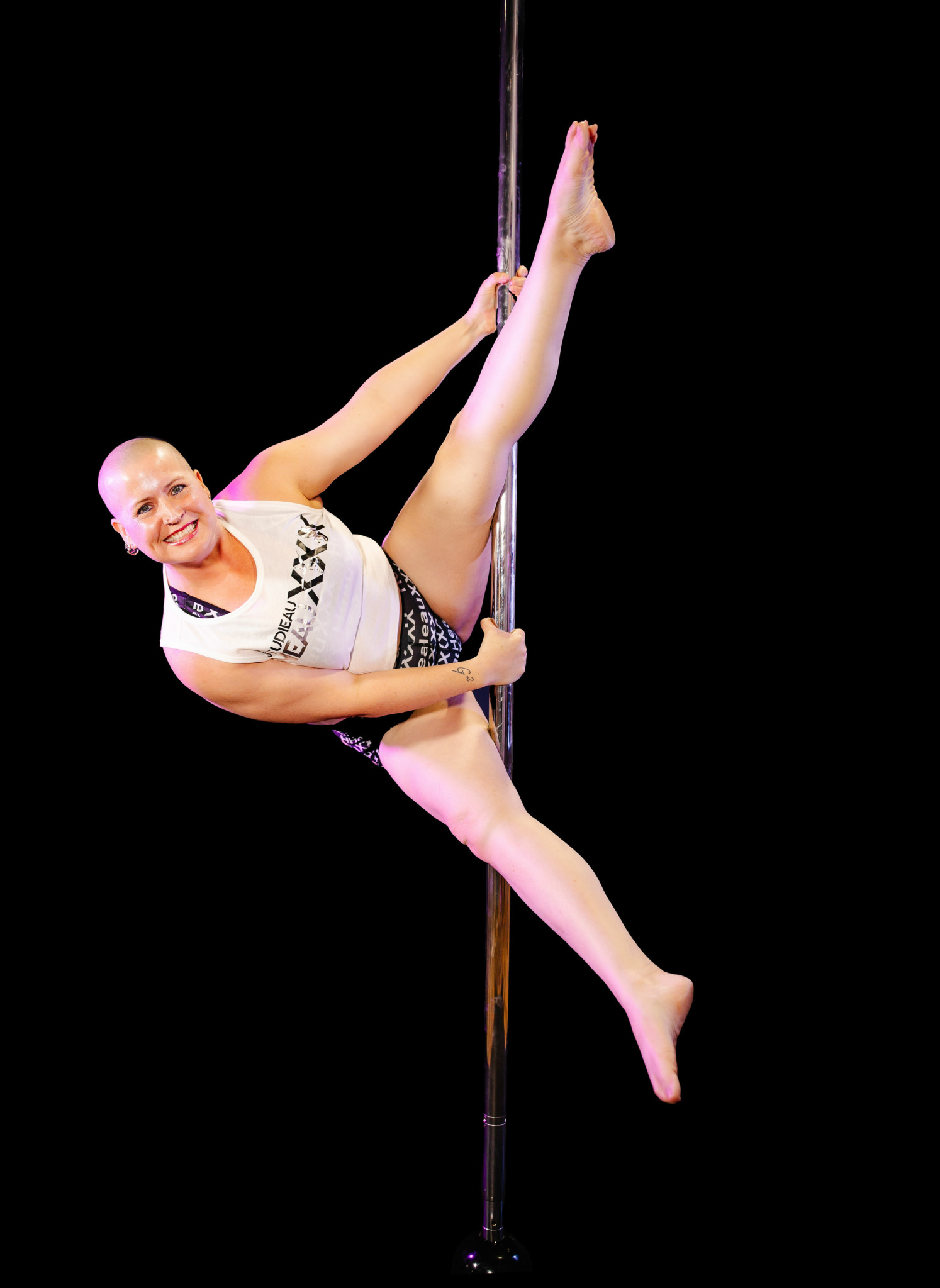
So I did the one thing I had been avoiding—I filmed myself. Just simple, direct videos talking about things my audience was dealing with. No polish, no production. Just me—50 years old, minimal makeup, speaking honestly.
And those videos performed better than anything I had ever posted.
That’s when it clicked:
People don’t just want a brand—they want a human.
They want to see the person behind it. They want to feel understood. They want to know that the person leading the business actually sees them, understands their struggles, and is invested in helping them move forward.
What I had to unlearn was the idea that visibility is ego.
What I learned instead is:
Visibility is leadership.
As the owner, I am the reason these businesses exist—and they exist because I want to help people. But for that to land, I have to let people see me. I have to step forward and lead.
That goes against how I was raised, and even how I operated in my previous business. But embracing it has become one of my greatest strengths.
Because when I show up fully and honestly, people don’t pull away—
they connect.
Contact Info:
- Website: www.studieauxxxheauxxx.com, www.activateandelevate.com, www.heauxxxapparel.com
- Instagram: @studieaux.heaux @activate.elevate, @heaux_apparel
- Other: Podcast where I talk about my journey through Be Activated: https://open.spotify.com/episode/2D4kTGs2Kn5flDSmqF0UAh?si=6ki5hgLTTC6zZBACDacIkg