

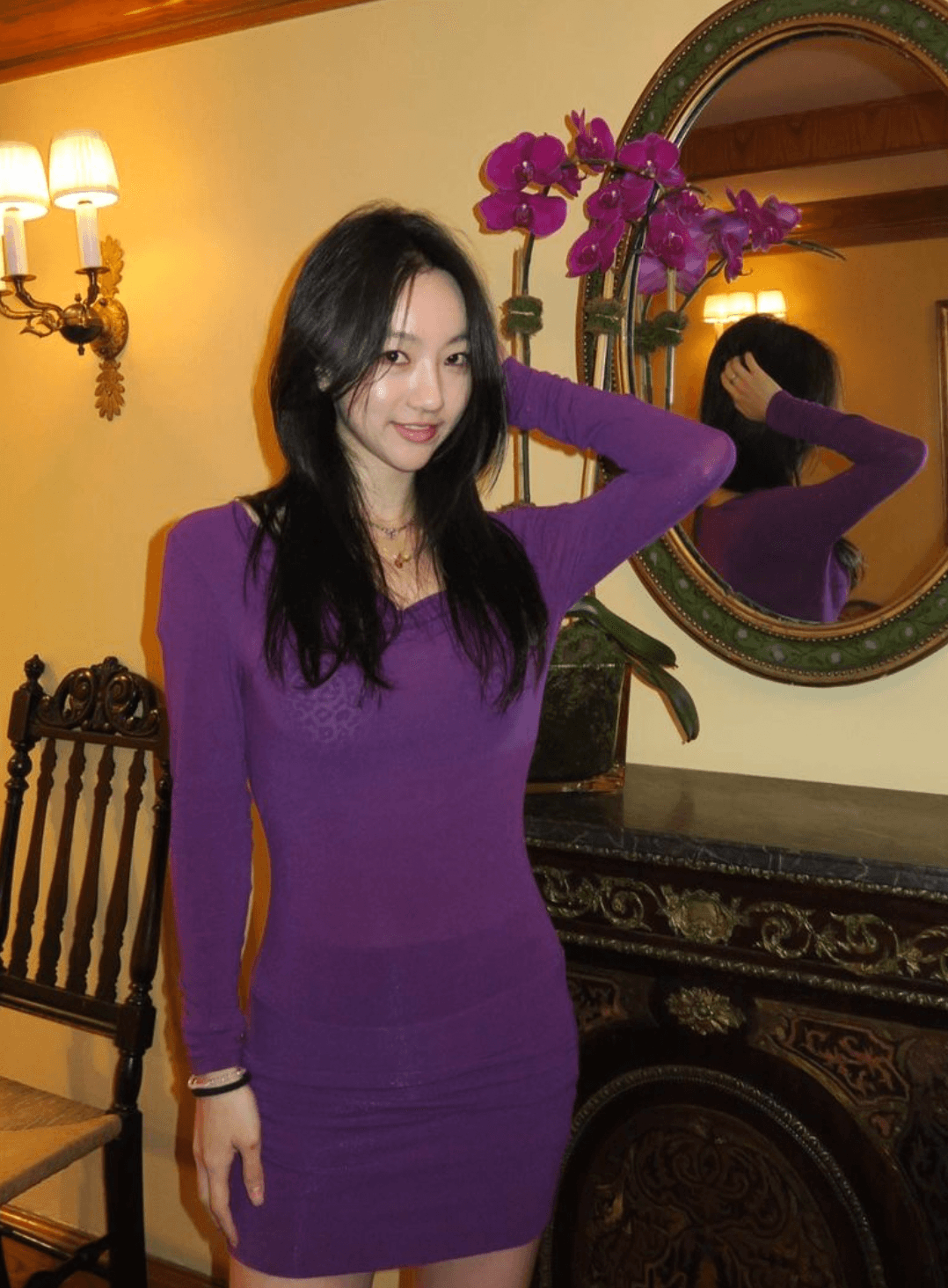

We’re excited to introduce you to the always interesting and insightful SunWoo Jang. We hope you’ll enjoy our conversation with SunWoo below.
Hi SunWoo, thanks for joining us today. Can you talk to us about a project that’s meant a lot to you?
The most meaningful project I’ve worked on is Nubism.
The project began after spending time in Florence, Paris, and New York, where I became fascinated by the role of heritage and craftsmanship in shaping the identities of some of the world’s most respected luxury houses. Those experiences led me to reflect on my own cultural background and question how traditional craftsmanship can remain relevant in contemporary fashion.
As I researched Saek-sil Nubi, a traditional Korean quilting technique, I became increasingly interested in its potential beyond its historical context. Rather than preserving it as a cultural artifact, I wanted to explore how it could evolve into something contemporary and create a new aesthetic language.
What made Nubism meaningful was that it ultimately shaped my entire design philosophy. Through the project, I realized that innovation does not always come from inventing something entirely new. It often comes from connecting ideas across cultures, histories, and disciplines to create new meaning.
More than anything, Nubism taught me that heritage is not something to preserve behind glass. It is something that can continue to live, evolve, and inspire new possibilities. That belief continues to guide my work today.

As always, we appreciate you sharing your insights and we’ve got a few more questions for you, but before we get to all of that can you take a minute to introduce yourself and give our readers some of your background and context?
I am a New York-based fashion designer whose work explores the intersection of craftsmanship, structure, and femininity. I create contemporary eveningwear and couture-inspired garments that celebrate the female form while combining technical innovation with emotional storytelling.
My journey into fashion has been shaped by living and studying across different cultures, including South Korea, China, Italy, France, and the United States. Experiencing different perspectives on art, design, and craftsmanship taught me that creativity often comes from connecting ideas across cultures and disciplines rather than inventing something entirely new.
What sets my work apart is my approach to technique. I am deeply interested in textile development and construction, but I see technique as a language rather than a destination. Through projects such as Nubism, I have developed my own textile methods and design systems that allow me to explore silhouette, texture, and movement in unique ways. My goal is never to showcase a craft for its own sake, but to create garments that make women feel confident, feminine, and unforgettable.
The problem I try to solve is not purely functional. In a fashion landscape that often prioritizes speed and trends, I am interested in creating pieces with lasting emotional value—garments that feel distinctive, personal, and worthy of meaningful moments in a person’s life.
What I am most proud of is developing a design philosophy that feels authentic to me. Through my work, I have learned that innovation often comes from synthesis: bringing together different histories, techniques, and perspectives to create something new. More than any individual project or achievement, I am proud of building a creative practice rooted in curiosity, craftsmanship, and a commitment to creating work with lasting significance.
Ultimately, I want people to know that my work is not only about clothing. It is about creating experiences, emotions, and a sense of transformation through design.

Are there any books, videos, essays or other resources that have significantly impacted your management and entrepreneurial thinking and philosophy?
One book that has had a significant impact on my thinking is After the End of Art by Arthur Danto.
What resonated with me most was Danto’s idea that contemporary art is no longer defined by a single aesthetic standard or historical direction. Instead, artists are free to draw from different histories, cultures, and ideas to create new meaning.
Reading the book encouraged me to think more deeply about my own work and identity as a designer. It helped me realize that creativity is not about rejecting the past or pursuing novelty for its own sake. Rather, it can come from reinterpreting existing ideas and placing them in new contexts.
That perspective has influenced the way I approach fashion today. It reinforced my belief that tradition and innovation are not opposites, and that meaningful design can emerge from creating a dialogue between heritage, contemporary culture, and personal expression.

Can you share a story from your journey that illustrates your resilience?
What kept me going was a sense of responsibility toward something I believed deserved to be seen.
One of the most challenging experiences in my journey was developing Nubism. There were countless failed experiments, technical setbacks, and moments when I questioned whether the concept was worth pursuing. At times, giving up would have been the easier option.
However, the more I researched Saek-sil Nubi and explored its possibilities, the more strongly I felt that it deserved a place in the contemporary fashion conversation. Through my experiences in Florence, Paris, and New York, I had seen how certain traditions and forms of craftsmanship were celebrated globally. I became driven by the desire to show that there are still overlooked techniques capable of inspiring entirely new aesthetic possibilities.
Looking back, resilience was not about confidence or certainty. It came from believing that the idea was bigger than my own frustrations. Even when the outcome was unclear, that belief gave me a reason to keep moving forward.
Contact Info:
- Instagram: @ari.sunwoo
- Linkedin: https://www.linkedin.com/in/sunwoo-jang-62a34b2b7/


Image Credits
Photo by Thandi Roe