

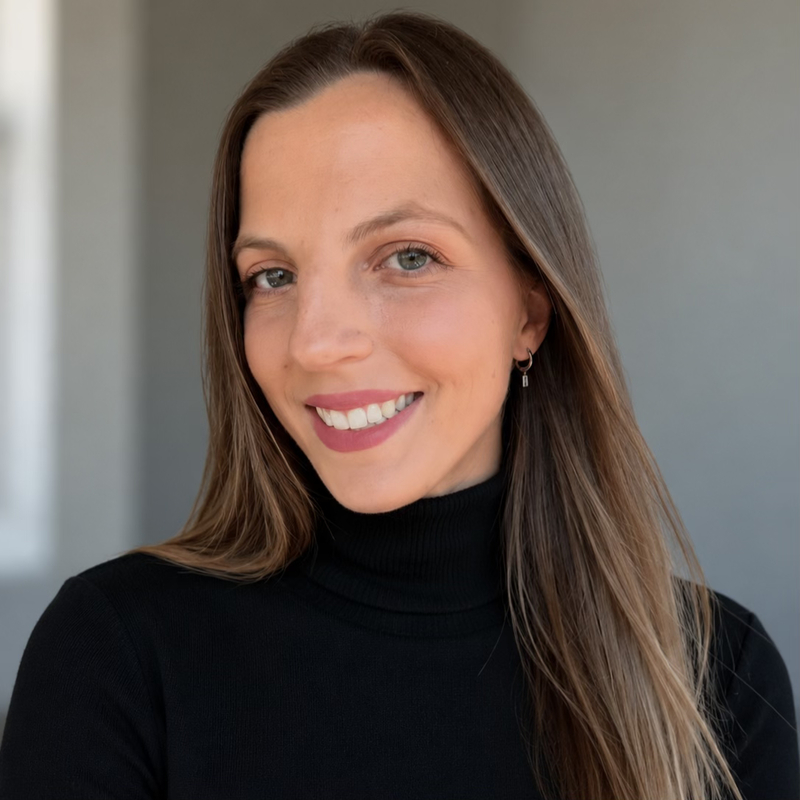

We’re excited to introduce you to the always interesting and insightful Stephanie Bachus. We hope you’ll enjoy our conversation with Stephanie below.
Stephanie, looking forward to hearing all of your stories today. What was it like going from idea to execution? Can you share some of the backstory and some of the major steps or milestones?
My path wasn’t linear and honestly, that’s what made me good at what I do. I started out in nonprofits, then moved into broadcast operations, and also worked in hospitality advertising. On the surface those feel like totally different worlds. But looking back, every single one of them was teaching me the same thing: how to read a room, solve problems fast, and make an experience feel seamless even when everything behind the scenes is chaos. I never set out to be a consultant. What happened was, people kept asking me for help. With their marketing, their messaging, their events, their strategy. And at some point I realized I had been doing it informally my whole career. I was just doing it for free.
That problem solving instinct shows up everywhere for me. As a co-founder of Chai Society, I recognized a gap in my community and built something to fill it. That’s kind of just how my brain works. I see the issue and I start figuring out the solution.
So eventually consulting just became the thing. Today I work with business owners who are looking to create a meaningful connection with their audience. My background across such different industries is actually my biggest asset. I don’t come in with a one-size-fits-all playbook. I come in as someone who has sat in a lot of different seats and knows how to figure things out in real time.
That’s what a creative really is, at the end of the day. Not just someone who makes things look good. Someone who sees the problem and builds the solution.
Stephanie, before we move on to more of these sorts of questions, can you take some time to bring our readers up to speed on you and what you do?
I’m Steph! I’m a consultant, and the co-founder & CEO of Chai Society AZ, a Jewish women’s community in Scottsdale connecting women in their 20s and 30s through social events and cultural gatherings. The through line of everything I do is pretty simple. I see problems and I build solutions. That’s it. That’s always been it.
My career has taken me through nonprofits, broadcast operations, and hospitality advertising. None of it was part of some master plan but all of it shaped how I think. I learned early that the best work happens when you really understand the people you’re serving, and that has followed me into everything I do.
On the consulting side, I work with business owners who feel like something in their brand or their messaging just isn’t landing the way it should. Maybe they have a great product but the story isn’t there yet. Maybe they’re creating content constantly and none of it is converting. That’s where I come in. I help them find the connection between who they are and what their audience actually needs to hear.
Chai Society came from the same place. I saw something missing in my own community and decided to do something about it instead of waiting for someone else to.
I think what makes me different is that I’m not just a strategist and I’m not just a creative. I’m both, and I know how to move between them depending on what the moment calls for. I’ve been in rooms where the idea is brilliant but the execution falls apart. I’ve also seen flawless execution with nothing behind it. I know how to bridge that gap.
The work I’m most proud of is the kind you can feel. Not just see.
Are there any books, videos or other content that you feel have meaningfully impacted your thinking?
The book that has stuck with me most is The Midnight Library by Matt Haig. It sounds like an unexpected answer for a business question but hear me out. The whole premise is about the weight of the choices we make and more importantly the ones we don’t. There’s something in that concept that really shifted how I think about risk as an entrepreneur. Every time I’ve hesitated to start something or waited until conditions were perfect, I think about that book. The cost of not trying is just as real as the cost of trying and failing. That reframe changed a lot for me. Beyond that I tend to learn more from people than from traditional business resources. Conversations with other founders, watching how people I admire handle hard moments, paying attention to what works and what doesn’t in real time. I think being genuinely curious about people is its own kind of education.
How’d you build such a strong reputation within your market?
It comes down to three things. Being kind, actually listening, and doing what I say I’m going to do. That sounds simple but it’s surprisingly rare. A lot of people in this industry are great at the pitch and then the execution doesn’t match. I’ve always been really upfront with clients about what’s realistic, what I think, and what I’d push back on. That honesty sometimes feels risky in the moment but it’s what builds actual trust over time.
The listening piece is big for me. I genuinely want to understand what someone is trying to build before I say a single word about how to help them. Most people can tell the difference between someone who heard them and someone who just waited for their turn to talk.
And then you just have to show up and do the work. Reputation is really just consistency over time. Every client who felt taken care of told someone. That’s how it grew.
Contact Info:
- Website: https://stephaniebachus.com
- Instagram: @stephaniebachuss
- Linkedin: https://www.linkedin.com/in/stephaniemdavies1/
