

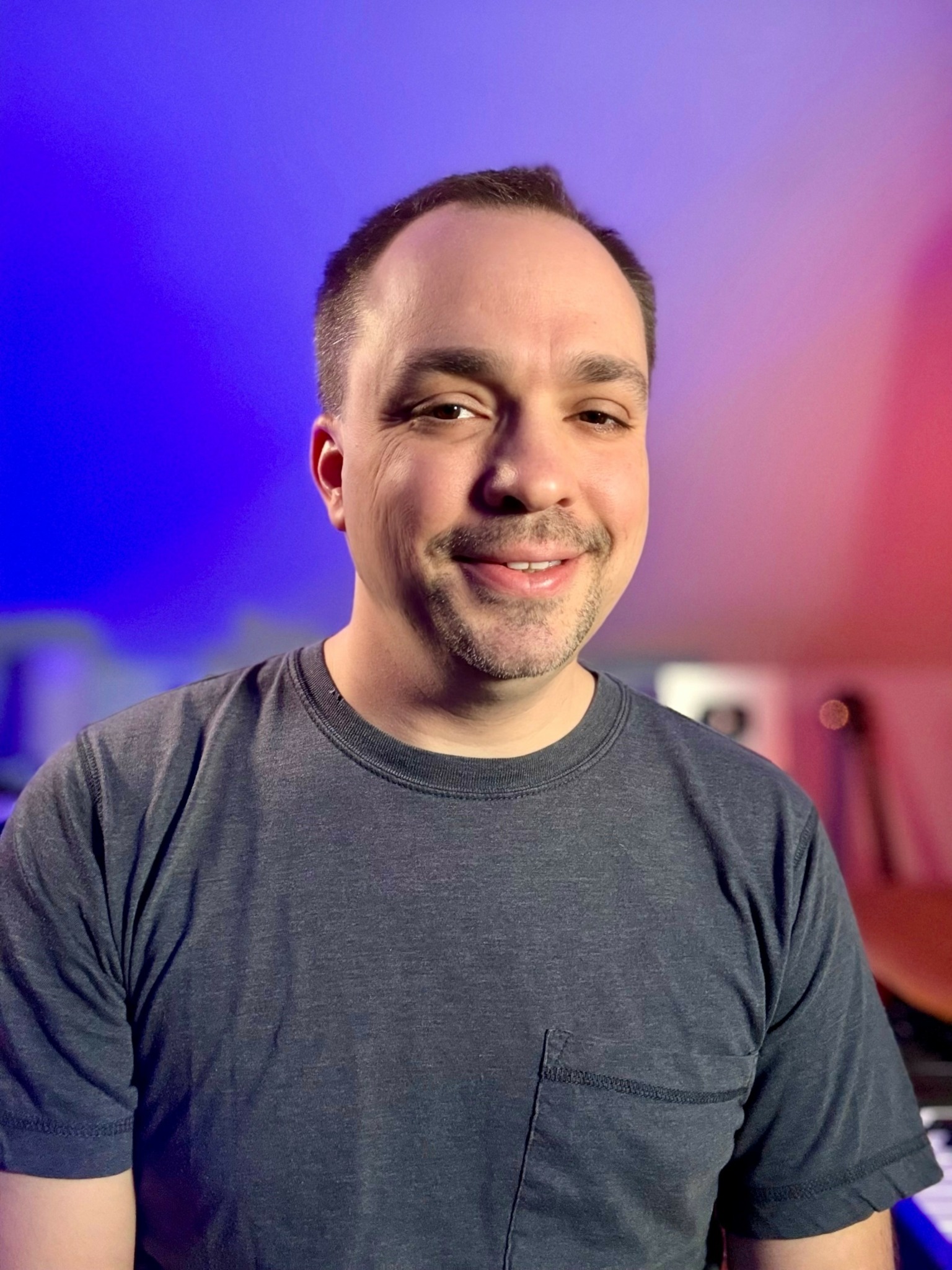

We’re excited to introduce you to the always interesting and insightful Ryan Leach. We hope you’ll enjoy our conversation with Ryan below.
Ryan, looking forward to hearing all of your stories today. Are you happier as a creative? Do you sometimes think about what it would be like to just have a regular job? Can you talk to us about how you think through these emotions?
I have been a freelance creator for over twenty years and there have absolutely been times where I daydreamed about what it would be like to get a “real” job. When you’re a freelancer income is unpredictable, the work can be lonely, and having to handle every single detail of your business can be exhausting.
The last time I went through a period of real career doubt was in late 2019. Over the previous few years I had hit a burnout point with the constant hustle of trying to get the next gig. I’m an introverted indoor-kid, and having to constantly meet new people and maintaining existing relationships in a never-ending chase of another project was becoming unbearable. I loved doing the composing and working with other creative people, but if I had to go to one more cocktail party networking event I thought I might lose my mind.
Of course if I didn’t hustle to get projects I wouldn’t have any projects, so what would I do then? I reignited an old interest in coding and gave very serious consideration to shifting careers into computer science. For several months I went pretty deep; I brushed up on the basics, learned all about coding interviews and job opportunities, and was looking into several options for degree or certificate programs.
But one day as I was looking through local job postings, just to see what kind of opportunities were out there, I started to picture myself actually working in one of those jobs. I thought about being subordinate to a boss (for so many years I had been my own boss). I thought about having to work a fixed workweek schedule (as a freelancer I had complete control over my own time). And I thought about starting over in a brand new career in my 40s and how challenging that would be.
So I realized maybe transitioning to a new industry wasn’t the solution I was looking for after all. But then what was I going to do?
At that point the pandemic hit, and the disruption to everyone’s life gave me the cover to step away from that question for a while and not worry about it. There were bigger things going on in the world.
To make a long story short, it was about a year into the pandemic that I decided to give YouTube a shot and it completely changed my life. I ended up creating a career as a music educator that worked alongside and enhanced my work as a composer, rather than replacing it.
I was right to trust my gut that abandoning a creative life would be the wrong choice for me, and I’m glad I waited for the real answer to reveal itself.
So yes, despite the instability, I’m ultimately happier building a creative life than I would be in a more conventional career.
As always, we appreciate you sharing your insights and we’ve got a few more questions for you, but before we get to all of that can you take a minute to introduce yourself and give our readers some of your background and context?
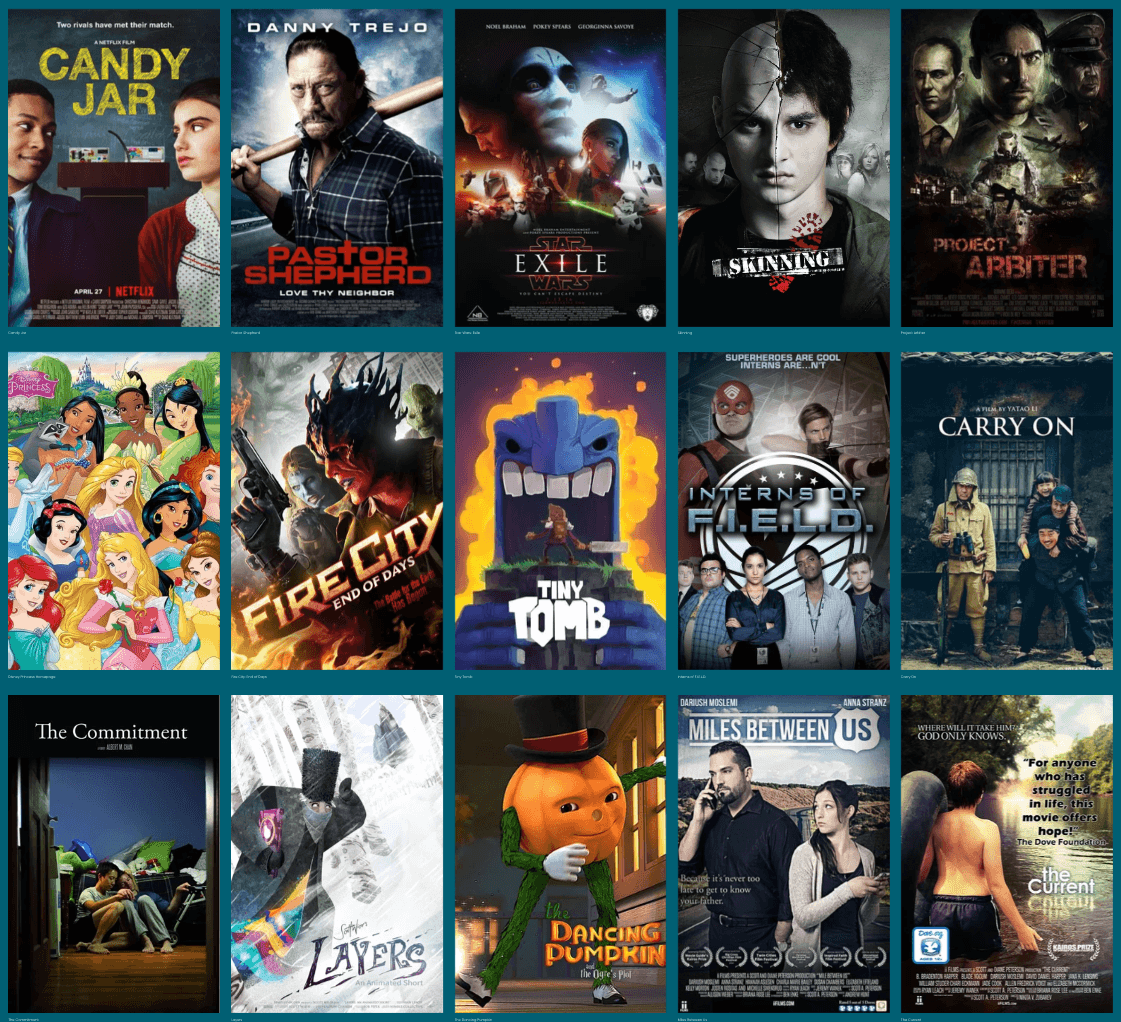
I’m Ryan Leach, a composer, music educator, and content creator who specializes in film and video game music. These days, I spend most of my creative energy making videos and courses for people who want to become better composers.
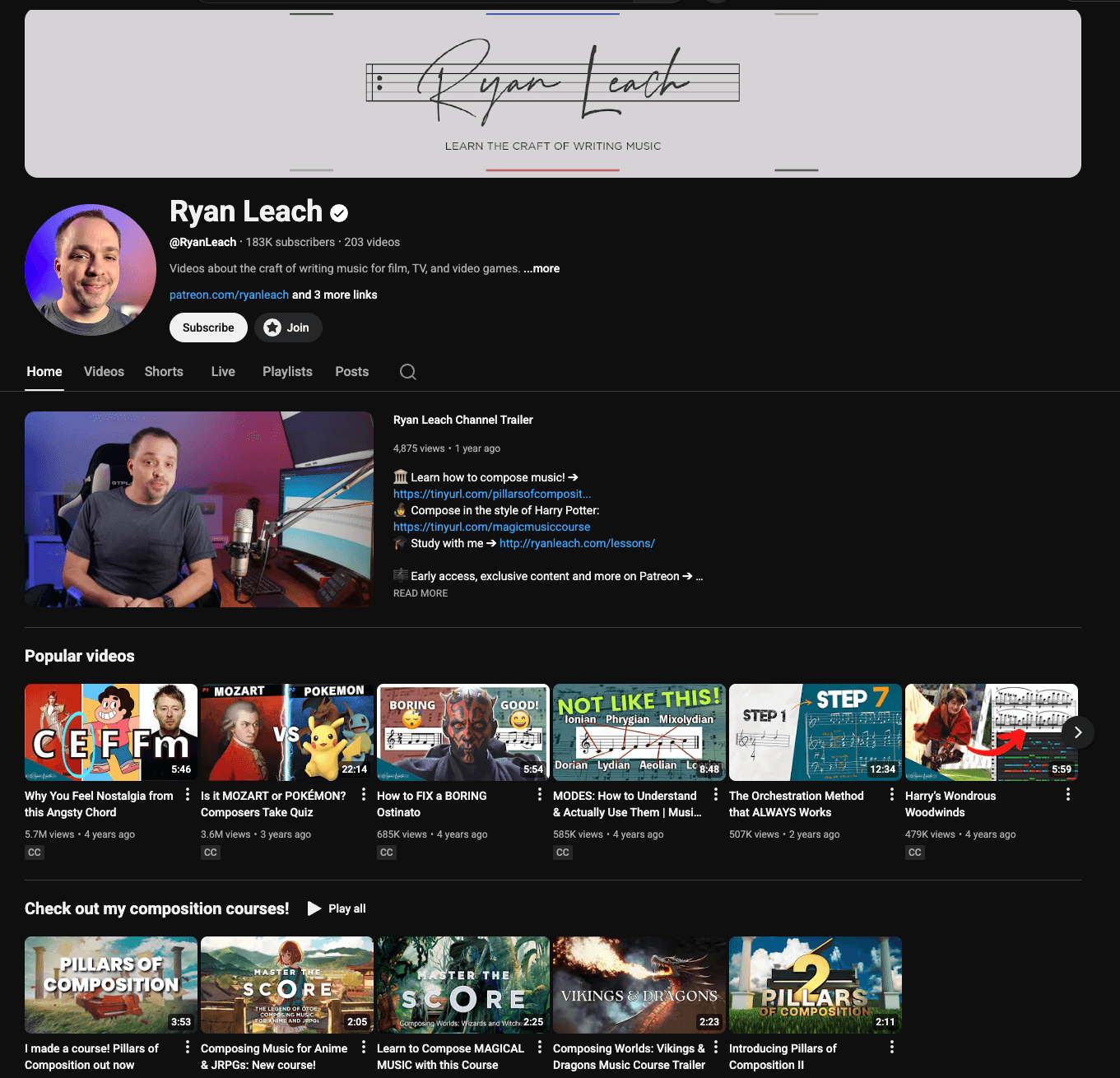
I’ve loved film and game music since I was a kid, and from the very beginning of my career there has also been a teaching side to what I do. It started with simple articles for a music blog, and has since grown into a YouTube channel, a catalog of courses, and a thriving Discord community. A big turning point for me was when I finally gave in to the nagging sense that I should make video content and actually recorded my first video. I would tell my younger self to start much sooner, because it turns out I was far more suited to that work than I realized.
My videos and courses are mostly focused on beginner and intermediate composers. Many of them struggle with the same core challenges, and I’m told I have a knack for explaining difficult concepts in a clear and approachable way. It’s incredibly gratifying when someone sends me a piece of music they were able to write because of something they learned from one of my lessons.
As a composer, my music has been used in thousands of shows across network and cable TV. I still vividly remember the first time I heard my music on television. It was about ten seconds long. Now there’s a pretty good chance I have something playing while you’re reading this. It may not be the next Star Wars like I imagined it would be as a kid, but when people ask me, “Are you actually making a living writing music?” I’m proud to be able to say that I am.
These days, the educational side of my work excites me the most. Composing can be a solitary craft, so getting to work with students, composers, and other YouTubers has been a welcome and much-needed change in my career, and something I truly enjoy. More than anything, I want people to know that my work is about making composition feel less mysterious, less intimidating, and more achievable.
Have any books or other resources had a big impact on you?
A significant video, and one that I share with many of my students, is a short speech by Ira Glass, host of This American Life (and cousin of composer Philip Glass!).
The video is called “Ira Glass on the Creative Process”, and in just two minutes he powerfully explains what all artists and creative people struggle with: the feeling that our work is not as good as we want it to be. The problem is that there is a mismatch between our taste and our ability. We have great taste, so we know what great work is supposed to look like, but we don’t have the skills to actually produce that work. He calls this the “gap”, and says that the only path forward is to keep making stuff and piece by piece work to close that gap.
For years after I stopped writing articles for a music blog I was still receiving emails and comments from people thanking me for them and appreciating the work. I kept thinking that “maybe I should start a YouTube channel”, but I had too many reasons not to. First of all that I didn’t know how to make videos!
But Ira’s advice reminds us that we can’t possibly be at the top of our game at the very beginning, and it helped me go from “I don’t know how to make a great video” to “well I guess I could just upload something I record on my phone real quick to get started.” From there each new video was a tiny bit better than the last, and before I knew it I had a thriving YouTube channel.
What’s the most rewarding aspect of being a creative in your experience?
For me being a creator has always been less about self-expression and much more about freedom.
Freedom to control my time, freedom to choose what projects I do or don’t work on, freedom to go for a walk in the woods if that’s what I feel like I need to do that day.
That may be one of the reasons I’m so comfortable wearing multiple creative hats. I compose music, write scripts, edit videos, host competitions, and many other things. But they all come back to the fact that I like making stuff, feel a great sense of satisfaction after having made something, and am grateful for the freedom to be able to keep making things.
Contact Info:
- Website: http://ryanleach.com
- Youtube: https://www.youtube.com/@RyanLeach