

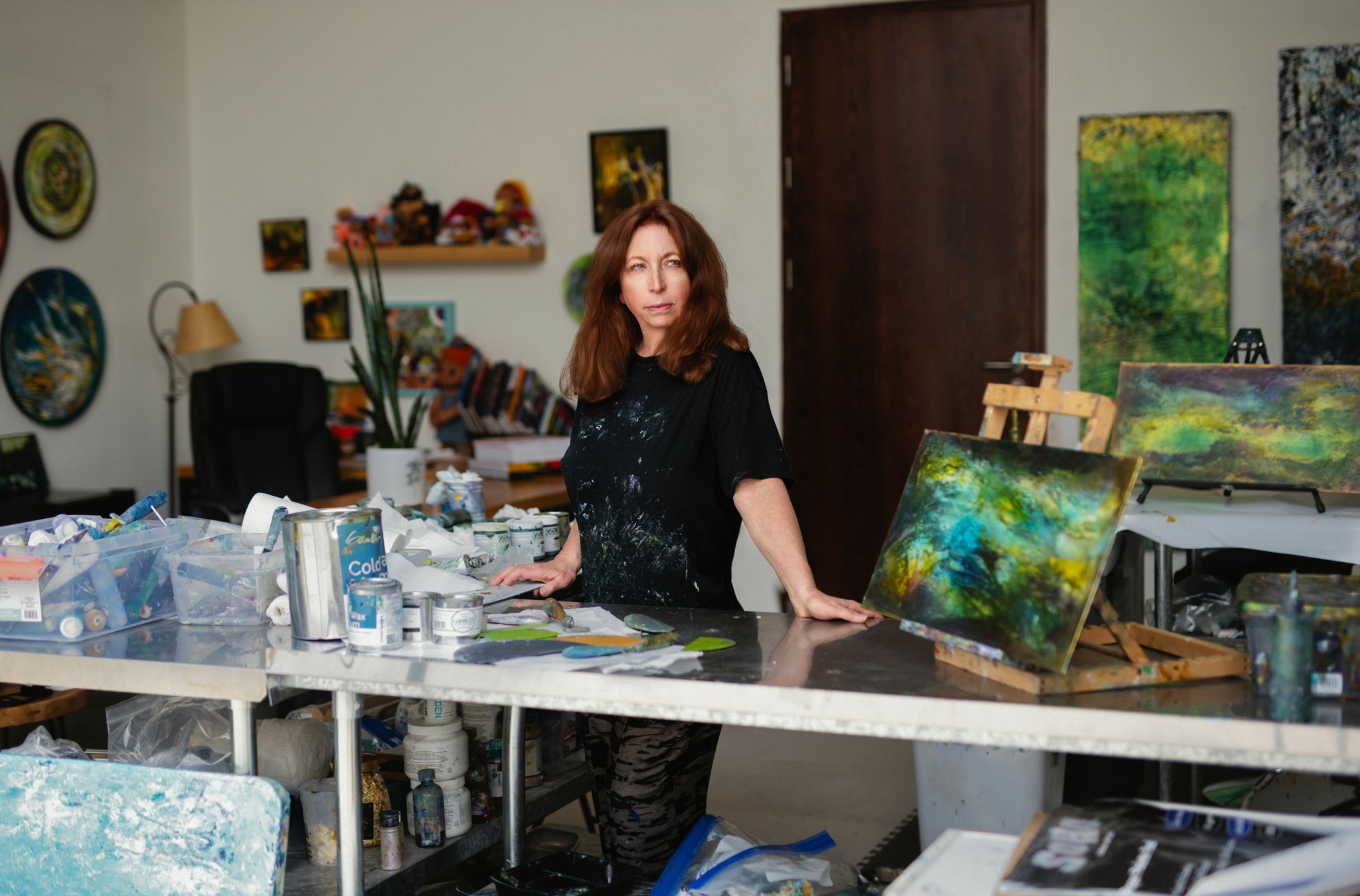

We were lucky to catch up with Pearl Berger recently and have shared our conversation below.
Pearl, thanks for joining us, excited to have you contributing your stories and insights. Can you talk to us about how you learned to do what you do?
My work with oil and cold wax began through a mixed-media workshop and quickly became central to my studio practice. I was drawn to the material’s capacity for layering, revision and transformation.
I developed my craft through a combination of workshops and years of working in the studio. Early on I studied with Jerry McLaughlin and Rebecca Crowell, whose teaching helped establish an important technical foundation. Most of my understanding, however, has come from consistent studio practice and learning through the process itself.
The most essential skill is the ability to keep working and not settling too quickly. A painting often goes through many stages before it comes together. Pushing past a “good” painting in order to discover something stronger is central to my process.
One obstacle for me early on was working in a smaller space. I often work on dozens of paintings at once, which requires a lot of wall space and the ability to step back and see the work clearly. Moving into a warehouse studio changed everything. The scale and openness allowed me to move freely and pushed the work to a new level.
Looking back, I thought I could speed up the learning process through more workshops, books, or online instruction. Those things were helpful, but what I know now is that there really isn’t a shortcut. Over time, the work begins to develop its own voice through the process itself.
Pearl, love having you share your insights with us. Before we ask you more questions, maybe you can take a moment to introduce yourself to our readers who might have missed our earlier conversations?
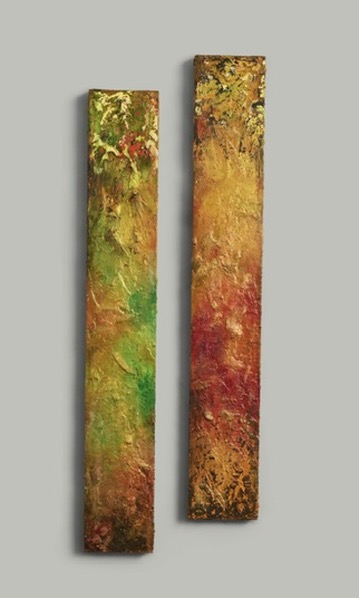
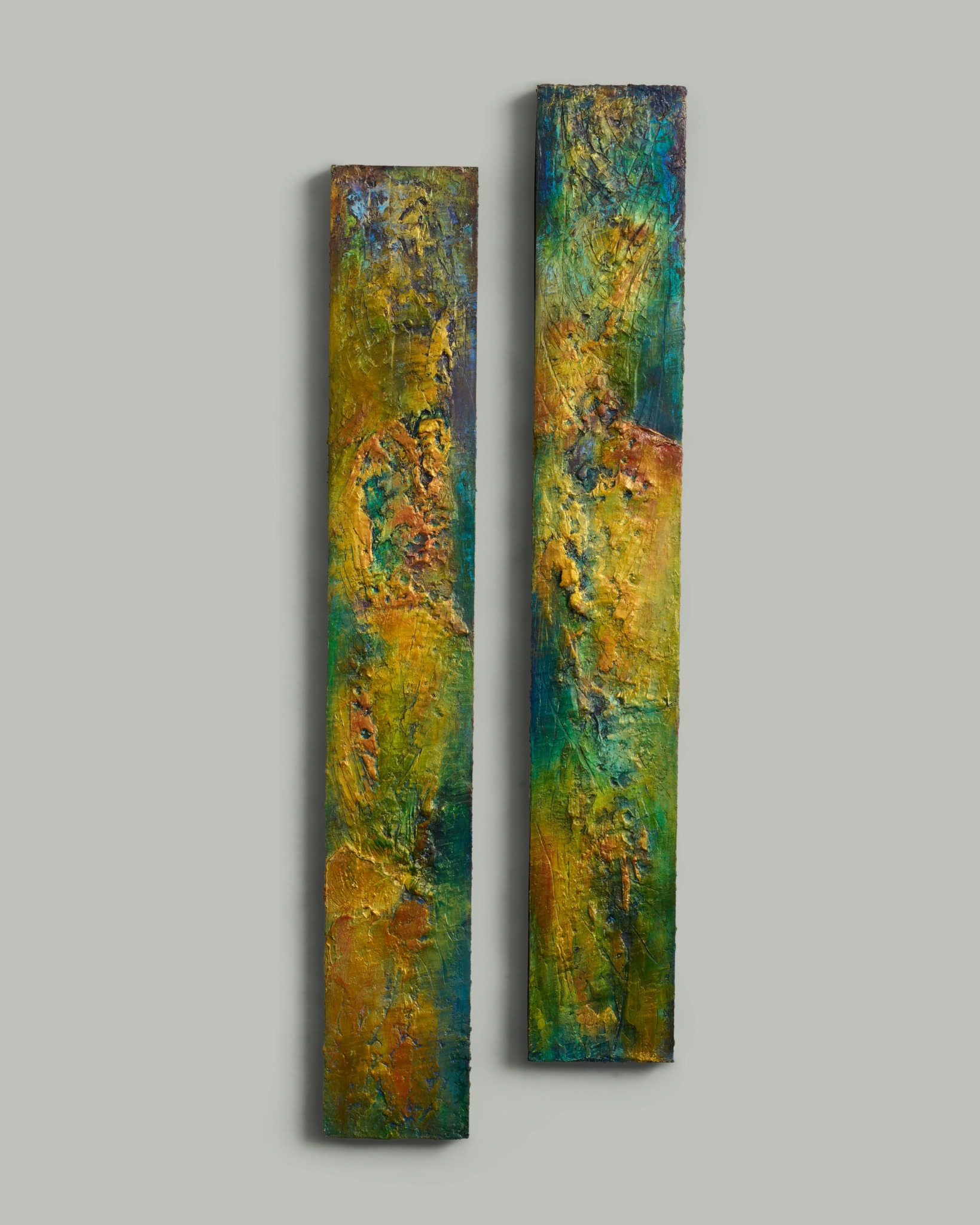
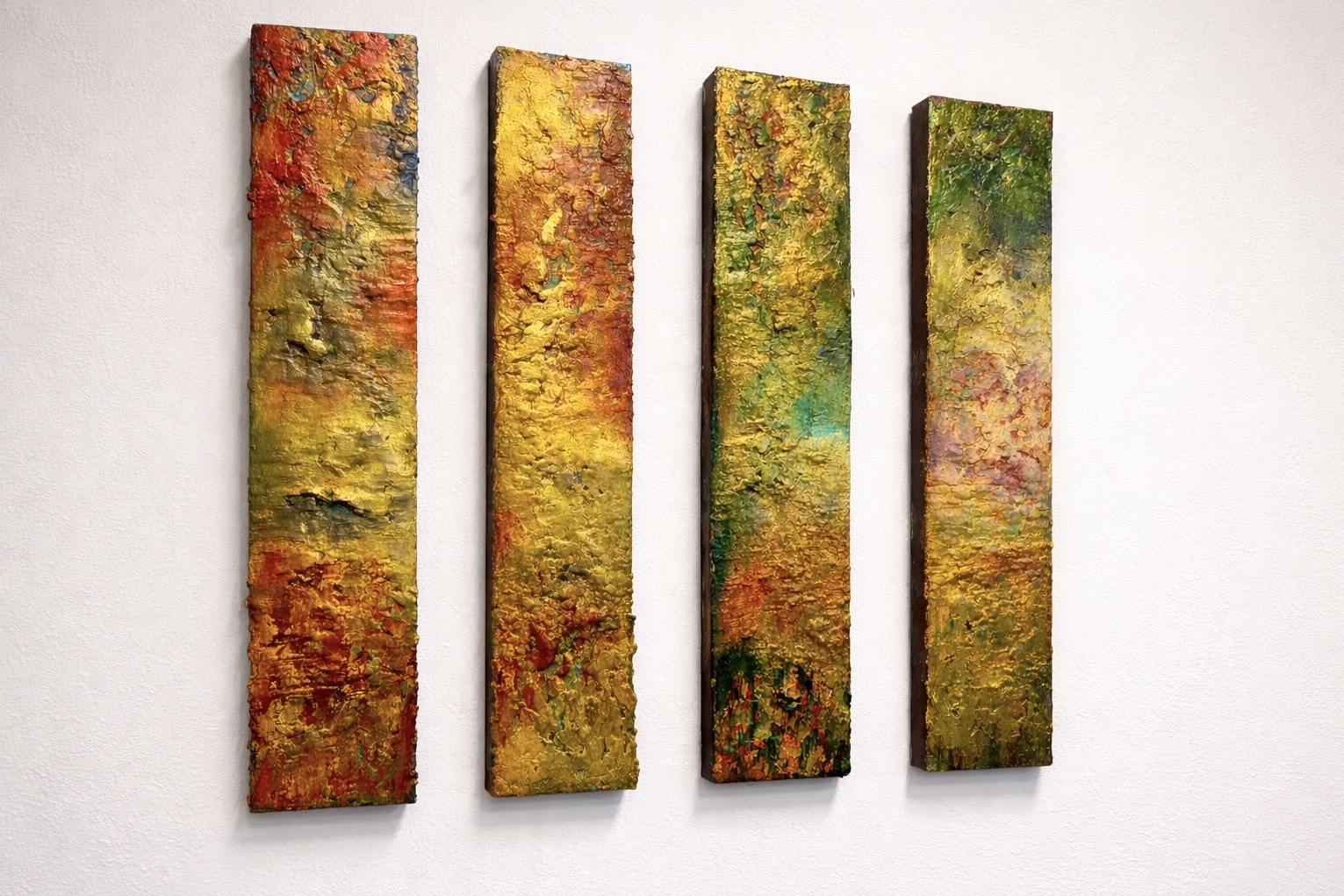
I am an abstract painter working primarily in oil and cold wax on wood panels.
My background as a psychotherapist informs how I approach painting. I am drawn to the idea of inner landscapes-surfaces that hold complexity and history. When a section of a painting feels unresolved, I analyze the layers of color, pattern and texture. Sometimes I’ll need to trace back to the original ground on which they were built. Layers are choices, and how we add or change them leads to the finished product that can adorn both our walls and inner lives.
What I am most interested in is the accumulation of time within the surface. Each mark, texture, and color contributes to the whole. There is no dead space in the painting-every area must earn its place.
Three years ago I moved from New York to Sarasota, Florida, a change that allowed me to devote more time and space to my studio practice. Relocating to a warehouse studio as mentioned, has also been transformative, giving the work the scale it needs.
What’s the most rewarding aspect of being a creative in your experience?
What has been most rewarding for me is watching the work develop over time and seeing a personal language begin to take shape. Painting is something I was drawn to early on, but only in recent years has it become a central focus of my life.
Fully embracing my life as an artist has been especially meaningful. The more time I spend in the studio, the more the work continues to deepen, and that ongoing growth is what keeps me committed to the process.
Is there something you think non-creatives will struggle to understand about your journey as a creative? Maybe you can provide some insight – you never know who might benefit from the enlightenment.
One thing people outside the arts may not always realize is the level of commitment involved. Making art is often seen as a hobby, but for many artists it is a serious, daily practice that demands both discipline and endurance.
There is also the physical side of the work that can be surprising. I paint standing and often spend 8 hours at a time in the studio.
Much of the day involves moving and repositioning large birch panels while using a step stool to reach different areas of the painting.
Sharing art publicly also involves a certain vulnerability. When artists show their work, they’re inviting others into something that has often taken a great deal of time and effort. Because of that, thoughtful responses can mean a great deal.
Contact Info:
- Website: https://pearl-abstracts.com
- Instagram: pearl_abstracts
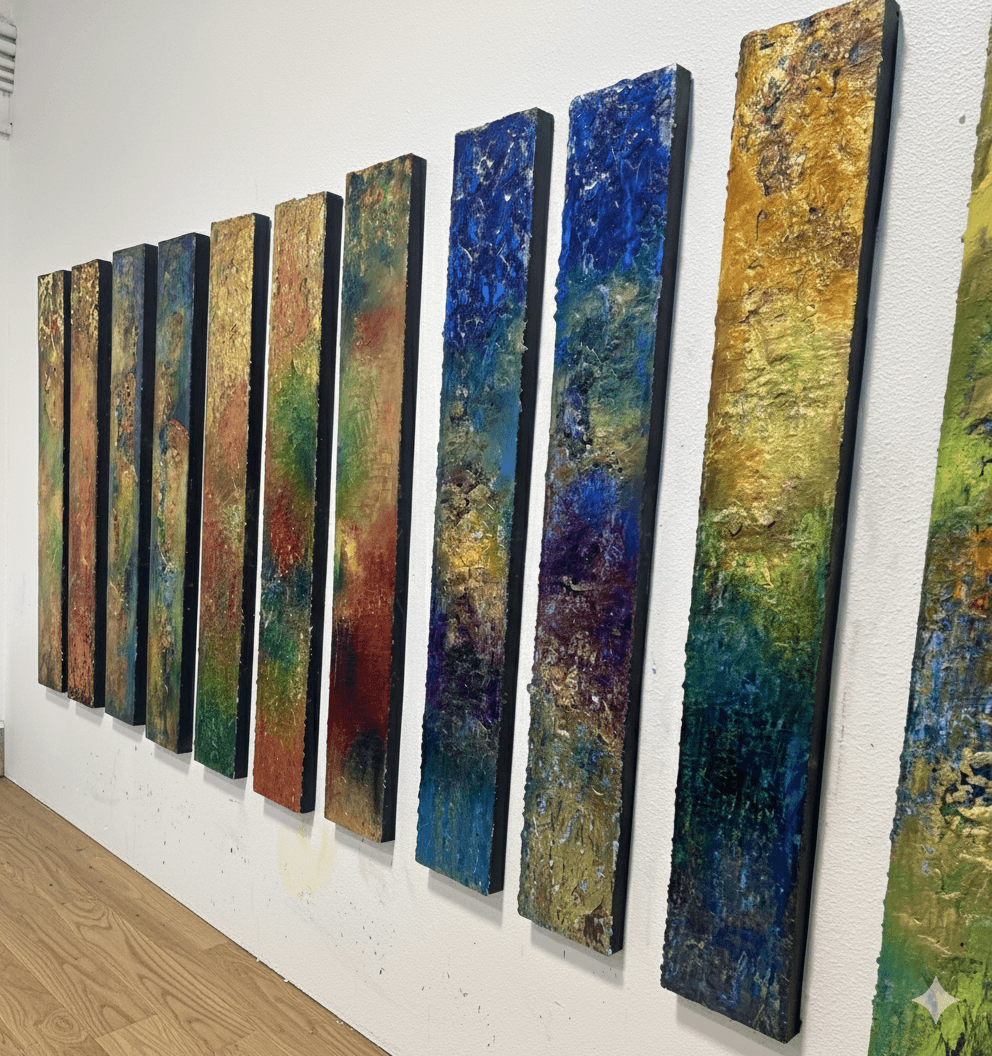
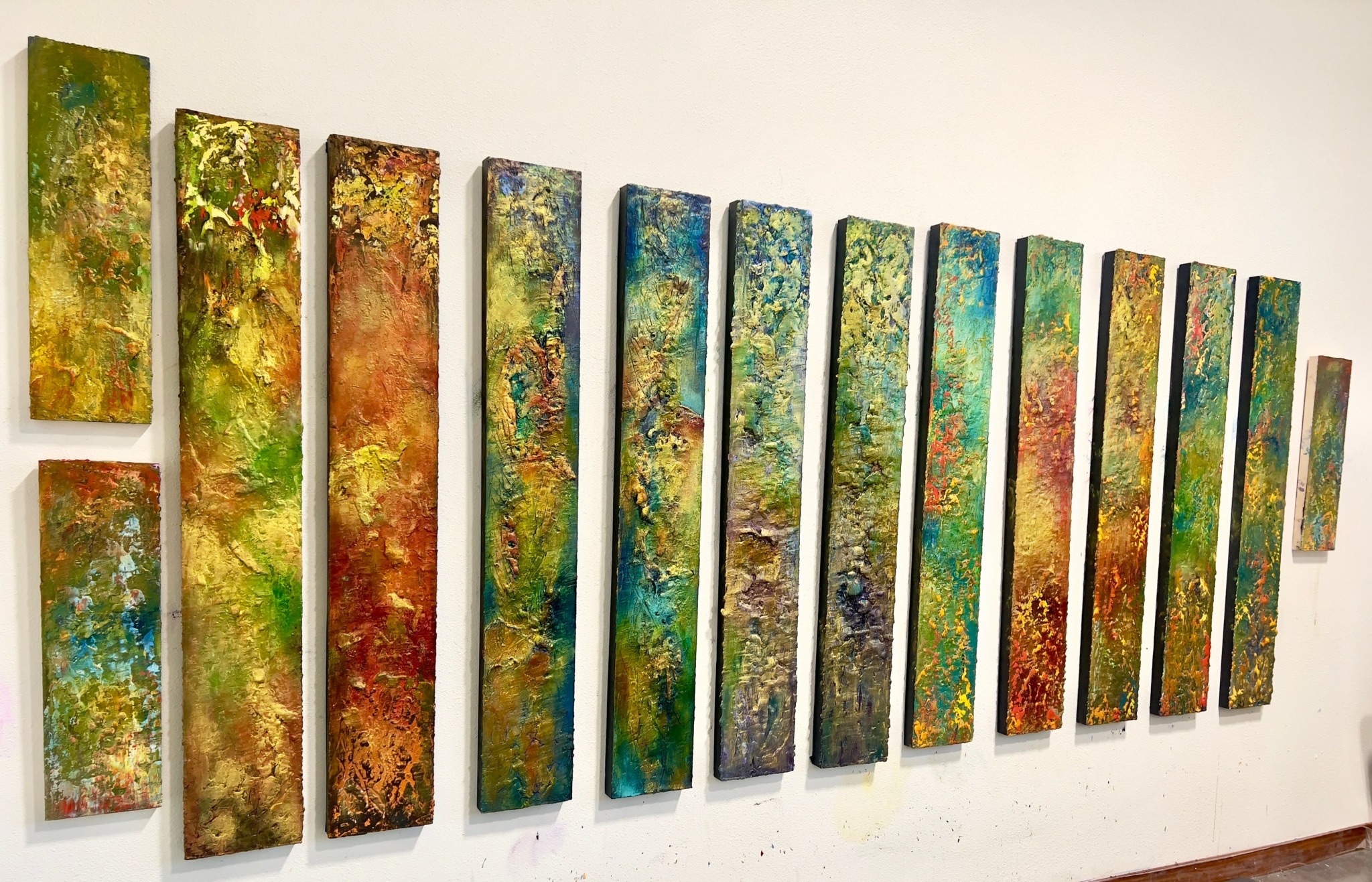
Image Credits
Photographer – @srqheadshots (instagram)