

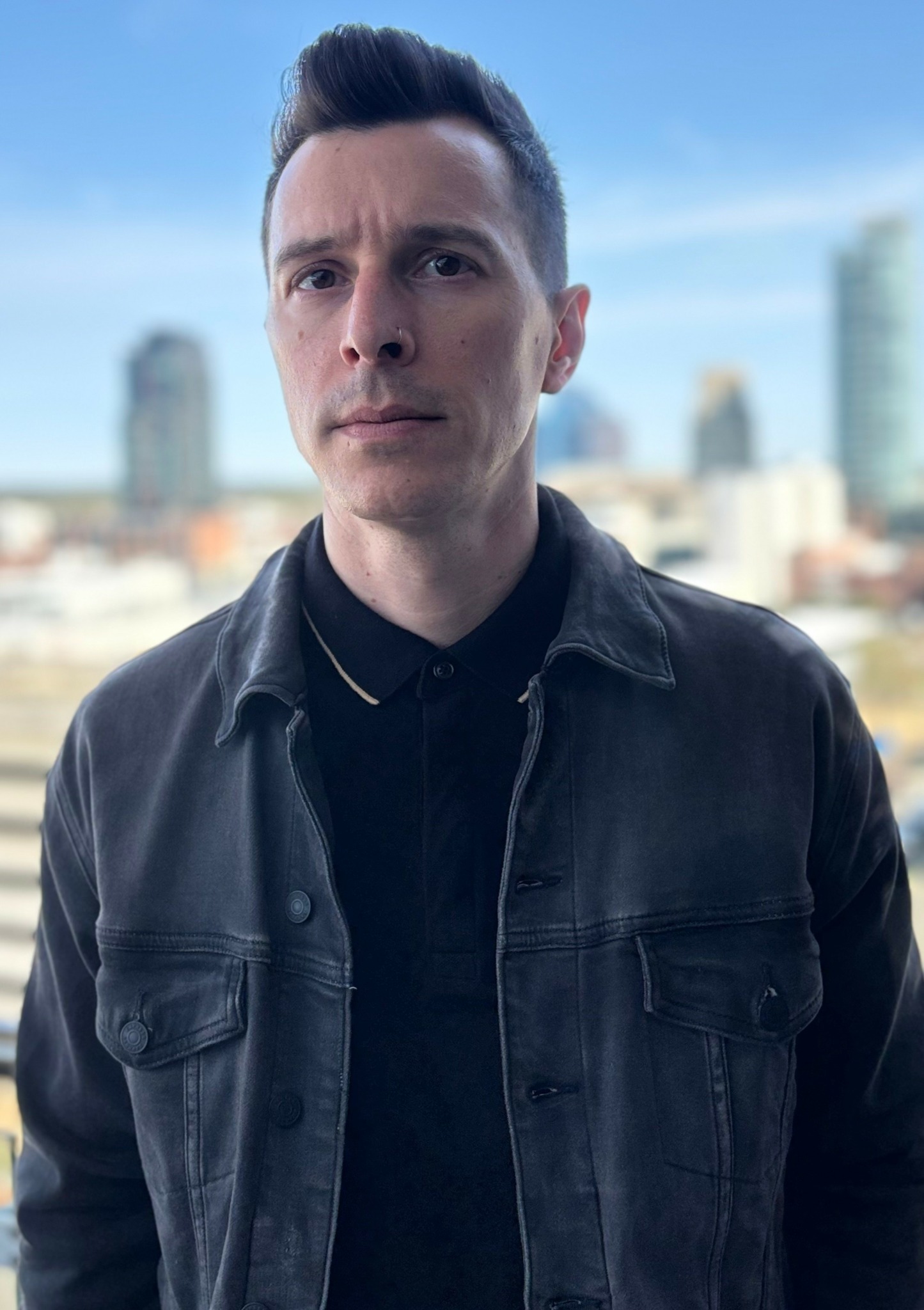

We recently connected with Paul Kiger and have shared our conversation below.
Paul, thanks for joining us, excited to have you contributing your stories and insights. Being a business owner can be really hard sometimes. It’s rewarding, but most business owners we’ve spoken sometimes think about what it would have been like to have had a regular job instead. Have you ever wondered that yourself? Maybe you can talk to us about a time when you felt this way?
Whenever I tell someone I own a business they almost always say, “Wow! That is so nice you work for yourself and have all of the flexibility you want.”. My response always is, “It is so flexible, I get to choose which 22 hours of the day I want to work!”. Although I am being a little facetious and have found better balance than working 22 hours a day, I often find myself working at odd times to support clients and handle aspects of the business that pop up unexpectedly.
However, I absolutely love being a business owner. I am much happier working for myself and having freedom and autonomy, especially in a world with growing middle management, micromanagement, oversight, as well as meetings upon meetings. I am grateful to say that I do not think I have been to a traditional meeting since 2019! There are other pros like being able to work remotely, taking vacation when I’d like, and not needing to adhere to large agency policies and procedures.
However, the hard part of owning a business, especially a single person one like Supporting Act Counseling, is I have to wear a lot of hats that can often be outside of my wheelhouse as a trained therapist. The times I think about going back to a “regular job” are when I am wearing those other hats and feel overwhelmed, confused, and stretched too thin. I often have to handle compliance aspects of the business, marketing, bookkeeper, etc. that can be frustrating, stressful, and confusing. I always recommend other business owners have mentors, colleagues, and professionals they can reach out to for the needed support.
Despite these challenges, I would still choose every day to be a business owner. I often say that the frustrating aspects are well worth it if it means I get to work for myself, work remotely, and have the freedom and autonomy that Supporting Act Counseling gives me.
Great, appreciate you sharing that with us. Before we ask you to share more of your insights, can you take a moment to introduce yourself and how you got to where you are today to our readers.
When I was 8 years old I started taking piano lessons and at around 13 started teaching myself how to play guitar. From then on my dream in life was to become a rock star. I played in bands in the Detroit area before moving to Grand Rapids to attend college at Grand Valley State University. I studied social work and Spanish with the hope of becoming a mental health therapist if my dream of becoming a rock star did not pan out. While attending college I was able to play in a band that had decent success in the Grand Rapids area playing shows at a variety of well known local venues including Skelletones, The Intersection, and The Orbit Room. In the end, we all decided to go our separate ways and I decided to continue to pursue a career in counseling and spent time living in Central America. When I returned to the United States, I began working as a therapist and adjunct professor. After about 7 years I had the idea to start Supporting Act Counseling which allowed me to combine my two passions, music and counseling.
As the demands of life, especially those of artists and creatives, can make it difficult to attend counseling in a physical space, Supporting Act Counseling offers telehealth sessions to ensure touring artists can build rapport and maintain continuity of care with one therapist who can address their unique needs. An aspect that I believe sets me apart is that I am a musician who has played in bands and can relate to the stress, pressure, and anxiety that comes with being an artist. This is also an aspect of Supporting Act Counseling that I am proud of. I was able to find a way to combine two of my passions into a career that I absolutely love.
One of the joys of working as a professional therapist and life coach is supporting people as they move through various phases of their lives to realize and reach their full potential. I currently support clients and staff as they move towards openness, acceptance, compassion, justice, wisdom, and self-understanding. We are all on our own journey and my hope is to meet clients where they are at in their journey. The skills I have refined over the past decade have uniquely prepared me to work in the mental health field to serve individuals, families, and groups.
With 15 years of experience working in the mental health and substance use field as a therapist, life coach, university professor, trainer, and mentor, my goal is to bring my knowledge and skills to my practice supporting artists as they navigate the complex issues that accompany touring and a lifestyle with such high demands. Before becoming a therapist I played in bands alongside groups such as Hellogoodbye, The Red Jumpsuit Apparatus, Taking Back Sunday, The Spill Canvas, Mayday Parade, Motion City Soundtrack, and The Summer Set, to name a few. I have worked with Grammy nominated artists as well as professional athletes and reality show contestants. My hope is to bring a unique understanding of what it is like to be a touring musician or artist in addition to providing quality and evidenced based counseling and life coaching. I am a Licensed Master of Social Work (LMSW), Licensed Clinical Social Worker (LCSW), Certified Advanced Alcohol and Drug Counselor (CAADC), certified in Brainspotting, as well as trained in Trauma Focused Cognitive Behavioral Therapy (TF-CBT), Dialectical Behavioral Therapy (DBT), the Sanctuary Model of Care, and Motivational Interviewing.
How did you build your audience on social media?
When I was first trying to advertise for Supporting Act Counseling, I was not sure where to start. I wanted to connect with musicians, artists, and creatives, but was unsure how to find or target them on social media. I ran ad campaigns in cities like LA, Nashville, and Chicago thinking there may be more musicians in those areas. But no leads came out of those campaigns.
But what happened next would not only go on to completely impact and change the trajectory of Supporting Act Counseling for the better, it is a life lesson in never underestimating the value of a connection.
Years ago when I played in the local pop punk music scene in Detroit, I met a friend who was also involved in that scene. I would see them at shows and we stayed in touch over the years, occasionally hanging out when we were in college. Fast forward around 15 years and I happened upon that friend’s Facebook page when I was trying to run those ad campaigns I previously mentioned. I noticed that friend was dating someone in a famous pop punk band. Since my friend would be a mutual connection, I hit the add friend button for the famous musician with little to no expectation of it amounting to anything. However, something incredible happened next. The algorithm did its thing, and before I knew it I was getting “People You May Know” suggestions from Facebook for a lot of the people in the pop punk scene that I was wanting to break into and work with. I started adding people, kept a list of who they were and what bands they were associated with, and started networking. This is what actually led to my first clients in the music industry as well as connections to other organizations I partner with.
The moral of the story…be kind and make connections. You never know how those connections may go on to impact your life in the future. If I had never met that friend at a show in the early 2000s, if I had not kept in touch or connected with them on Facebook, Supporting Act Counseling may not have taken off the way it did and I would not be answering these very questions right now.

Can you talk to us about how your side-hustle turned into something more.
Jumping into a niche business not many other people had done before definitely made the leap intimidating. Focusing my work with touring musicians, artists, and creatives, I was unsure how quickly I could grow the business from the ground up. It was not as if I simply needed to connect more with potential clients in my area, or could do regular marketing as if I was a general counseling practice. So, once I decided to combine my passions for counseling and the music industry, I knew it may take some time to build to the point that it could be sustainable.
For these reasons, I decided to start Supporting Act Counseling as a side hustle that I could grow while I was also working a full time counseling job, a part time counseling job, as well as teaching at the University level. In my free time I began building my website, business plan, and client base. This allowed me to slowly grow Supporting Act Counseling to the point where I could eventually make it a full time job.
There are pros and cons to this approach as starting Supporting Act Counseling as a side hustle allowed me to build it slowly over time without the pressure of it being my only source of income. However, I can see the advantage of fully jumping in as it could have led to growing the business more quickly out of necessity. However, I think each person needs to make this decision based on their own needs and life circumstances.
Contact Info:
- Website: https://www.supportingactcounseling.com
- Instagram: https://www.instagram.com/supportingactcounseling/
- Facebook: https://www.facebook.com/supportingactcounseling
- Linkedin: https://www.linkedin.com/in/paul-kiger-lmsw-lcsw-caadc-995b10173/
- Youtube: http://www.youtube.com/@supportingactcounseling
- Other: https://flow.page/supportingactcounseling