

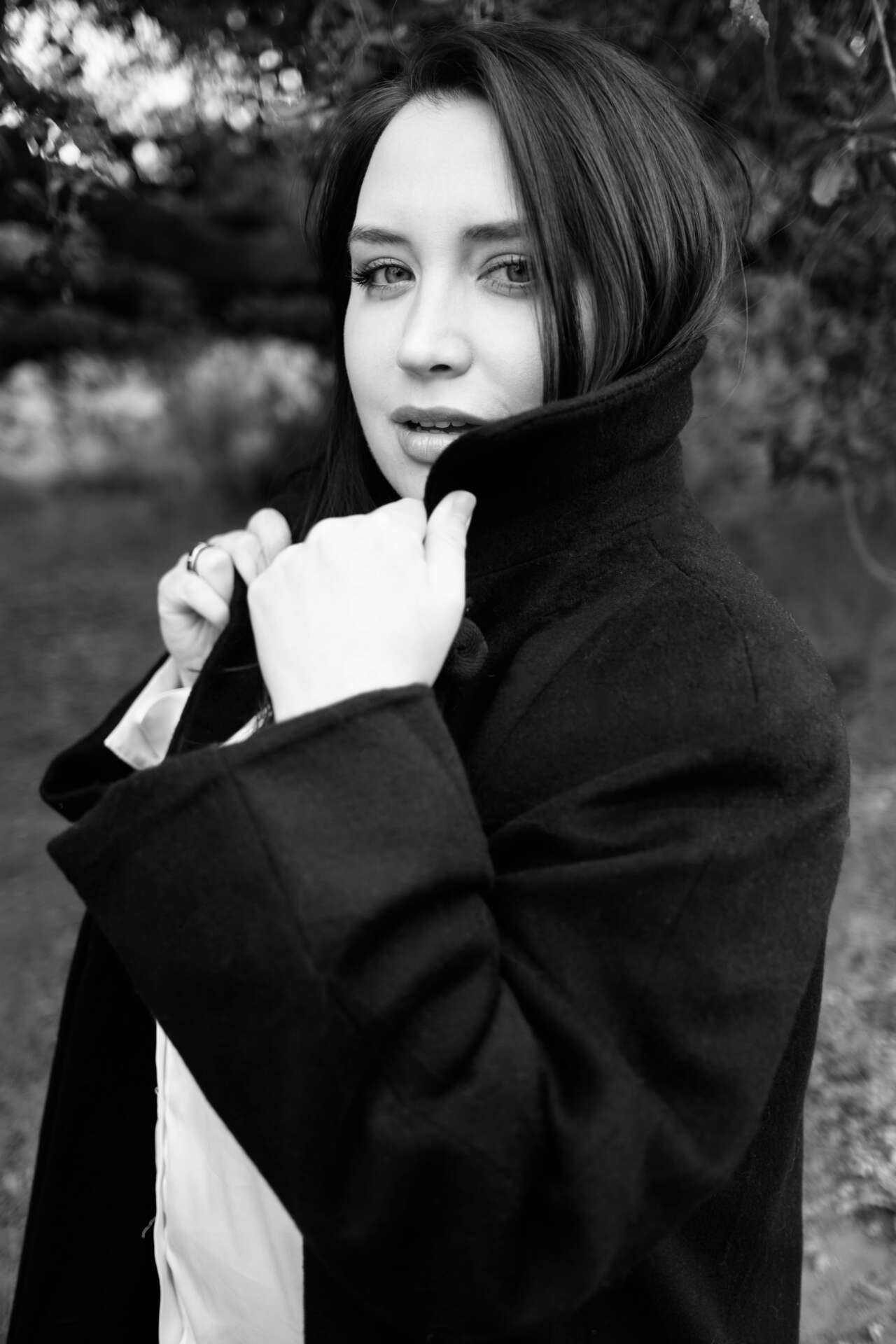

Alright – so today we’ve got the honor of introducing you to Melanie Abrams Fierstein. We think you’ll enjoy our conversation, we’ve shared it below.
Melanie, thanks for joining us, excited to have you contributing your stories and insights. We’d love to hear the backstory behind a risk you’ve taken – whether big or small, walk us through what it was like and how it ultimately turned out.
It was 2018 and I was miserable. I worked in politics, a career I entered with a fire in my belly that was soon extinguished by the 80-hour workweeks, barely-there paychecks, and 5 stress-induced EKGs. I was lying on my now-husband’s couch, The West Wing playing as always, wondering how I – a writer who’d won adult-level writing competitions in middle school, whose first script had won the Hollywood Screenplay Contest, who dreamed up dramas about complicated women – had gotten stuck writing fundraising emails that filled her inbox with violent vitriol in response. Don’t get me wrong, it’s important work, and while I am passionate about instigating change, I learned the hard way that a 9-5 in campaigns isn’t the best way to achieve it. I finally had to accept that I didn’t want to BE The West Wing, I wanted to WRITE The West Wing. But having grown up in LA, I figured the field was already cluttered with nepo babies and Ivy Leaguers clawing at each other just to cling a pinky finger to a rung on the ladder. How was a late-20s woman with an unfinished college degree and 10 years of politics on her resume going to break down the cement wall that protected the Aaron Sorkins from the dreaded dreamers? Turns out I’d been standing in front of the wall for so long, just staring at it in frustrated wonder, that I’d failed to notice I could just walk around it.
So, on April 16, 2018, lying on that couch, I googled some contact info and sent a one-off email to the agent of an author whose New York Times bestselling series of books I adored – that I’d daydreamed of adapting to the screen for years – asking who owned the film rights.
Within a month, the answer to that question was me.
Of course, it took more than just walking around the wall – writing a feature quickly, navigating contracts, charging attorney’s fees to credit cards, gaining the trust of a brilliant and respected author, getting used to the word “no”, avoiding slimeballs, and of course, some luck. And to be honest, I haven’t finished my journey to the other side of the wall. But it was at one of my lowest career points that I learned the power of something that would change my life forever: the “what’s the worst that could happen” email, aka, the cold query.
Having the rights to that book series has been invaluable to my career. I retired from politics and went all-in for writing. Since buying the rights, cold queries have been my bread and butter. If cold querying were a competition, I’d win gold. I’ve got a Nobel Prize in audacity, and I make sure everyone knows it. Cold querying got me my producer. It’s gotten me every meeting I’ve had. It’s gotten me the interviews I needed when writing a true crime project. It got me my first job. The art of crafting the perfect email can be learned, and its importance cannot be overstated to writers and creatives at every level. With a little talent, a little luck, and absolute heaps of delusional nerve…you might just get a reply that changes your life.

As always, we appreciate you sharing your insights and we’ve got a few more questions for you, but before we get to all of that can you take a minute to introduce yourself and give our readers some of your back background and context?
I’ve been a writer my entire career, and specifically fell in love with screenwriting in 2010 when I took my first screenwriting class in college. I was a theatre major then, and I promptly changed majors. Since then, my scripts have been awarded by the Austin Film Festival (29 & 30), Warner Brothers Writer’s Workshop, Atlanta Film Festival, Coverfly Top 1%, Coverfly Red List, ISA, Screencraft, WeScreenplay, Industrial Scripts, Stage32, and many more. I write edgy dramas and dark comedies, often inspired by true events, that feature complicated women and instigate vital conversations. Here is my bio, for reference:
Melanie Abrams Fierstein currently lives in Los Angeles, California. She is a first-generation- American screenwriter specializing in eyebrow-raising, character-driven dramas/dramadies, true stories, and IP adaptations. Previously, Melanie was an accomplished speechwriter, organizer and political consultant for candidates including Secretary Hillary Clinton, Senator Elizabeth Warren, and many other Congressional and local candidates across the United States. Melanie
combines her experience in politics with her unique perspective as a disabled woman to write stories with diverse leads that trigger much-needed larger conversations. Melanie’s true-crime pilot HIGH CRIMES has been featured on Coverfly’s Red List & Top 1%, and has earned over nine accolades including Austin Film Festival Semifinalist, Diverse Voices Official Selection, and Pasadena Film Festival Official Selection. Her dark comedy PRETIREMENT is a 2023 Austin Film Festival Second Rounder, Golden Script Competition Finalist, and ATX Festival Semifinalist. When she’s not glued to her laptop, Melanie enjoys reading murder mysteries, painting, and going to Harry Potter World.


What’s a lesson you had to unlearn and what’s the backstory?
“Successful people don’t ask for help.” Good god, is that wrong. I had to unlearn that lesson the hard way.
I was raised by incredibly strong women, and for them, saving face meant getting a seat at the table. My Grandma grew up in a time when things like diversity, being unmarried, and feminism were not seen as strengths. If you weren’t white, wealthy and male, you had to work ten times as hard to earn ten times as little. So I was raised to behave as though I already belonged at the table – that I was as successful, as wealthy, and as heartless as those already sitting there. While that instilled in me an incredibly valuable backbone and ability to talk to people at every level, it also precluded me from many opportunities, when those in charge thought I didn’t need the leg up. I’ve had to learn that it isn’t just okay to ask for help – it’s imperative. Good mentors want to help those who are brave enough to ask, and it took a lot of time for me to break down my fake strength so I could become strong. Since I began being proud of myself and the place I am in, I have created incredible relationships with mentors and peers, and I cannot overstate how much that means to me.


We’d love to hear a story of resilience from your journey.
The project I am developing based on the book series I bought the option to has been met with a lot of roadblocks – more than is typical in an already difficult industry. First up: COVID. There I was, fresh faced and hopeful, ready to shop my project to Hollywood, get a million offers and start a bidding war…only to have the industry shut down. Instead of feeling defeated, I used the time in lockdown to take classes, get a mentor, and make the project even better than before, with a series deck that one producer even said was the best they’d ever seen (I don’t know about THAT, but the point is, I worked hard). Once the world opened back up, I was thrust onto the violent roller coaster that is selling a project – a very slow, arduous climb to a peak, only to be pushed right back down in a stomach-dropping plunge. I had three production companies come very close to signing, one that tried to get me to blindly sign all my rights to them, and then finally, one I genuinely like, with whom working is an easy pleasure, and trust and respect are mutual and natural. Of course, one week later, the WGA went on strike. I was still short credits to join, and my project would be the thing to finally get me in. Yet I stood in solidarity. I grabbed my picket sign and hit the picket line 74 times, walked over one million steps, and met some of my new favorite friends at all levels of writing and acting. It was hard, being part of the team yet not part of Guild – but I stuck with it to ensure a fair contract not just for my new friends, but for me as soon as I was allowed to get back to work. All of this has taught me invaluable lessons about the industry – sometimes you’re up, sometimes you’re down, you can’t control the weather, and a good working relationship is worth waiting for. But hopefully the pandemics and strikes are over, and my resilience can take a back seat to pure hard work for a while.


Contact Info:
- Website: www.melaniefierstein.com
- Instagram: @melfierstein
- Twitter: @melfierstein
- Other: https://writers.coverfly.com/profile/writer-6143d5875-132287
Image Credits
Getty Images