



Alright – so today we’ve got the honor of introducing you to Mel McKenzie. We think you’ll enjoy our conversation, we’ve shared it below.
Mel, thanks for joining us, excited to have you contributing your stories and insights. If you could go back in time do you wish you had started your creative career sooner or later?
I feel like I was a late-bloomer as an artist. I have pockets of memories of drawing as a child, but never took it seriously and never opted for art subjects at school or university. I have zero regrets about that. My career as an artist – as a painter – has been a slow burn that I give credit for to a sewing class our local Rural Women’s Group ran at our country hall. With my family in its infancy, starting to sew was a forging of my own identity outside (but still connected to) motherhood and opened a can of creative worms. From there I gradually grew my confidence and stretched creative muscles into more practices, that eventually included painting. And then painting squeezed out the rest.
I can only describe what I felt as a knowing that there was something special brewing inside me, and I had to walk the path to find it.
But having said that, I don’t regret not starting sooner. I don’t think I’d have had the confidence or space to become the artist I am today in those earlier years. And putting my focus elsewhere, on my career, enabled my husband and I to build a platform that meant I didn’t have to return to work outside the home while our 4 children were young.

As always, we appreciate you sharing your insights and we’ve got a few more questions for you, but before we get to all of that can you take a minute to introduce yourself and give our readers some of your background and context?
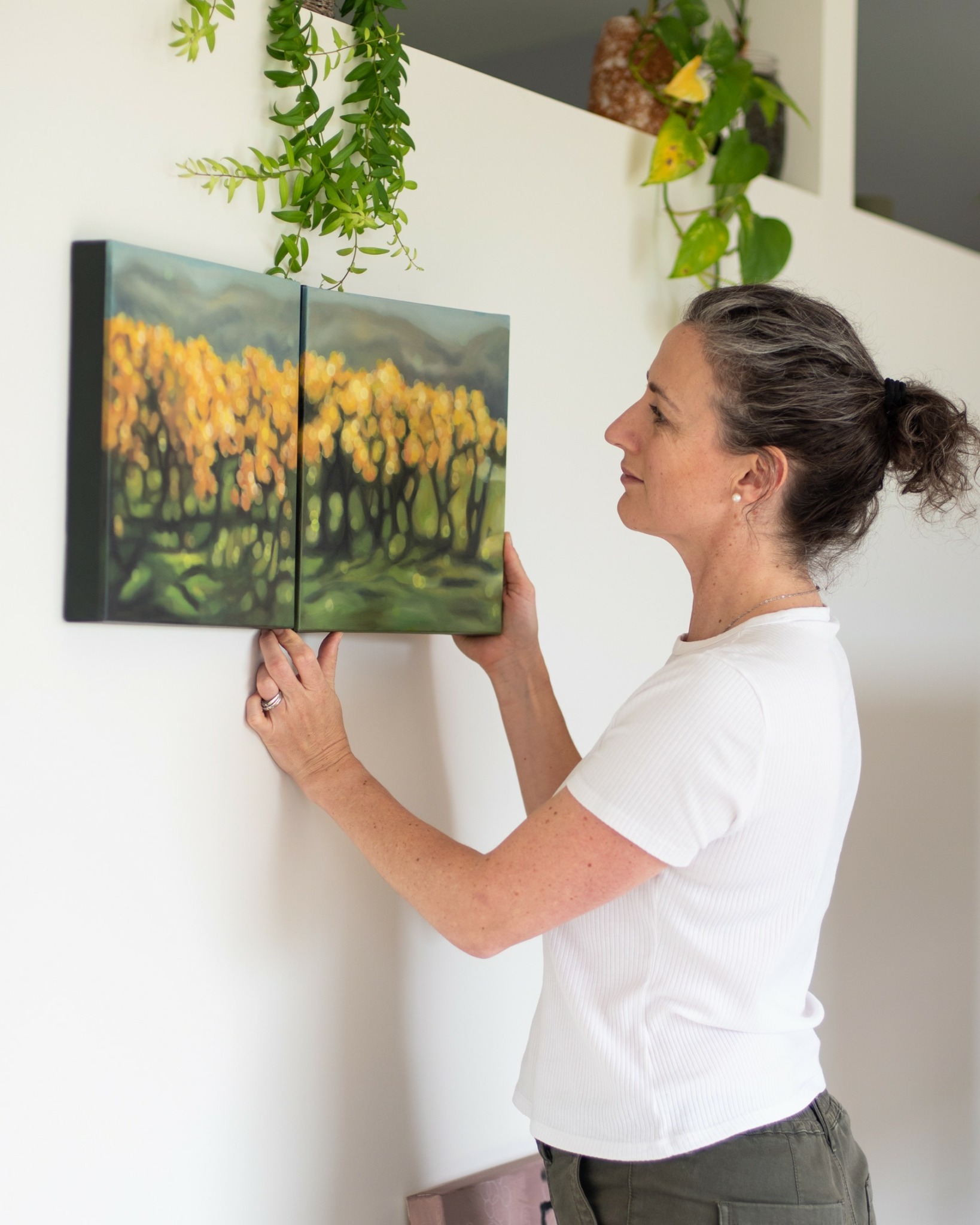
I call myself a ‘Bokeh Artist’. Bokeh is a term I’ve borrowed from photography where it describes the blur in the background (and/or foreground) of a photo. I enjoyed photography immensly in the early days of my creative awakening, and bokeh was always something I found particularly aesthetic. After many years of dabbling with paint – exploring different mediums and styles – I finally asked myself, “What would it look like if I painted this blurry photo”.
With that first painting I won an award. And with my second painting I won another.
From then I was hooked. It felt like the Universe had given me the green light to go all in.
It felt like ‘coming home’.
And the inner knowing I’d been harbouring all those years said, “This is it”.
I have no regrets about the time it took to find bokeh as my art form. The journey was important and I’m proud of my commitment to creativity, despite many years where from an economic standpoint at least, on paper I should have quit. For building my audience and taking them on the journey, for sharing the infancy of creative pursuits and then ‘failing to thrive’ publicly over and over – but never ending the story there.
To me bokeh represents 2 things: 1) the way light and beauty are magnified when we take our focus off the nitty-gritty details of life – as I unfocus the camera lens when taking my reference photos, pin pricks of light literally grow into these beautiful orbs of light. And 2) the way bokeh simplifies – it takes the grungy minutiae that can hog all our attention and pares it back to simple shapes and colours, a respite for our nervous system from constant bombardment and the need to give attention to detail. Bokeh literally sets our homes up as a soft place to land at the end of a hard day.
I think it’s valuable for showing us we don’t have to have everything figured out. Things don’t have to be be clear and obvious for us to enjoy the moment we’re in. Afterall, as a wise woman said to me, “when everything is uncertain, anything is possible”.
I also want people to see bokeh as a metaphor. That by looking more softly at their surroundings, the people around them – even themselves in the mirror – they will see the good, the beauty and have more compassion. When we take away the details, the ways we are similar become more pronounced. In a world where differences increasingly divide us, softness could bring us back together.
I represent my art under the name ‘The Penny Drops’. Penny is my maiden name, and in my early years of going to craft shows with my sewn products I needed a stall name – it was actually my husband who suggested ‘The Penny Drops’ and it was an instant “Yes that’s it” – you could say the penny dropped.
Recently my art has started finding a bigger audience online. I joined TikTok a year ago and was surprised to discover my art was ‘controversial’. In my mind, I’m painting softness and light on canvas. But for many, I’m painting ‘ragebait’. The blur I paint can be very polarising – some people love the reminder of what they see without glasses or before corrective surgery. Others find it disorienting or triggering. As an artist, such visceral reactions are a sign your art is strong, so I’m never offended when people tell me they hate it – which they do, multiple times per day.
I’m naturally a shy person, but I find myself quite comfortable on social media – engaging in comments and making content. The creative side of content creation is almost as fun as painting. And being able to reach an audience much bigger than the one available to me locally (we live in rural New Zealand, far from any major city) is game changing for my art business.


We’d love to hear the story of how you built up your social media audience?
I’ve been sharing my art and creativity on social media for 15 years now and my audience has always been small. It’s doubled recently, but is still relatively small. And that’s been a good thing overall. It’s enable me to feel safe while finding my path. It’s enabled me to pivot without feeling like I need to start again. It’s given me a community of people who’ve been there for ages and seen the effort. Slow and steady growth is underrated.
Recently, on the back of some virality, my audience has grown significantly and I’m not convinced it’s for the long term benefit of my art. Time will tell…
My tips for anyone starting out are:
– consistency: showing up regularly, engaging and sharing
– leaning into the comments: this will give you insights into your art that you might not be attuned to and give you ‘customer voice’ that you can use to make your content more relatable going forward
– be yourself: standing out from the crowd is really hard in an oversaturated feed, but if you’re unapologetically you, no one else can steal that. Lean into your differences.


We often hear about learning lessons – but just as important is unlearning lessons. Have you ever had to unlearn a lesson?
Pricing my work adequately has been an ongoing challenge – as it is for many creatives. For many years, I undercharged for time and materials because I just loved doing what I was doing and that was rewarding enough. I remember selling a set of early paintings to a friend for $45 each. That felt like so much at the time! She still has those pieces and I still love them.
But pricing like that was never economically sustainable. I have definitely had to come to terms with the idea that ‘cheap’ doesn’t equate to ‘easy to sell’; that pricing alone is a branding decision. More expensive work can sell faster, simply because at a higher price point it is perceived as being better.
Though even now, with my work selling for thousands, in all honesty for the hours I put into each painting, it’s probably not enough. So it’s an ongoing conversation.
Contact Info:
- Website: www.thepennydropsart.co.nz
- Instagram: @thepennydrops_artist
- Facebook: https://www.facebook.com/pennydrops
- Other: TikTok: @thepennydrops_artist

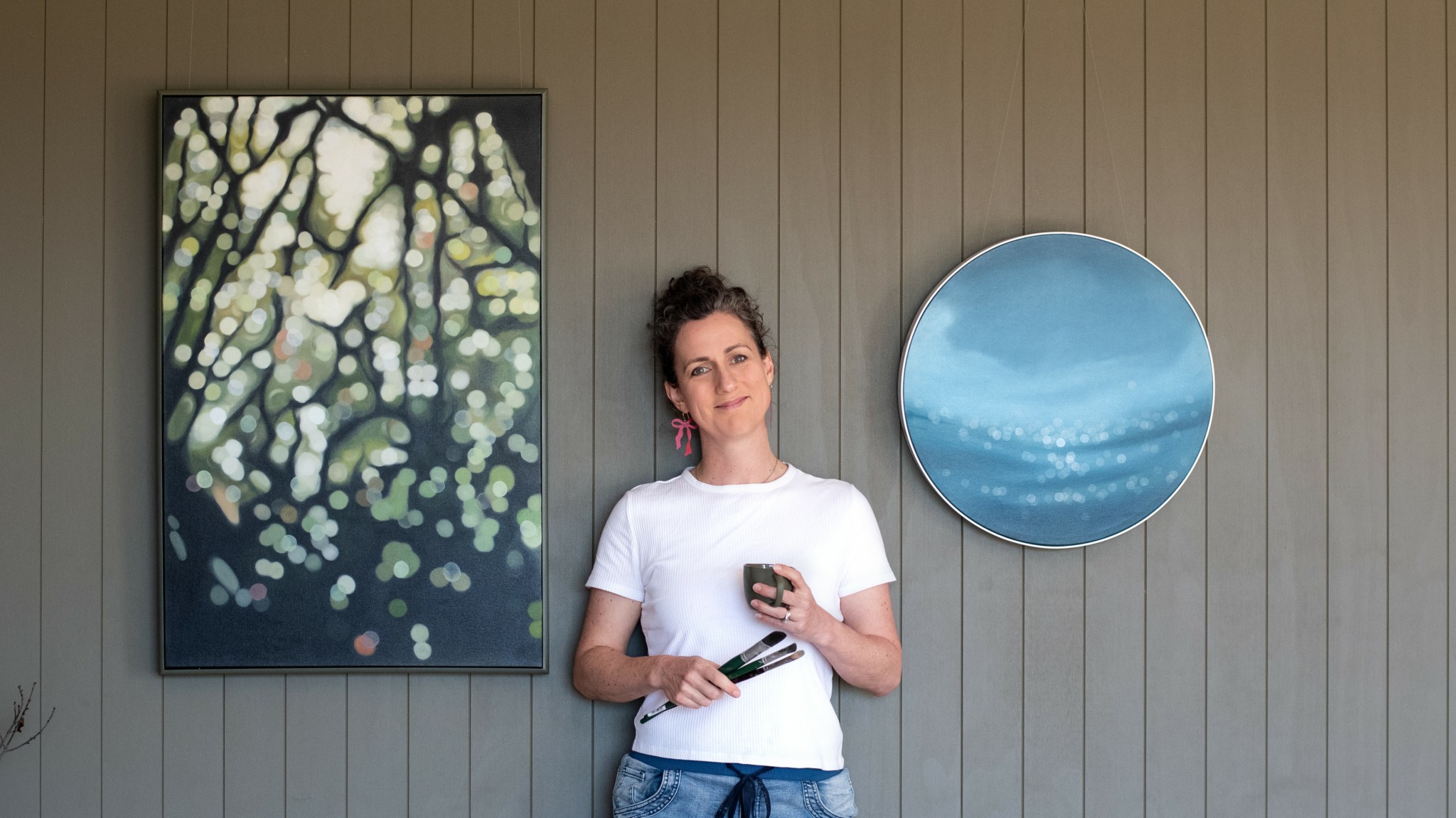
Image Credits
Mel McKenzie