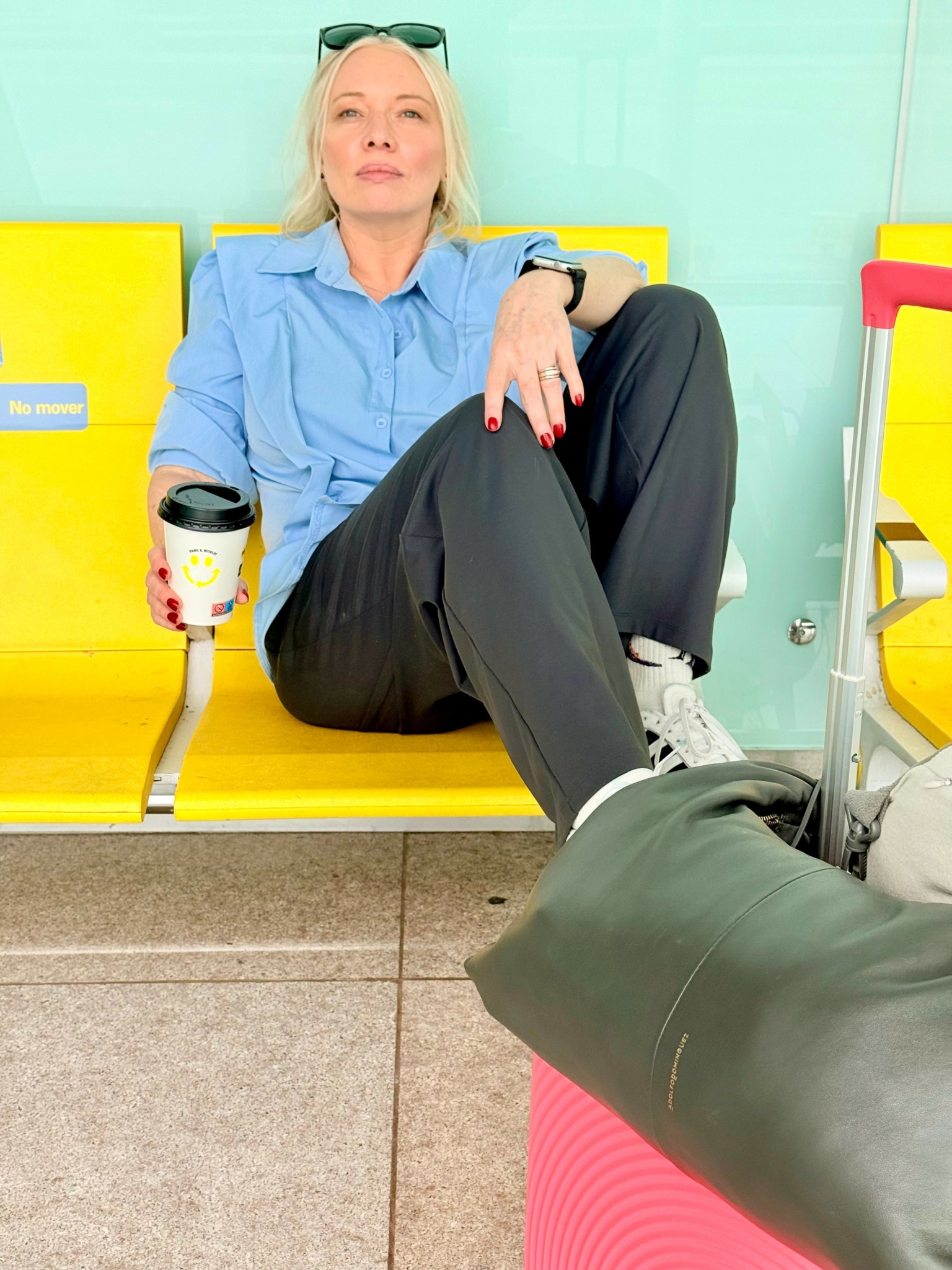

Alright – so today we’ve got the honor of introducing you to Leigh Matthews. We think you’ll enjoy our conversation, we’ve shared it below.
Hi Leigh, thanks for joining us today. Along with taking care of clients, taking care of our team is one of the most important things we can do as leaders. Looking back on your journey, did you have a boss that was really great? Maybe you can tell us about that boss and what made them a wonderful person to work for?
Not exactly the best boss I ever had, but the most useful leadership training I ever received happened in a wooden house in Mullumbimby, New South Wales, Australia, with no television, a lot of Scrabble, and a teacher who thought most of what goes on in the human mind is, to put it politely, unreliable.
Christopher wasn’t a leadership coach. He was a practitioner of Pancha Tanmantra, an ancient Indonesian martial art, and he had a particular fondness for what he called f*cked up city people. I qualified on both counts. I has just turned twenty-seven, recently out of hospital after a deep depressive episode brought on by grief that had run out of road. My sister had died of cancer at only thirty-nine. A close friend had died by suicide the year before. I had no framework for what I was carrying, and the therapists I sought help from for myself at the time were genuinely abysmal, and I say that as someone who has now spent over twenty years in the profession. That experience sits underneath everything about how I built Therapy in Barcelona. Christopher gave me something they never managed to. He pointed to his head and said: this is bullshit. Then he put his hand on his heart and said: this is real. This is basically the Wise Mind of DBT, if you are familiar with that.
I have spent fifteen years building a therapy practice in Barcelona. I have been leading a team for nearly a decade, made hiring decisions I regretted, had difficult conversations I delayed too long, burned out quietly and then loudly, and rebuilt something I am genuinely proud of.
And every significant leadership lesson I have now learned maps back to that gesture.
The mind will tell you it’s too risky. The heart already knows the way.
In practice, this shows up constantly. When I need to end a working relationship or have a difficult conversation, the mind generates an elaborate list of reasons to wait. The timing isn’t right. We’re too busy. It’ll probably resolve itself. The heart already knows it won’t. The heart knew from the first email, often before the mind had caught up with the evidence. Learning to trust that signal, to act from clarity rather than from the story the mind is building to avoid discomfort, is the single most important leadership skill I have developed.
Get up. That’s just the mind.
Christopher said this to me repeatedly during practice when I was face down on the floor insisting I couldn’t continue. What he was pointing at was the difference between the genuine limit and the story the mind builds around it. In leadership this distinction is everything. The conversation I’m avoiding isn’t actually as dangerous as the mind has decided it is. The decision I’m delaying isn’t actually as complicated. The mind catastrophises. It separates. It tells you stories designed to keep you small and safe. The heart can expand to meet hard things. Most of the leadership failures I can point to, delayed goodbyes, avoided conversations, tolerating dynamics I should have addressed months earlier, even failing to delegate or take rest and care for myself, came from listening to the mind’s story rather than the heart’s, the Wise Mind’s, knowledge.
The heron doesn’t apologise for its wingspan.
My element in the five element system Christopher taught is metal. The animal form is the heron. The movement begins with a deliberate lowering, a step back, a slow curtsy. Then the arms rise and widen until you are taking up every inch of the space available to you. Nothing tentative. Nothing apologetic.
I spent years in leadership making myself smaller than the role required. Over-explaining decisions. Apologising for boundaries before I’d even stated them. Asking for others’ permission to make decisions in my own business. Putting up with gross displays of disrespect. Coming back to the heron taught me something I couldn’t access intellectually: that taking up space is not aggression. It is presence. A leader who shrinks doesn’t protect anyone. They just make the space available for something else to fill it.
The metal element asks you to move through loss, not around it.
Metal’s shadow emotions are hurt, guilt, sadness, and depression. Its higher quality, the thing that becomes available when you stop running from those feelings, is vulnerability. Not weakness. The courage of someone who has been broken open and chose to stay open.
In practice this means I don’t try to manage my way around the hard things in leadership. The goodbye that needed to happen. The feedback that landed harder than I expected. The period of genuine burnout that I had dressed up as dedication for years. Moving through those things rather than around them, sitting with what they actually cost, feeling the feelings, rather than only narrating a tidy lesson from a safe distance, is what has made it possible to lead with any real honesty and humanity.
That includes Christopher’s death itself. He died suddenly on July 4 2011, exactly one month before I landed in Barcelona. He came to my wedding two weeks before he died. I didn’t know that would be the last time I would ever see him.
What he left me was not a framework or a philosophy. It was an experience, felt in the body, of the difference between living and leading from the egoic mind and living and leading from something steadier. I am still growing into it. I still, frequently, catch myself listening to the wrong narrator, building the story, avoiding the conversation, shrinking when the moment asks for the heron.
But now I know the difference. And when I notice I’m face down on the floor, insisting I can’t continue, I can hear him.
Get up. That’s just the mind.
Great, appreciate you sharing that with us. Before we ask you to share more of your insights, can you take a moment to introduce yourself and how you got to where you are today to our readers.
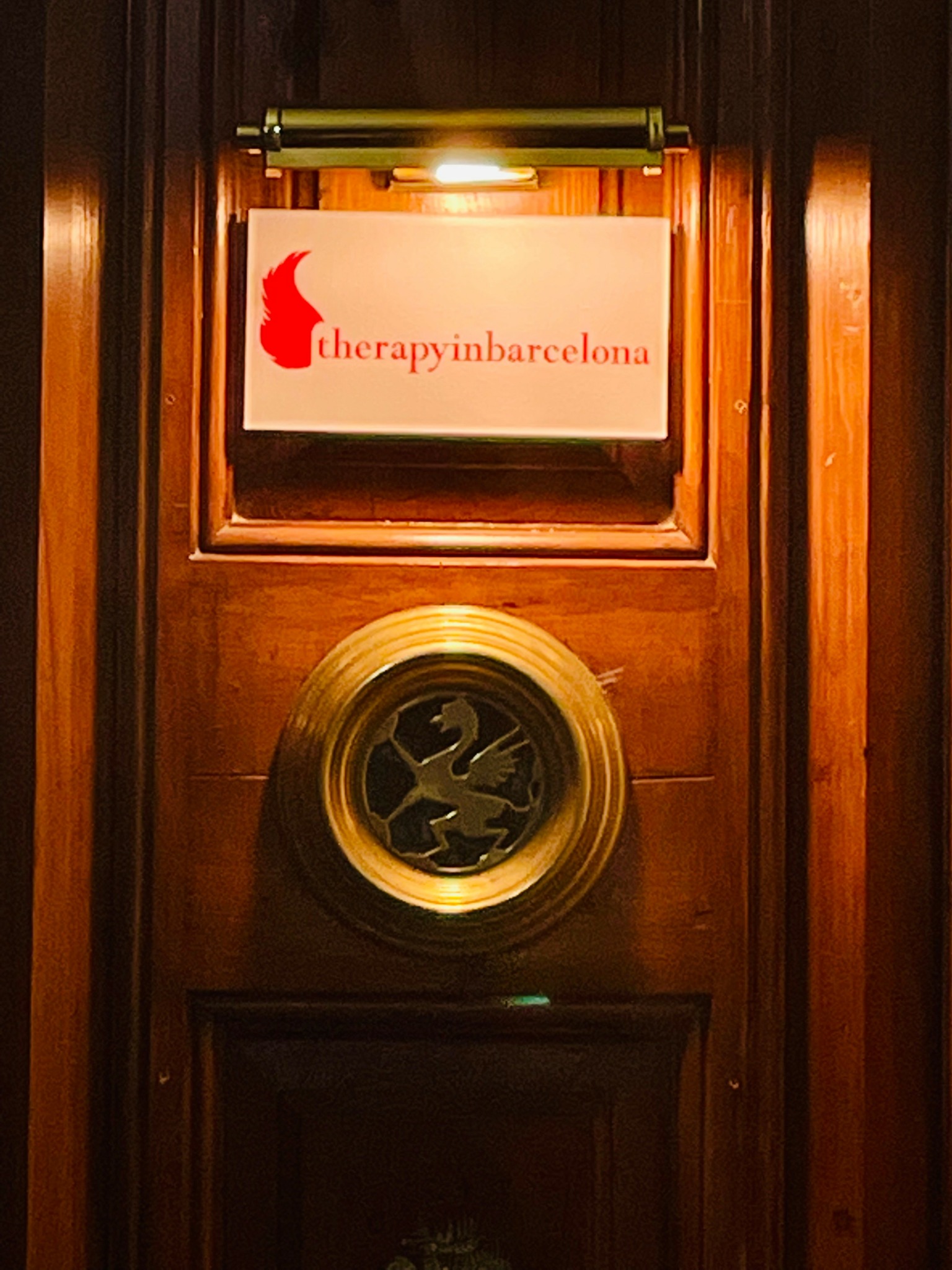
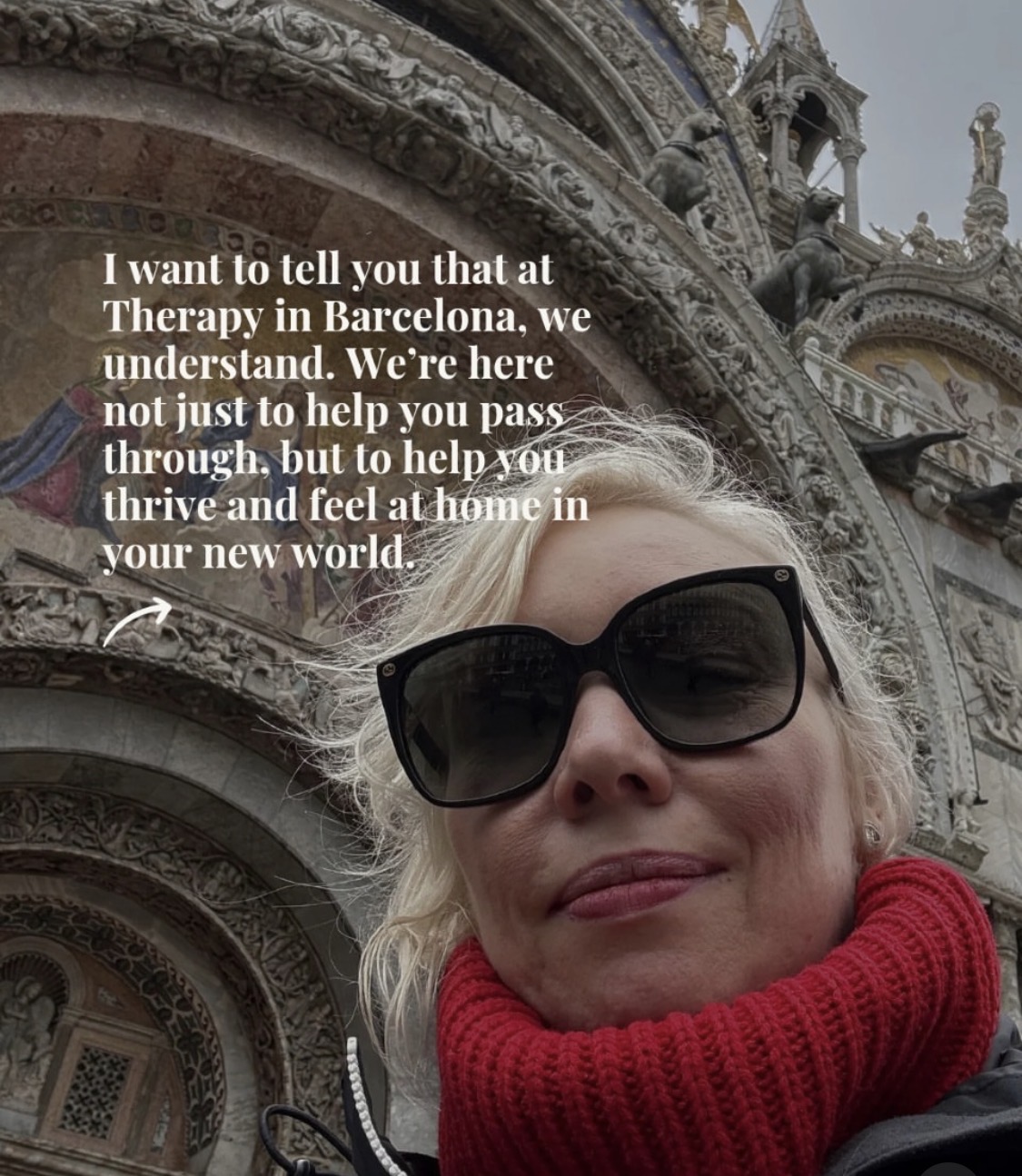
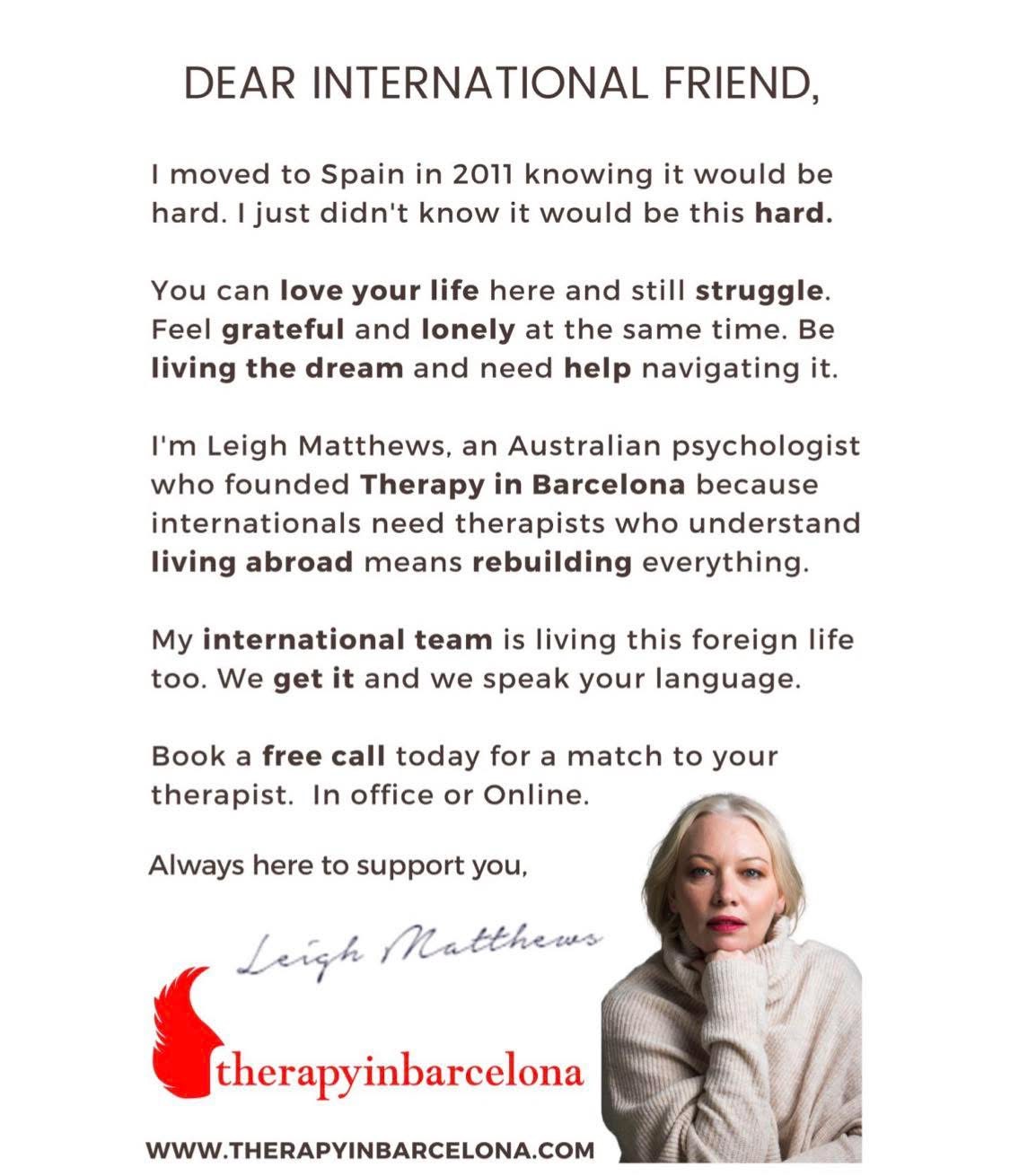
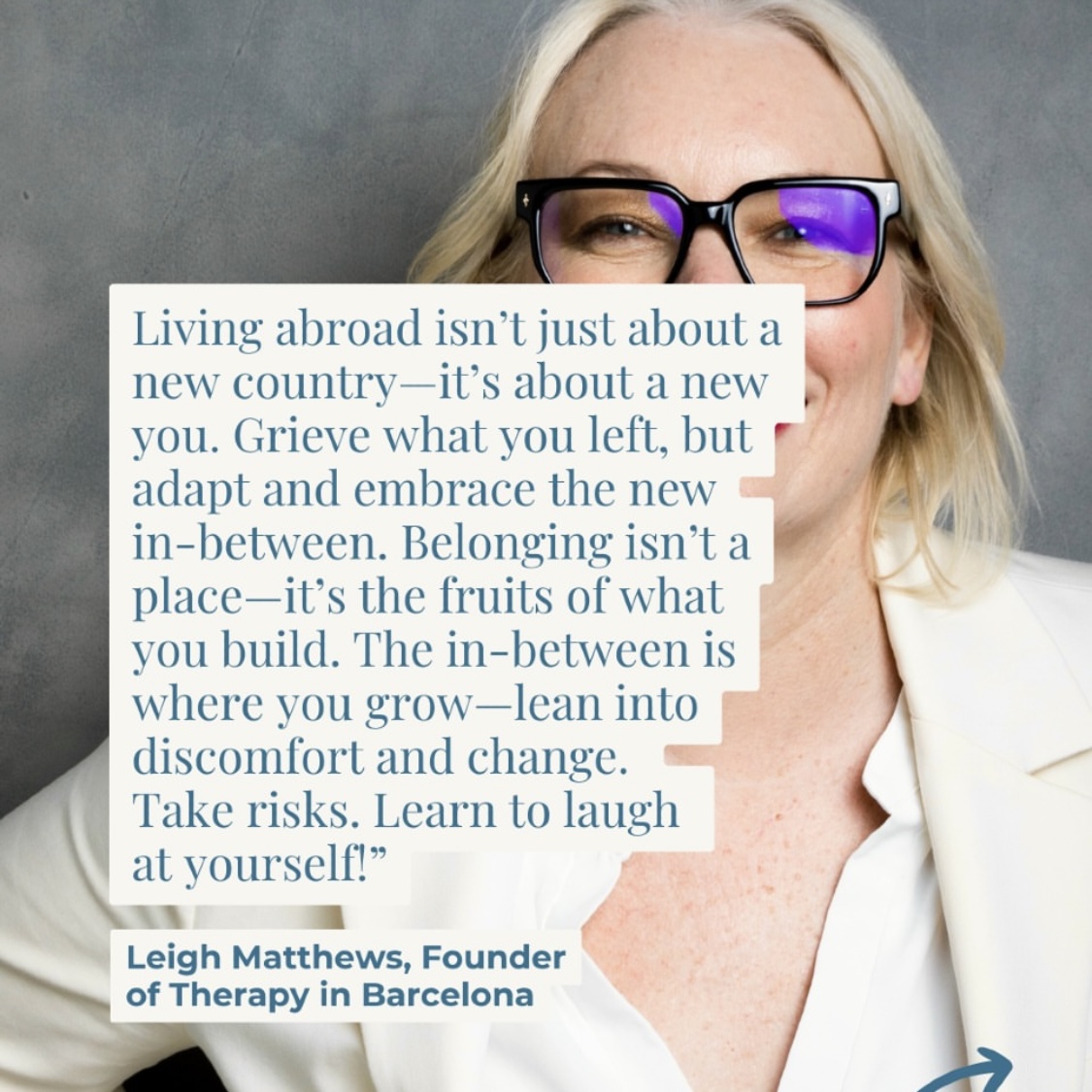
I’m Leigh Matthews, an Australian psychologist and the founder of Therapy in Barcelona, a group therapy practice offering English-speaking therapy for internationals in Spain and across Europe.
The short version of how I got here is this: I met my Catalan husband in Australia, we got married, and decided together to build our life in Barcelona. I arrived in 2011 completely lost. I didn’t speak the languages (Spanish and Catalan in Barcelona), didn’t understand the bureaucracy, had no idea how anything worked, and was figuring out what it meant to start over in a country that wasn’t mine. I left everything behind including my successful private practice in Australia, my home, my friends, my culture, my family of origin.. everything. I built a therapy practice in Barcelona inside all of that. That experience, of being deep in migratory grief, being genuinely foreign, genuinely disoriented, genuinely lonely, and genuinely in need of support that understands the specific texture of that kind of upheaval. That is the whole reason Therapy in Barcelona exists the way it does.
I had also experienced, at my lowest point at 26 years old, what it feels like to see therapists who are not good enough. That sits underneath every decision I make about ethics, about matching, about who we bring onto the team and how we monitor quality of care for our clients.
What we offer is therapy in English for international adults, couples, adolescents, and families, both in person at our Eixample office in Barcelona and online across Europe. Every therapist on our team is an international themselves. Not just English-speaking. Actually having lived the experience of building a life in a country that isn’t theirs. That is not a marketing line. It is the thing that changes what is possible in the room. They are also highly qualified, experienced and deeply human professionals, passionate and full of care for their work with clients.
The problems we work with are the full range of human difficulty, anxiety, depression, relationship strain, burnout, identity, grief, trauma, and the particular exhaustion of cultural adaptation that most people underestimate until they are inside it. We work with internationals including immigrants, digital nomads and expats who are highly capable and genuinely struggling, often simultaneously. People who have built impressive lives abroad and are quietly falling apart inside them. People who thought moving to another country like Barcelona, Madrid, Spain or Europe would fix something and discovered it came with them.
What sets us apart is the matching process. We don’t assign the next available therapist. We take time to understand what someone needs, what has and hasn’t worked for them before, what kind of relationship they need to feel safe enough to do real work. That process matters because the therapeutic relationship is the most significant predictor of whether therapy actually helps. We take it seriously from the first contact.
One of the things I am most proud of is a moment that happened around the end of 2025. Some of the members of my current team of 11 therapists and 2 intake coordinators, gathered around at our office with pizza for an end of year celebration. There was ease in the room, the ease of people who respect each other and the work they share. Warmth without the false brightness of people performing harmony. Genuine laughter. It took fifteen years and a lot of hard lessons to build that room, and the clients who sit with our therapists are the direct beneficiaries of it. A settled, respected, psychologically safe team and leader offers something qualitatively different to stressed and demoralised therapists and leaders. Our clients feel that in the quality of care they receive, even when they can’t name it.
As at the beginning of 2026 we have supported over 5000 internationals from more than 45 countries through our expat therapy services. That number means something to me that goes beyond a statistic. Every one of those people reached out at a vulnerable moment, disconnected from their usual supports, in a country that wasn’t yet home and they got help from a safe and trusted service.
I think of myself as a multiplier. By building a group practice rather than staying solo, I have been able to reach far more people than I ever could have alone. That includes the therapists who come to work with us. They arrive in a city where they are unknown, where building a client base from scratch would take years, and they find not just good fit clients but a place where they belong, alongside other internationals who understand exactly what it costs to build a life somewhere new. I built the thing both clients and therapists need when they arrive in their foreign life.
What I want people to know is this: you don’t have to be in crisis to come to therapy. A large percentage of our clients have had therapy before. They are not coming because they have finally hit rock bottom. They are coming because they are smart enough to know that the life they are building abroad deserves the same quality of support they would invest in anything else that matters. The internationals who genuinely thrive, rather than just function, tend to be the ones who take the inner work as seriously as the logistics.
If you are looking for an English-speaking therapist in Barcelona, or online therapy anywhere in Europe, we would love to hear from you.
We are not therapists in suits. We are humans walking alongside you, supporting you with the care, empathy, training and experience to make therapy actually useful.
Learning and unlearning are both critical parts of growth – can you share a story of a time when you had to unlearn a lesson?
That being a good leader means being endlessly available, endlessly accommodating, and endlessly self-sacrificing.
I built that belief from two directions simultaneously, and they reinforced each other in ways I didn’t see clearly for a long time.
The first was being a woman. I was socialised, as most women are, to accommodate, to make things smooth, to prioritise other people’s comfort over my own needs. To read the room and adjust. To shrink when the situation seemed to call for it. To be less than, and quieter. That wiring doesn’t disappear when you become a leader. It just finds new expressions.
The second was being a therapist. The therapeutic identity is built around care, around holding space for others, around a type of rescuer role in its most socially sanctioned form. That is not a criticism of the profession. It is a description of what the culture rewards and an observation of the predominant mindset therapists embody in their work. What it does not prepare you for is running a business. Wearing three hats simultaneously as therapist, leader, and business owner, requires a completely different relationship with your own value, your own limits, and your own authority. Therapists are trained to give. We are not trained to charge appropriately for what we give, we generally struggle to hold firm boundaries with clients or the people we work alongside. We struggle to understand that saying no or caring for ourselves is not a failure of care, it is an act of care and the foundation of good work.
This is not a personal quirk. It is a widespread issue in the helping professions that you simply do not see in the same way among lawyers, accountants, or architects. Those professions have cultures that support the clear valuing of expertise and time. Ours doesn’t, as if a caring profession is a less then vocation. The result is a profession full of people who are extraordinary at holding space for others and genuinely struggling to hold it for themselves.
I carried that belief slowly and wore it for years without questioning it. I was the founder, the person whose name was on the door, and somewhere along the way I confused that with being the person who absorbed everything. Every difficult dynamic. Every unreasonable demand. Every boundary that needed to be stated but wasn’t, because stating it felt like failing at the job.
The backstory is not pretty. Between 2018 and roughly 2023 I was working harder than I had ever worked in my life, shifting from solo and building the group practice, while feeling more powerless than I had since I was twenty-six years old. I was wearing every hat. I was not drawing a salary. I had a team that I was grossly undercharging for the valuable services I was delivering to them, that had organised a meeting without me to discuss their grievances, circulated a spreadsheet about what they believed I should be charging them, and made comments about my weight. I was being made invisible in my own business while telling myself that this was just what leadership cost. I thought I wasn’t cut out for leadership. I didn’t realise I had to learn it as a skill and unlearn the belief that I had to carry it all and put up with it all. I had to learn the great skill of discernment in who I invited into my business, onto my team. I was yet to learn I could do no harm, build something great and also take no sh*t.
By 2023 the cost had become impossible to ignore. I was working ALL the time. My mental health was shot. I had so little time to give my husband and son. I was insulin resistant. I was 84kg and my body had been keeping score long before I was willing to read it. I was seriously considering closing Therapy in Barcelona, a practice I had built from the solo operation I started 5 years before, that had cost me years of financial sacrifice, emotional labour, and physical health to grow into something real. I was on the edge of walking away from all of it.
I didn’t. But I had to change almost everything to stay.I got a business mentor who introduced me to the concept of business anaesthetic, the deliberate pause between stimulus and response, the discipline of not reacting from charge. She also did something simpler and more important: she reflected back to me that what I was dealing with was genuinely hard, that I was capable, and that with some changes and new strategies things could be different. That landed differently than I expected. I had been so busy absorbing everything that I had stopped believing my own assessment of how difficult it actually was.
I remembered Christopher’s teachings too. The heart knows. The egoic mind catastrophises. Get up.
I got a personal trainer and started building muscle. That turned out to be as much about rebuilding my self as it was about my body. I carved out non-negotiable chunks of time in my weeks and days for my own care, not as a reward or a luxury but as the foundation of everything else. I sent myself an email of my non-negotiables every single Monday listing what I would no longer accept, and what I would only accept. I took courses on the right use of power, authentic and conscious leadership, and understood for the first time that shrinking is not humility. It is a failure of leadership. Leaning into your authority clearly and kindly is not aggression. Refusing to is an abdication.
I joined leadership peer groups and discovered that the challenges I faced and the failures I owned were not evidence of my inadequacy. They were normal. Sadly common. Every honest leader in those rooms had a version of the same story.
I stopped playing victim and accepted my role as the creator of my own circumstances. That doesn’t mean tolerating other people’s poor behaviour. It means observing clearly, problem solving honestly, genuinely asking what I contribute to any dynamic I find myself in, and then effecting change rather than absorbing consequences. I stopped complaining and started building. The difference between those two things turns out to be everything.
Slowly, I stepped into myself. Into my sovereignty as a person, as a woman, as a leader, and as someone with decades of experience who had built something genuinely remarkable and had every right to inhabit it fully.
What I learned instead of what I had to unlearn is this: that having needs is not weakness, that stating limits is not unkindness, that owning experience and expertise is not arrogance and that the measure of a good leader is not how much they can absorb before they break. A leader who has collapsed every boundary in the name of availability has not been generous. They have been unclear. And the people who needed them most got a depleted, resentful, diminished version of what they deserved.
The clearest version of the lesson came from my teacher Christopher, who would have had no patience for any of this. He taught me the difference between the genuine limit and the story the mind builds around it. The mind said: a good leader gives everything. The heart knew: you cannot lead from empty.
I still catch myself slipping back into the old pattern. The difference now is that I can hear it for what it is. The story. Not the truth.

What’s been the most effective strategy for growing your clientele?
Authenticity. Not as a buzzword but as a operating principle. We do not perform care. We provide it. And that distinction, lived consistently across every touchpoint, is the foundation of everything else.
I market as a service rather than as a sales exercise. Every piece of content we put out is written with one person in mind. The international. living life in a foreign land, who is sitting somewhere in Europe, say Barcelona, Amsterdam, Lisbon or Madrid, feeling alone in a way they cannot quite explain to the people around them, who stumbles across a post or my newsletter and feels, for a moment, less alone. Whether they ever book with us or not is secondary. That is wholehearted marketing. It is ethical, it is caring, and it works precisely because it is not trying to, because I was once that person looking for Therapy in Barcelona and so I get it, our whole team gets it.
Great service IS marketing and the single most important strategy for growing your clientele. This is the thing most businesses miss. The care we take in matching clients to therapists, the thoroughness of our onboarding process, the attention we give to every step of the client journey, these are not just operational decisions. They are the most powerful marketing we do. A vulnerable person who feels genuinely held from the first contact tells people. A therapist who feels genuinely supported and well matched with their clients stays, thrives, and becomes part of what makes the practice worth recommending. The care flows in both directions, toward the people receiving the service and toward the people providing it, and both matter equally.
SEO has been essential and remains our most reliable source of new clients. When someone newly arrived in a foreign city is struggling, they go to Google and, now, AI searches. We have invested consistently in being there when they do, with content that is genuinely useful rather than just keyword-dense. That investment compounds. Fifteen years in, it is still working.
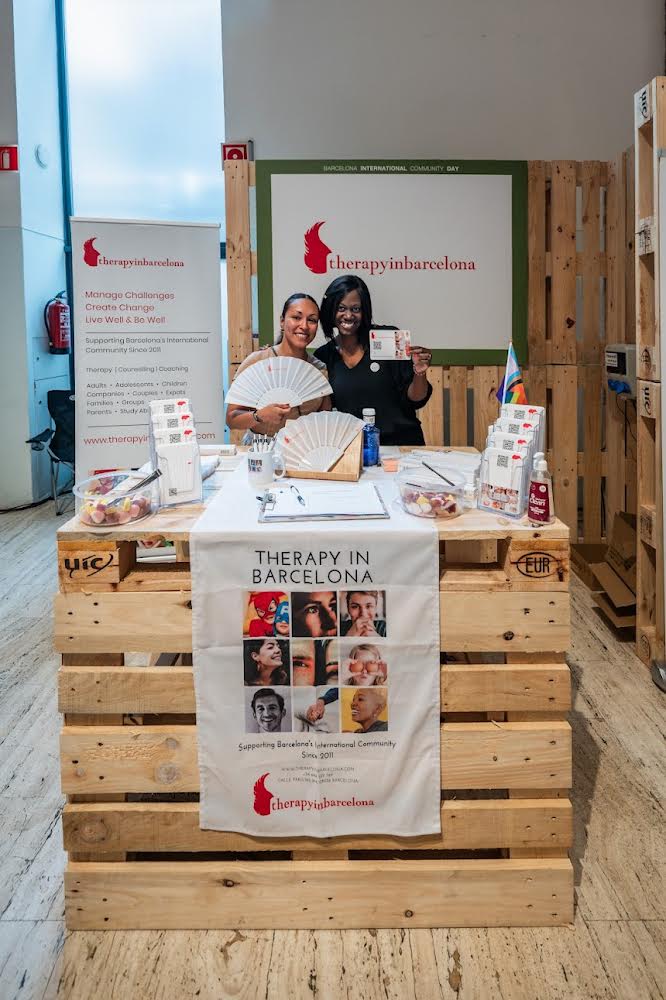
Beyond SEO we focus on being present everywhere, consistently across platforms. We’re on LinkedIn, Instagram, Facebook, directories, online publications, in our newsletter and so on. We focus on nurturing relationships in real life through mutual support, collaborations, networking, showing up for the international community through talks or workshops when possible, and being consistent in our messaging. That consistency is easy because we are not performing anything. We tell the true story of what we do, who we help, and what we see our clients struggling with. We look to the reality of our clients’ lives to know what to talk about. The content writes itself when you are paying genuine attention to the people you serve.
The thing I would tell anyone starting out: don’t try to be findable by everyone. Get very clear on exactly who you are for and speak directly to them.
The right people find you when you are honest about who you are. Forget the algorithm, forget the reach, forget the numbers. Write for the one person sitting alone in a room who needs to feel seen. Get that right and the message carries itself.
Contact Info:
- Website: https://www.therapyinbarcelona.com
- Instagram: https://www.instagram.com/therapyinbcn/?hl=es
- Facebook: https://www.facebook.com/therapyinbarcelona
- Linkedin: https://www.linkedin.com/in/leigh-matthews-8a9877b0/
- Youtube: https://www.youtube.com/channel/UCvvUvpUP8ueXqg-qSsk9yMg
- Other: https://www.facebook.com/groups/therapyinbarcelonasupportgroup