
Alright – so today we’ve got the honor of introducing you to Kuhoo Mitra. We think you’ll enjoy our conversation, we’ve shared it below.
Alright, Kuhoo thanks for taking the time to share your stories and insights with us today. Can you talk to us about a project that’s meant a lot to you?
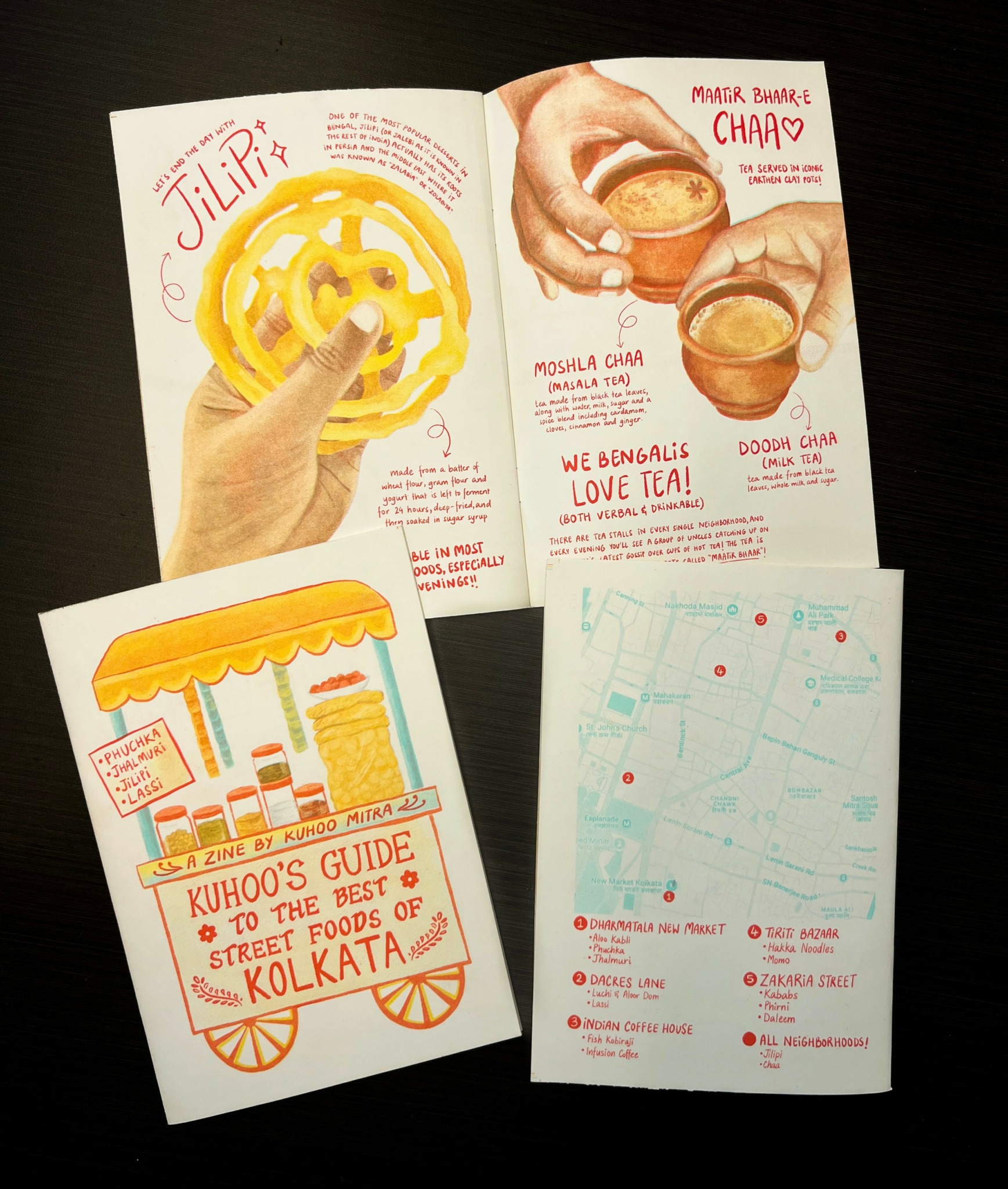
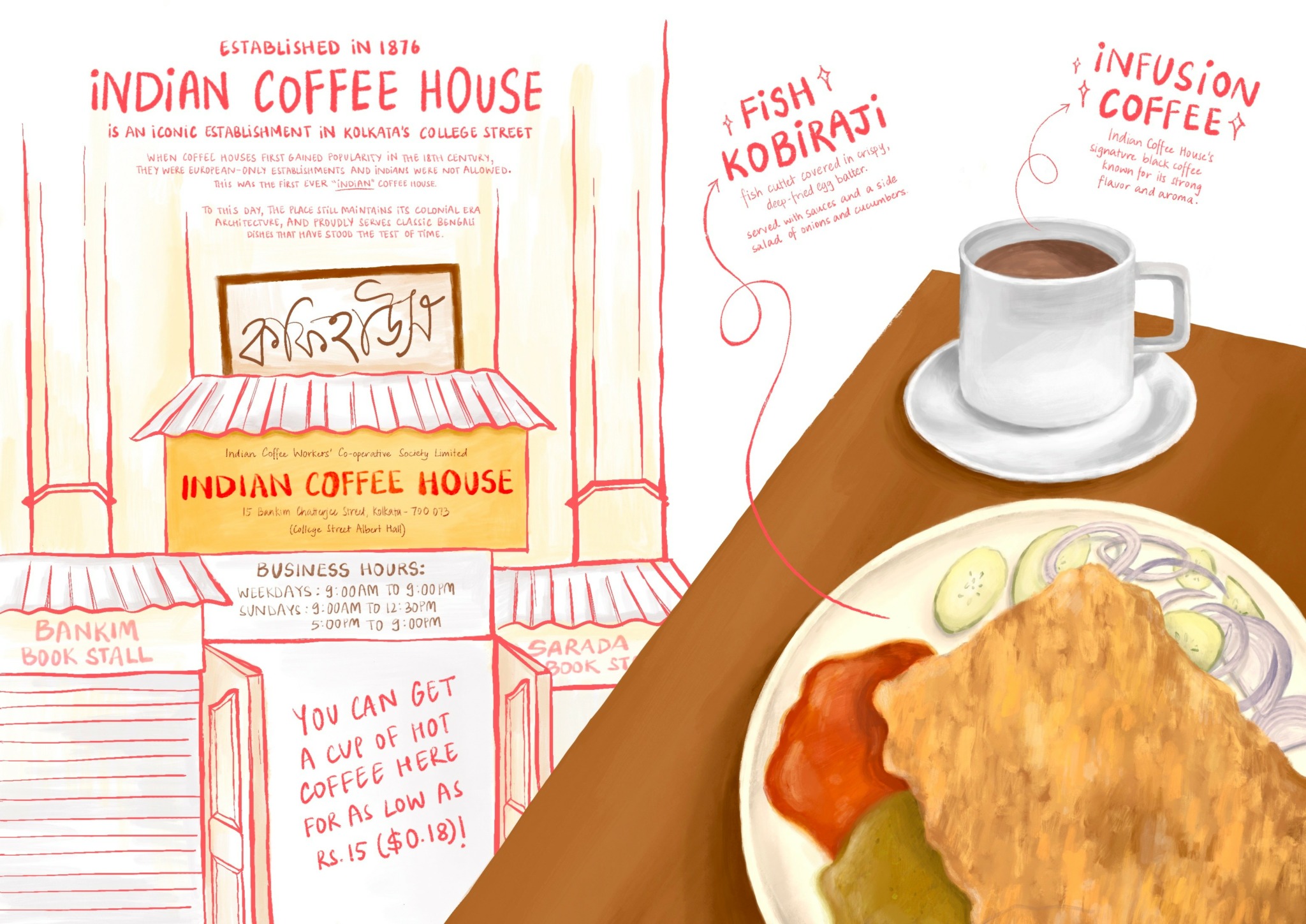
In the spring of 2025, I worked on a 16-page zine titled “Kuhoo’s Guide to the Best Street Foods of Kolkata”. This was the last project I did in art school before graduating with a BFA in Illustration in May.
There are many reasons why this project is so close to my heart. The first, of course, is because it transported me back to my hometown. When I first moved to New York City five years ago, I never thought the hardest thing about living away from home would be missing the food. Something that not a lot of people know about India, is how varied the culture and cuisine are in different parts of the country. In New York, Indian restaurants are fairly common, but they usually only serve either North Indian or South Indian food, which are delicious. However, coming from Kolkata – a much less represented city, compared to Delhi, Mumbai, or Bangalore – I found myself craving food from my hometown that is rarely found in other parts of India, and definitely not in New York. After miserable or tiring days, I’d long for a plate of Fish Kobiraji, or Luchi and Aloor Dom. Since cooking has never been my strong suit, I did the only thing I know to do – I decided to draw the foods I missed the most.
Another reason why this project is important to me, is because it was my first time drawing digitally. I am mainly a traditional artist, and I love working with paints, colored pencils and printmaking. However, last year, a few months before my graduation, I suddenly felt terrible about never having done a project digitally in my entire time in art school. So I downloaded Procreate for the first time, and because I was on a deadline, I went into it blindly, before figuring out most of the controls and features. I will admit, most of the time I did not know what I was doing. Still, the process was incredibly fun, especially because it was my first time working on this software. Every single day I would discover something new while drawing, and isn’t that the best thing about art?
I printed 40 copies of the zine on a risograph. I had only riso printed a couple of times before that, and this was my first time printing an entire zine in riso. Needless to say, I made a lot of mistakes and registration errors in the beginning. However, that is the reason why this project is so meaningful to me – it is the project that I have learnt the most from. It is through this project that I learned to use a totally new medium, and a totally new printmaking technique. This zine sold a lot of copies at the Riso LAB Print Slam, so all the effort was worth it, too!
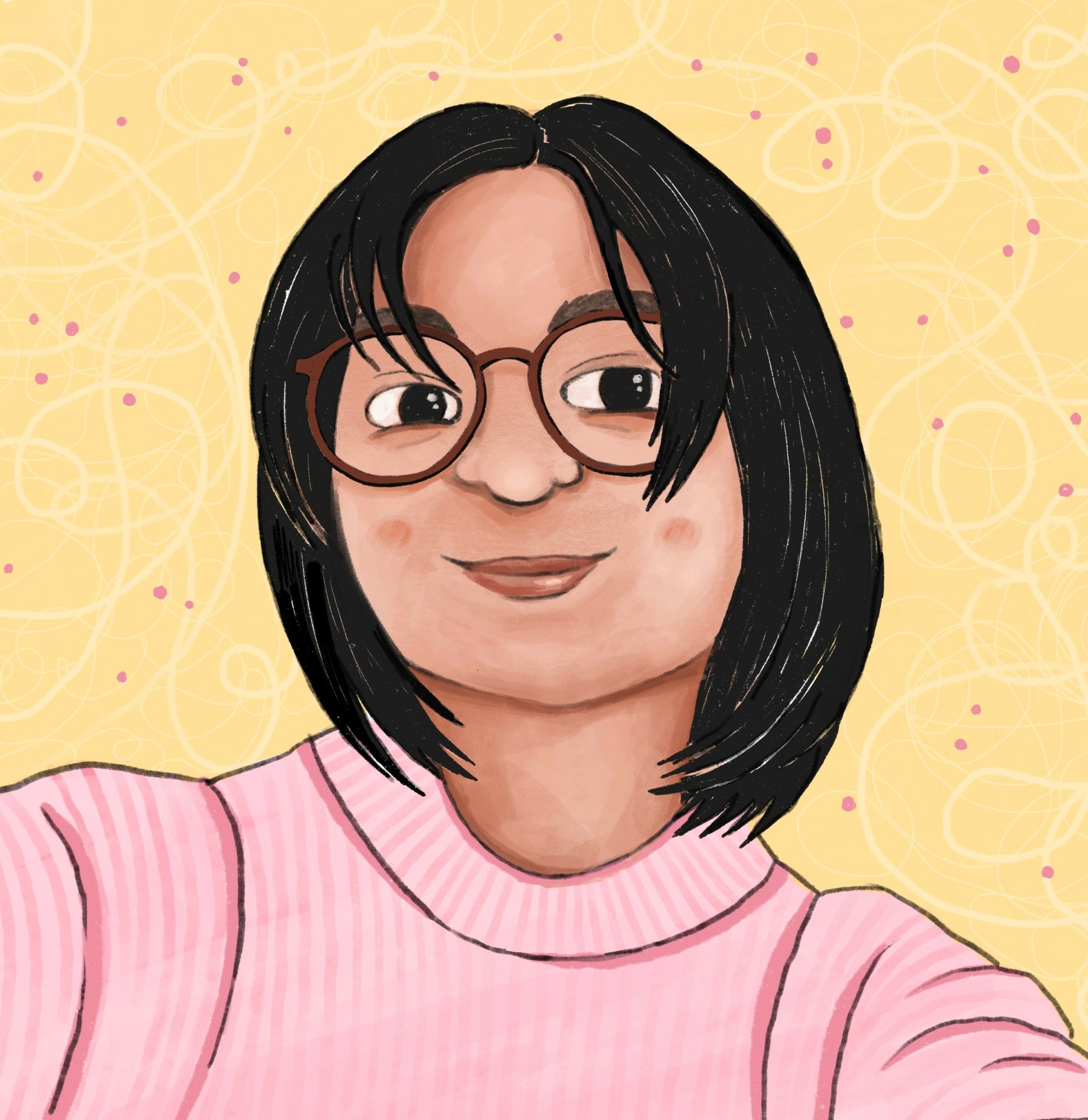
As always, we appreciate you sharing your insights and we’ve got a few more questions for you, but before we get to all of that can you take a minute to introduce yourself and give our readers some of your back background and context?
I am a picture book illustrator, painter and printmaker. More than anything else, though, I consider myself a storyteller. Anything I create, I hope there is a story at the heart of it.
I was born and raised in Kolkata, India. Kolkata, lovingly called “the city of joy” is the cultural capital of India. It is a city known for its literature, art, cinema and theater. It is a city whose every street and every corner is alive with poetry, emotion, and nostalgia. The memories of this city are perhaps what inform and inspire my art the most.
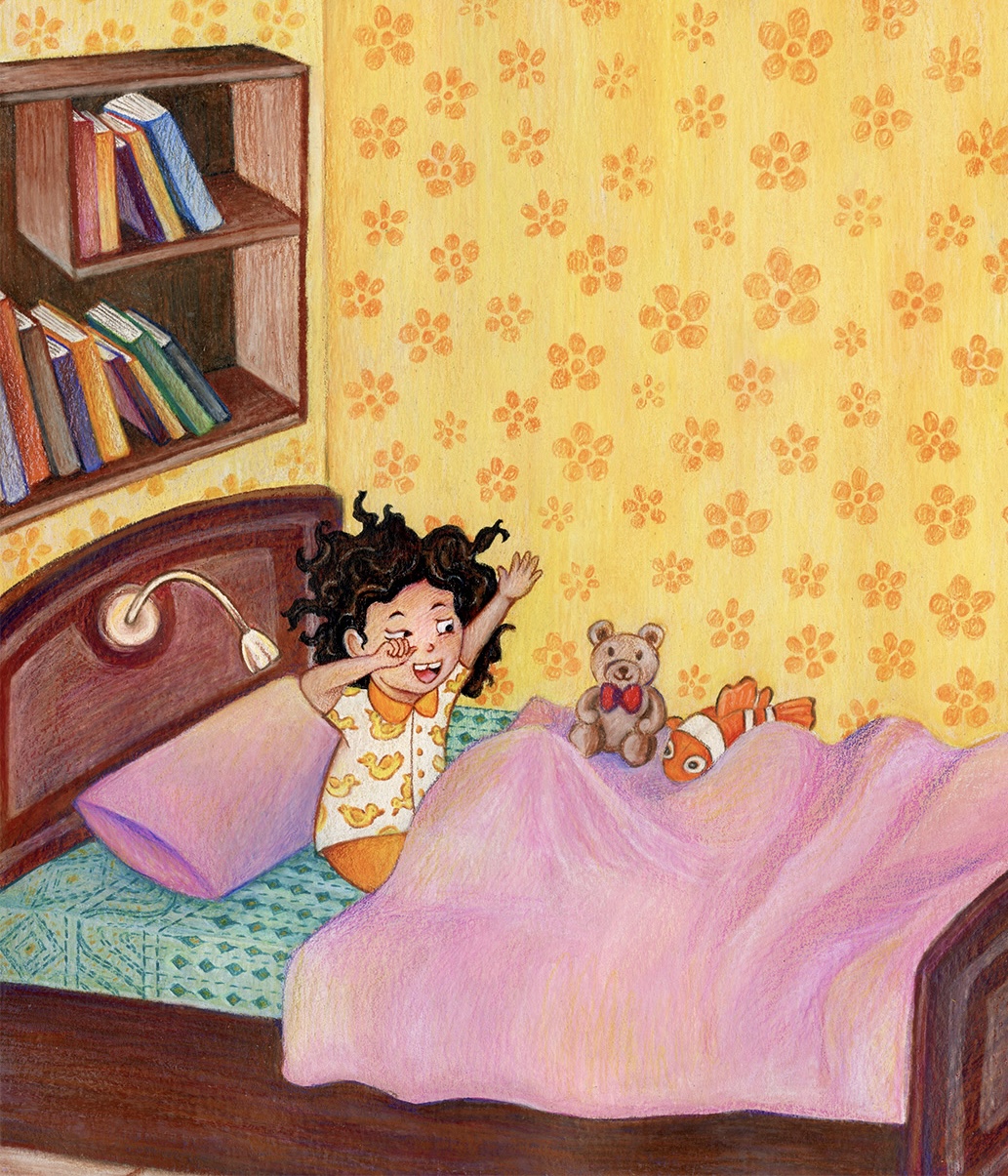
My love for picture books is as old as myself. Growing up, my parents filled my bookshelves with books before I had even learnt to read independently. I would flip through the board books, and try to figure out the story from just the images. If I couldn’t quite decipher what was happening, I would let my own imagination take over. I remember having a lot of books with black and white illustrations in them. I must have been five or six, when I started coloring them with my crayons and colored pencils. My mother says I was probably eight or nine when I proudly declared “I want to draw pictures in books” when asked what I want to be when I grow up. Flash forward more than a decade later, I am still chasing that dream.
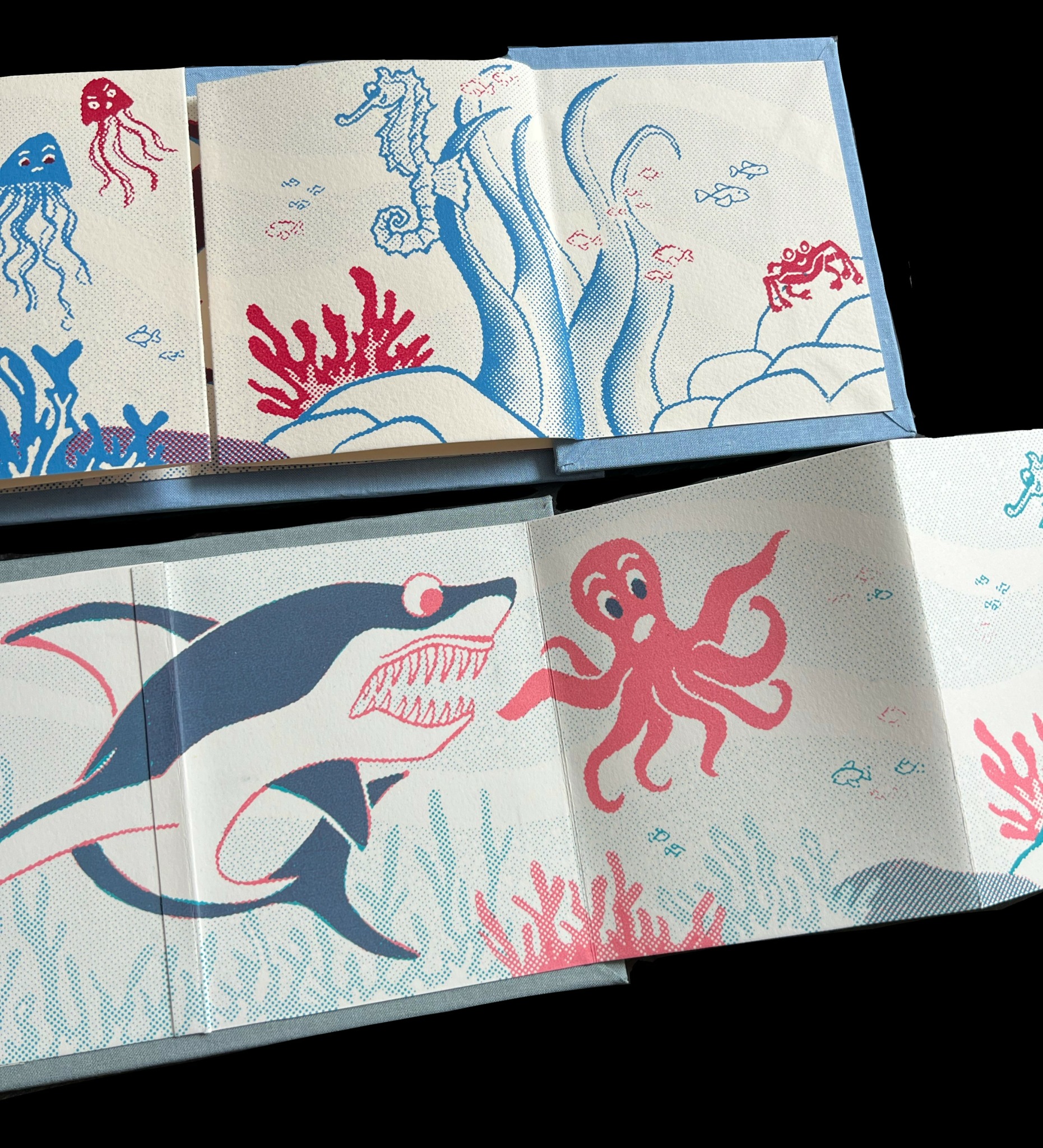
My work ranges from wordless picture books for little kids to stories about more serious young adult topics. I work digitally in Procreate, and traditionally with watercolors, gouache and colored pencils. I also do printmaking with linocut and silkscreen. I love experimenting with sizes and formats of books. I have made double-sided accordion books, zines, mini books that fit in the palm of your hand, and books with interactive flaps to reveal hidden elements in the story.
While I love writing and illustrating my own stories, I am also excited to collaborate with authors and publishing houses to illustrate books by other writers!
Learning and unlearning are both critical parts of growth – can you share a story of a time when you had to unlearn a lesson?
When I was still studying in middle school and high school in India, I measured the success of an artwork solely based on how realistic it is, or how technically perfect it is. This is what we had been taught to believe and strive for. We drew one still life after the next, and all our assignments were graded on how accurately we were able to replicate what we observed on paper. Looking back on my drawings from high school, I realize none of them had a soul, and none of them said anything about me or who I am.
This is not to say that I am not thankful for those classes. I am grateful for them because they did equip me with very necessary technical skills. However, what I really struggled with towards the beginning of my illustration journey was making sure my art had a voice. Even hyperrealistic art can evoke a lot of emotion, if someone knows how to do that. However, I didn’t know how to do it, because I had previously never even considered or tried to evoke any emotions through my art. I had just been trying to get technically better and better without ever asking myself, “What is the point of my art?”
It was only after I started art school and professors began to ask me questions like, “What are you trying to communicate through this?” or “Why did you make this?” or “What do you want your audience to feel when they see this?” that I stopped to actually think. I remember the panic in freshman year when I realized I don’t know what I am doing with my art at all. I knew I wanted to make children’s books, but having only ever been taught to draw realistically, I had no idea how to draw stylistically or whimsically.
It was like starting from scratch again. I had to forget so many things I had learnt previously. I had to learn to stop judging my art based on things like perspective, and anatomy, and light and shadow. Instead, I asked myself the same question my professors asked me, “What do I want my audience to feel when they see my work?” After a lot of soul searching, I realized that although I am making picture books, I am not only making them for kids. Yes, I want kids to enjoy my books and feel inspired and uplifted by the messages in them. But I am also making my art for adults, and I hope that when adults see my work, they can be transported, even for a minute, back to their childhood. I hope that when adults see my work, they forget their problems and worries, if only for a second, and feel unfiltered joy.
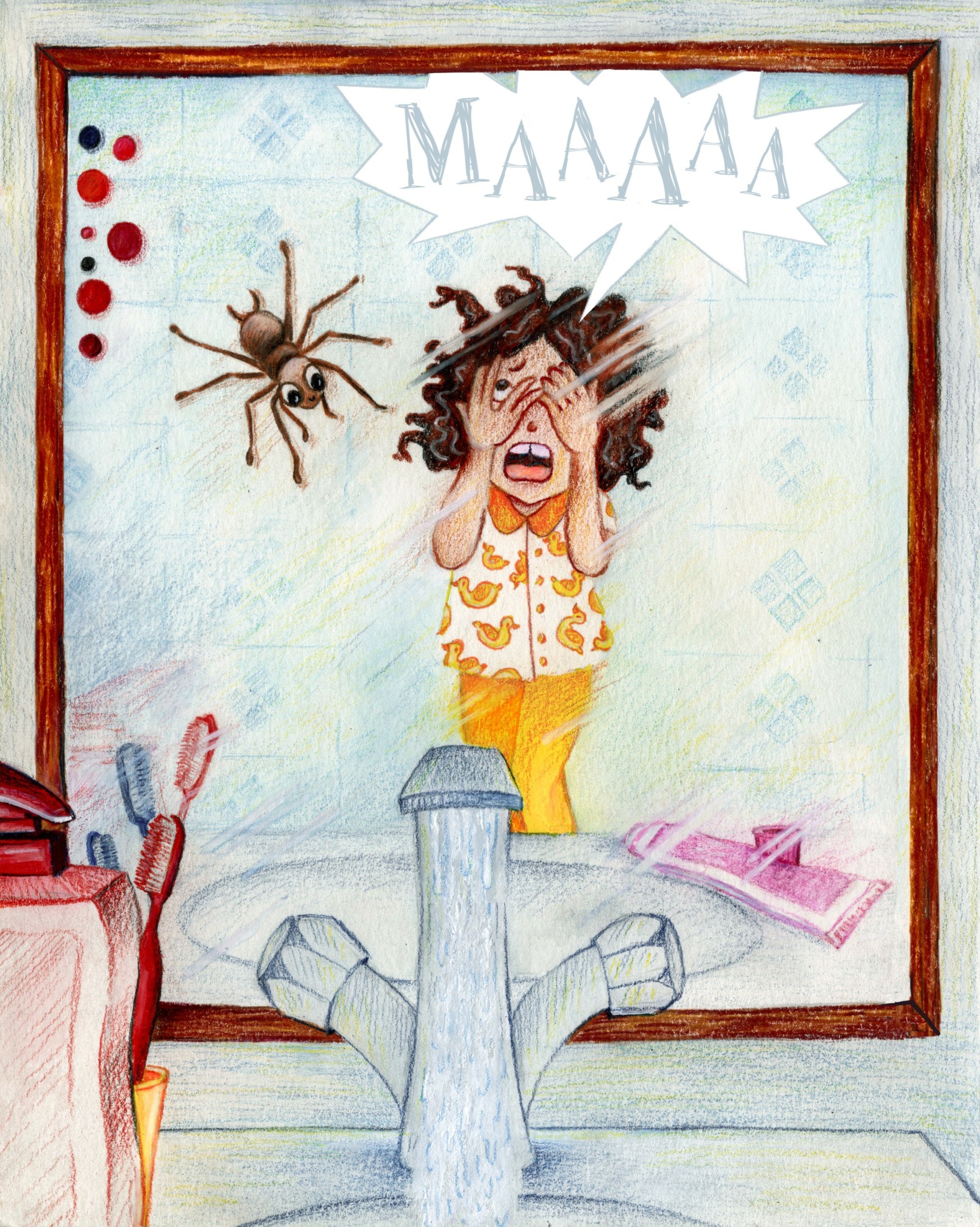
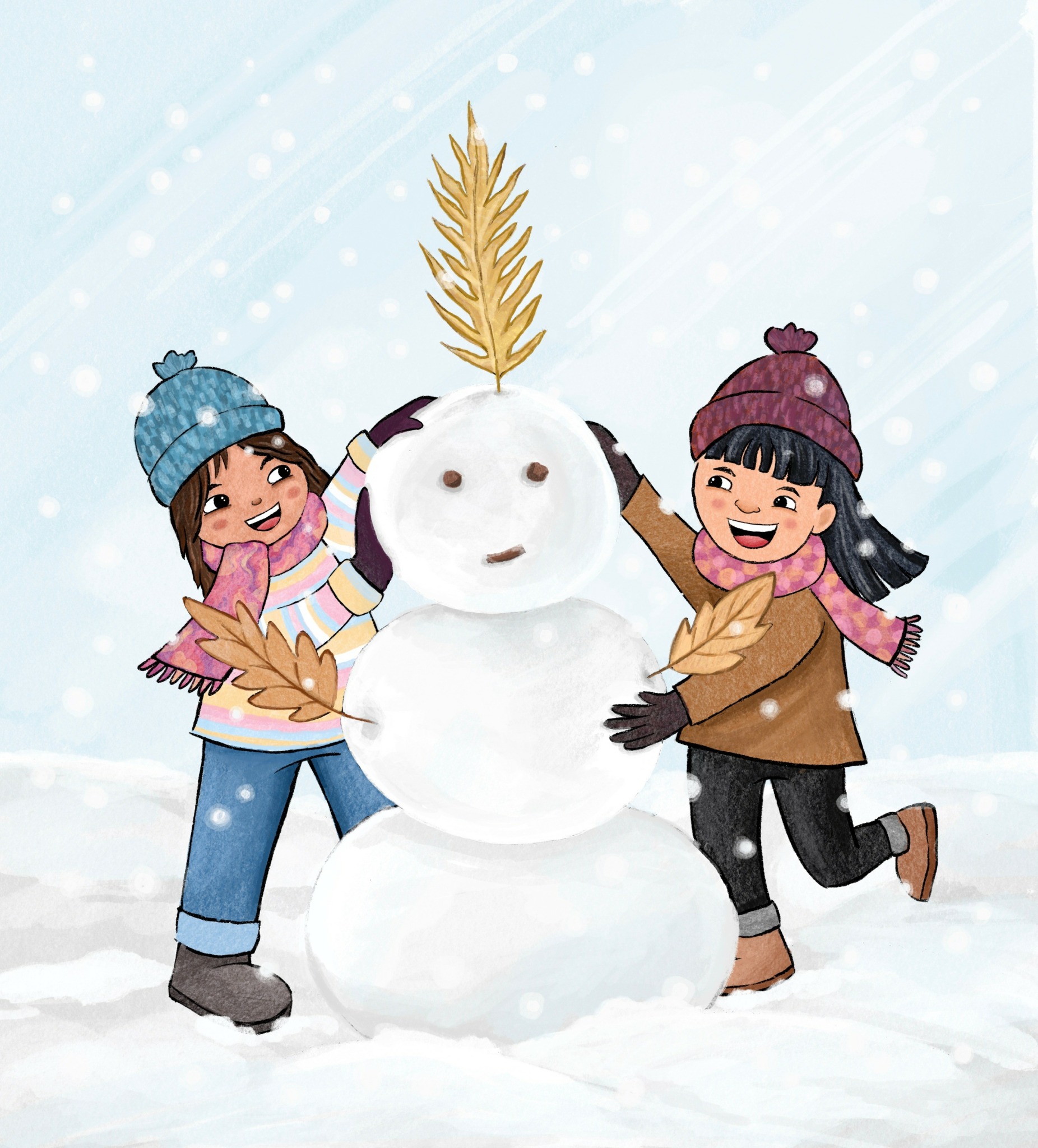
When making my art now, I no longer spend hours on the light and shadow of the clothes of the characters. Instead I spend hours on the expressions of the characters, often exaggerating the features a lot to express fear or amusement or joy. Previously, I would have been so scared to do that because then it would no longer look “realistic”. But now, I know that doesn’t matter at all as long as it conveys the feeling and emotion I want it to convey.
What do you think is the goal or mission that drives your creative journey?
I grew up consuming art in so many different forms – through books, movies, paintings, and music. I believe art to be the language in which people communicate and share their stories with each other. Pretty early on, though, I realized that certain stories became more popular and were circulated more than other stories. Growing up in India, most of the books I read as a child were written by white British and American authors. All foreign films that were released and popularized in India were Hollywood movies. As a child, this never bothered me. In fact, a lot of the media I consumed then has shaped me to be who I am. Today, however, I wonder if I would think differently, create differently and process the world differently if I had been exposed to a wider range of stories, a wider range of voices.
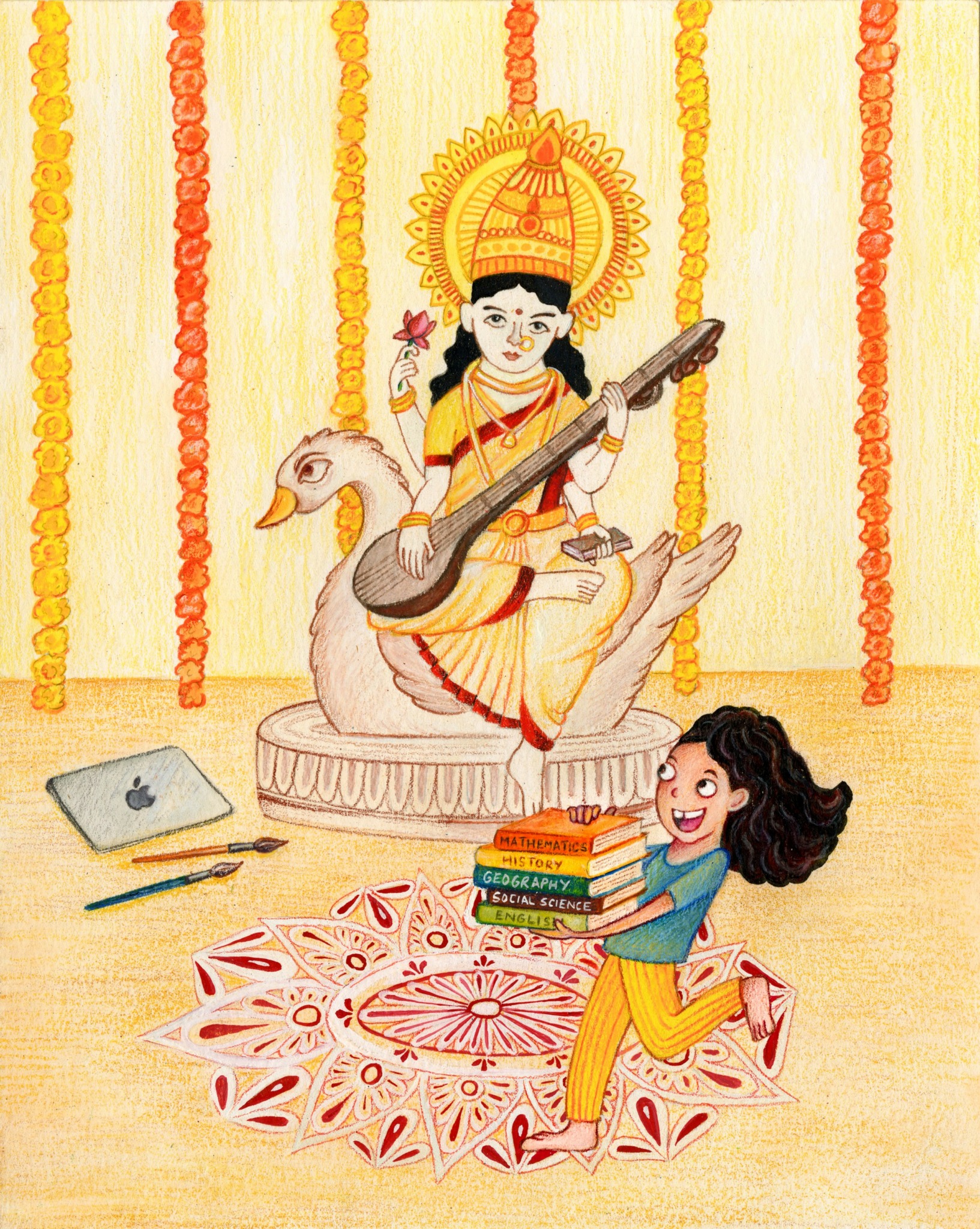
Moving to New York City, and realizing how little people from the rest of the world know about South Asia, and how little I know about other countries and cultures, shocked me. None of us can change this situation on our own, but we can each try in our own small way. My art is a form of rebellion. I create art to challenge stereotypes about my culture. In my art I reference various patterns, art forms, folklore, rituals, festivals and foods that are unique to Bengal, where I come from. I often incorporate the Bangla script, and Bangla words and phrases in my work – it is my subtle attempt at letting people know that Hindi is not the only language spoken in India. In a world where we are expected to conform and fit stereotypes, I want my art to do the opposite.
I think it is especially important now, more than ever, to tell our stories. With everything going on in the world right now, and the rise of generative AI, I often feel dejected. Art is the most fundamental form of human expression. One of the earliest pieces of evidence of human life are cave paintings. If you take the human away from art, what is left? I am inspired to keep creating despite it all, because my art is a culmination of my ideas, my beliefs, my emotions, my inspirations and my hard work. It is a way for me to make sense of the world around me. I am not scared about AI taking the jobs of artists, because I do not believe that a machine that cannot even think for itself or feel a single emotion, is capable of making real art. The more “AI art” gains popularity, the more I feel compelled to keep drawing, to keep painting, to keep illustrating. Because every piece of art I make, good or bad, is a piece of myself. It is something real.
Contact Info:
- Website: https://www.kuhoomitra.com
- Instagram: @kuhoomitra.art
- Linkedin: https://www.linkedin.com/in/kuhoo-mitra
- Other: Email: kuhoomitra.art@gmail.com