



We recently connected with Jonathan White and have shared our conversation below.
Jonathan, thanks for taking the time to share your stories with us today Can you talk to us about how you learned to do what you do?
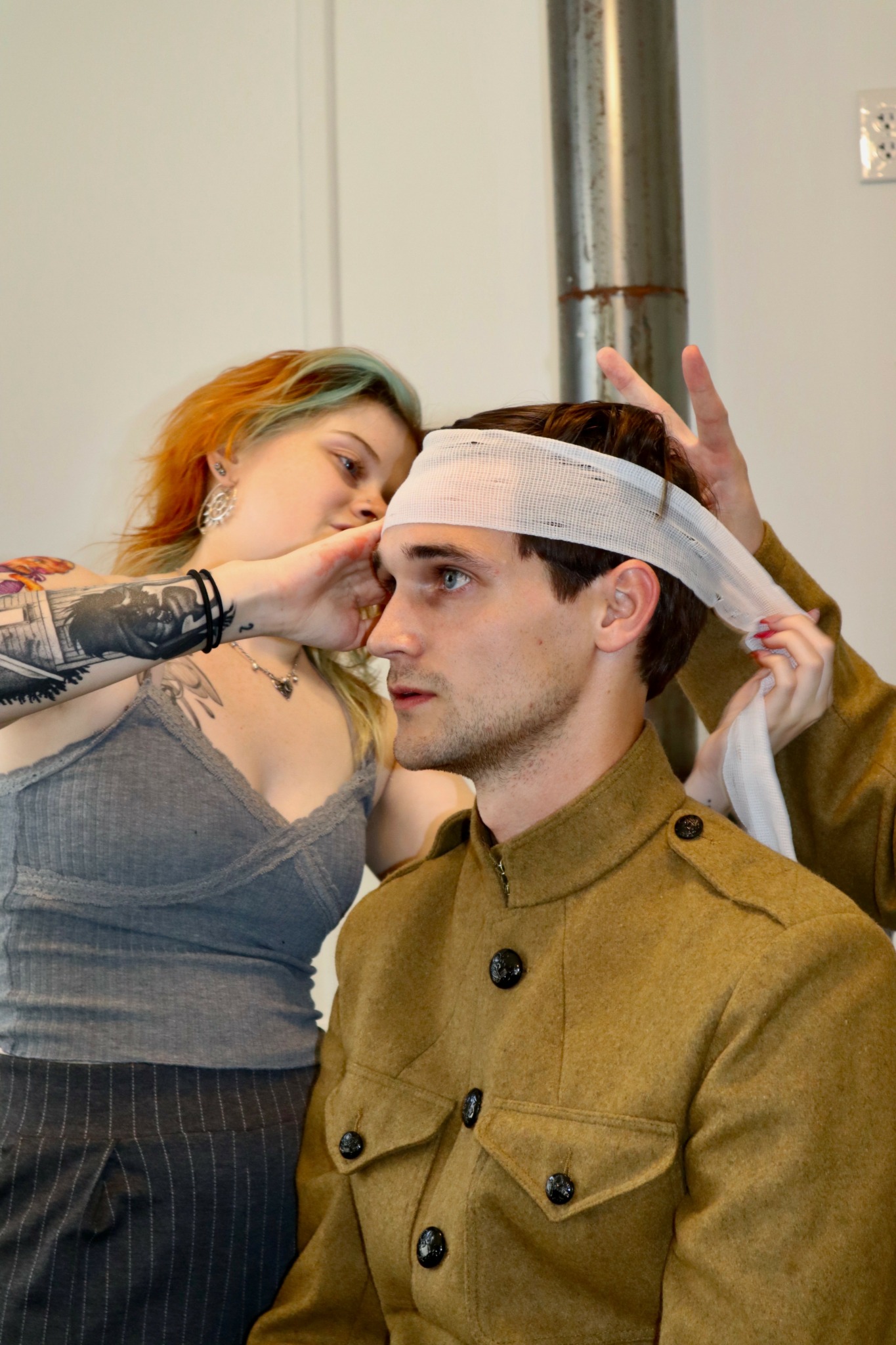
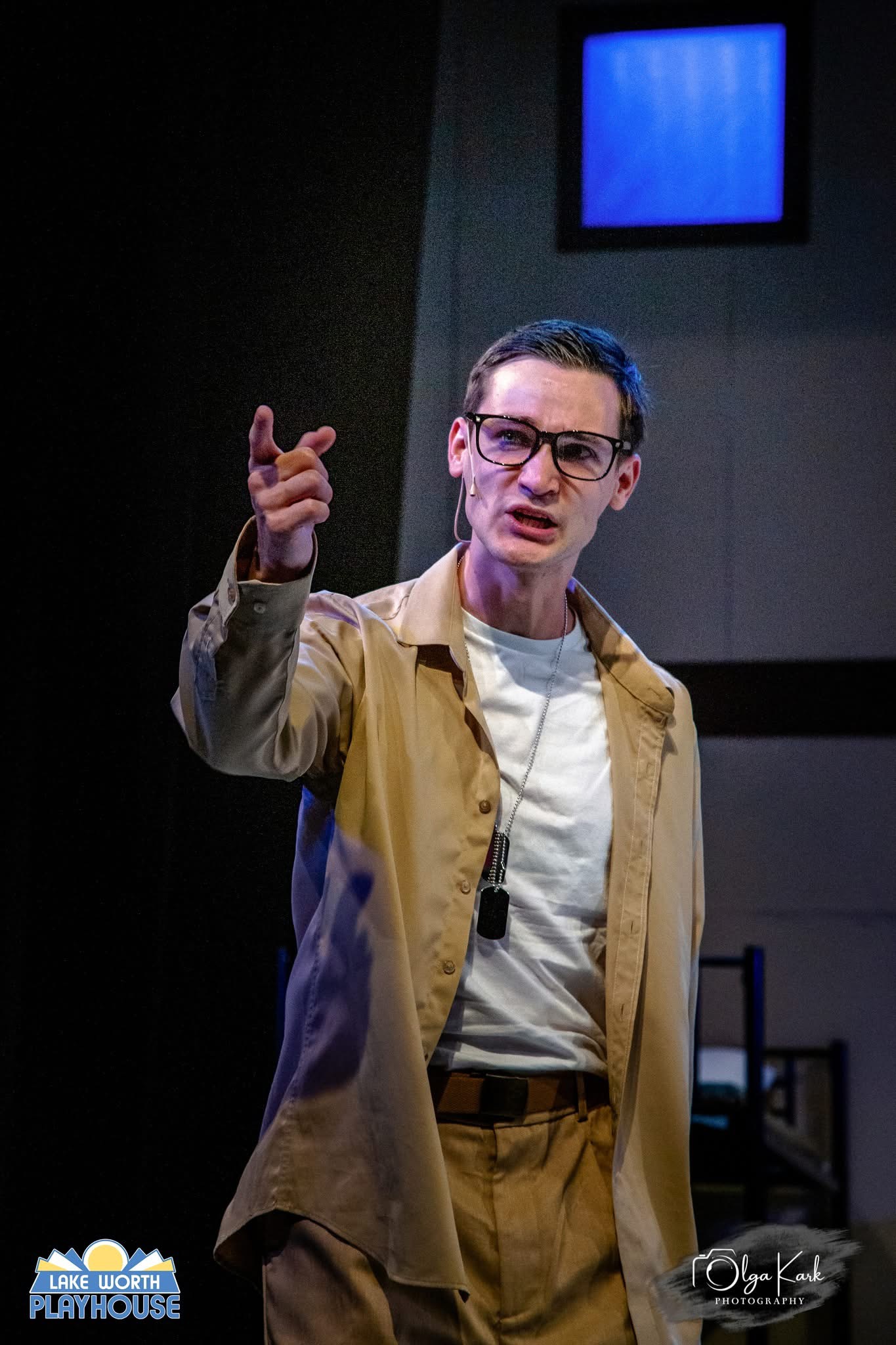
The beauty of creative work such as writing and acting is that you never stop honing the craft. While I can point to specific examples of situations in which I was ‘taught’ such as the summers spent at the Neighborhood Playhouse and the Globe Theatre respectively or my time in Savannah completing a master’s in Dramatic Writing, I still find myself learning on every project that comes my way. When it comes to acting or the programs I did, I learned technique. I learned history. I learned motivation. I learned consistency of routine while maintaining authenticity in performance. Stanislavski said, “an actor prepares,” and I couldn’t agree more. Each rehearsal is an opportunity to fine tune even the most minute facial expression – however, when paired with Sanford Meisner’s approach to performance, I find there is a meaningful balance between the firm foundation supplied by preparation and the fluidity and liveness of reacting naturally in the moment. Most recently, I played Arnold Epstein in the Lake Worth Playhouse’s rendition of “Biloxi Blues.” I’m not sure I’ve ever played so nuanced or intelligent a character that wasn’t just a brainiac or a know-it-all and had to be liked by the audience. In this way, I relied so heavily on my preparation; however, every show was allowed to develop according to the liveness of the audience’s reaction and relationship to Arnold and his journey in Biloxi, Mississippi. I suppose, when referring to writing, the two best skills I’ve learned at SCAD and beyond, is a sentence can always be improved upon (edit!) and the more you do it, the better you get. Like, with anything, repetition matters!
Great, appreciate you sharing that with us. Before we ask you to share more of your insights, can you take a moment to introduce yourself and how you got to where you are today to our readers.
Sure! My name is Jonathan White and along with my brother, Joseph, and the support of our family and friends, we make stories come to life. Or we try to! I’ve been acting since Middle School. I got involved with the school play simply because they would get a week off during tech week! However, I learned quickly that it wasn’t a “week off,” but “crunch time.” From then on, I fell in love with acting. So much so, that I would go on to study at the Neighborhood Playhouse in NYC and the Globe Theatre in London on top of the time spent at the University of Chicago and the Savannah College of Art and Design. It wasn’t until my time in Chicago, however, that I explored my love of writing. It started in stage plays and began as a way to build characters and stories that I didn’t necessarily see or have the opportunity to perform in plays already written. Quickly, my love for writing spiraled into television, movie, even fiction podcasts! Hence, why I landed in Savannah after graduation eager to develop this newly acquired passion! Although, obsession may be more apt after having written 1,000 pages of script content in the calendar year of 2025 alone! This included everything from plays to pilots to films!
All that said, my brother and I work to create content that we believe in. We set out to produce high quality work with low budgets and quick turnarounds. You shouldn’t have to spend a pot of gold, and you shouldn’t have to wait a thousand years. We ensure that when filming or creating a live experience – vision meets efficiency. And it does so in good faith. Always.
Learning and unlearning are both critical parts of growth – can you share a story of a time when you had to unlearn a lesson?
A lesson I’ve had to unlearn! That’s a terrific question! I suppose the lesson is two-fold. “Fail Fast.” Here’s where it gets tricky. I never exactly learned the lesson, “fail slowly.” Perhaps, it was more the lesson of “if failure is inevitable, keep cracking on?” Although, that’s not exactly ever been my relationship with failure. However, the notion of “failing fast” hit me like a ton of bricks. It changed my entire outlook on every venture I undertake. Failure is a part of life. It is inevitable. But the idea of “failing fast,” to me, brings connotations of “try hard and try fast.” It means to put 100% into whatever idea it is and act fast on the idea. To move it to market. To achieve higher quality faster so that if they idea fails because of any factor whatsoever (preferably something not in your control like public reaction) you can deviate, fix, change, alter the product now instead of pouring more time, energy, and money into what might not be destined for success yet. I say “yet” because what works today might not work tomorrow. And vice versa. What does not work today, may actually work tomorrow! And the ability to fail fast allows you to pivot as quickly and necessary as you possibly can. It helps you achieve today what you don’t have to wait until tomorrow to know. Now, I don’t mean this entirely from the financial side of things but more as a creative. Sure, you want to write with the reader/producer in mind. You want to make things achievable. But that does not mean you scale back at the first hint of pushback! Part of the game as a creative is finding creative solutions to financial limitations. Part of the game is creating “the new” before it gets old.
Can you share a story from your journey that illustrates your resilience?
Now, while resilience is key, I was fortunate at this time in my life that the people around me were immovable! I was a senior in college. It was time for my thesis. What could I have decided to do (as a creative) but write, direct, and produce a full-length play investigating faith, individualism, and self-worth through elevated language, biblical references, and live music in the form of a choir, piano, and violin? That seemed to me to be the most logical of undertakings for a senior on the verge on graduation. Now, normally original plays and projects like mine culminated in table-reads and/or workshop performances. Meaning, less-than-full performances. They were meant to “start small.” In theory, I agreed. In practice, however, casting calls went out and the team was assembled. We, of course, got pushback and recommendations to scale back. To ‘start small’. But when my music director sent me her original compositions of age-old psalms and hymns, we had no way to go but forward. From there, lights were programmed, a literal weaving loom was acquired, and blocking was set. Now, to the College’s credit, they provided space for rehearsals and availability. However, in the end, we had a successful weekend of shows because my team never even considered “starting small.” Was the process without its hurdles? No. Would I go about the process differently now knowing what I know? Yeah, probably! Did I learn a whole heck of lot more having gone big? Absolutely. It wasn’t perfect, but only G-D is. However, starting small isn’t an option for me anymore. Not when I know the value of ‘trying big’.
Contact Info:
- Instagram: @jcwhite27
- Facebook: Jonathan White
- Linkedin: Jonathan White, www.linkedin.com/in/jonathan-c-white-271400abc
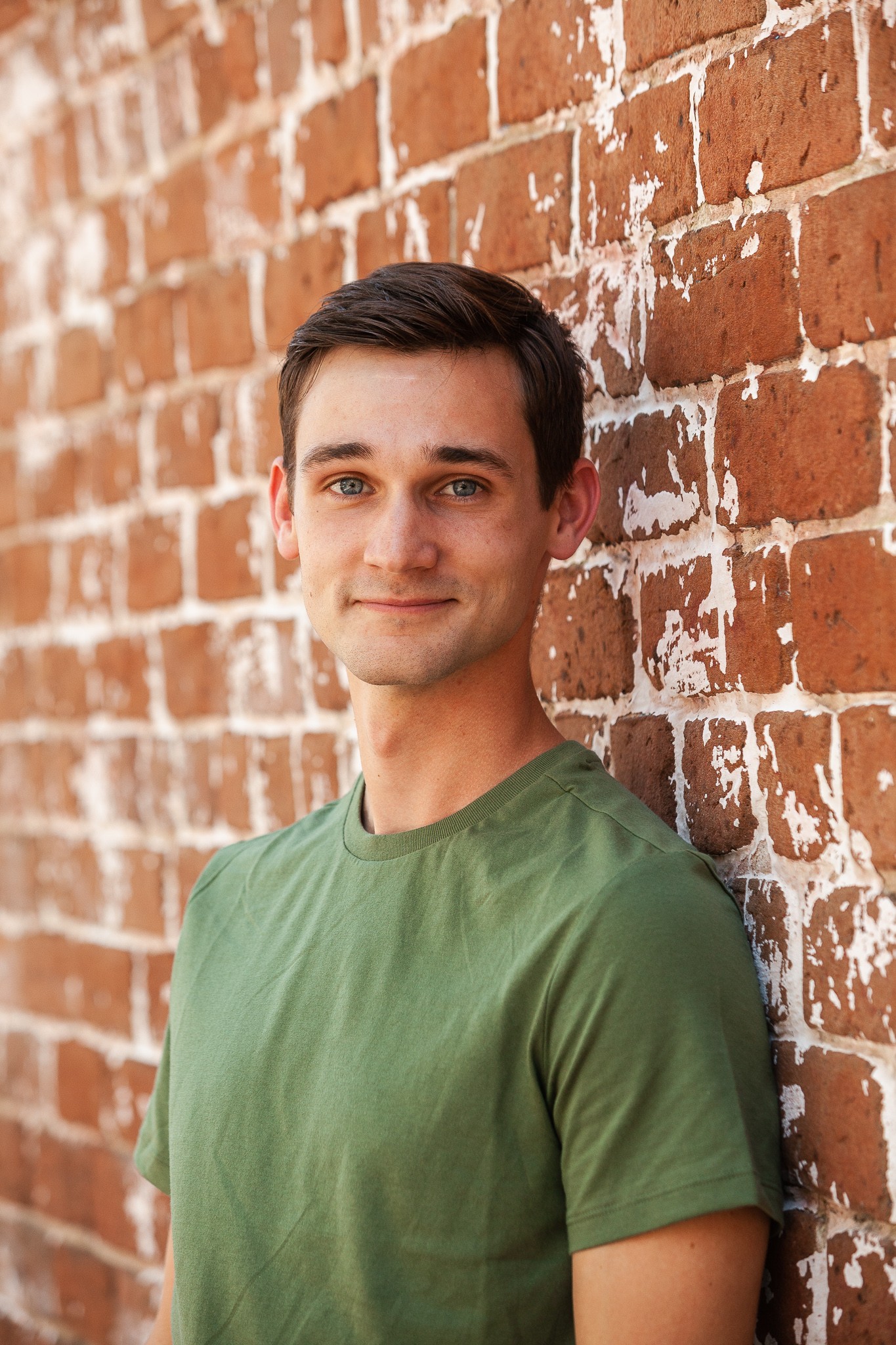
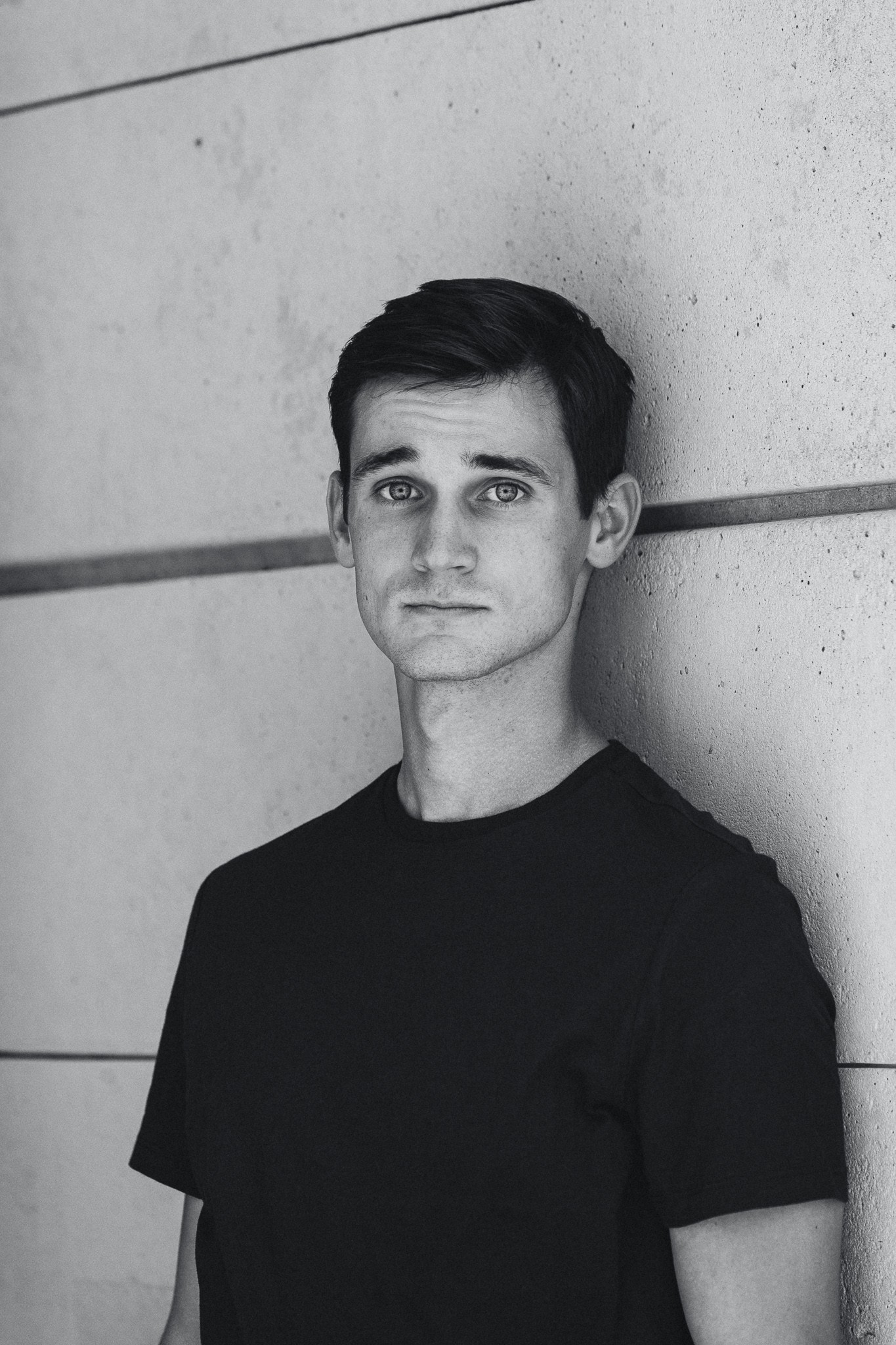
Image Credits
Katherine Lamb
Maddie Steele Photography