

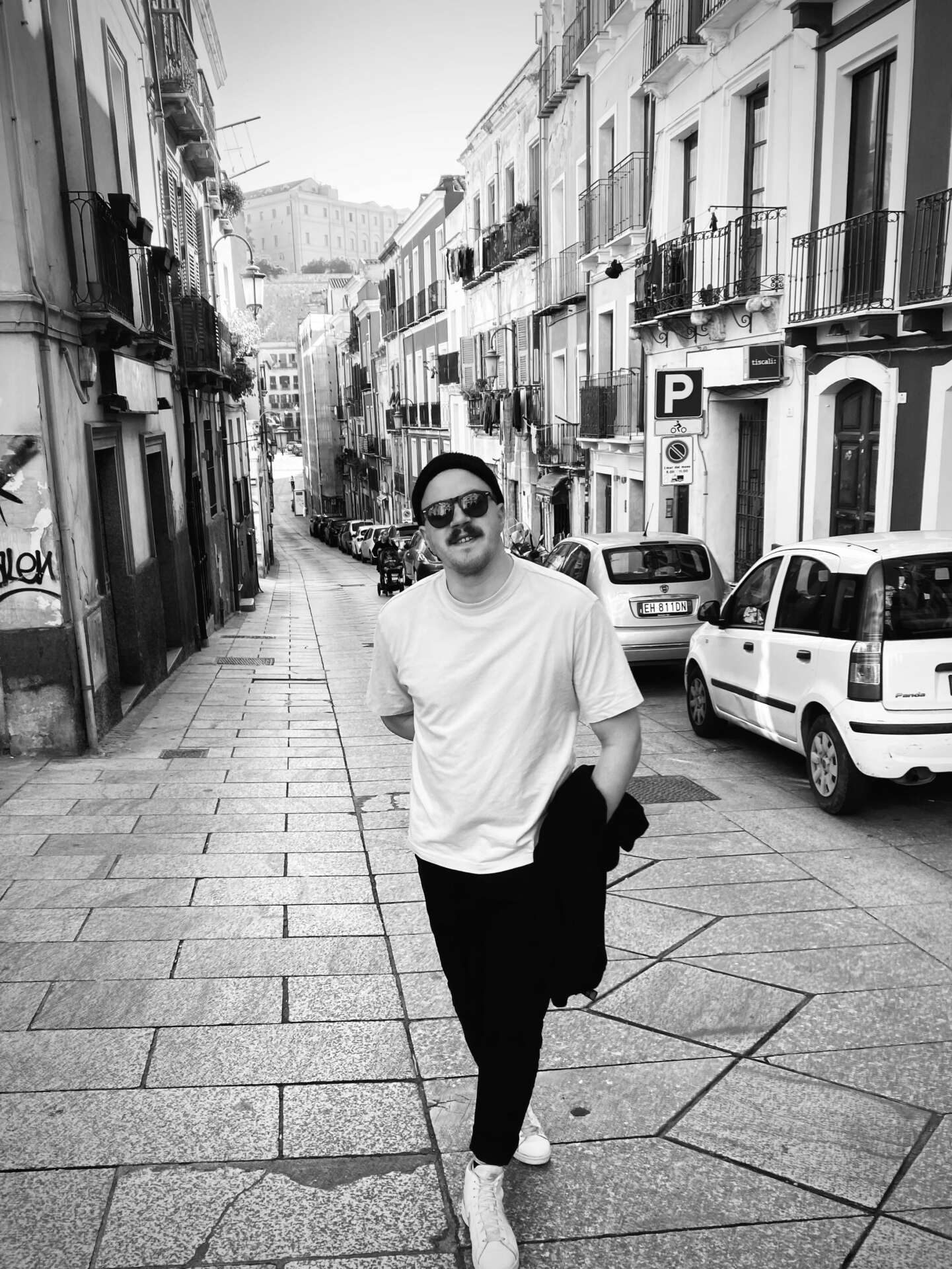

We recently connected with Joe Antus and have shared our conversation below.
Alright, Joe thanks for taking the time to share your stories and insights with us today. Before we get into specifics, let’s talk about success more generally. What do you think it takes to be successful?
The first step is understanding & defining what success means to you. You can’t spend your life chasing someone else’s version of success. To me, success is when I can serve at the nexus of passion, influence, and ability. What I mean by that is I want to find a place I can contribute that aligns what I love, with people I care about, doing the things I’m best at.
Success has never been easy for me to define. I never had a clear answer to the classic question of “what do you want to be when you grow up?” I spun my wheels for years trying to answer that question & it’s taken me a while to realize that I didn’t need to answer that question. The better questions for me were “who do I want to be?” and “who is my community?” Eventually, I found a lot of freedom realizing that I wanted to find a group of people to invest in & live life with, then see what needs I could meet to help them thrive.
That hasn’t always been a particularly easy disposition to have. I’ve worked many, many different jobs to support my passions. At one point last year, I mapped out all of the gigs I’ve had since I was a teenager. I managed to list out 33 different things: from bussing tables to playing music to working as a summer farm hand to organizing voter registration campaigns. I don’t know if I’ve always felt particularly successful when I’ve been a closing a bar, mopping floors at 2 in the morning. But when I look at the path I’ve chosen, I’m proud of the steps I’ve taken & thankful to the people that elevated me & positioned me for success.

Awesome – so before we get into the rest of our questions, can you briefly introduce yourself to our readers.
I started to become loosely interested in policy in late high school. Really it started with being curious with how people live and how we live collectively together. I studied political science in undergrad amongst other things but didn’t pursue that directly until a few years after I graduated.
My professional career path really started through writing. I wrote & edited in several different capacities through the years and I eventually I began consulting with the company I am currently with, Signal Tech Coalition, about 4 years ago. I helped in the brand creation, wrote op-eds, testimonies, grants, and the likes for a few years until I eventually took over as executive director when the former director moved on to their next step.
Signal’s works lies mostly in the climate advocacy space. We run a coalition of private-sector leaders across Colorado that makes economic arguments for climate policies, regulations, & investments.
The climate world as a whole can be intimidating and at times emotionally deflating. With a wide breadth of disciplines & strategies in climate advocacy, I think Signal’s voice is unique in highlighting the innovative & bold steps being made in Colorado. We partner with organizations of all sizes across, tech, finance, and government.
While we advocate for legislation & policy that positions Colorado to lead by achieving ambitious climate-related goals, we also try to nurture the growth of an economy that thrives as we transition to clean energy & implement green technology.
That’s really the heart of our brand & our mission. With so much uncertainty & apprehension underlying climate change, we want to pick the signal out of the noise that highlights the innovators and elevates the voices of people bringing equitable solutions.

We often hear about learning lessons – but just as important is unlearning lessons. Have you ever had to unlearn a lesson?
The biggest lesson I’ve had to unlearn is one I still have to unlearn almost daily. I’ve always believed everyone knows exactly what they’re doing. While experts certainly exist, I’m consistently amazed by how many people (in any given field) are figuring things out as they go.
I think we’ve all heard cheesy aphorisms about being lifelong students, but damn–it’s cliche for a reason. There’s always more to know and more to hear. When we free ourselves from the expectation that we need to know everything to contribute, we can earnestly & authentically say “I don’t know, but I’m going to see if I can find out.” Then we actually start learning. Then we actually find out the things we do know. Then we actually can start making impact.
I’m constantly humbled by the intelligence & thoughtfulness of the people I work with. Saying “I don’t know” has been one of the biggest gifts I’ve given to myself even though I have to remind myself that that’s okay to say.

How about pivoting – can you share the story of a time you’ve had to pivot?
I’m from a small rural town in Ohio and grew up working in churches. I got to a place in my life where I was doing that professionally and by many definitions was successful in it. While I was able to work with so many compassionate and genuinely wonderful people, I got to a place where it was no longer working for me, for many reasons.
I had just turned 28 and had spent over a decade committing my time and energy and talents to this work. I’d held several jobs simultaneously to try and make sure I could align my passion with my talents, but I arrived at a point where I hit the end of that road. My personal beliefs were changing and my aspirations were too. It was absolutely terrifying.
So, I decided to pivot. I began trying new things to see what was next. As I started to gain some momentum, the pandemic hit. Like many of us, I was left reeling. My wife and I had to face countless health issues while I was turning 30 and yet again found myself saying “I have no idea what I want to do.” There was no blueprint and honestly that scared the shit out of me.
Fortunately, I wasn’t alone. All of us were trying to find what to do. With the support of my wife & the people I cared for most, I tried to simplify. I started finding ways to advocate for my mental health and I began looking for places I could be successful: I stopped asking myself “what do I want to do?” and started searching for ways I could meet needs in places I cared about & with people I cared about.
It was humbling. It had a lot of low points. I felt like I was starting over at the worst possible time. But very slowly, things started to come together. Conversations with my friends, with my family, with my mentors were sustaining.
Eventually, opportunities started to come up. I trepidatiously stepped into a few, figuring out what worked & what didn’t. The thing that absolutely worked better than the rest was surrounding myself with good people & listening to what they had to say. Any modicum of success I’ve experienced is directly owed to the people I have in my life.
Contact Info:
- Website: https://www.signaltechcoalition.org/
- Instagram: https://www.instagram.com/signaltechco/ and https://www.instagram.com/joe.antus/
- Linkedin: https://www.linkedin.com/in/joe-antus-94862237
- Twitter: https://twitter.com/sigtechco?lang=en
Image Credits
These are all photos I’ve taken personally, no need to credit.