
We’re excited to introduce you to the always interesting and insightful Jodey Zhihan Yang. We hope you’ll enjoy our conversation with Jodey Zhihan below.
Jodey Zhihan, looking forward to hearing all of your stories today. What’s been the most meaningful project you’ve worked on?
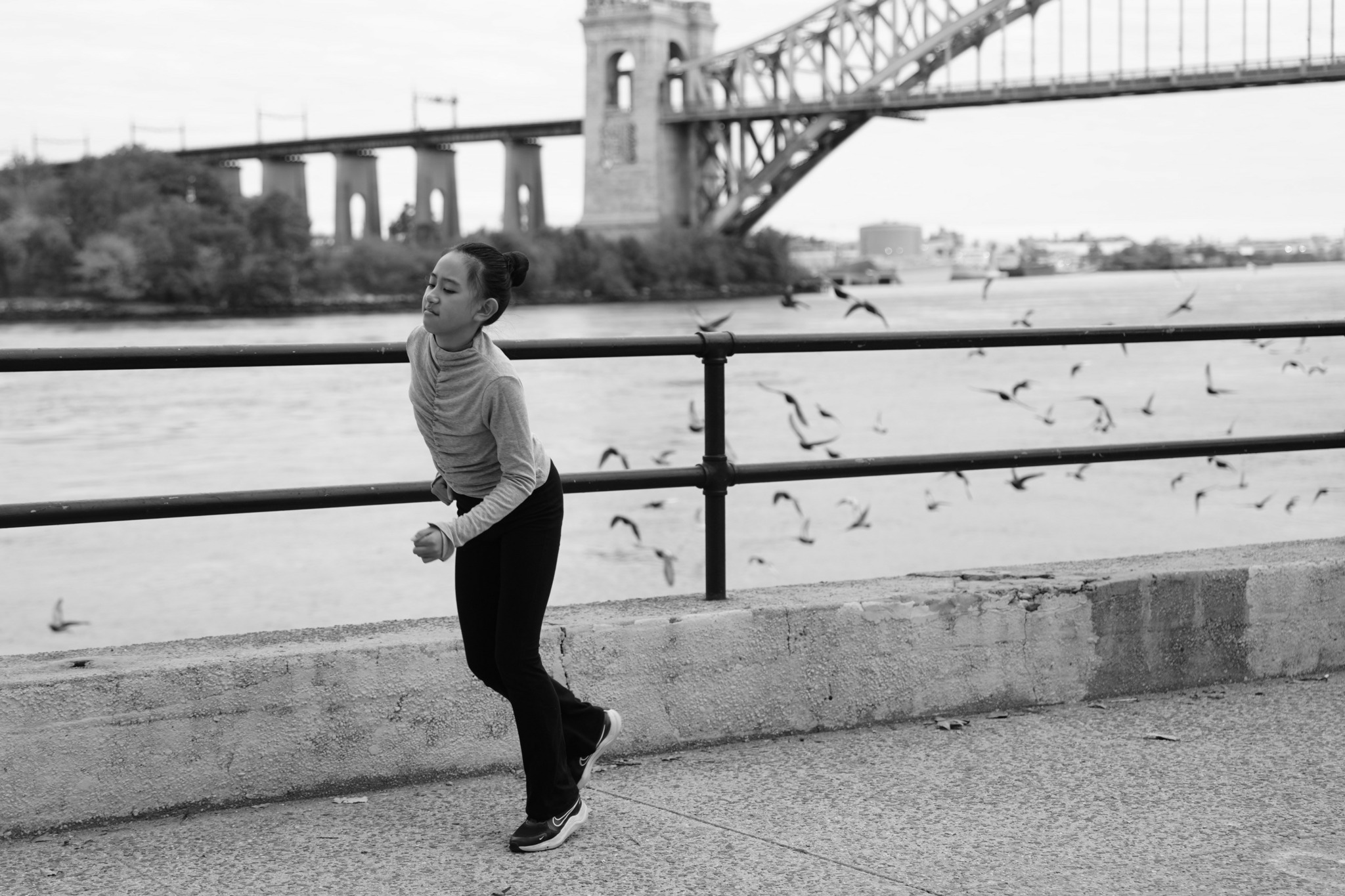
In 2025, I worked on a project that stayed with me more than I expected. It began with a 10-year-old girl I met through a choreography commission for a provincial dance competition called Glorious Flower, in Hubei, China. I was asked to create a contemporary solo for her titled One Step Away.
She had grown up entirely within a traditional Chinese dance training system. Her body was extremely disciplined in that way—clean lines, clear alignment, a strong sense of form and correctness. But she had never encountered contemporary dance, or anything that asked her to move without a fixed reference point.
From the beginning, there was a kind of pressure layered onto everything. The competition itself was highly competitive, and there were strong expectations from her teachers and family that she would place first. At the same time, we were trying to introduce a movement language that doesn’t really operate through “right or wrong” in the same way. That gap—between expectation and uncertainty—became the space we were working in. We only had two hours of rehearsal each week, over four months. That rhythm shaped everything. There wasn’t really time for gradual “training” in the usual sense. Each session had to be very focused, almost like small experiments rather than a continuous build.
In the beginning, she would often ask whether something was correct. Even when she was moving, you could see that she was trying to locate a stable answer inside the movement. That made sense, given her background. But contemporary dance doesn’t really offer that kind of stability, so part of the work was just staying with that discomfort without immediately fixing it. Instead of teaching steps, I found myself giving her very simple tasks—things like shifting weight without planning it, or noticing breath before shape, or holding stillness without “preparing” it. These were not dramatic exercises, but they slowly started to change how she organized her attention inside the body.
After a while, there were small moments where something opened up. She would pause differently. Or continue a movement slightly past where she used to stop. It wasn’t a big transformation that you could point to in a single rehearsal, but over time you could see that she was no longer only reproducing form—she was beginning to make choices inside it.
By the time we arrived at Glorious Flower, she performed One Step Away with a kind of calm presence that hadn’t been there at the beginning. She ended up winning first place. But honestly, that part feels almost secondary when I think back on it. What stayed with me more was watching how her relationship to “not knowing” changed over those months. She started from a place where uncertainty felt like a problem to solve as quickly as possible. And gradually, it became something she could stay inside of, even briefly.
For me, the project also shifted something in how I think about choreography in general. Especially in high-pressure contexts like competitions, where everything is measured through outcome. I started thinking less about choreography as the production of a finished form, and more as the construction of conditions where a different kind of attention can emerge in the body. It wasn’t really about introducing contemporary dance to a trained young dancer. It was more about seeing what happens when a very structured body is given just enough space to hesitate, and to start thinking for itself.
Jodey Zhihan, before we move on to more of these sorts of questions, can you take some time to bring our readers up to speed on you and what you do?
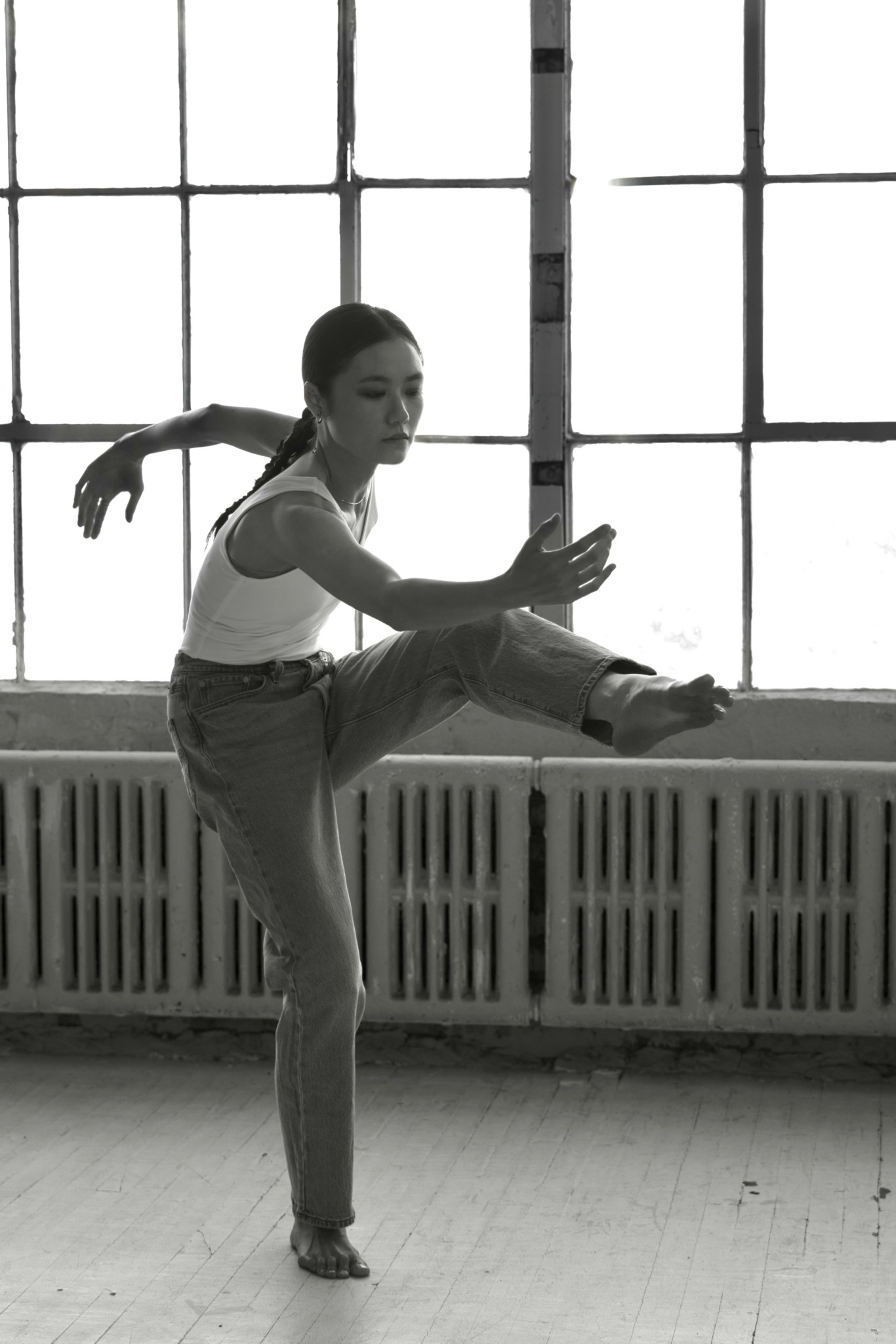
I am a choreographer, dancer and filmmaker. I was trained in both classical Chinese dance at Beijing Dance Academy and later in contemporary performance and experimental practice through my graduate studies at CalArts. Over time, my practice expanded beyond dance into film and multimedia work, but my core interest has remained consistent: the body as a site of perception, memory, and social conditioning.
I work across film, choreography, and site-specific performance, often moving between stage, screen, and installation. Rather than treating these as separate disciplines, I approach them as interconnected languages that shape how time, emotion, and attention are constructed. Film teaches me framing and narrative structure; choreography teaches me embodied logic and spatial thinking. I am interested in how these systems overlap, and how movement can function both cinematically and physically at the same time.
Much of my work is concerned with the tension between structure and agency. I am drawn to environments where the body is already shaped by systems—training systems, institutional expectations, or cultural narratives—and I’m interested in how subtle shifts in attention or physical decision-making can open up alternative ways of being inside those systems. In that sense, my work is less about producing fixed forms, and more about constructing conditions where perception can shift.
In addition to my artistic practice, I have worked across performance, film, and arts education, collaborating with organizations such as Pacific Symphony Orchestra, LACMA, Heidi Duckler Dance, Yaya Dance Academy, and San Musae Cultural Center. These experiences have allowed me to work in different contexts where choreography is not limited to the stage, but extends into educational spaces, orchestral settings, and interdisciplinary productions.
Across these projects, I am most interested in how the body learns—and how it unlearns. I am less concerned with movement as technique alone, and more with how movement reveals thought processes, habits, and internalized expectations. For me, choreography becomes a way of making these invisible structures visible, even if only briefly.
What I hope distinguishes my work is this sensitivity to transition: moments where a performer is not yet fully within a new language, but no longer fully inside an old one. I find meaning in that instability. Whether working in film or live performance, I am interested in creating conditions where hesitation, ambiguity, and transformation can exist without needing to be immediately resolved.
What’s the most rewarding aspect of being a creative in your experience?
The most rewarding aspect of being an artist, for me, is the way creative practice continually pulls me into a more immediate and unfiltered relationship with lived experience.
Making work—whether writing, choreographing, or developing film projects—often places me in a state where I can no longer remain observational in a detached sense. The process becomes physically and mentally consuming in a way that collapses the distance between life and perception. Long hours, fatigue, uncertainty, and repetition are not separate from the work itself; they become part of how the work is felt and understood. In that condition, creativity is less about producing ideas and more about staying present with what is unfolding in real time.
What I find most meaningful is that this process continuously sharpens sensitivity—to people, to environments, to subtle emotional and behavioral shifts. There are moments when something as simple as a gesture, a fragment of conversation, or a shift in atmosphere can suddenly feel disproportionately significant. These are not necessarily “dramatic” moments, but they become charged because the practice trains you to notice rather than overlook.
Over time, I’ve also become more aware of how different creative systems shape the body and mind differently. In some contexts, I was trained to prioritize control, clarity, and form. In others, I’ve had to learn how to sit with ambiguity, fragmentation, and unresolved states. Rather than replacing one with the other, my practice now exists in the tension between these modes. That tension often feels uncomfortable, but it is also where a lot of creative clarity emerges.
Dance remains an important foundation for me in this process. It continues to surface in ways that are not always formal or staged—sometimes as memory, sometimes as instinct, sometimes as a physical response that precedes language. It provides a kind of grounding that I return to when thinking becomes too abstract or overly conceptual. At the same time, writing and filmmaking allow me to extend that bodily intelligence into structure, narrative, and time-based composition.
What I find most rewarding, ultimately, is not a single outcome or finished work, but the ongoing transformation of perception itself. Creative practice changes how I notice things, how I hold uncertainty, and how I relate to complexity. It is a way of staying in contact with experience without immediately resolving it into explanation or conclusion.
In that sense, making work is not separate from life—it is a method of being inside life more fully, with all its instability, intensity, and constant movement.
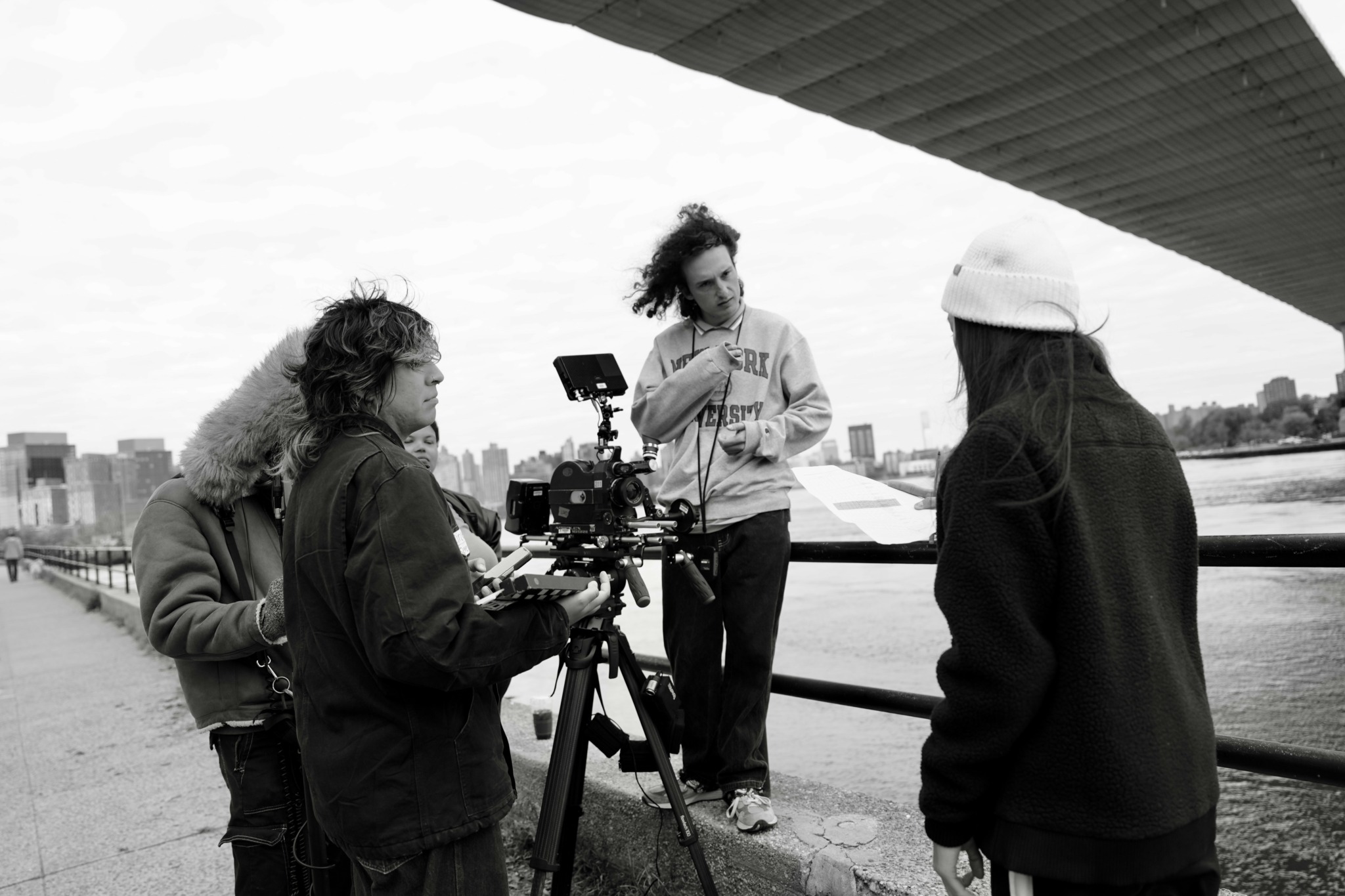
In your view, what can society to do to best support artists, creatives and a thriving creative ecosystem?
From my own experience as an artist based in New York, one of the first things that really becomes obvious is just how expensive it is to live and make work here at the same time.
There’s a lot happening in the city creatively—it’s actually quite inspiring to be surrounded by that much energy. But at the same time, the cost of simply sustaining yourself already takes up so much space. And then when you move into making work, it becomes even more complicated, because so many opportunities in the arts are either low-paid or completely unpaid.
But the actual process of making work… it’s not light. You need rehearsal space, you need to pay dancers, you need costumes, sometimes you need to rent a theater or a studio. And if you care about the work—even just in a basic way—it’s very hard to reduce those things without affecting the outcome.
So I think a lot about that gap. The gap between what it actually takes to make something, and what is structurally supported. I do think cities like New York could support artists more through funding structures that are more accessible and more diverse—not just a few competitive grants, but a wider range of support systems. And also more opportunities to show work without transferring all the financial pressure back onto the artists themselves.
At the same time, I don’t think it’s only about money. There’s also a cultural layer to it. I think it really matters whether a society allows room for risk, or whether everything has to immediately “work” or make sense in a very polished way.
Because when there’s too much pressure for certainty, people stop experimenting. And for me, experimentation is really where the work starts.
Healthy creative ecosystems recognize that experimentation, uncertainty, and even failure are essential parts of artistic development. I really believe that. Without that space, it becomes very hard for anything unexpected—or honestly anything meaningful—to emerge.
Contact Info:
- Website: https://JodeyYang.com
- Instagram: https://www.instagram.com/jodeyyang/