

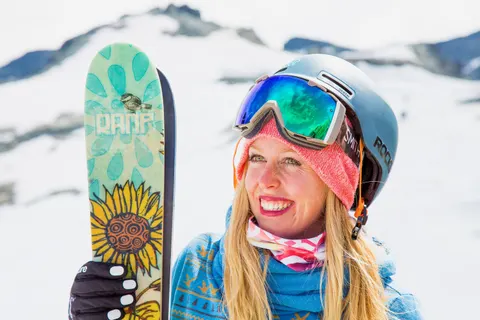

We caught up with the brilliant and insightful Jamie MoCrazy a few weeks ago and have shared our conversation below.
Jamie, thanks for taking the time to share your stories with us today What’s the backstory behind how you came up with the idea for your business?
The idea for MoCrazy Strong Foundation wasn’t born in a boardroom. It was born in a hospital room.
In 2015, at the Freestyle Skiing World Tour Finals, I crashed and suffered a near fatal traumatic brain injury. One moment I was a professional athlete competing at the highest level. Next, I was fighting to survive. I woke up unable to walk, talk clearly, or function independently. My identity — the one I had built through sport, performance, and pushing limits — was gone overnight.
The early days were raw, confusing and incredibly humbling. I remember the feeling of isolation most vividly. I had amazing family support but I felt society didn’t understand. People could see my physical injuries, but they couldn’t see what was happening inside my brain. The cognitive fatigue. The emotional swings. The fear that I would never feel like “me” again.
What shocked me most was what happened after the hospital.
There wasn’t a clear roadmap for life beyond survival. There was rehab — yes. But where was the conversation about identity? Purpose? Adventure? Joy? Where was the community for caregivers who were silently carrying everything? Where was the belief that a meaningful, powerful life was still possible?
That gap is where the idea began.
My family and I were constantly asked about the tools that helped me heal — mindset work, mind-body medicine, nature, movement, community, goal setting, redefining success. We realized recovery wasn’t just clinical. It was holistic. It was physical, emotional, relational, and deeply personal.
And I began to see something powerful:
Athletes understand alternative peaks. When you can’t reach the summit you planned, you find another way up.
Brain injury survivors deserved that same mindset.
The logic behind starting the foundation was simple but strong:
– Millions of people live with TBI.
– Survivors and caregivers often feel isolated and under-resourced.
– Traditional systems focus on stabilization — not thriving.
I had a platform, a story, and lived experience that resonated globally.
I wasn’t just solving a medical problem. I was addressing a hope problem.
What made it unique was the combination of professional athletes and lived experiences as a TBI Survivor, Family Caregivers and PhD research on TBI. We were combining resilience training, community-based adventure, education, and advocacy under one roof. We weren’t saying, “You survived.”
We were saying, “You can thrive.”
What excited me most was watching the shift in someone’s eyes — when they realized their injury didn’t disqualify them from purpose. When caregivers felt seen. When survivors stood on a mountain again — literal or metaphorical — and said, “I’m still here.”
That’s when I knew this wasn’t just worthwhile. It was necessary.
MoCrazy Strong Brain Injury Foundation exists because recovery is more than returning to baseline. It’s about discovering who you become after everything changes.
Awesome – so before we get into the rest of our questions, can you briefly introduce yourself to our readers.
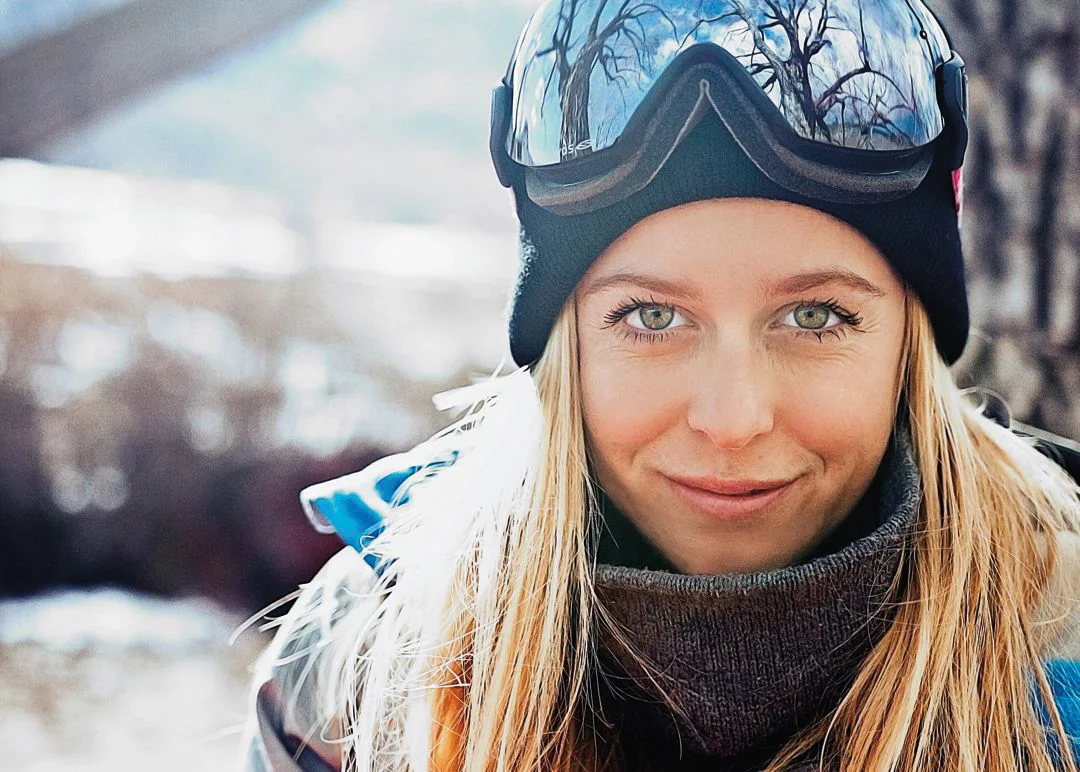
I grew up on the ski slopes. By 18, I had won the Junior World Championships and moved to Utah to pursue a professional career in slopestyle and halfpipe skiing. I became the first female athlete to flip off a rail in competition and land a double backflip at X Games. I was chasing Olympic dreams and world records—until a catastrophic crash at the Freestyle Skiing World Tour Finals in 2015 left me in a natural coma with a severe traumatic brain injury.
I survived—but survival was just the beginning. I had to relearn how to walk, talk, and regain cognitive function. For months, I didn’t even remember my own life. That experience forced me to redefine success, identity, and strength. It taught me that when the peak you were climbing disappears, you have to find an alternative one.
Today, I’m a keynote speaker, brain injury advocate, and founder of the MoCrazy Strong Foundation, a nonprofit dedicated to creating opportunity and community for the entire brain injury community. I also co-directed and starred in the award-winning documentary #MoCrazyStrong, which followed my recovery journey and now streams publicly on Amazon Prime.
Through my speaking, advocacy, and foundation work, I help organizations and individuals rethink resilience. I speak to healthcare professionals about trauma-informed communication, to leaders about growth mindset under pressure, to women about breaking barriers, and to brain injury survivors about reclaiming possibility. I don’t just tell a survival story—I translate it into actionable tools for navigating uncertainty, setbacks, and change.
What sets me apart is that I’ve lived both extremes: elite performance and total rebuild. I understand high achievement—and I understand starting from zero. That dual perspective allows me to connect with athletes, executives, nurses, parents, and survivors alike.
What I’m most proud of isn’t the medals or the records. It’s choosing to walk back onto the mountain that nearly took my life—to get married to the love of my life in 2022. It’s turning a hashtag my sister created in crisis into a foundation that serves thousands of others globally. It’s proving that resilience isn’t about going back to who you were—it’s about becoming someone even stronger. Because of recovery from the near fatal brain injury, Jamie MoCrazy began. I legally changed my last name to my lifelong childhood nickname MoCrazy during my marriage in 2022.
The main thing I want people to know about me and my work is this: there is no “normal” to return to after life changes you. But there is always another peak to climb. And sometimes, the alternative summit becomes the most meaningful one of all.
Have you ever had to pivot?
Most people know the headline of my story — the crash, the coma, the traumatic brain injury, the comeback.
But the real pivot didn’t happen on the mountain. It happened after I survived.
When I regained my memory and began rebuilding my life, I initially treated recovery like sport. I honestly thought recovery from my brain injury would be the same as recovery from when I tore my ACL-Train harder. Push more. Outwork the injury. I thought resilience meant returning to the exact version of myself I had been before.
The deeper pivot came when I realized I wasn’t meant to go back — I was meant to evolve.
Letting go of my former identity as an elite athlete wasn’t a single decision. It was a gradual surrender. In fact I walked away from the competition life and straight into psychological therapy. I had to learn for myself and shift from proving I was still “that skier” to asking who I was becoming now. That shift changed everything. Instead of chasing podiums, I began building platforms. Instead of breaking world records, I focused on breaking the stigma around brain injury and redefining how we talk about recovery.
Founding the MoCrazy Strong Brain Injury Foundation wasn’t just a nonprofit decision — it was a mindset pivot. I stopped asking, “How do I get my old life back?” and started asking, “How can this experience create opportunity for others?”
That shift — from performance to purpose — has been the most meaningful pivot of my life.
I’ve learned that sometimes the most powerful pivots aren’t visible to the world. They’re internal. They’re identity shifts. They’re the moment you stop trying to recreate who you were and start building who you’re meant to become. Stop fixating on the life you wish you had, and start leveraging the talents you currently possess to elevate the life you’re living right now.
That’s the pivot I’m most proud of.
Are there any books, videos, essays or other resources that have significantly impacted your management and entrepreneurial thinking and philosophy?
One of the most influential books on my approach to recovery, resilience, and even entrepreneurial thinking has been Mindset, The New Psychology for Success by Carol S. Dweck. I first encountered it during my study abroad in France in 2017, and it ended up shaping not just how I thought about challenges, but how I framed my life after brain injury.
When I arrived in France, no one knew me or my story—they didn’t know I’d survived a traumatic brain injury, that I had been in a coma, or that I had relearned all my basic motor skills. I was suddenly seeing myself in a new light, stripped of my history, and experiencing what it’s like to interact with society purely as a person, not as a “brain injury survivor” or “X Games athlete.”
Then, I was assigned to present on Mindset in front of my classmates. As I prepared, I realized just how connected the book’s principles were to my own recovery. And how that connection had been created by my mothers master’s education on psychology and my mom’s complete understanding of all the principles taught in Mindset. The idea that abilities and intelligence can be developed through effort, strategy, and persistence wasn’t just theory—it was the roadmap I had been following my entire life. Both to break world records as an athlete and then to rebuild my life after my fatality report had been written. I recognized that my journey, and my rehabilitation were practical applications of a growth mindset.
Mindset isn’t just a motivational concept; it’s a scientifically backed framework. With neuroplasticity, the brain’s ability to rewire itself, the principles of growth mindset literally made my recovery possible. It taught me that failure and setbacks aren’t the end—they’re opportunities to experiment, learn, and build new pathways. That philosophy informs everything I do today, whether I’m speaking, advocating, or leading initiatives and creating events that provide opportunities for brain injury survivors to thrive.
Contact Info:
- Website: https://www.mocrazystrong.org/
- Instagram: https://www.instagram.com/jamiemocrazy/
- Other: https://www.amazon.com/MoCrazyStrong-Jamie-MoCrazy/dp/B0D5T81DDQ
Image Credits
Jamie MoCrazy