
Alright – so today we’ve got the honor of introducing you to Hailey Winkleman. We think you’ll enjoy our conversation, we’ve shared it below.
Hi Hailey, thanks for joining us today. The first dollar you earn in a new endeavor is always special. We’d love to hear about how you got your first client that wasn’t a friend or family.
I really didn’t know that I was going to start my own business, but when I was still a college student I would take piecemeal jobs to earn spending money and grow my skills. Think web forums asking for logos done cheap, or local small businesses needing a flyer. I was always planning on applying for in-house design jobs with established companies once I graduated.
Sometime near the start of my third year of college, I had a professor who asked if I would meet with someone who emailed him. He seemed quite insistent that I take the meeting; I think my professor basically said it was to get the guy to leave him alone! I was definitely not in a position where I wanted to turn down an opportunity, but I didn’t make any promises I’d be the right fit. Essentially, I agreed to one meeting but nothing else.
When the time came, I was so intimidated! The guy I was meeting was much older than me, definitely established in his career, and wearing a full suit; meanwhile, I was coming straight from class with jeans and a backpack on! However, it turned into a great conversation about revitalizing the organization, and we ended up working together for a rate of 15/hour. At the time, this was about double the minimum wage and I felt really excited about it.
As time went on, my rate went to 18, then 20, then 25. Within a year we agreed on a monthly retainer, which was the very first time I had such a contract. I still work with this organization to this day. My independent work really began with that meeting, and it all came from one person recommending me. When I graduated, I had a remote job right away working for myself. I am beyond grateful that I didn’t try to do a “regular job.”
I would say to any young people pursuing design, especially those in a university environment, make connections and work hard in classes. Do things to hone your skills; ask questions and remain curious; and have a good attitude without compromising your own sense of self. The best way to love working for your clients is to be yourself from the outset and connect with people on the same wavelength as you.
Great, appreciate you sharing that with us. Before we ask you to share more of your insights, can you take a moment to introduce yourself and how you got to where you are today to our readers.
I have always been passionate about creating. This probably sounds incredibly vague, but it really drives everything I do. From the moment I could hold a crayon, I was drawing. I think my parents said I was using the computer at 3 years old. Basically, going into a creative industry was a no-brainer. I think the harder thing to decide was what specific creative industry I would pursue, and how I would actually make money from it.
I went into graphic design because it seemed to utilize my existing skill set without being a totally off-the-wall career choice. I really wanted to go into motion graphics and animation for a while, but as I learned more, I realized that it’s good to have a variety of skills you can provide for your clients. In a way, I became less sure of the specifics. However, that’s really worked to my advantage as I’ve built my business.
As a consultant, there are very few things I won’t do for a client. I have been graphic designer, IT specialist, on-site photographer, social media creator, video editor, animator, booking manager, and more. I very, very rarely tell a client, “I can’t do that.” I usually say, “Let me figure that out for you.” This way, my clients won’t need to search for another contractor, and I can grow my skills in that area.
That’s one of the great things about being your own boss. You get to decide which things interest you, as well as how you can best serve your clients and build relationships with them. Of course, all of these services are discussed in a Scope of Work agreement beforehand, but I always leave contracts open to continued discussion and negotiation.
If I were to summarize my work, I would say, “I do communications and design.” Communications – particularly social media, email, and print marketing – is the bulk of my work. Design could be anything from a t-shirt to a full website. If you think about going to a marketing agency, they may hire different people for these two aspects, but I love being able to work on them symbiotically. To me, communications and design are inseparable. They work best when they are generated together, reflecting each other and strengthening the message.
I think one of the more interesting aspects of my work is how little it has to do with drawing. I love getting to do creative work, and I do it often, but there are a lot of other pieces that feed into communications. I never imagined how much copy I would have to generate; how many analytics reports I have to sift through; or how much math I’d have to do. It’s sort of incredible how much has to happen “behind the scenes” before you can have a completed image, much less an annual report or a brochure about legislation.
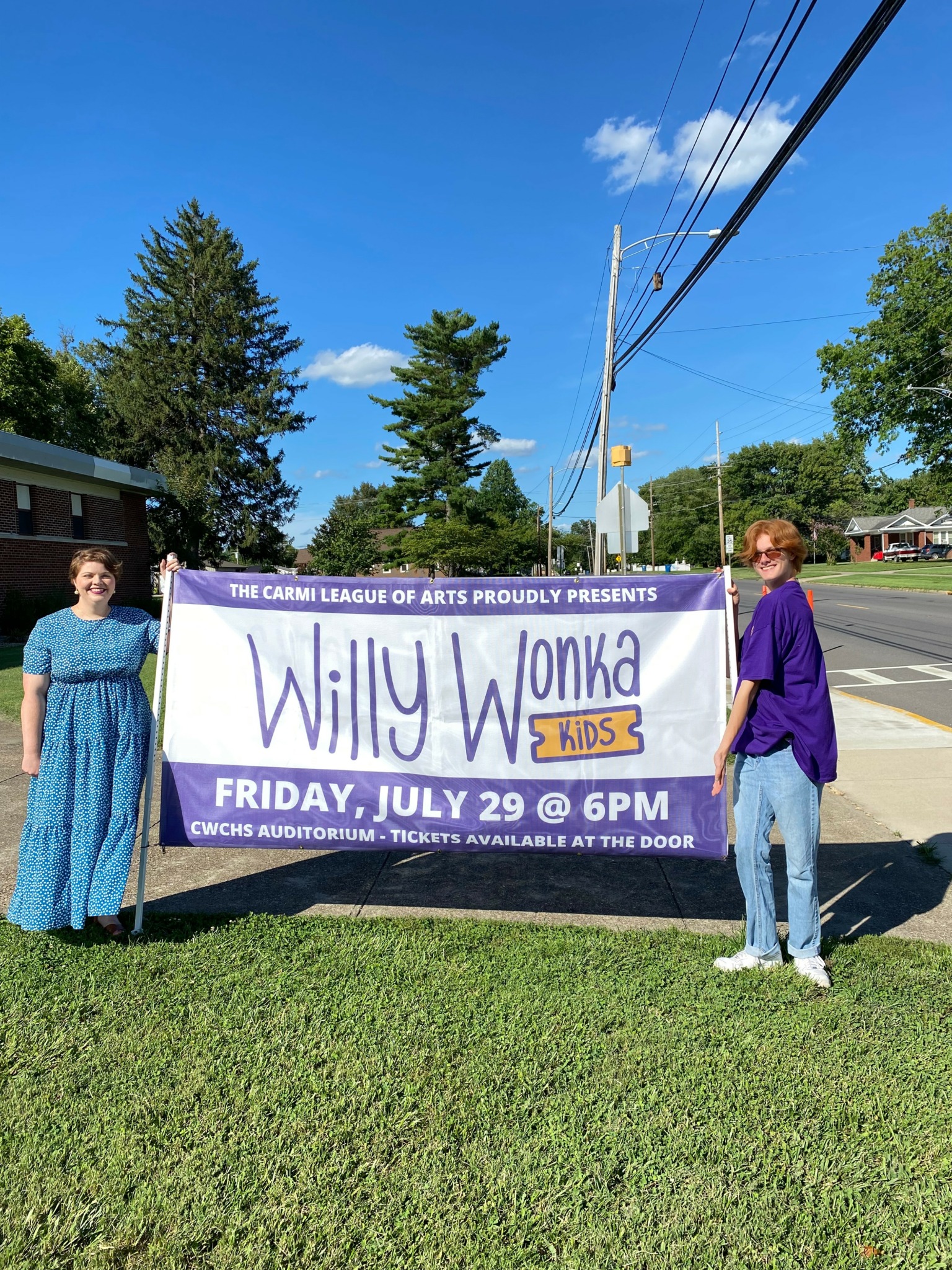
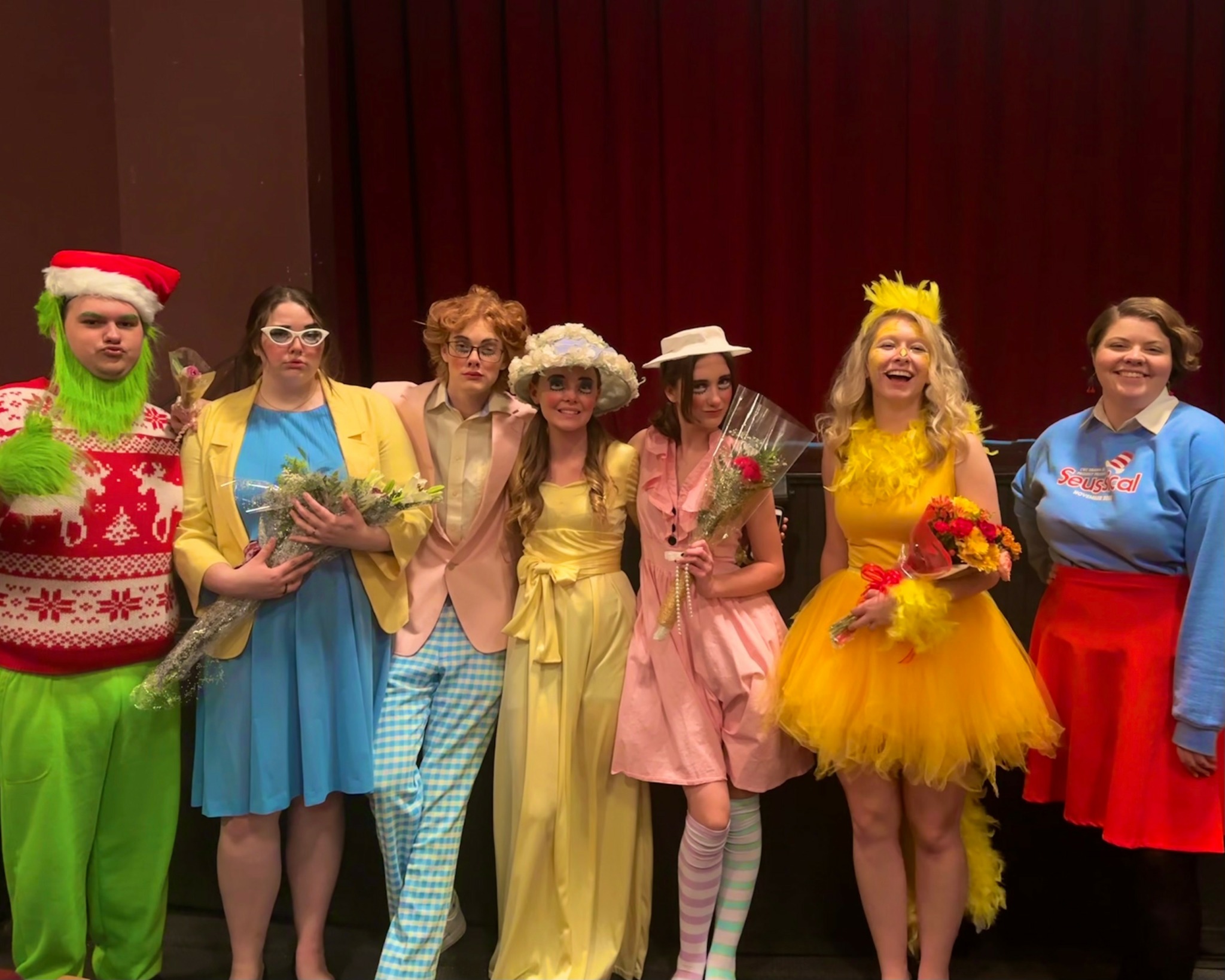
One of the most important things about my work is making sure it’s meaningful. All of my clients, with some one-off projects as exceptions, are non-profits or civic organizations. It feels good to know that I am able to use my skills to create something that has an impact. It’s hard to pick a project or a service that I’m most proud of because I love what I do, and I’m grateful for all the folks who have been right there with me along the way. I work with the high school drama department to create theater programs, t-shirts, and banners; I volunteer to take pet pictures with Santa for an organization that helps animals; and I work with a lot of local organizations on projects to help them grow and connect with our community. I honestly feel that I get to have the most fun and be the most creative when I’m doing this kind of volunteer work.
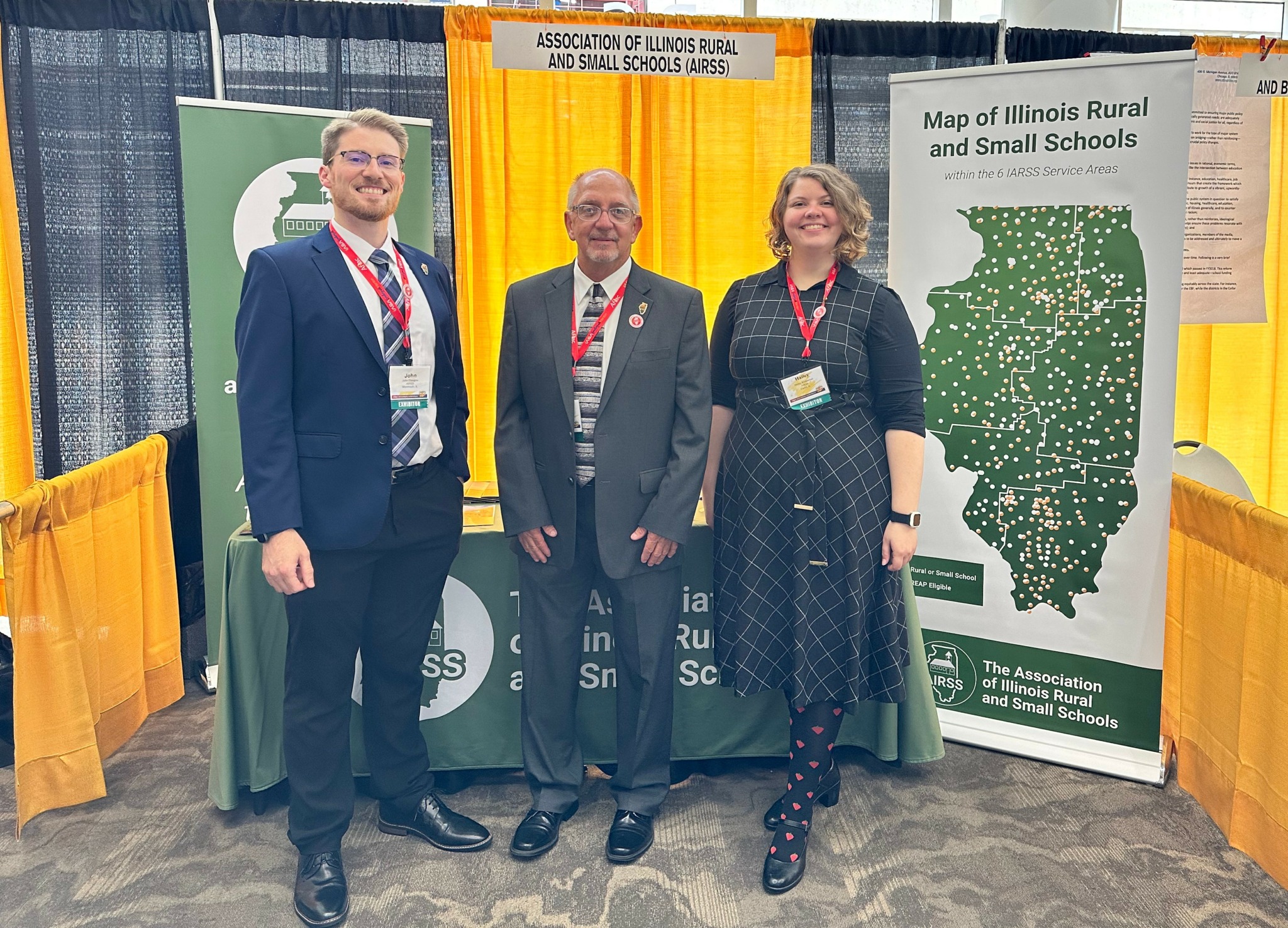
That being said, I think the most prestigious accomplishment I have is working with the Association of Illinois Rural and Small Schools to pass a bill in our state. Part of my job was to get the word out, and we had a lot of people respond to our campaign and write letters of support. The bill ended up passing the Illinois House and Senate unanimously. We sent out acrylic awards to a dozen or so people who were instrumental in the passage, and of course I ended up laying them out for production. To make a long story short, I ended up getting one of the awards myself! It’s something very special to me.
Where do you think you get most of your clients from?
The best way to find new clients is to invest in existing relationships. Every single client I work with hired me because I was recommended by someone else, or because I knew them in a different context first. My first client came from a college professor, and that client referred me to three more. I started working with the high school because my teacher remembered me and sent me a text one day. Heck, even my dad hires me sometimes. I know everyone is sick of hearing the term “network,” but seriously, it’s your greatest asset.
It really is important to do right by the people around you and make a good impression. That being said, you shouldn’t act like someone you’re not. I am able to be honest and straightforward, tell jokes, and feel at ease with my clients because I didn’t enter the relationship putting up a facade. I am who I am, and people appreciate that. What’s more, they refer me to other clients who vibe with my personality and work style.

Is there something you think non-creatives will struggle to understand about your journey as a creative?
I think one of the most difficult aspects of being a creative is talking about your work objectively. On the other side of the coin, it is difficult to pull information out of people that have a pre-conceived image in mind. It is so important to communicate effectively in any work you do, but it is especially crucial in design work. I’m not sure if many people realize this challenge because design is generally seen as a “fun” job.
I’ve had a lot of part-time jobs where it’s easy to give and understand instructions. There is a certain way to make a McChicken or to fold a t-shirt. However, with creative work, the instructions tend to be more vague. “Make it pop,” is one that gets a lot of ire online, although I haven’t yet had that one myself.
For any “non-creatives” out there, I would recommend doing your best to have specific feedback for your creatives. Believe it or not, even just how you feel is useful information. For other creatives, work on finding those reasons why something works. Why did you choose blue? Why is that circle there? What does it communicate? If we work together on creating this dialogue, the ideas will not only come easier; the work will be more effective.
Contact Info:
- Website: https://evileyecreative.com/
- Instagram: https://www.instagram.com/evil_eye_creative
- Facebook: https://www.facebook.com/EvilEyeCreative/
- Linkedin: https://www.linkedin.com/company/evileyecreative/
- Twitter: https://twitter.com/evileyecreative
- Youtube: https://www.youtube.com/@evileyecreativestudio8627
- Other: Tiktok: https://www.tiktok.com/@evileyecreative
Note:
I’m not really active on twitter or Youtube, but I included them since I do technically have them, haha!