
Alright – so today we’ve got the honor of introducing you to Faith Halverson-Ramos. We think you’ll enjoy our conversation, we’ve shared it below.
Faith, thanks for taking the time to share your stories with us today Was there a defining moment in your professional career? A moment that changed the trajectory of your career?
I’ve been working as a psychotherapist and music therapist for the last 18 years, and about 10 years into my career, I started to wonder if there was something more I could be doing with my life, because I saw limited growth opportunities as a psychotherapist who didn’t want the responsibilities of running a group practice where I’d need to be responsible for other people’s employment stability. Off and on, I thought about going back to school to pursue a PhD so I could shift into doing research or teaching and training the next generation of therapists, but the prospect of paying for that education deterred me. That changed in the winter of 2022, when a former professor of mine, then working at a new university, asked me if I’d ever considered going back to school to get a PhD. She told me about the new music therapy PhD program at the university she was affiliated with and said that GTA opportunities were available. This seemed like exactly the opportunity I was looking for, so I applied, and for the last 3 years, I’ve been working towards my PhD at a large R1 public university, which has provided me with opportunities and experiences I never would have imagined given my previous educational experiences. While I don’t yet know where this path will lead me, I look forward to seeing where it will lead me, and I’m incredibly grateful for everything I’ve learned and continue to learn from this opportunity.
As always, we appreciate you sharing your insights and we’ve got a few more questions for you, but before we get to all of that can you take a minute to introduce yourself and give our readers some of your back background and context?
Perhaps like many of my generation (Gen X), my life journey has not been linear. I didn’t just one day know what I wanted to do when I became an “adult.” The one thing I knew was that I didn’t fit into any particular box when it came to my lifestyle and worldview. However, my journey into music therapy began with my voice and the loss of it. Prior to becoming a psychotherapist and board-certified music therapist, I studied vocal performance at Viterbo University. While I loved singing, I realized that I wasn’t driven to pursue performing for a living. Instead, I found myself interested in the emotional, psychological, and physiological processes involved with singing and performing, and how that could affect mental health.
After graduating with my bachelor’s degree, I still didn’t really know what I wanted to do. My voice teacher had given me a brochure about the Transpersonal Counseling Psychology Music Therapy program at Naropa University, and while I was definitely intrigued, I really wanted to live and work overseas. This wanderlust eventually led me to Daegu, South Korea, where I taught English to school-age children. I also sang with a choir during my time there. The experience really showed me the universal power of music, and I grew a lot from the experience.
But sometimes life has a way of forcing a person to change course. And that is what happened to me.
I lost my singing voice due to some sort of respiratory ailment, which, of course, sent me into a bit of an existential tailspin. None of the doctors I went to could figure out what was going on, and being a metaphysically oriented person, I recognized that something was missing from my life. I was helping people by teaching, but I knew that I wanted to do more.
I remembered the brochure from Naropa that my voice teacher had given me a few years ago. Seeing limited opportunities while staying abroad, it seemed like the right time to come back to the States and to determine a clearer career path.
At Naropa, I was amazed to learn that what I thought of as music therapy was just a small part of this field. Music therapists work in diverse clinical settings with people from a wide range of backgrounds and therapeutic needs. Through my studies there, I had the opportunity to work with children diagnosed with autism, teens in residential treatment, and older adults with dementia, including people receiving hospice care.
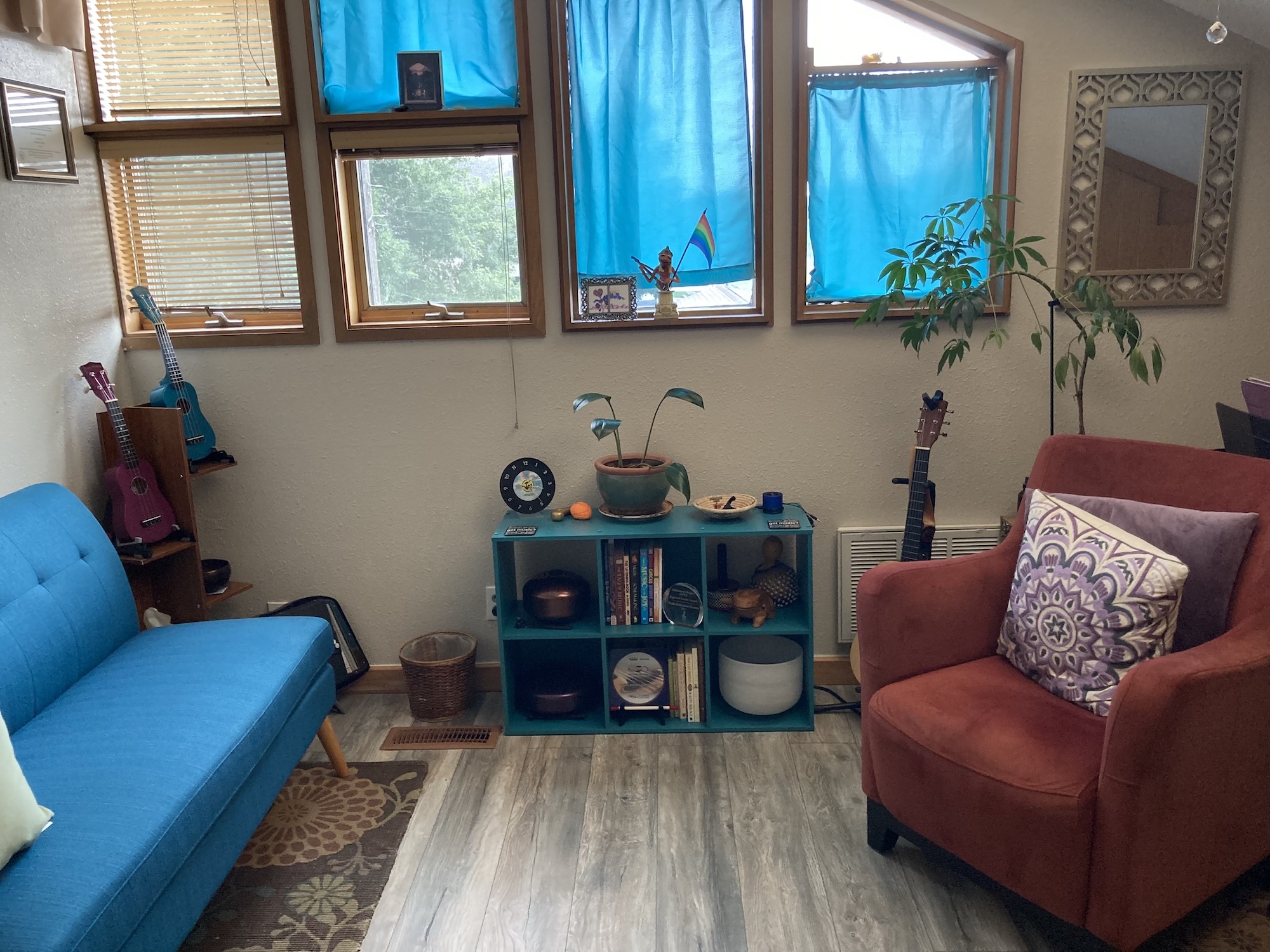
Since graduating in 2007, my professional path has been meandering as a music therapist and counselor. I worked for a few years in early childhood special education and in hospice before starting my own business. These experiences, coupled with my internship and my initial urge to become a music therapist, inspire the mission of my business, SoundWell Music Therapy. Through my practice, I work with young adults, adults, and older adults. By using music and authentic presence, I invite people to experience growth and health. Seeing others blossom into more of their own authentic selves is a joy for me.
Being a business owner also allows me to continue indulging in my wanderlust, which sometimes involves actual travel, while other times it doesn’t.
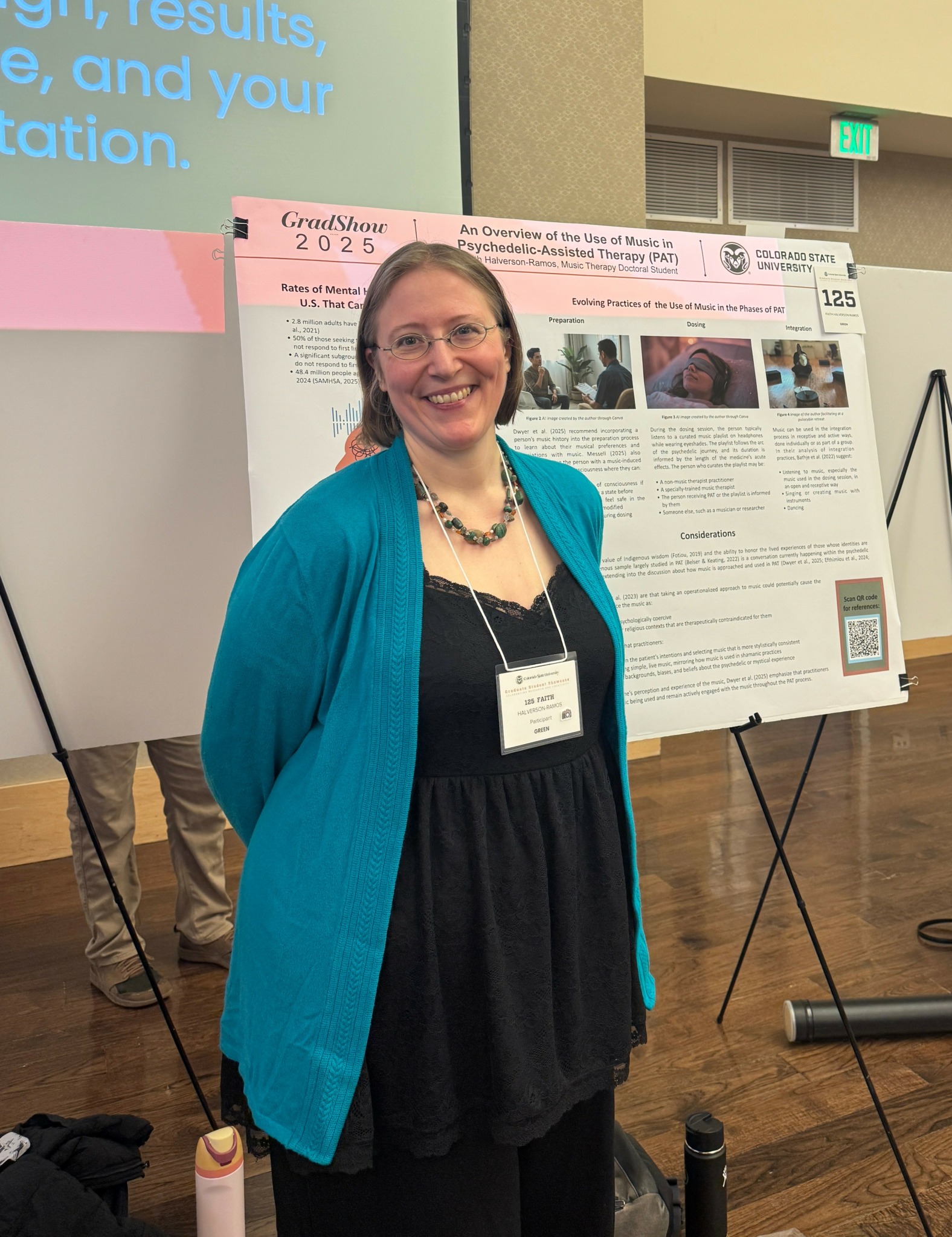
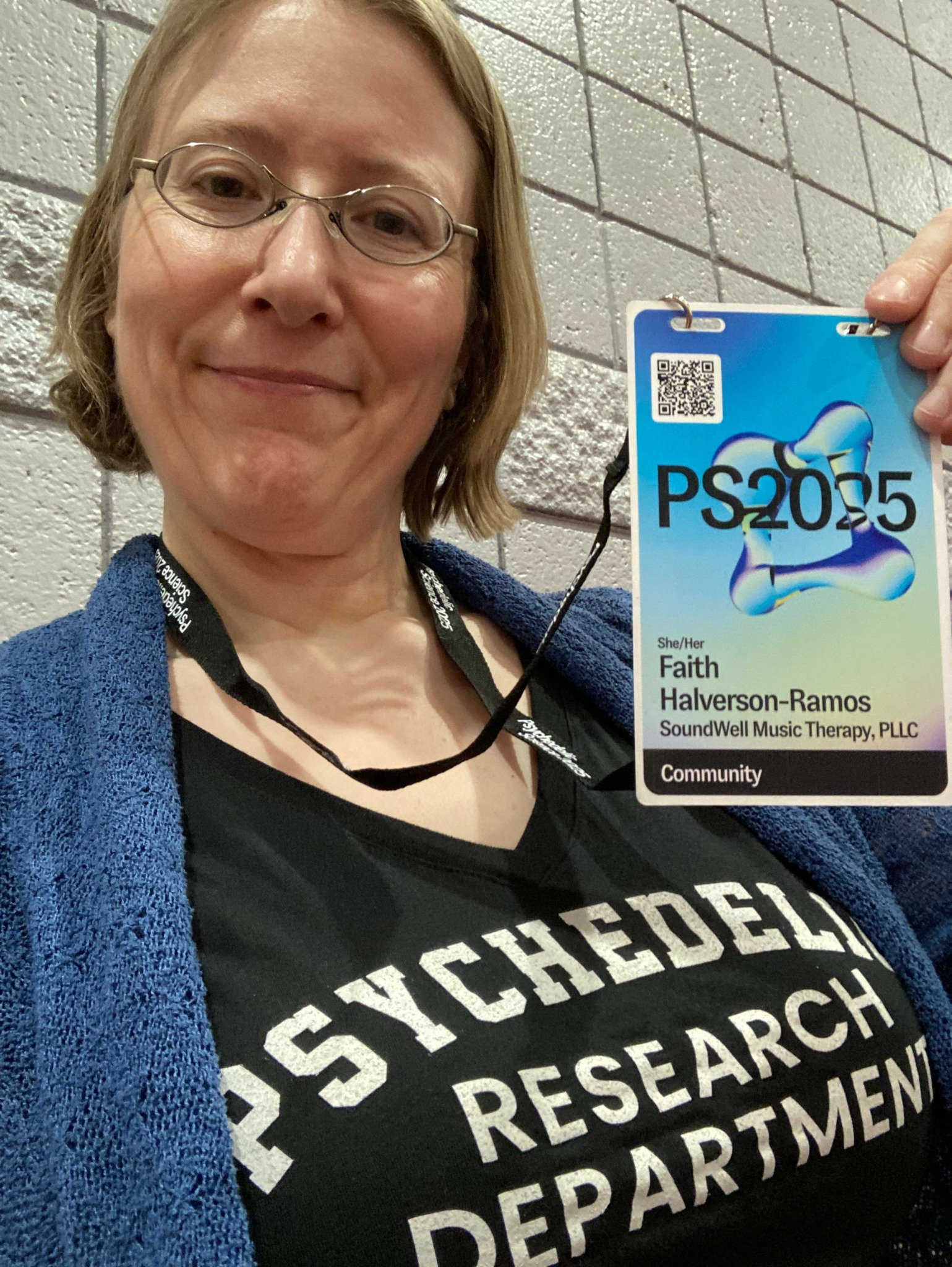
In 2023, I decided to go back to school after 16 years working in the field as a clinician. I’m currently a PhD student in the Music Therapy program at Colorado State University in Fort Collins, where I’m researching the use of music in psychedelic-assisted therapy (PAT), with a specific focus on ketamine-assisted therapy (KAT). As this is a developing field where best practices are still being developed for use in the clinical setting, I’m interested in understanding how to approach the use of music in a trauma-informed and culturally humble way through all phases of the treatment – preparation, administration, and integration, with particular emphasis on integration due to its value to treatment efficacy overall.
Do you think you’d choose a different profession or specialty if you were starting now?
I would absolutely go back and choose the same profession and specialty, although I do wish I could have done a bit more work on my mental health during my undergraduate and graduate experiences, so I could make the most of everything I could learn from them. However, hindsight is 20/20, so I trust I gained everything I needed from those moments in my life, and I relish opportunities to continue learning and growing.
Training and knowledge matter of course, but beyond that what do you think matters most in terms of succeeding in your field?
Some things that I believe are helpful for succeeding in my field are creativity, resilience, persistence, and a deep desire to help others improve their lives.
Contact Info:
- Website: https://soundwellmusictherapy.com/
- Linkedin: https://linkedin.com/soundwellmusictherapy
- Youtube: https://www.youtube.com/soundwellmusic