

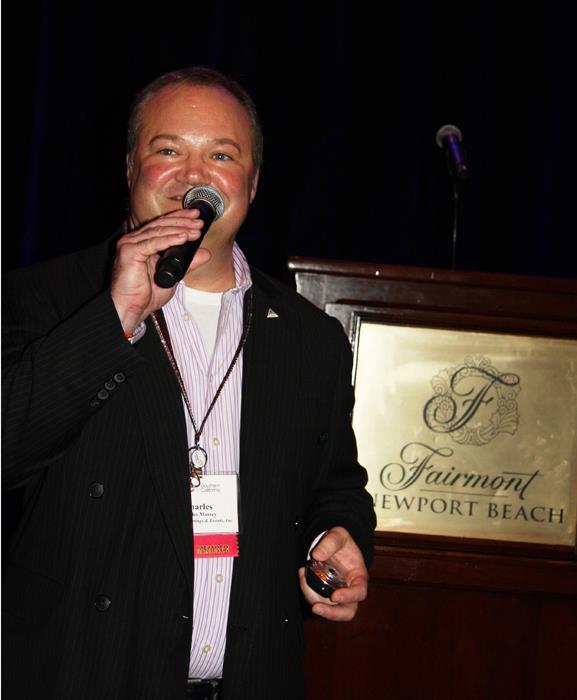

We’re excited to introduce you to the always interesting and insightful Charles Chan Massey. We hope you’ll enjoy our conversation with Charles below.
Charles, appreciate you joining us today. Getting that first client is always an exciting milestone. Can you talk to us about how you got your first customer who wasn’t a friend, family, or acquaintance?
Early on in my meetings industry career I was on the Supplier side, as we called it in those days, working in a hotel sales department. I had joined the Southern California chapter of one of our industry’s professional associations and eventually began serving as a volunteer on several committees.
One of the many great things about that association was that at the time, it was an equal membership organization. Planner members (those on the buyer side) and Supplier members (folks like me, who were sellers) were equal, and both Planners and Suppliers made up the membership and likewise jointly composed the committee and leadership structure.
Of course, over the years with a rise of “independent” members, those who found themselves somewhere in the middle, essentially both buyer and seller (or as I refer to us, “Supplanners,”) the lines began to blur, but I’ll get back to that in a bit.
Serving on committees and later in volunteer leadership positions I was able to learn who I clicked with and over the next several years, as I began to develop my own business, it was only natural that some of the buyer members I worked with on a volunteer basis became my initial clients, or as another friend refers to it, we became friends first and that evolved into “friends who do business together.” It’s an industry built on relationships, after all.
Two of these friends helped me pay the proverbial rent during the initial years of my business. One was an independent association executive who managed a non-profit medical society and another ran her own small meeting planning business with clients ranging from association and non-profits organizations to clients in the insurance marketing and destination marketing arenas.
Those two friends became my first clients and I have them to thank for helping me jumpstart my own business.
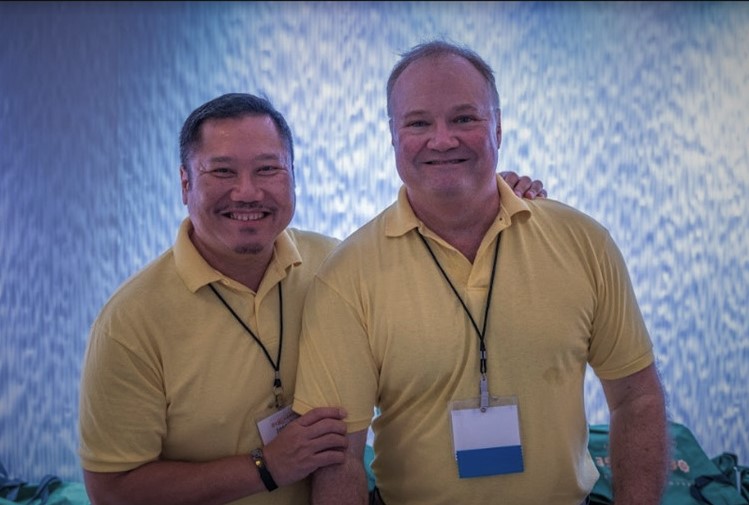
As always, we appreciate you sharing your insights and we’ve got a few more questions for you, but before we get to all of that can you take a minute to introduce yourself and give our readers some of your background and context?
My name is Charles Chan Massey and it’s great to be asked to share more about myself. I was born in suburban Charlotte, North Carolina in a little town called Mt. Holly.
My family owned the local hardware store so when it was time for me to get my first job it was a given that I would work there, at least for a while. I loved interacting with the various townsfolk but I wasn’t exactly thrilled about selling nuts, bolts, and paint so I eventually applied for a job at the local theme park, working first at the front gate selling entry tickets and later transferring to the guest relations department.
I really enjoyed that level of guest interaction so I took it to the next level once I relocated to Charleston, South Carolina for my college years. I applied for a job as a bellman at a historic hotel, eventually getting promoted to the front desk. Even though I made less money as a desk clerk, as most folks who stayed at our hotel were great tippers, I enjoyed dealing with our guests, so that became the next step along my career path.
Several years later, I graduated with a bachelor’s degree and relocated to Atlanta, continuing my work in the hotel industry. I briefly left to take an administrative position at an engineering firm (truly one of the most boring and thankless jobs I ever had), followed by a stint as manager of a video store that was part of a larger chain, and eventually took a transfer to California when my company expanded their west coast footprint, absorbing a smaller company and were in need of managers who knew the parent company’s operations.
Los Angeles was a place I’d always wanted to live, so that’s where I landed. Shortly after I arrived, I realized how much I missed working in hotels. It didn’t hurt that I ended up working for an absolutely horrible boss at the video store company, so I made my way back to my true passion, the hospitality industry, starting in an entry level inside sales and reservations position at a family owned and operated hotel in Santa Monica and later moving into sales and marketing at a larger chain hotel, ultimately becoming director of sales at a small boutique hotel in West Hollywood.
All along my Los Angeles journey I had been an active member of one of our industry’s premier professional associations, so when I decided to start my own business, I stayed in the meetings and events industry but switched “sides,” as it were, from supplier to planner. Or as I prefer to call it, I became a Supplanner – my fledgling company provided a service to our clients.
We worked side-by-side with them as an integral part of their team, helping them plan their events and meetings. A bit convoluted? Possibly, but we made it work and built a somewhat unorthodox business model that worked for us. We’re essentially hybrids, and eventually our third-party segment evolved to be better understood in an industry that has also evolved over the years.
Ultimately, our company, SYNAXIS Meetings & Events, evolved into a boutique meeting and event firm with offices in Southern California and British Columbia in Canada. Over the years, our portfolio included clients from a variety of industries – tourism marketing organizations, hotel companies, non-profits, professional associations, and medical societies and more. In some cases, we even worked with clients who were our vendors and vendors who became our clients. That’s the beauty of the meetings and events industry.
Over the years our services included hotel and venue search, selection, and contract negotiation, registration and attendee communication, exhibit management, food and beverage selection, and more. We positioned ourselves as a team that would take over the tactical aspects of the meeting or event, allowing our clients to focus on the strategic aspects.
We were always a little “out there” and edgy with our marketing. At one point we even had a slogan printed on the back of t-shirts that we wore at industry events that said “We Save You From Yourself” because in many cases that is literally what event planners do for their clients!
I think our attention to detail and customization to our clients’ specific needs is what differentiated us from other firms in our industry. Over the years we built a business model based on “coopetition” by partnering with other small businesses who might in some industries be considered competition – but in the meetings and events industry it became a scenario where “the whole was greater than the sum of its parts.” When one of us would get a lead, for example, knowing we couldn’t do it alone, we built a custom team and took on projects that none of our smaller firms could successfully handle on our own.
I built a business out of my professional association involvement and I proudly admit it. The meetings and events industry is primarily a people business, after all, and I have often worked with folks I met in my volunteer life and in addition to building strong business relationships I’ve also made lifelong friends. That’s the magic of this industry.
I want readers to know this: if I can do it, YOU can do it! Don’t give up! You’re going to have some thankless jobs and some horrible bosses. You’ll have some events where everything goes wrong and there’s no way to fix it. And just like you sometimes have to make the decision that enough is enough and leave your current job, you’ll also someday have to make the decision to fire a client – over the years we have had to let go of several when our organizations grew apart.
You’re also going to have your proverbial “dream job” at some point in your career as well as some absolutely amazing bosses and clients. You’ll have some events that go off so perfectly you’ll have to pinch yourself to make sure you’re not dreaming.
As we wind down the business and prepare for retirement (for real this time), my advice to everyone reading this is to make the most of every single moment along your journey – the good, the bad, and the ugly. And treasure those life-long friendships you make along the way – I know I do!
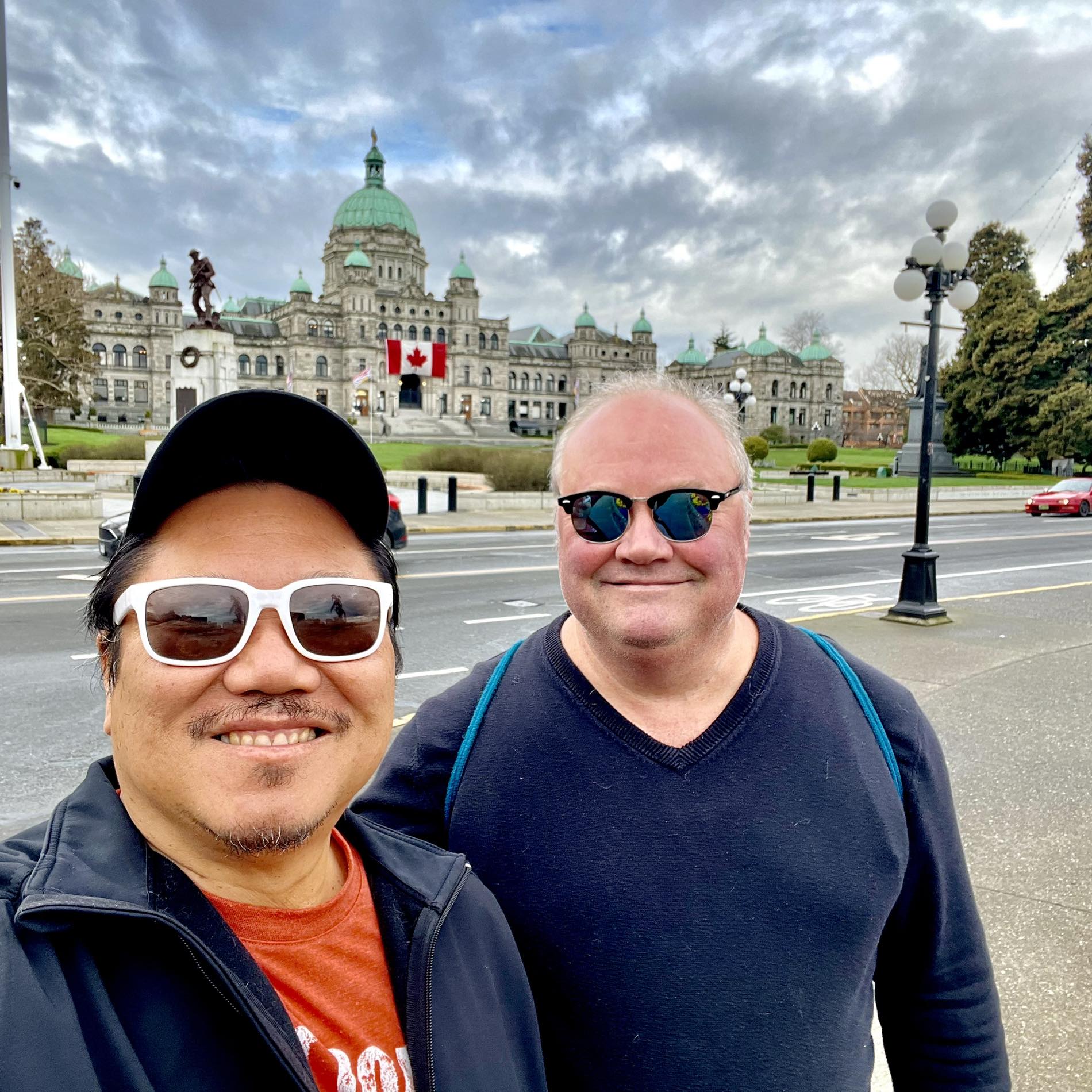
We’d love to hear a story of resilience from your journey.
Someone once asked me what prompted me to start my own business. Since I’ve never had much of a filter I instinctively responded “I got tired of working for idiots.” That’s not exactly the word I used but you get the picture.
A while back, a friend told me that her father once told her that some people have a gene that simply doesn’t allow them to succeed working for other people. Over the next decade I learned that I, too, might be “blessed” with that same gene. I had descended from a long line of entrepreneurs, after all.
Earlier in the interview, I mentioned in passing that folks reading this interview might have a horrible boss or two along their journey. I’ve definitely had more than my share, and a few in particular come to mind. I even recently had a dream that featured one of them prominently so I took it as a sign.
In the late 1990’s, I got my first purely sales job. My mission? To get corporate group business into a hotel whose logical market was a nearby university because someone got the brilliant idea to “reposition” it. Never mind that the hotel had minimal meeting space and an “iffy” location.
It was a bit of a catch 22. I did what I could but wasn’t able to create a market where there was none. “Lucky” for me, the First Gulf War came, business travel in general slowed down, and my boss at the time walked into the office and put an un-achievable “action plan” as it was called on my desk. I had a month to achieve the unachievable and at the end of that month I was told I had two weeks to either find another job within the company or simply leave on my own.
Over the next several weeks, I scoured the intra-company job postings and found an operations position at one of the company’s downtown LA hotels. I interviewed and was offered a position managing the front desk. It was a lateral move, so my salary remained the same, but it required working second shift instead of regular daytime hours. I quickly realized it wasn’t the best fit for numerous reasons, not the least of which was that my boss’s boss, the general manager, was a bit of a tyrant (put mildly) but I hung around as long as I could.
Then came the Los Angeles Riots. It was a lot and I finally hit my breaking point and left on my own.
Shortly thereafter I responded to a blind ad in the LA Times and landed a sales job at a hotel near the LAX airport and within the next few years followed my (finally!) wonderful boss to a hotel with great conference space in the San Fernando Valley.
I could go on, but suffice it to say that my entire career demonstrates my resilience. From a string of not-so-great bosses, to finally ending up with a great one, to starting my own business in the late 1990’s, I’m living proof that you can write your own success story and am proud I was able to do just that.
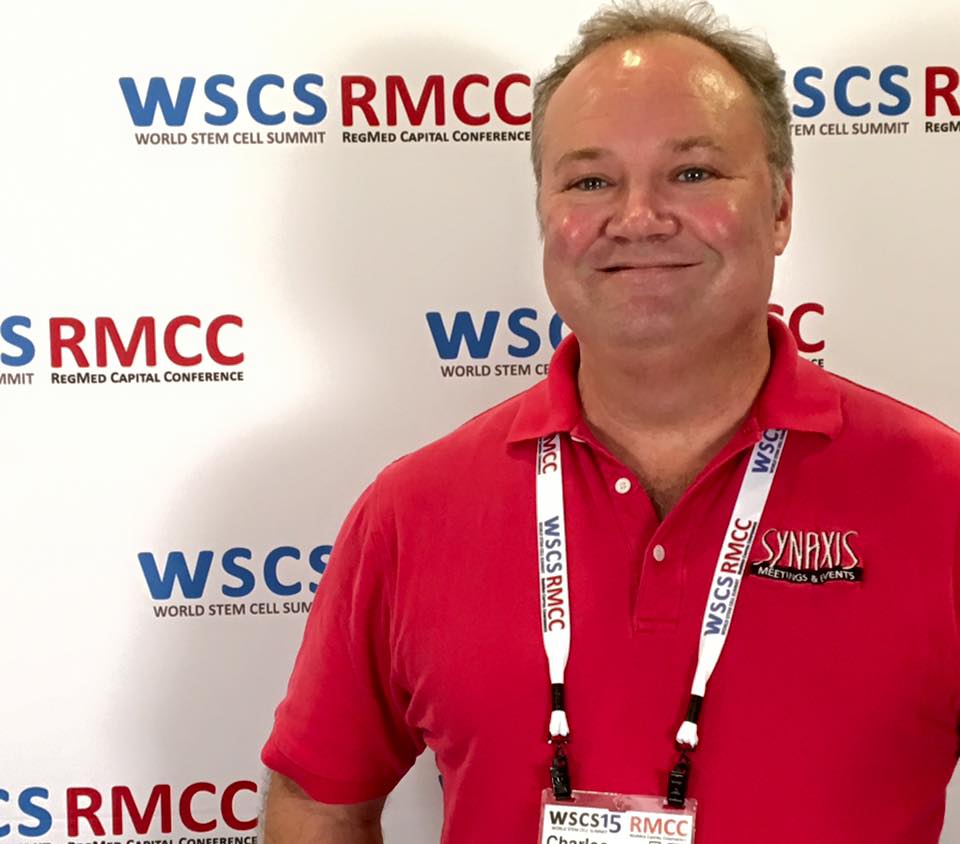
How’d you meet your business partner?
My business partner is also my spouse. We met on an early dating site back in the mid 1990’s (even before AOL chat rooms – think “dial up chat boards,” if you can remember those) and we’ve been together ever since.
We met at one of said dating site’s membership mixers and moved in together in 1994.
In addition to our meetings and events business we also co-owned a small local chain of retail pet food and supply stores based in West Hollywood and ultimately co-located the offices for both companies, pooling resources.
While it’s not always easy working with one’s spouse co-running a small business, or in our case two, we found a way to make the benefits far outweigh the negatives and have managed to make it work for the past 30+ years.
Contact Info:
- Website: https://www.synaxismeetings.com
- Facebook: https://www.facebook.com/synaxismeetings
Image Credits
All image credits Charles Chan Massey