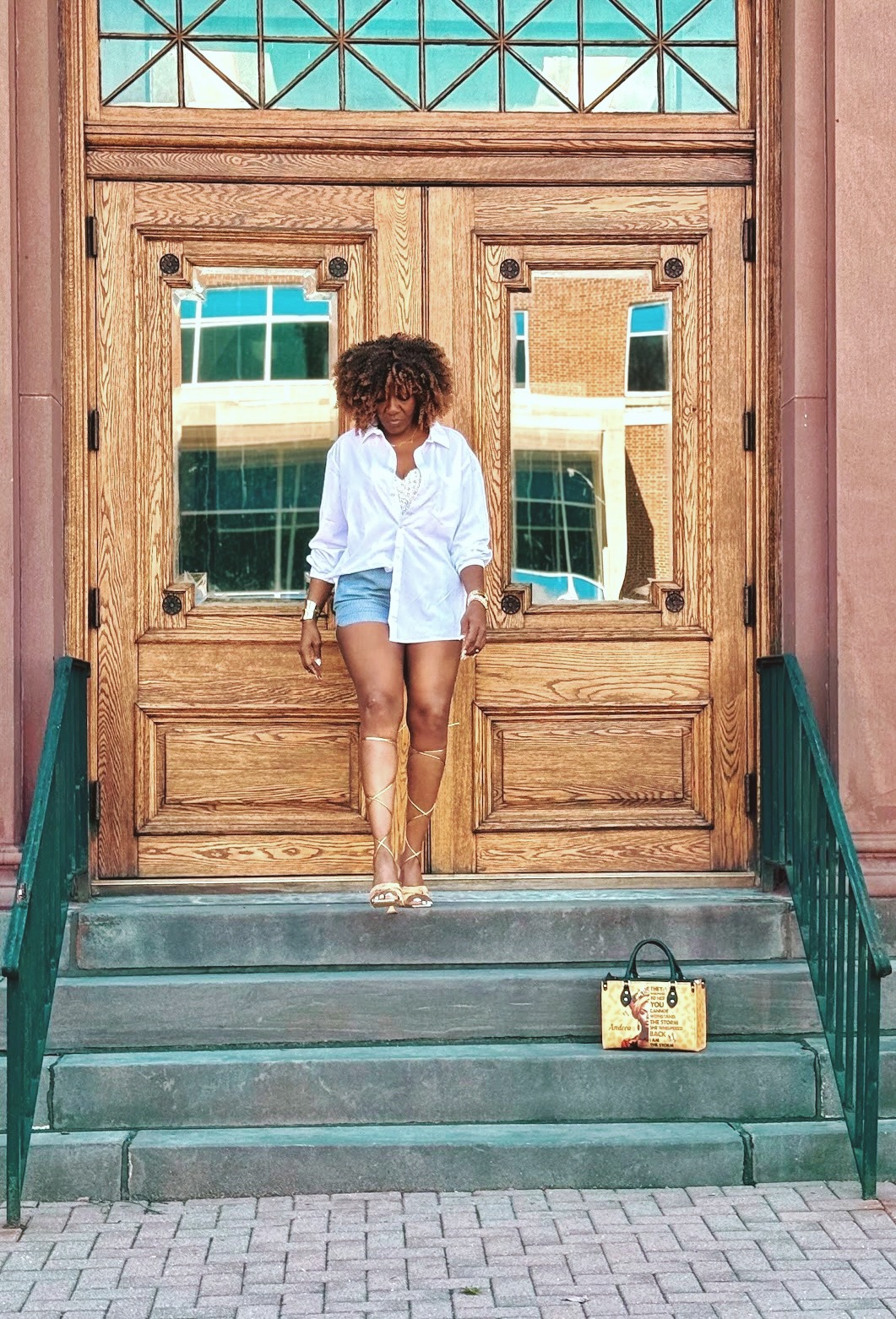

We’re excited to introduce you to the always interesting and insightful Andrea Ligé. We hope you’ll enjoy our conversation with Andrea below.
Andrea , thanks for joining us, excited to have you contributing your stories and insights. Can you take us back in time to the first dollar you earned as a creative – how did it happen? What’s the story?
The first dollar I ever made from my work came in April 2025, and it started with a vision to create something different.
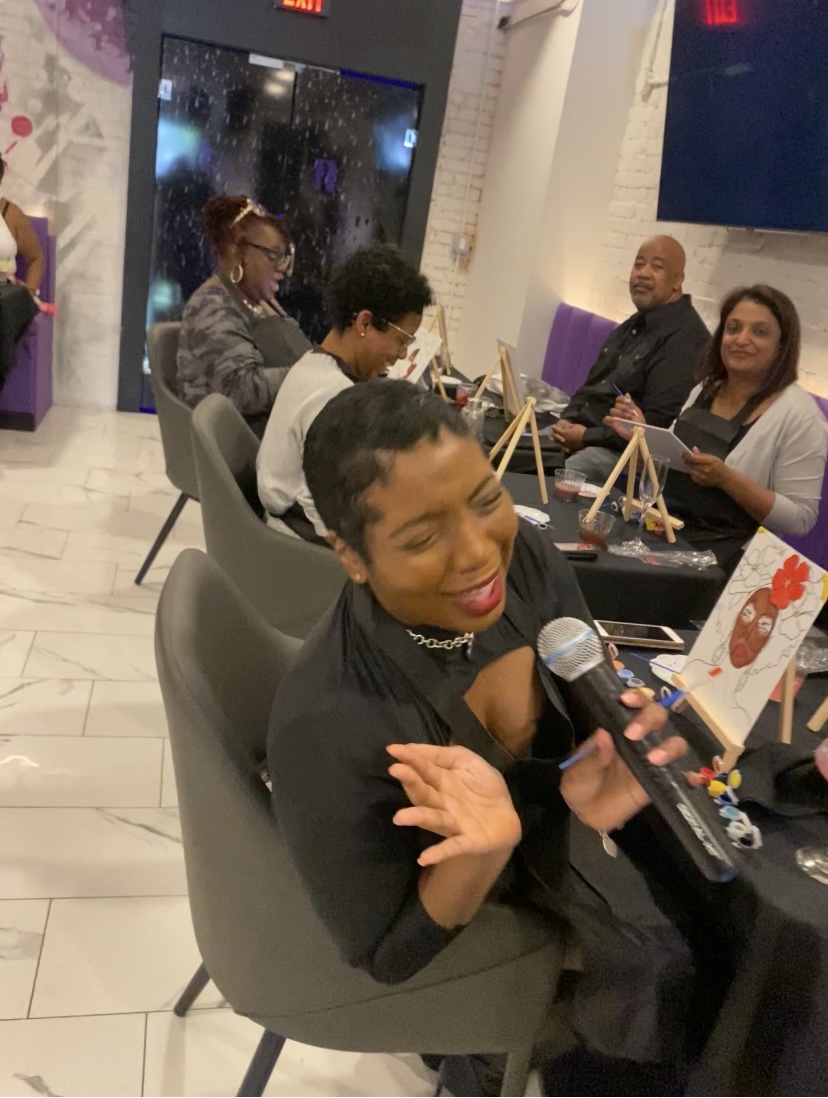
I decided to host a sip and paint—but I didn’t want it to feel like a typical event. I wanted to layer in poetry and personal short stories to create something more immersive, something people could feel, not just attend.
At the time, I wasn’t known in the art community, and I chose to launch this idea in Washington, DC—one of the most creatively saturated spaces. There was no safety net, just belief in what I was building.
I poured myself into the details—writing the script, curating the ambience, preparing the materials. I felt confident in the experience itself, but what I underestimated was the challenge of marketing. I had to convince people not only to show up, but to trust an experience led by someone they didn’t yet know.
I started with flyers, social media, and an Eventbrite page. I created videos, shared my vision, and pushed consistently—but for weeks, there was no traction. No ticket sales at all. Two weeks before the event, I still hadn’t sold a single ticket and I was seriously contemplating canceling it.
In a moment of trying something different, I wrote a thoughtful review for the venue I had booked. That single post gained attention—shares, comments, and new visibility for my page.
Then, something shifted.
One morning around 3AM, unable to sleep, I checked my phone and saw an Eventbrite notification. I had made my first sale. It was a small moment, but it felt monumental. I remember immediately texting my bonus daughter to share the news.
By the end of that same day, I had sold 20 tickets.
Within days, the event sold out. I extended the capacity—sold out again. I did it a third time, and once again, it filled.
What started as something I was ready to walk away from became fully realized in a matter of days.
The day of the event, the room was filled with a beautifully diverse audience—couples, students, friends, families. And the moment I began, the nerves disappeared. I felt completely aligned in what I was doing.
That experience affirmed something for me in a very real way: I could build a life around storytelling, creativity, and shared emotional experiences.
That first dollar wasn’t just income—it was confirmation.
Andrea , before we move on to more of these sorts of questions, can you take some time to bring our readers up to speed on you and what you do?
I’m Andrea Ligé, an Art Therapy Practitioner and the founder of Voiceless—a creative and healing platform designed for people who feel unheard, emotionally overwhelmed, or disconnected from their own voice.
Voiceless was created for those navigating depression, communication challenges in relationships, or unspoken trauma. My work focuses on giving people a safe, expressive outlet through immersive storytelling experiences, interactive art therapy events, creative release sessions, and performance-based healing. I design spaces where people don’t just observe art—they participate in it, feel it, and use it as a form of emotional release and self-discovery.
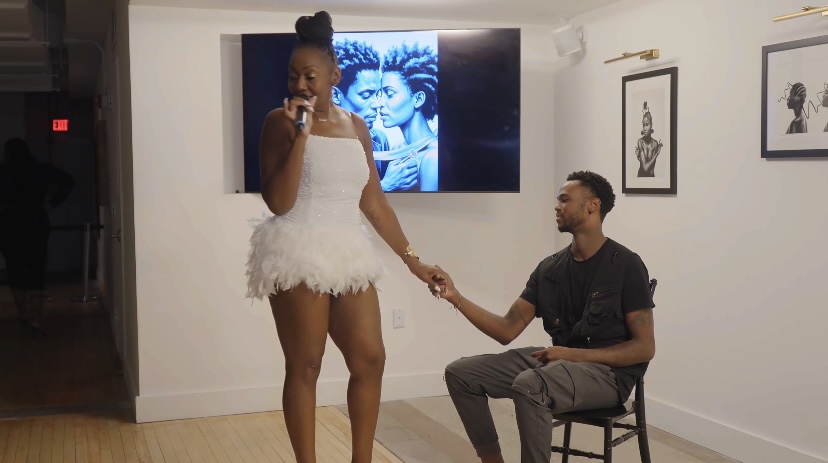
My journey into this work is deeply personal. I am someone who has always processed life through creativity. I use the same tools I offer to others—poetry, painting, sketching, writing, and storytelling—as a way to express what words alone can’t always hold. I’ve written books, and in October 2025 I wrote and starred in my first play, bringing my storytelling to life in a fully embodied way. That moment was a major extension of my purpose: turning inner expression into shared experience.
I’m originally from Georgia, 5’10, and instead of pursuing athletics, I embraced art as my discipline. Creativity became my training ground—mentally, emotionally, and spiritually.
What sets my work apart is that it lives at the intersection of therapy, storytelling, and performance. I don’t just create events or art pieces—I create emotional environments. Every experience is intentionally designed to help people release what they’ve been holding, often without even realizing how much they’ve been carrying.
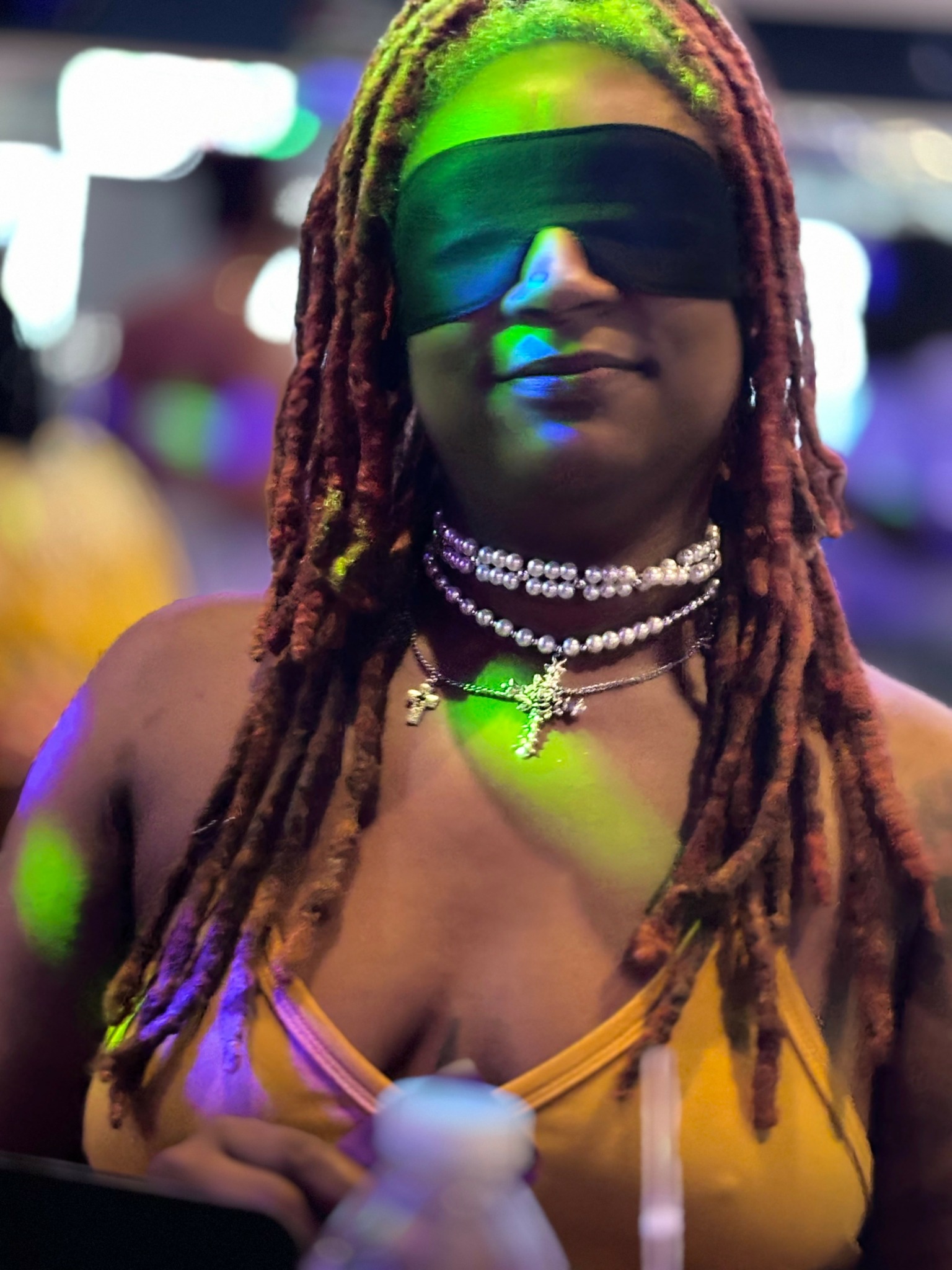
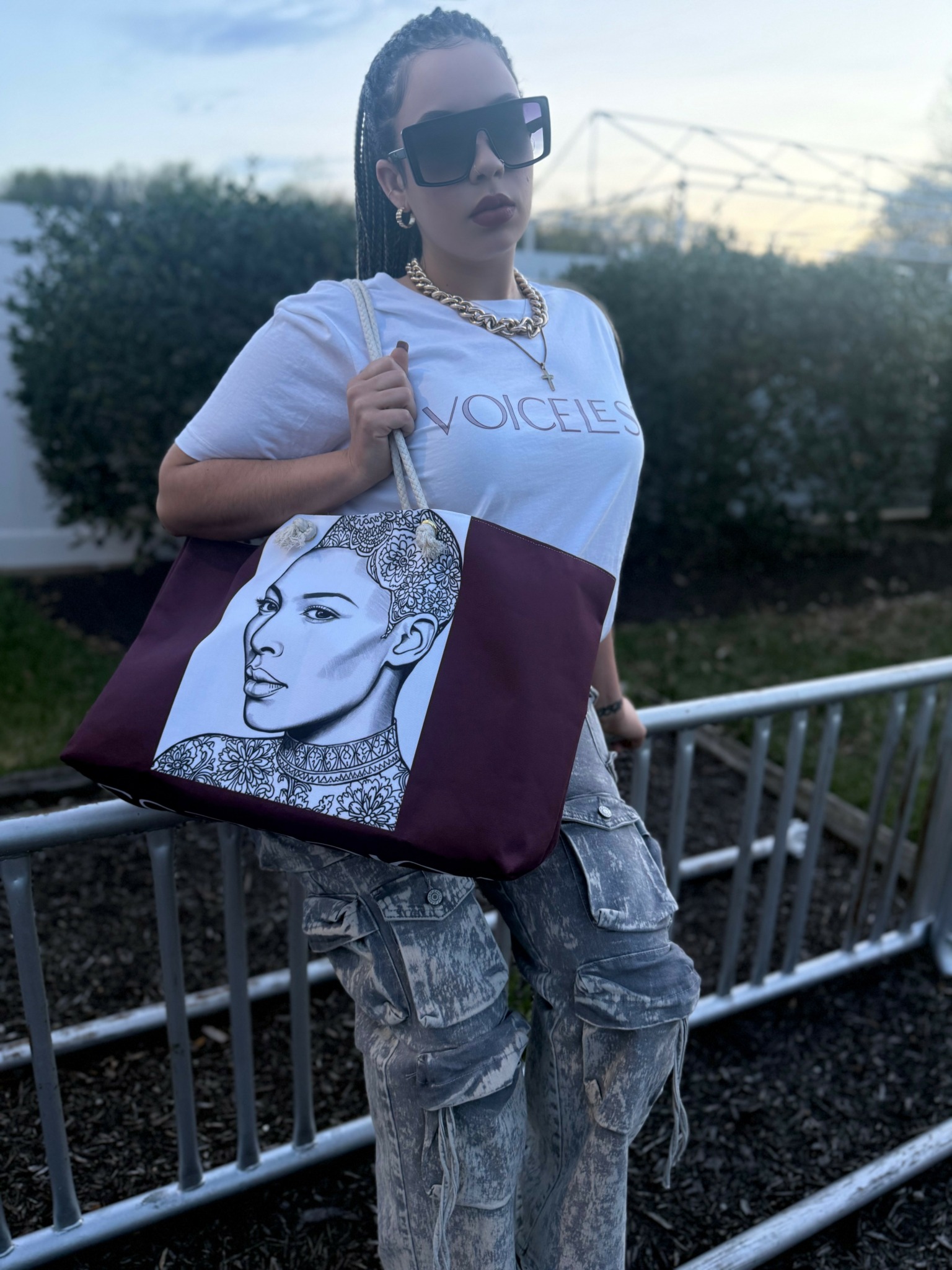
What I want people to understand is that Voiceless is also about what you leave with. Each experience offers a unique moment of expressive art and a small but intentional escape from distraction and daily noise. You don’t just attend Voiceless—you take a piece of it with you. That could be a painted canvas, a coloring weekender bag, a sensory box, or another creative extension of the experience. These pieces are not just products; they are tangible reminders of what you felt, released, and reclaimed in that space.
What I’m most proud of is building Voiceless from lived experience and intuition—trusting a vision that wasn’t always immediately understood, but deeply felt. From immersive sip-and-paint storytelling events to my evolving art therapy products and performances, everything I create is rooted in one purpose: helping people reconnect with their voice.
At the core, I want people to know this—Voiceless is not about silence. It’s about expression, healing, and reclaiming yourself and voice through creativity.
In your view, what can society to do to best support artists, creatives and a thriving creative ecosystem?
Society supports artists best when it stops treating creativity as a “nice extra” and starts treating it as infrastructure—something as essential as education, housing, or healthcare. A thriving creative ecosystem isn’t built only on talent; it’s built on stability, access, and respect for creative labor.
One of the biggest shifts needed is economic stability. Many artists aren’t struggling because they lack skill, but because they lack time and security. When people are forced to choose between survival and creation, creativity becomes fragmented or abandoned. Stronger public funding for the arts, more accessible grants (especially for independent and grassroots creators), and paid residency programs can give artists the breathing room to actually develop their work instead of constantly chasing income. Even small-scale support—microgrants, stipends, or guaranteed commissions for community work—can radically change what gets created.
Equally important is access to space. Cities often celebrate art while pricing artists out of living and working in them. Affordable studios, shared creative hubs, and community art spaces matter just as much as galleries and museums. When artists have physical space to experiment, collaborate, and fail safely, the entire ecosystem becomes more dynamic. Without that, creativity gets pushed into isolation or becomes overly commercialized just to survive.
Education also plays a huge role. If creative thinking were treated as a core skill—not just for “future artists” but for everyone—society would naturally become more supportive of artistic work. That means early exposure to arts in schools, but also reframing creativity as problem-solving, emotional intelligence, and communication. When people understand art as a form of meaning-making rather than decoration, they value it differently in adulthood.
Then there’s cultural value—arguably the most overlooked piece. Society often celebrates artists after they are “successful,” but undervalues them while they are building. A healthier ecosystem normalizes supporting artists at every stage: buying from emerging creatives, paying fair rates for commissions, and respecting creative boundaries instead of expecting constant free content. Attention alone isn’t support; compensation and recognition are.
There’s also something deeper that connects closely to your own work in art therapy: society needs to recognize that creativity is not just entertainment—it’s emotional processing. Spaces like yours, where people can create, reflect, and release, show that art is part of mental wellness. When communities fund and prioritize creative healing spaces, they reduce isolation and improve collective well-being. That’s not abstract—it has real social impact.
Finally, digital platforms need to evolve in how they treat creators. Algorithms that reward burnout, unpaid visibility, or constant output don’t sustain artists—they exhaust them. A healthier ecosystem would prioritize discoverability, fair monetization, and ownership of creative work.
At the core, supporting artists means shifting from “consume art when it appears” to “build conditions where art can consistently exist.” When artists are stable, resourced, and valued, the culture they produce becomes richer, more honest, and more transformative for everyone.
Is there mission driving your creative journey?
As a child, I felt like I had no voice. As a young adult, that silence continued, and I didn’t have a healthy outlet to express what I was feeling or experiencing. Over time, I began to recognize that this is not just my story—it’s something I see reflected in many people today.
I see it in children who don’t yet have the language to explain what they feel, in couples struggling to communicate emotionally, and in individuals navigating mental health challenges while carrying everything internally.
This is what led me to create Voiceless. My creative journey is driven by a mission to help people reclaim and express their voice through art. I believe expression is not a luxury—it’s a necessity for healing.
Through storytelling, painting, poetry, and immersive art therapy experiences, I create spaces where people can release what they’ve been holding in. These moments are intentional and reflective, allowing people to process emotion in a way that feels safe, creative, and unforced.
Whether it’s a canvas, a coloring bag, or a sensory-based piece, each creation becomes an extension of that experience—something tangible they can take with them as a reminder that their voice still exists, even when it has been quieted.
At its core, Voiceless is about turning silence into expression, and expression into healing.
Contact Info:
- Website: https://voicelessonline.com/
- Instagram: https://www.instagram.com/voiceless.online/
- Youtube: https://www.youtube.com/@AndreaLige