

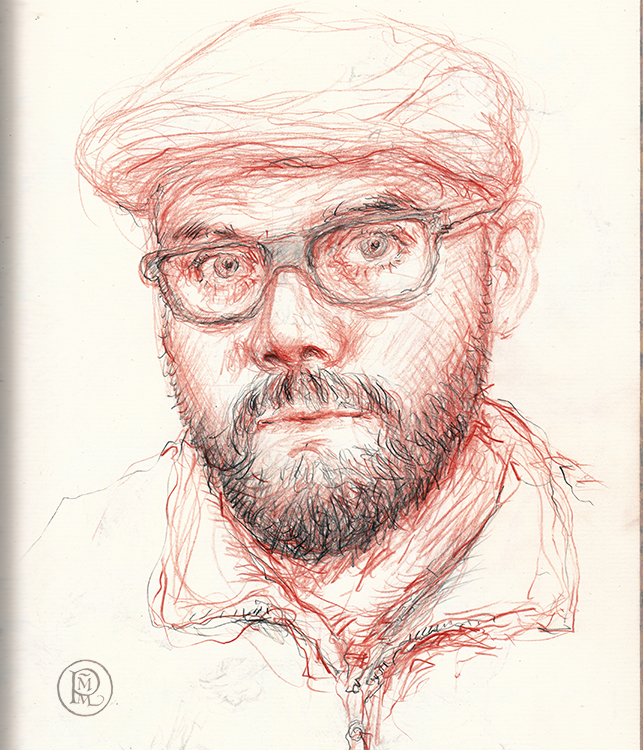

We were lucky to catch up with Patrick McGrath Muniz recently and have shared our conversation below.
Patrick, thanks for joining us, excited to have you contributing your stories and insights. Are you happy as a creative professional? Do you sometimes wonder what it would be like to work for someone else?
Happier? That may not be the right question. The right one: What’s the alternative? I’ve been doing this for thirty years already. And yes, there are moments when I look at what a regular job would mean and something in me doesn’t immediately recoil. I can certainly see its pros.
The last time it hit me hard was early this year. I came off a solo show in Santa Fe. Months of real work, paintings I believed in, and the response was mostly silence. Not criticism. Not controversy. Silence. Which is harder to recover from than failure, because at least failure tells you something.
Then I picked up my drawing journal and started drawing again. Not for a show, not for Instagram. Just drawing. And within a week I remembered what I’d forgotten: I don’t do this because it makes me happy. I do it because I can’t not do it. Those are not the same thing, and confusing the two is what gets artists into trouble.
A regular job would probably make certain parts of my life easier. It would not make me easier to live with.
Patrick, love having you share your insights with us. Before we ask you more questions, maybe you can take a moment to introduce yourself to our readers who might have missed our earlier conversations?
I’m a painter. I work with oils on panel, mostly, in the tradition of Spanish Colonial art and the Baroque retablo painters of the Americas. But the subject matter is entirely contemporary. Mythological archetypes, technology, consumerism, social and environmental issues as well as my own personal stories are at the core of the work. The images may look like they belong in an18th-century church but the content and discourse belong to our times. That tension is the whole point.
I grew up between two worlds. Born in New York, but raised in Puerto Rico, trained at the School of Fine Arts in San Juan and later at SCAD, where I completed my MFA. My name, Patrick McGrath Muñiz, carries both sides of that story. From an Irish-American father and Puerto Rican mother. I use the full name deliberately. The dual identity isn’t just biographical. It’s the essence of who I am and what my work is about.
I’ve been painting professionally for thirty years, and in that time I’ve developed a practice built around what I call devotional symbolism, paintings that function the way retablos and altarpieces once did, as objects of contemplation that encode a culture’s fears and beliefs and aspirations. Except the fears and beliefs I’m encoding are ours: surveillance capitalism, artificial intelligence, environmental collapse, the erosion of shared truth. I paint them the way the colonial masters painted the apocalypse. Slowly, carefully, with gold leaf and glazes and a lot of hours in a quiet room.
What sets the work apart is density. There are no decorative paintings in my studio. Every image is built with symbols layered upon symbols, classical inscriptions, mythological figures carrying contemporary cargo. You can look at one of these paintings for five minutes or five hours and keep finding things.
What I’m most proud of is the longevity and the consistency. The work has never chased a trend. It has never tried to be anything other than what it is. That’s cost me things over the years. It’s also what’s kept the work alive.
Currently I’m finishing a body of twenty oil paintings for a solo exhibition, Nuevos Dioses: Devotional Paintings in the Age of AI, opening in November 2026 at the Nuevo Mexicano Heritage Arts Museum in Santa Fe. It’s one of the most ambitious projects I’ve attempted given the time constraints. I also created the Tarot Neocolonial de las Américas, a full 78-card deck that maps colonial and post-colonial history onto the Tarot arcana, and I run a YouTube channel: “Art & Archetypes”, where I explore Tarot, mythology, and Art for a general audience.
What I want people to know: the work is 100% handmade, it takes a long time, and it means something. In an age when images are generated by the billions, and impersonal algorithms decide what gets seen and what not, that still matters. Maybe it does, more than ever.
How can we best help foster a strong, supportive environment for artists and creatives?
First of all: Stop treating art as entertainment and start treating it as evidence. Every civilization that has ever existed left images behind. Those images are how we know what people believed, feared, valued, and imagined. Cave paintings, cathedral frescoes, retablos, murals, these are not merely decoration. They are records. The societies that understood this built institutions around it: patronage systems, guilds, academies, museums. Not out of charity. Out of the recognition that culture is infrastructure.
What we have now is a system that produces enormous wealth from creative work and returns almost none of it to the people who originate it. Streaming platforms, social media algorithms, AI training datasets, all of it runs on creative output. Almost none of it compensates the source. That’s a market failure and a policy choice. And it can be unmade.
But beyond this, the most direct thing any individual can do is buy original work from living artists. Not prints and definitely not cheap soulless AI slop. Buy the actual object, made by an actual human being who spent actual time on it. That transaction is one of the few left in modern life that is entirely unmediated. No platform takes a cut. No algorithm decided you should see it. This is in the end about you, and the artist, and the art between the two of you.
The second thing is pay attention. Go to openings. Watch the independent channels. The attention economy has made visibility the scarcest resource for working artists, and you don’t need money to give someone your attention. You just need to show up.
A thriving creative ecosystem isn’t built by governments or markets alone. It’s built by people who understand that the images a culture makes are the clearest record of what a culture actually believes, not what it says it believes. Support the people making those images. They’re doing something nobody else will do.
We often hear about learning lessons – but just as important is unlearning lessons. Have you ever had to unlearn a lesson?
That art is primarily an intellectual exercise. That’s what school taught me, more or less. You develop a thesis, you support it with art historical references, you situate your work within a critical framework. And that training is useful, and I still use it. But somewhere in the process I absorbed a version of art-making that was more about satisfying a conceptual argument than about telling the truth of a lived life. It took me years to unlearn it.
Living through the age of A.I. makes this more urgent, not less. A machine can construct a conceptual framework. It can cite influences, identify patterns, generate images that satisfy an academic argument. What it cannot do is live a life and make something out of it. That distinction is the only one that matters now, and school never taught me to value it the way I should have.
Recent personal losses pushed me in that direction. Hurricane Maria took my studio and most of my early work in 2017, my closest friend died during COVID in 2020 with no way of saying goodbye, but what finally broke the camel’s back was a solo show last year that I had put everything into. The response was mostly silence. At some point you stop blaming the circumstances and ask what you actually believe about why you do this.
What I had to unlearn was the transactional version of artistic faith: the idea that devotion to the work is an investment that pays out in recognition. It isn’t. The work is the work. What happens to it afterward is a separate story.
What replaced it is simpler and harder: make the work you would make if no one was ever going to see it. I started keeping a drawing journal again at the beginning of this year, after years away. No audience, no concept, no exhibition plan. Just drawing. That habit, more than anything else, is what keeps me honest about why I’m actually in the studio.
Recognition is fine when it comes. It’s just not the point.
Contact Info:
- Website: www.retabloarts.com
- Instagram: www.instagram.com/patrickmcgrathmuniz/
- Facebook: https://www.facebook.com/PatrickMcGrathMuniz
- Linkedin: www.linkedin.com/in/patrick-mcgrath-muniz-56133514/
- Youtube: www.youtube.com/@patrickmcgrathmunizart
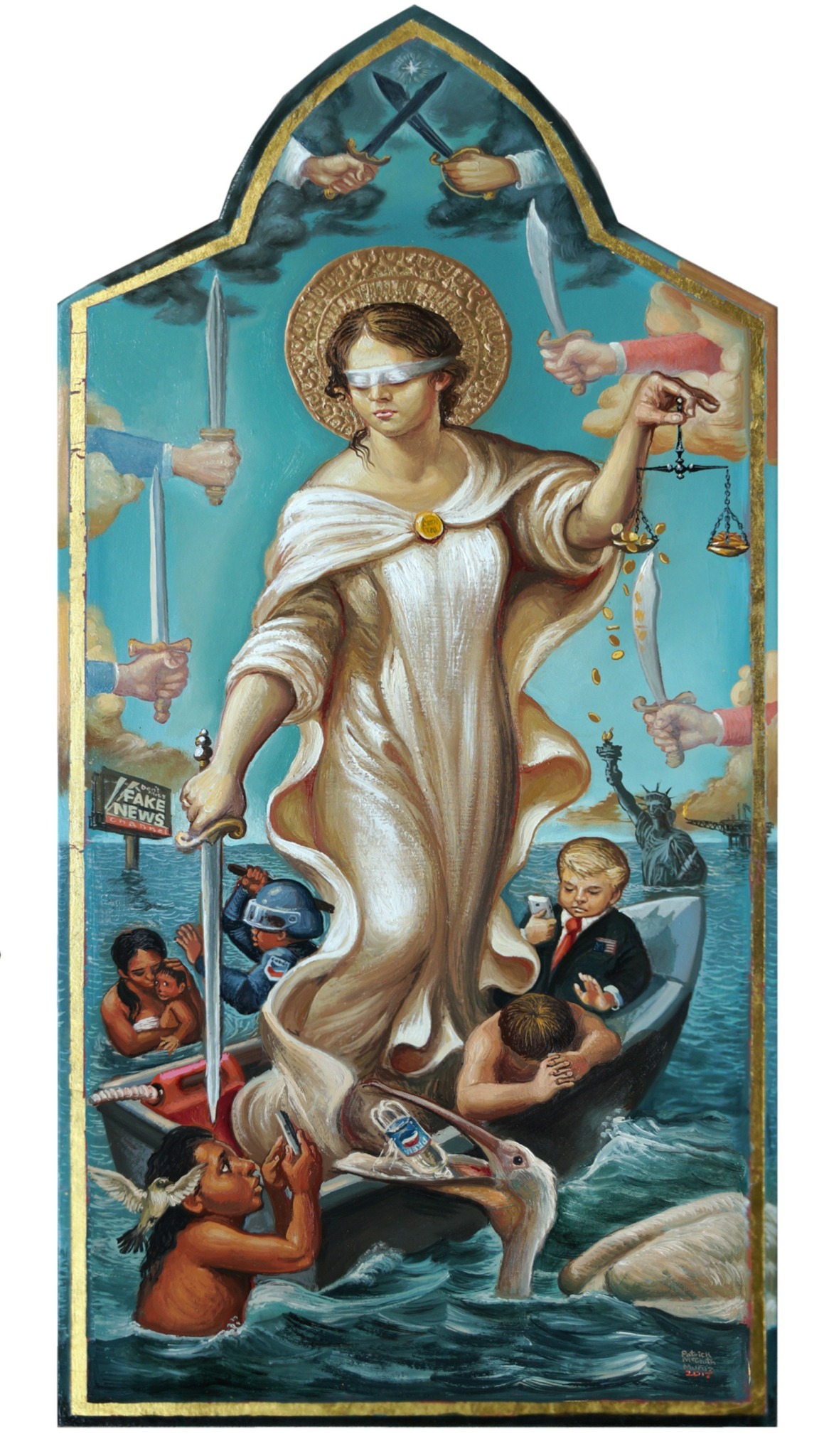
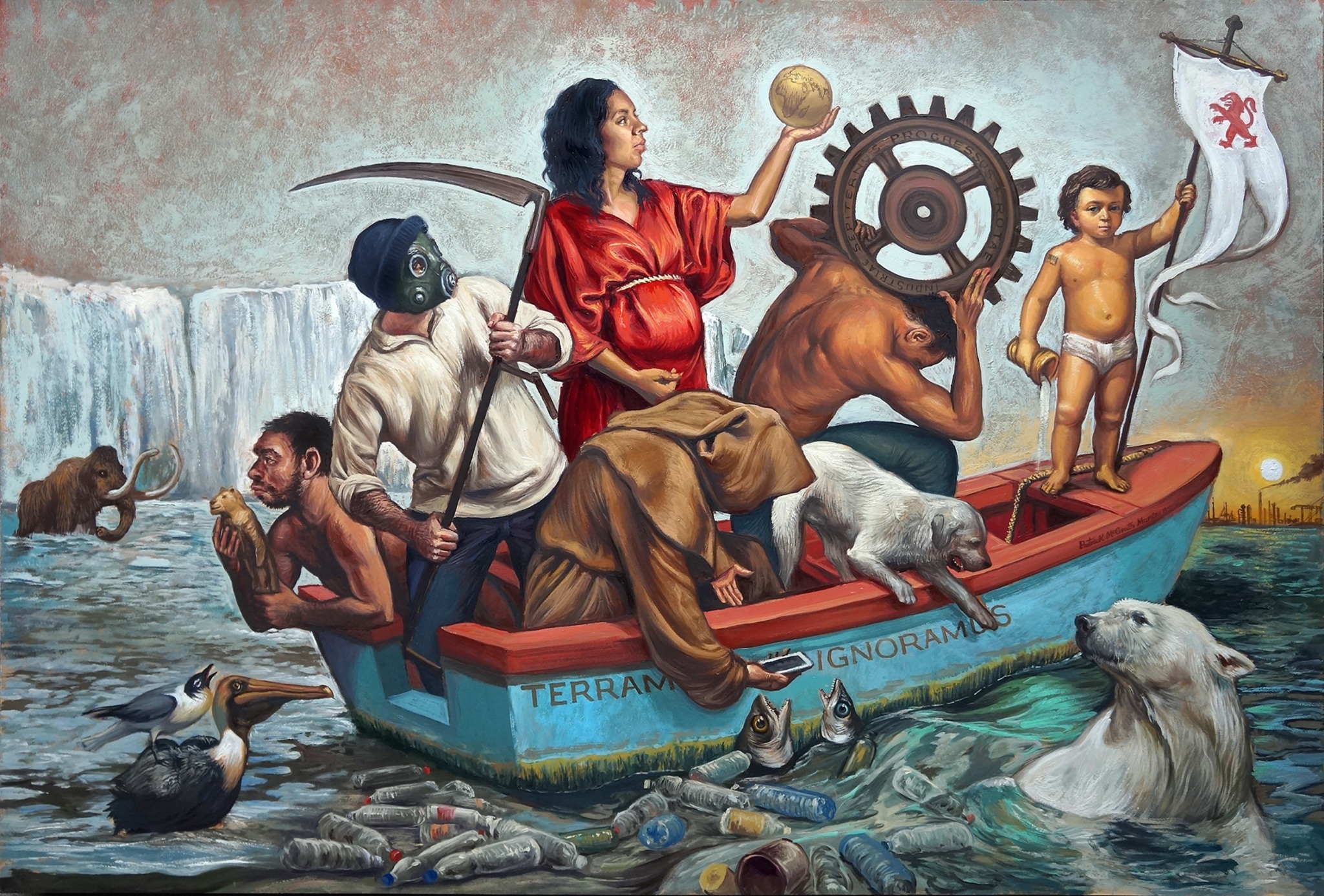
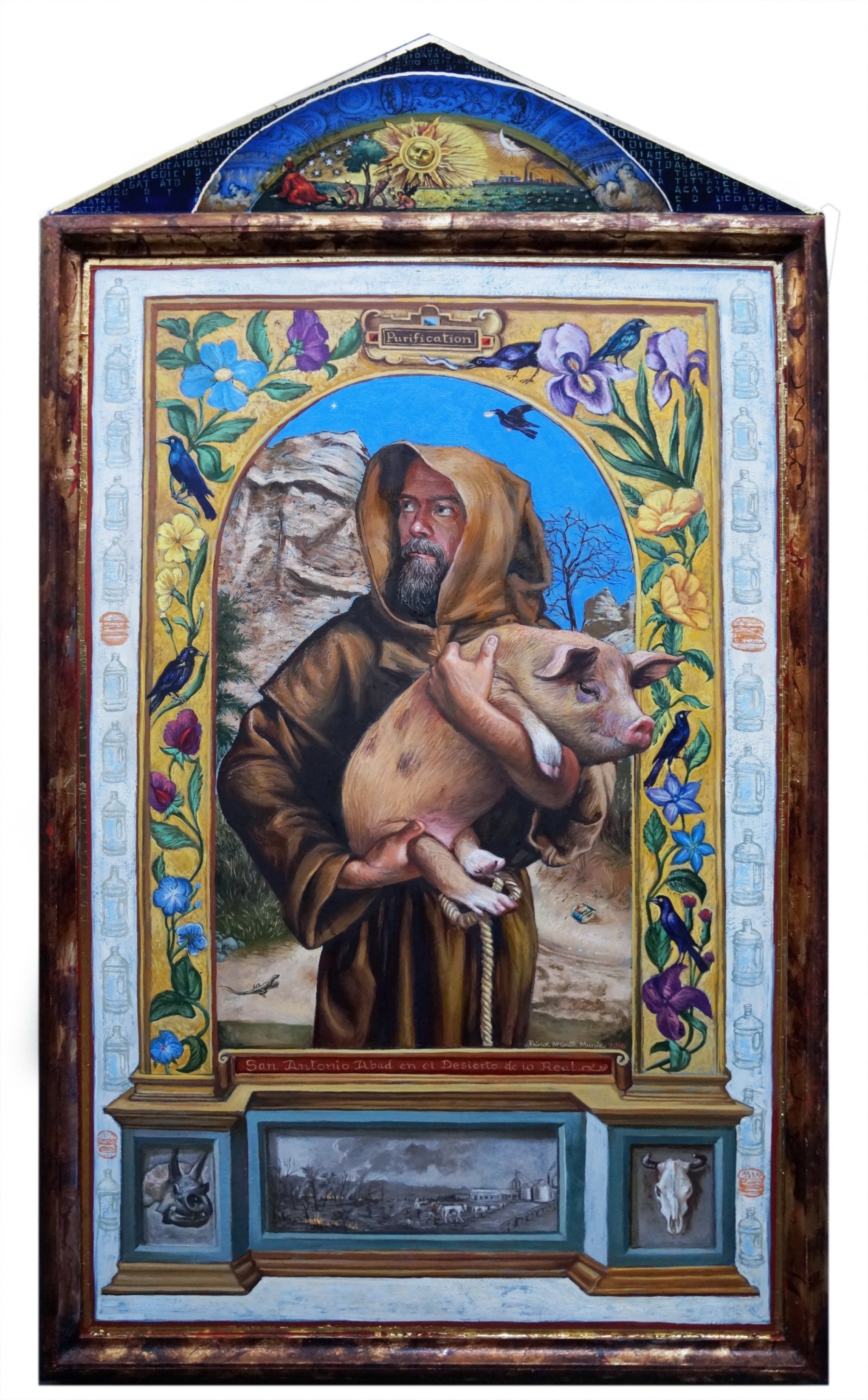
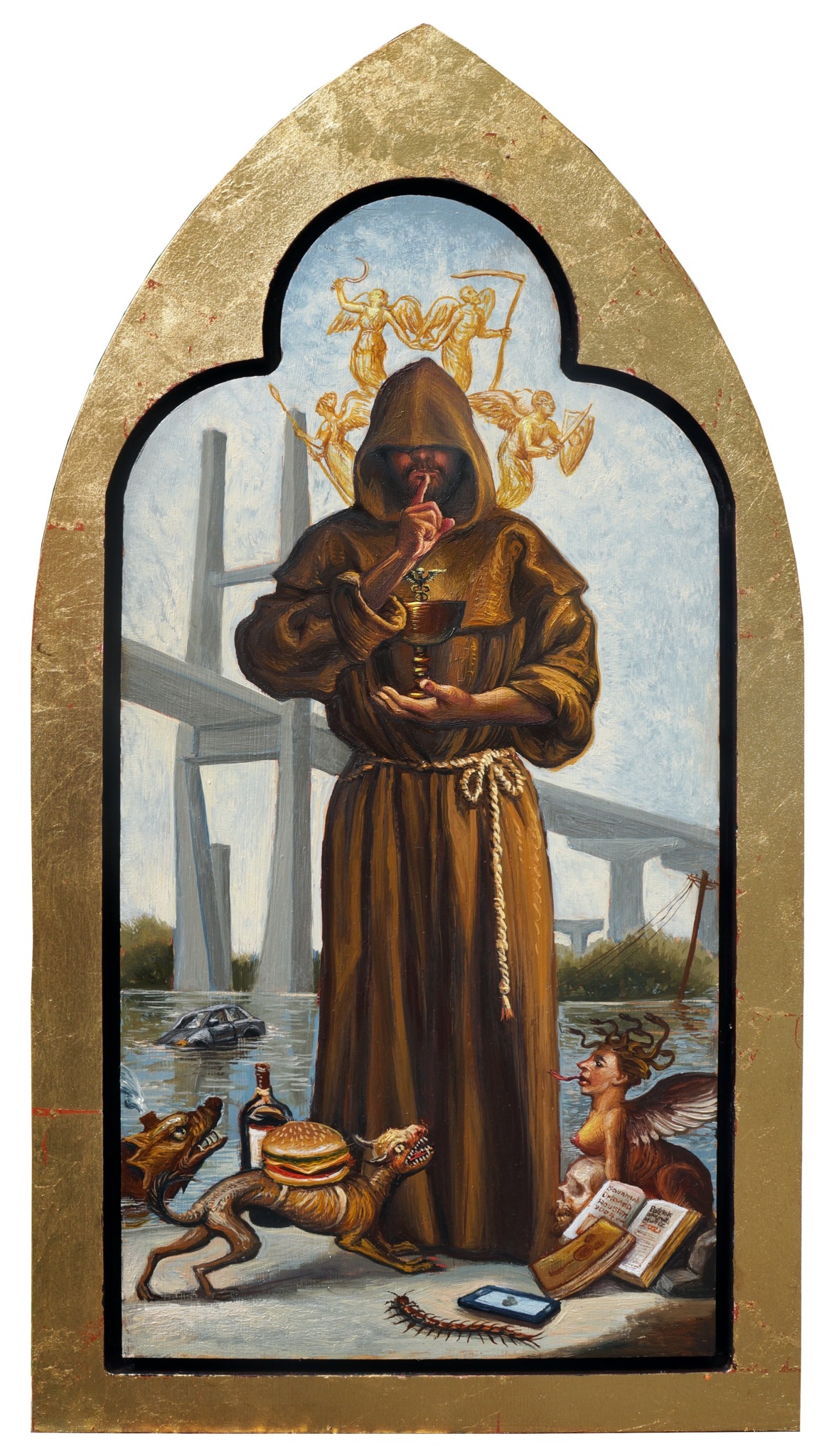
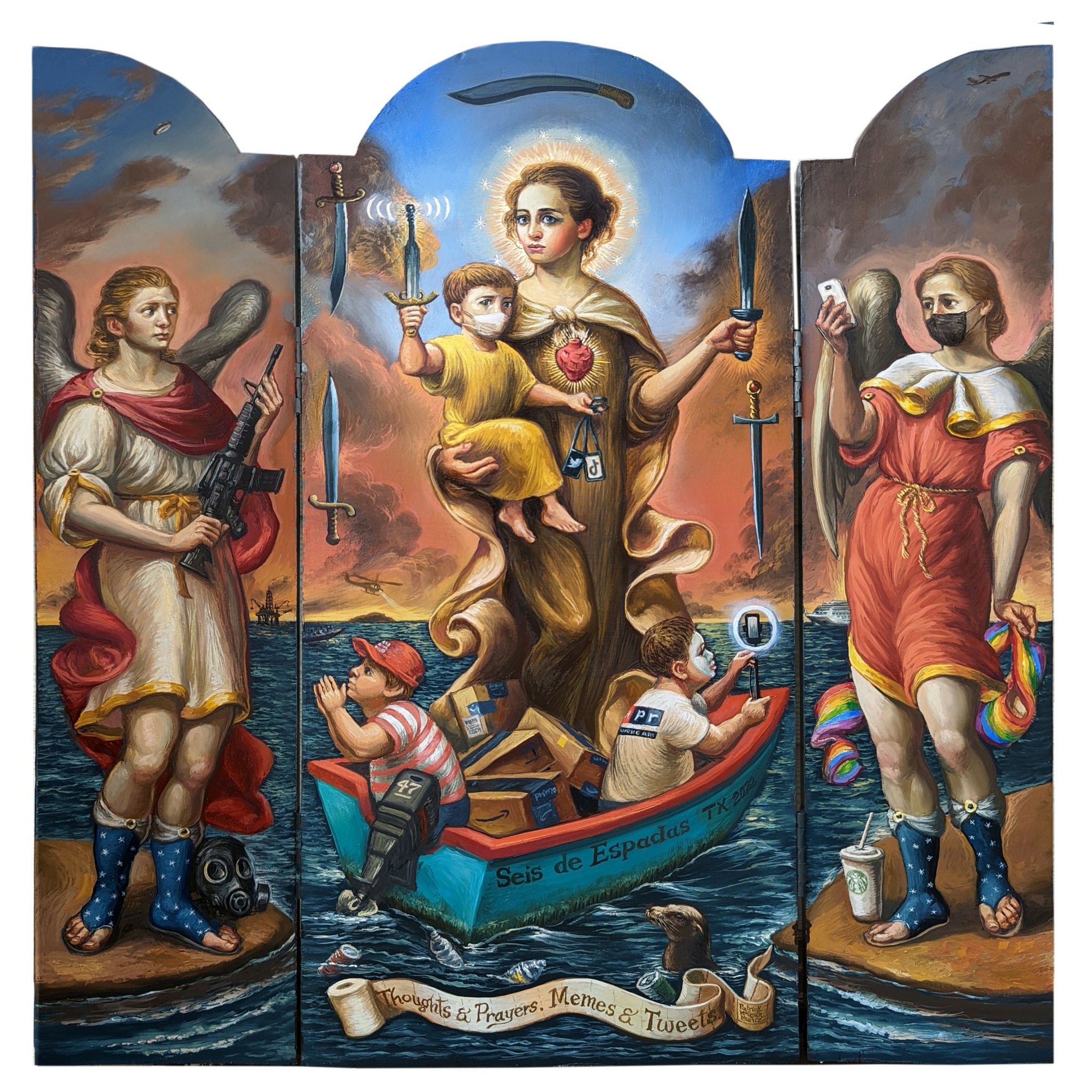
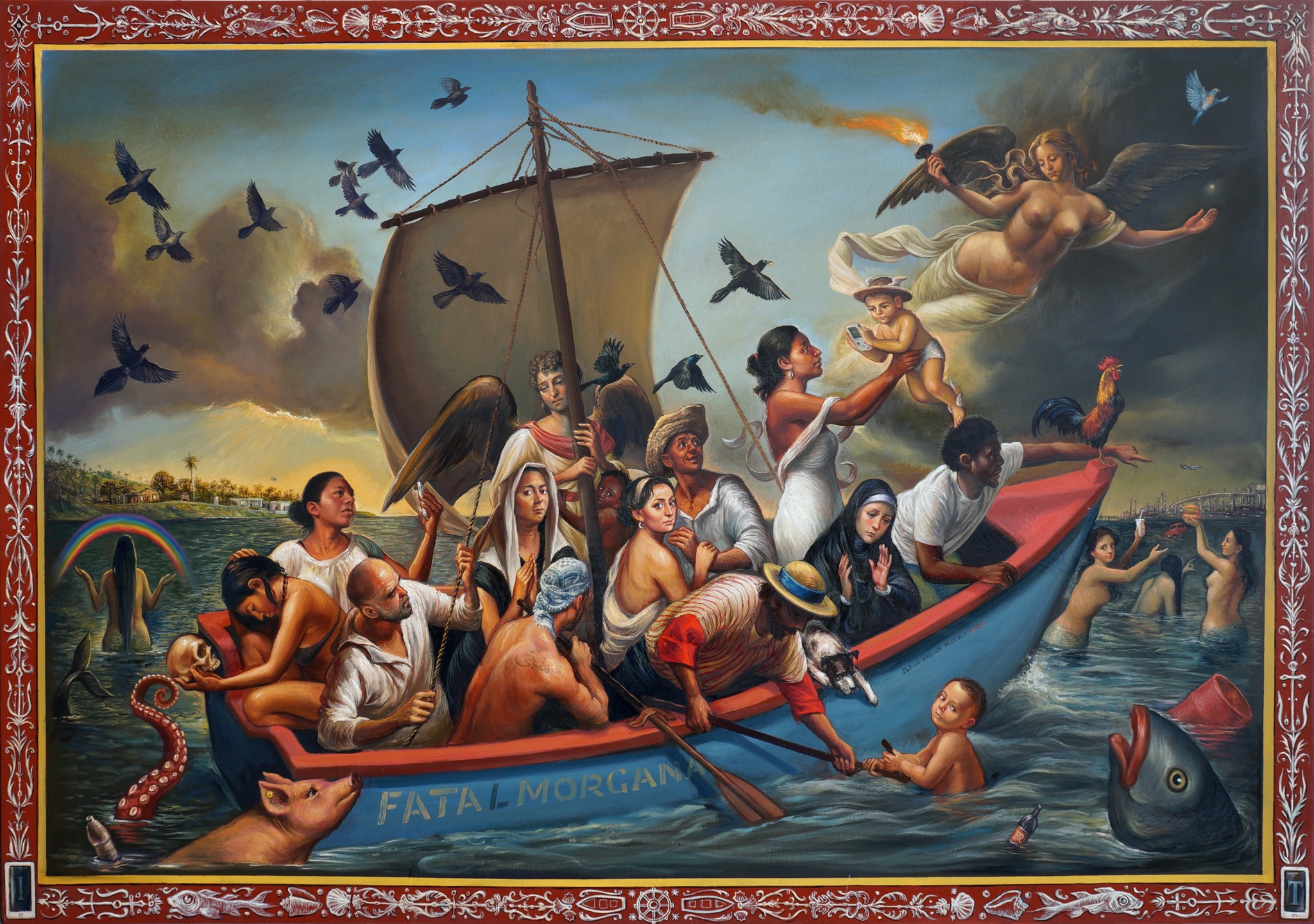
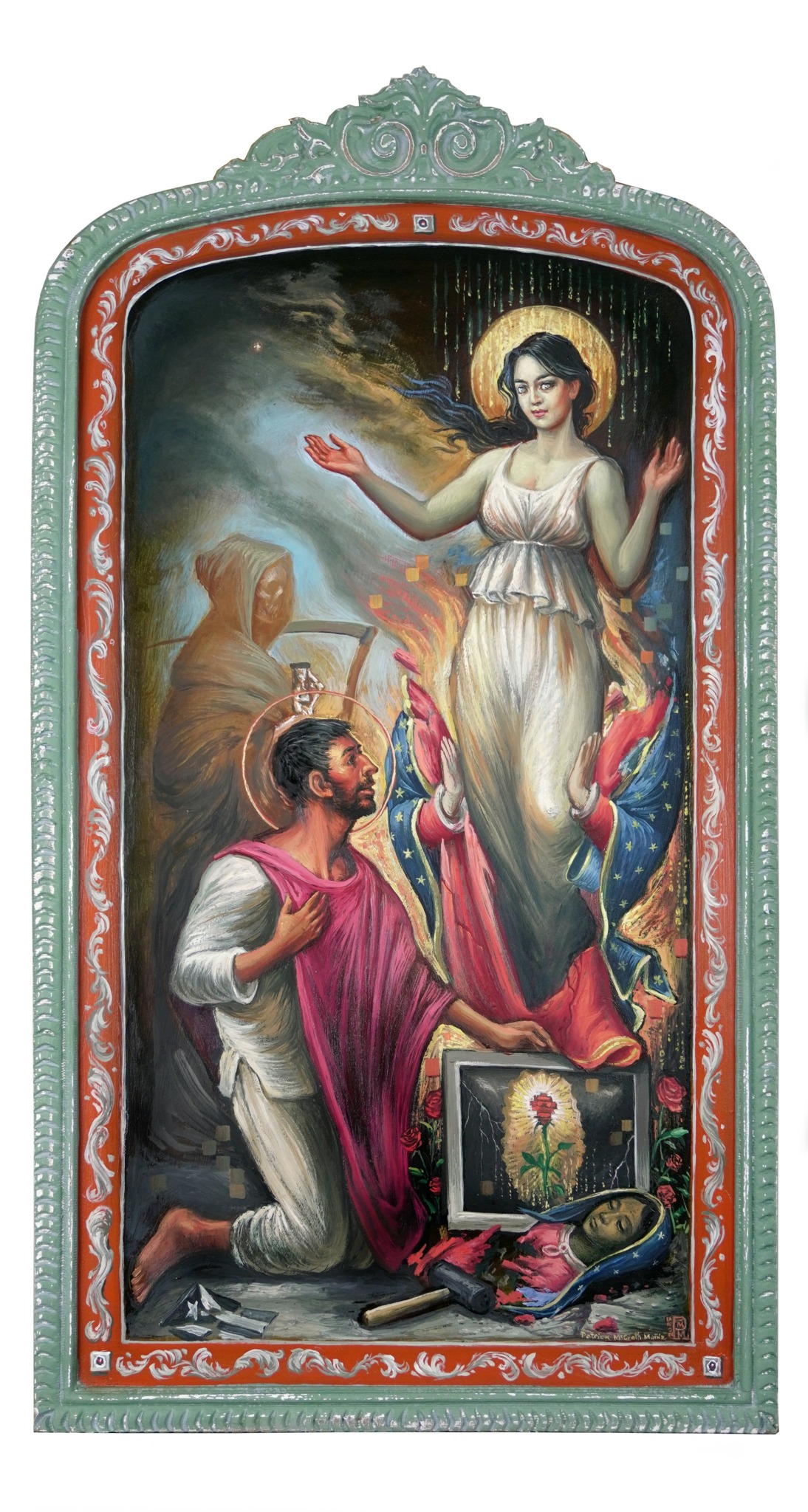
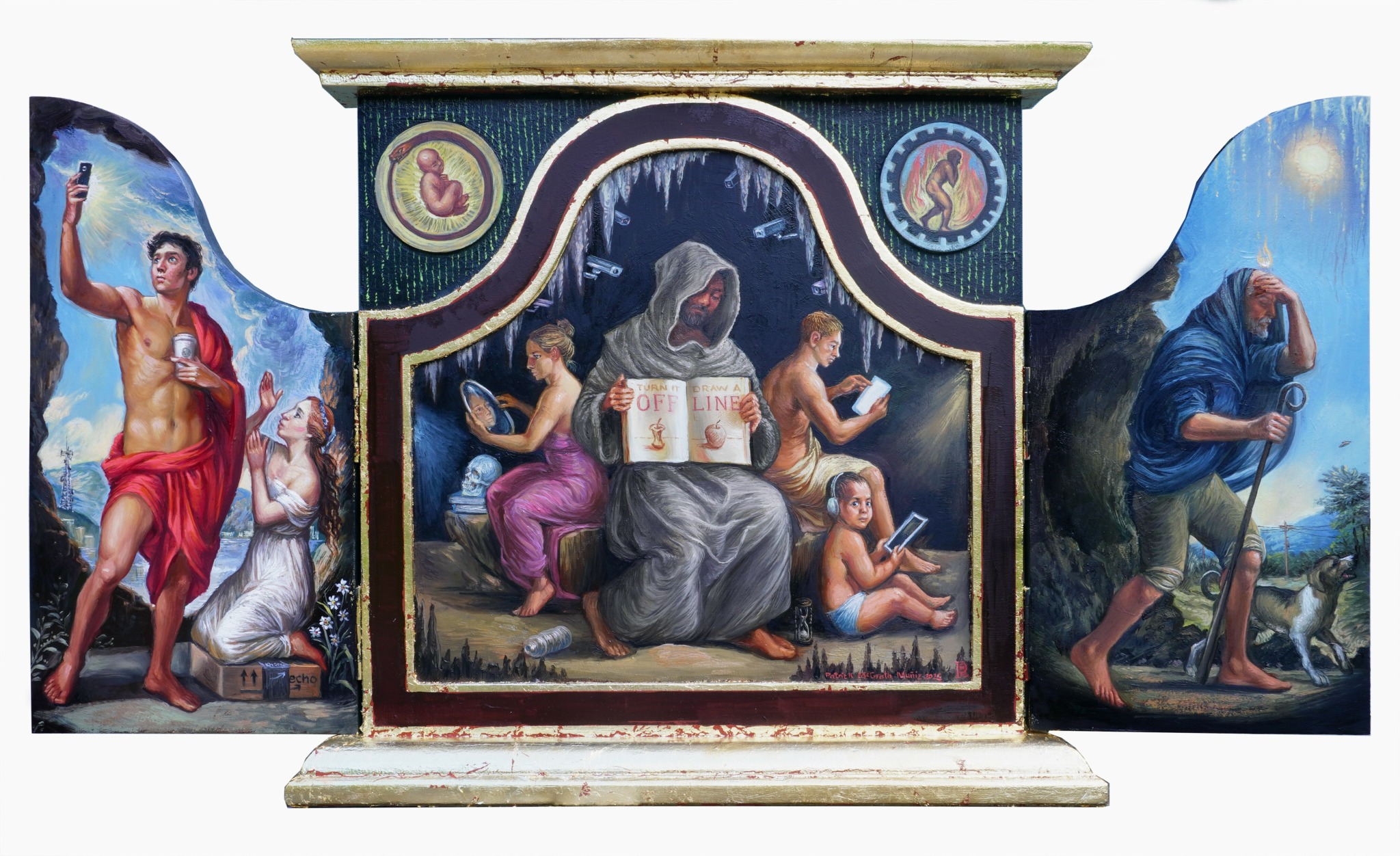
Image Credits
1. SANTA JUSTICIA (2017) Oil and gold leaf on panel 11.5 x 23.5 inches. Private Collection.
2. TERRAM IGNORAMUS (2018) Oil on panel 24 x 36 inches. Artist’s Collection.
3. ANTHONY AND THE PIG (2018) Oil and gold leaf on panel 42 x 24 inches. Private Collection.
4. THE HERMIT (2021) Oil and metal leaf on panel 10.5 x 20 inches. Private Collection.
5. THE VIRTUE SIGNAL (2022) Oil on triptych panel 24 x 24 inches. Private Collection.
6. ENTRE TIERRAS (2024) Oil on canvas 65 x 45 inches. Available at Evoke Contemporary, Santa Fe, NM.
7. ALGORITMIA (2025) Oil on panel 16 x 30.5 inches. Available at Evoke Contemporary, Santa Fe, NM.
8. OFFLINE (2025) Oil on wood panel triptych 36.5 x 20 inches. Available at Evoke Contemporary, Santa Fe, NM.