

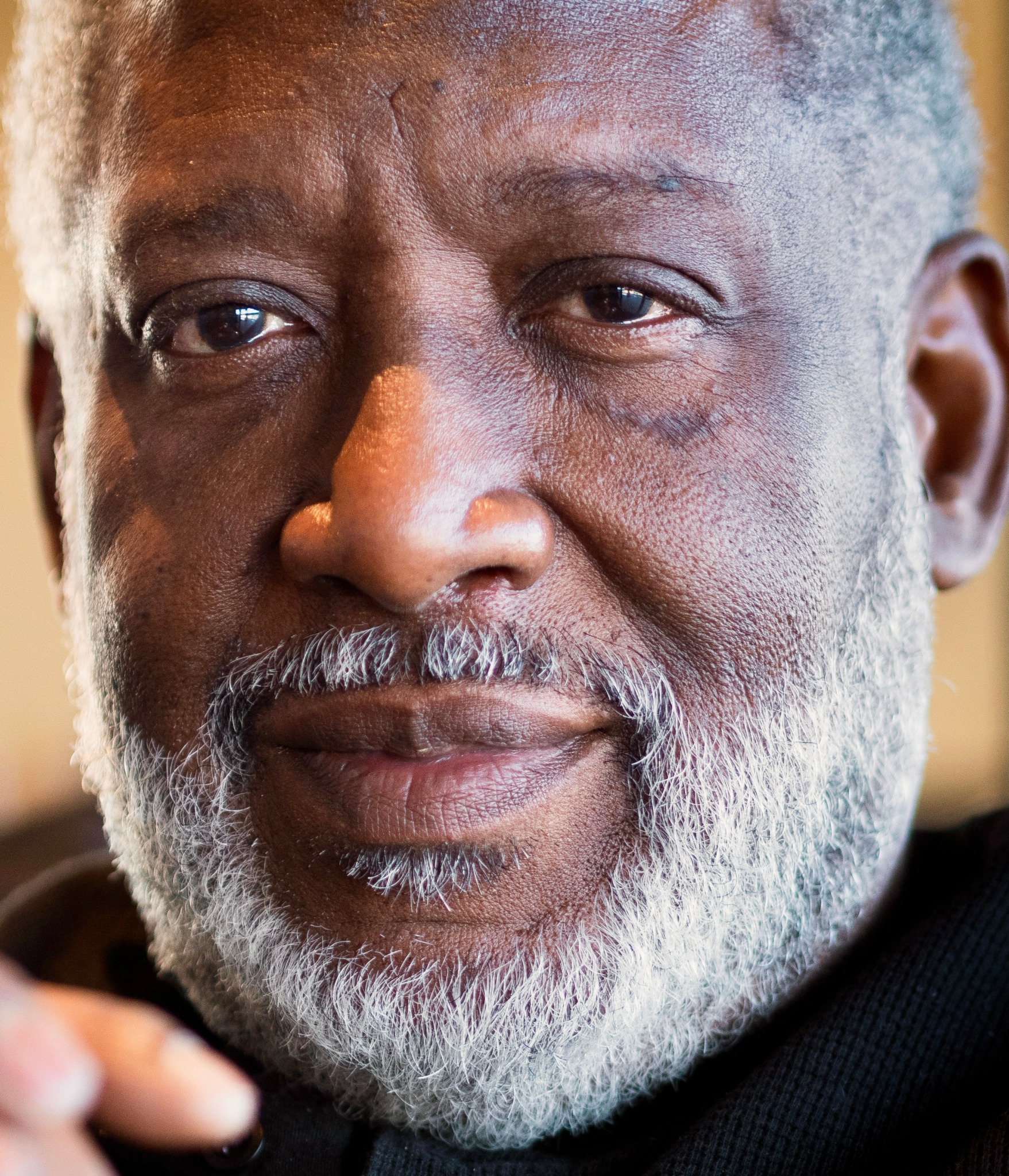

We caught up with the brilliant and insightful Aaron Mahlon Thomas a few weeks ago and have shared our conversation below.
Aaron Mahlon, thanks for taking the time to share your stories with us today Let’s jump right into how you came up with the idea?
The idea for my creative services nonprofit did not arrive as a business plan—it emerged as a necessity. It was born in a season of collapse, not confidence.
After decades as an entrepreneur in information technology, my company imploded during the 2008 recession. That loss stripped away more than income; it dismantled identity. I found myself facing depression, anxiety, and ultimately a long-delayed diagnosis of post-traumatic stress disorder rooted in my military service decades earlier. What I did not yet have were words for what was happening internally—only symptoms. My inner world was overexposed, grainy, and unstable.
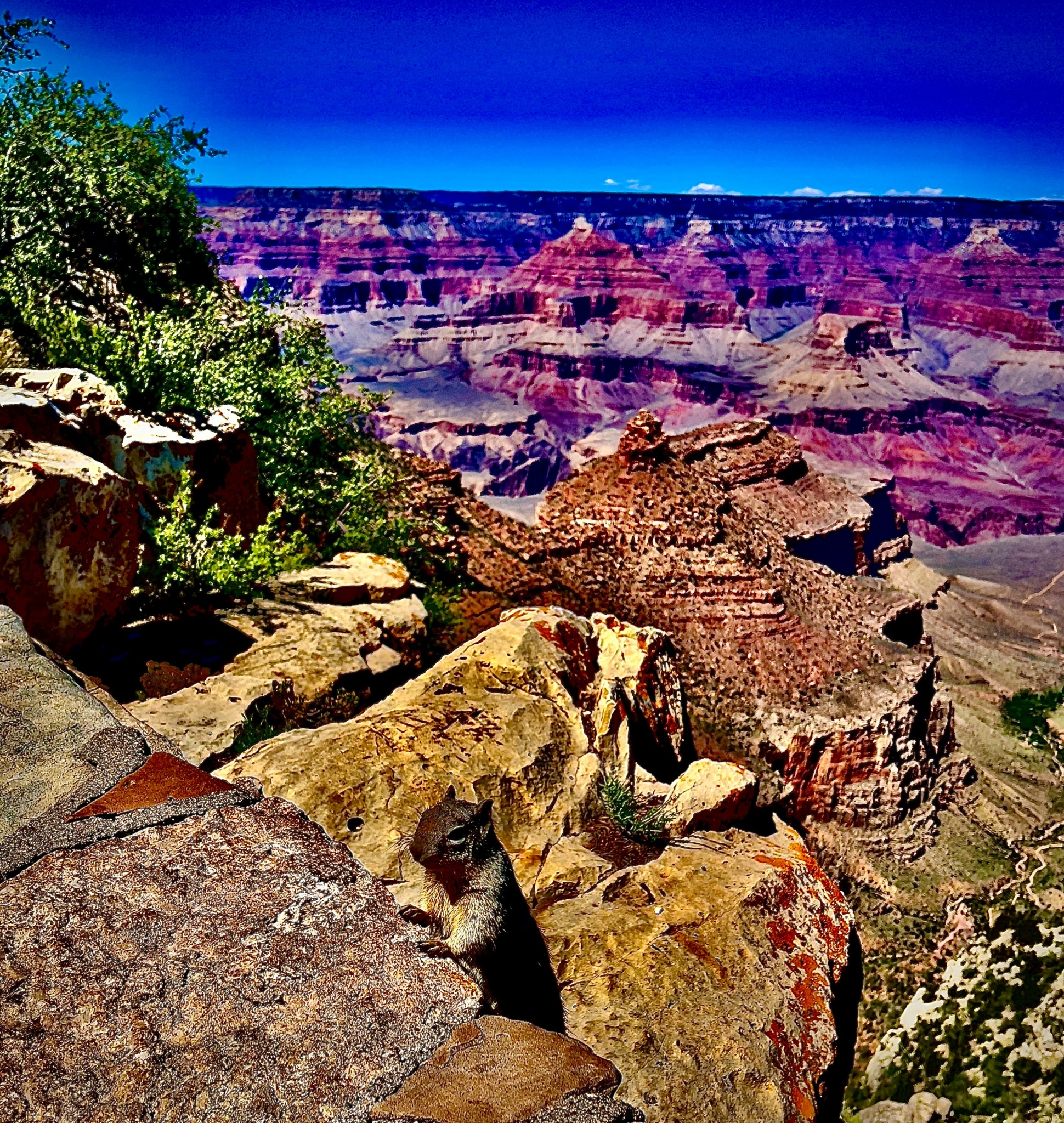
Returning to school in my late fifties was not a strategic pivot; it was survival. Photography became my language before it became my craft. I discovered that when I held a camera, my nervous system slowed. Framing an image gave shape to chaos. Light—literal light—became a teacher. I learned that what overwhelms us emotionally can often be approached indirectly, through metaphor, process, and creative control.
The pivotal realization came when fellow veterans began responding to my work—not to the aesthetics, but to the permission. They recognized themselves in the images and in the process. Many could not yet speak about trauma, but they could photograph it. I saw men and women who had shut down emotionally begin to re-engage—not through therapy language, but through visual storytelling.
That was the moment Photographically Touching Souls Deeply was conceived.
The logic behind believing this could succeed was grounded in both evidence and experience. I had already spent thirty years building, sustaining, and adapting a business. I understood systems, scalability, and service. Academically, I was earning multiple degrees in photography, visual communications, and documentary production. Clinically, research in therapeutic photography already existed—I simply recognized a gap where veterans were concerned. Spiritually, I knew this work aligned with purpose rather than profit.
This was not about creating photographers. It was about restoring agency.
I believed it would work because it was already working—quietly, organically, one veteran at a time. The nonprofit simply gave structure to something that had proven its value in real lives, under real conditions. I was not chasing a market. I was responding to a calling that had survived war, loss, failure, and recovery.
In focus at last, the picture was clear: if creativity could help me reclaim my life, it could help others do the same.
Aaron Mahlon, before we move on to more of these sorts of questions, can you take some time to bring our readers up to speed on you and what you do?
For those meeting me for the first time, I am a master photographer, documentary filmmaker, educator, and founder of Photographically Touching Souls Deeply, a nonprofit organization serving veterans diagnosed with post-traumatic stress disorder. But long before titles, degrees, or exhibitions, I was a young man trying to make sense of internal noise that had no vocabulary.
I enlisted in the United States Navy at eighteen and traveled to thirty-three countries aboard the USS John F. Kennedy. Like many veterans, I carried experiences home that did not neatly unpack. Decades later—after building and losing a thirty-year information technology firm during the 2008 recession—I was diagnosed with PTSD, major depressive disorder, and chronic anxiety linked to military trauma. What appeared externally as a business collapse was internally a reckoning.
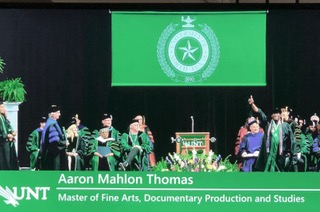
Photography entered my life not as an artistic hobby but as a stabilizing instrument. When I returned to school in my mid-fifties through the VA’s vocational rehabilitation program, I immersed myself in digital imaging, photography, visual communications, and documentary production. I eventually earned four associate degrees, a Bachelor of Fine Arts in Photography with a minor in Radio and Television Broadcasting, and a Master of Fine Arts in Documentary Production.
But the camera did more than educate me—it regulated me. The act of composing a frame restored agency. Exposure, contrast, depth of field—these were not just technical terms; they were metaphors for emotional calibration. I realized creativity could transform chaos into structure.
That realization became the foundation of my nonprofit.
What We Provide
Through Photographically Touching Souls Deeply, I design and facilitate:
• Therapeutic photography workshops for veterans and their families
• Educational programs blending visual literacy with emotional processing
• Exhibitions and community showcases that amplify veteran voices
• Documentary storytelling projects that reframe trauma into testimony
• Public speaking engagements and panel discussions on creativity and mental well-being
• Curriculum development for institutions seeking structured therapeutic arts programming
I also serve as a college instructor in photography and digital media, where I integrate technical excellence with emotional intelligence. My work lives at the intersection of art, education, and healing.
The Problem We Address
Many veterans struggle to articulate trauma verbally. Traditional therapy is invaluable, but not everyone begins with language. We provide an alternative doorway.
Photography allows veterans to externalize internal experiences safely. It creates distance without denial. It invites observation without overwhelm. Participants learn to see differently—not just through a lens, but through their lives.
The problem is not simply PTSD; it is isolation, loss of identity, and fractured narrative. We help rebuild narrative coherence through creative process.
What Sets Me Apart
First, I am not approaching this work academically alone—I have walked through it personally. I understand the silence. I understand the shame. I understand the stubborn pride that keeps many veterans from asking for help.
Second, I combine three disciplines:
Entrepreneurial leadership, formal academic training, and lived military experience.
That combination allows me to build sustainable systems while maintaining authenticity.
Third, my work is grounded in excellence. I believe veterans deserve high-level instruction, professional-grade equipment, structured curriculum, and public platforms worthy of their dignity. We do not approach this as charity; we approach it as empowerment.
What I Am Most Pleased with in myself efforts
I am most pleased with watching a veteran who once avoided eye contact stand beside their framed photograph at an exhibition and speak with confidence about its meaning.
I am pleased with returning to higher education after four decades away and proving that intellectual rebirth is possible at any age.
I am pleased that our programs do not reduce veterans to diagnoses—we elevate them as artists.
What I Want Readers to Know
My brand is not about photography alone. It is about restoring authorship over one’s story.
I believe creativity is not a luxury—it is a stabilizing force. I believe healing can coexist with excellence. I believe discipline and compassion belong in the same room.
At its core, Photographically Touching Souls Deeply exists to transform chaos into creativity—one image, one voice, one veteran at a time.
And if there is one thing I want readers to understand, it is this:
We are not capturing photographs. We are reclaiming identity.
Let’s talk about resilience next – do you have a story you can share with us?
Resilience, in my life, was not a loud declaration. It was a quiet decision made when no one was watching.
One of the clearest moments came after the collapse of my thirty-year information technology firm. Before the 2008 recession, I had borrowed $250,000 to expand the company. When the economy shifted, contracts vanished almost overnight. Revenue dried up. The business imploded. Bankruptcy followed.
Externally, it looked like financial failure. Internally, it was far heavier. I was in my fifties, a high school dropout for nearly four decades, carrying unprocessed military trauma I did not yet understand. Depression and anxiety tightened their grip. Identity began to erode. I had built a career on competence and independence—suddenly I was facing doctors, paperwork, and the word “disability.”
I remember sitting at the kitchen table one evening, surrounded by documents—legal papers, financial statements, medical evaluations. It felt like every line item represented loss. Pride. Security. Direction.
My wife looked at me and said something simple but life-altering: “Why don’t you try to go back to school.”
At first, the suggestion felt unrealistic. I was older than most students’ parents. I had no academic confidence. But something inside me recognized that staying still would be surrender.
So I enrolled.
Walking into that first classroom was humbling. I was older, uncertain, and carrying invisible wounds. Yet I made a decision that day: I would not compete with the eighteen-year-olds. I would compete with the man I had been yesterday.
I began studying photography. At first, I simply wanted to pass the course. Then something unexpected happened. When I held a camera, my breathing slowed. When I composed a frame, my thoughts organized themselves. Light and shadow made sense in ways my emotions did not.
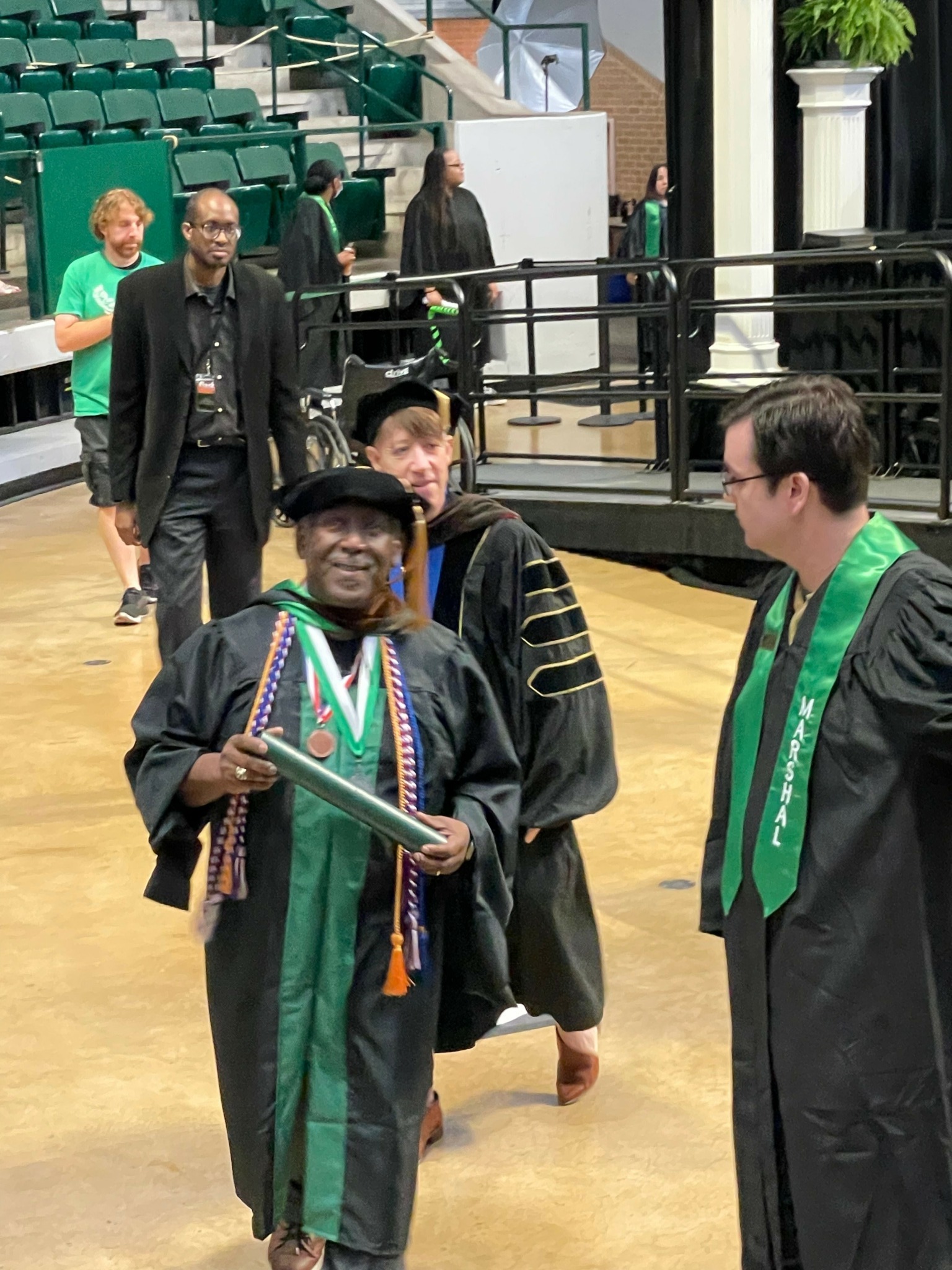
I did not just complete one degree. I completed four associate degrees. Then a Bachelor of Fine Arts. Then a Master of Fine Arts in Documentary Production. Each semester felt like adding stability to a structure that had once collapsed.
Resilience was not dramatic. It was waking up and attending class when I wanted to withdraw. It was submitting assignments when anxiety whispered I did not belong. It was asking questions instead of pretending to understand. It was choosing growth over embarrassment.
The most defining moment came years later when I stood in front of a classroom as an instructor. The same environment that once intimidated me had become a place where I could serve others. I was no longer rebuilding alone—I was guiding.
That journey illustrates my resilience because it required me to accept brokenness without becoming defined by it. I did not erase my past. I reframed it. The bankruptcy, the diagnosis, the shame—they became raw materials rather than verdicts.
Resilience, I have learned, is not toughness. It is alignment. It is the willingness to stand back up, even when standing feels unfamiliar.
And sometimes, resilience begins with enrolling in one class and believing that light can still enter a life that feels overexposed.

Is there something you think non-creatives will struggle to understand about your journey as a creative?
One thing non-creatives often struggle to understand is that creativity is not decorative—it is structural.
From the outside, photography can look like aesthetics, hobbies, or artistic indulgence. What many do not see is that for some of us, creativity is not about producing images. It is about stabilizing the mind.
When I first began studying photography, people assumed I was pivoting careers. They saw equipment, exhibitions, degrees. What they did not see was that the creative process was regulating my nervous system. Composing a frame was teaching me how to think clearly again. Adjusting exposure was teaching me how to tolerate emotional intensity. Editing an image was teaching me discernment instead of reaction.
Non-creatives may not realize that art is often a form of cognitive reorganization.
There were days when I could not articulate what I was feeling. Trauma does not always present itself in sentences. But I could express isolation through negative space. I could express fragmentation through contrast. I could express hope through light breaking into shadow. The image carried what language could not yet hold.
Another misunderstanding is this: creativity looks spontaneous, but it is disciplined. Many assume artists wait for inspiration. In reality, I learned resilience through repetition—early mornings, technical study, critiques, revisions. Creativity demanded rigor. It required structure. That discipline, ironically, helped rebuild areas of my life that felt chaotic.
There is also the vulnerability component. When a veteran shares a photograph publicly that reflects an internal struggle, it is not merely art—it is exposure of a different kind. Non-creatives may not understand how much courage it takes to make the invisible visible.
And finally, some may struggle to understand why I insist on excellence within therapeutic spaces. I do not believe veterans should be handed cameras as distraction. They deserve mastery, technique, professional standards, and public platforms worthy of their stories. Creativity, when treated seriously, restores dignity.
If someone reading this does not consider themselves creative, I would offer this insight: creativity is not limited to artists. It is the human capacity to interpret experience and assign meaning. Whether through photography, writing, engineering, or entrepreneurship, creativity is how we reorganize chaos into coherence.
My journey as a creative was not about becoming an artist. It was about becoming stable enough to serve.
And sometimes the most practical decision a person can make—especially after loss—is to build something beautiful, not because it is pretty, but because it is powerful.
Contact Info:
- Website: https://www.aaronmahlon.com/
- Linkedin: https://www.linkedin.com/in/professor-aaron-m-thomas-mfa-193763263/
- Soundcloud: https://on.soundcloud.com/FSE7HzOJEoyXe4wCtm
- Other: https://ptsddfw.org/
Image Credits
Aaron M. Thomas, and Aaron’s Family members.