

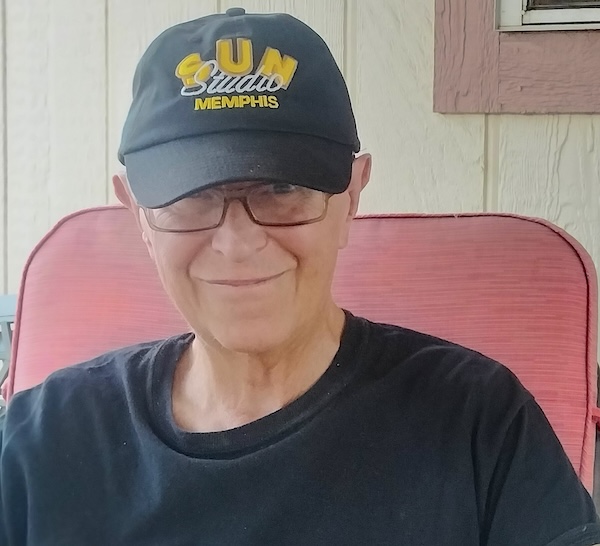

For Tim G. Young, writing has always been a constant — poems, lyrics, fragments of ideas scribbled down over decades. But with his latest novel, A Taste of Heaven, he did something different: he slowed down, trusted the process, and gave a story the space it needed to fully unfold. Inspired by the neighborhoods of Queens and shaped by years of reading, rewriting, and self-doubt turned self-belief, Tim’s journey is a reminder that creative breakthroughs don’t always happen on a deadline — sometimes they arrive when you finally let yourself keep going. We caught up with him to talk about long-form writing, creative discipline, and what it really takes to finish a book.
Hi Tim, thanks so much for joining us again. You’ve just finished your new novel, A Taste of Heaven, and you’re submitting it to traditional publishers. What inspired this story, and what has the journey been like bringing it from first draft to polished manuscript?
The most important inspiration for this story is the borough of Queens in New York City. At first, I didn’t know much about it, but since my girlfriend, Paula, lived in the Astoria neighborhood, visiting with her helped me grow to love the neighborhood and learn all about it. The diners, bars, and cafes were also inspirational. And unlike Manhattan, where I lived, there were no skyscrapers, just rows after rows of mostly brick homes, and that was a pleasant change.
The journey was fairly long. The germ of the idea happened on October 31st, 2023. That’s because I was still thinking of November as a writing month, but once the story began to take shape, I realized 30 days would never be enough time to tell the tale. Knowing that really freed me of any time constraints, and so I was able to forge ahead and take as much time as I needed. So, from the initial start to the finished manuscript was two years and many different drafts. (He said with a sigh of relief)
You credit Chris Baty’s book No Plot, No Problem and NaNoWriMo with jump-starting your long-form writing career. Can you take us back to that moment — what clicked for you, and how did that first challenge reshape your relationship with writing?
As a writer since high school, mostly poetry and songs, I often flirted with the idea of writing a book. But I don’t think I’m talking out of school when I say writers, in general, are filled with self-doubt, me included, so I never considered it seriously. Then one afternoon in 2005, while browsing paperbacks in Barnes and Noble, I came upon Chris Baty’s book, and a light went on in my head. It meant I wouldn’t need to outline and fret forever before I began to write a book; it meant I could just jump in and get going, and that’s what I did.
It changed my relationship because my efforts proved to me, I could get the work finished, I could string together fifty thousand words into a cohesive story. And these facts did wonders to alleviate my self-doubts and create a belief that I could write novels if I wanted to.
You’ve now written several titles — from novels to memoir to poetry and lyrics. What keeps pulling you back to the page, and how do you decide which ideas become books, poems, or songs?
I believe what keeps me returning to the page has something to do with habit. Something I’ve always done. Of course, new ideas are also an important factor. Since I’ve been writing poems and songs longer than other forms, it’s second nature to me to know a poem from a lyric. In poetry, it is often what is not said that is critical. In a lyric, usually getting as detailed as possible is advisable. An idea for a book is much more, for me, a germ of an idea that keeps returning to mind. It could be only one line that might inspire the beginning of a complicated story. Or a line or passage from a book I’m reading. The memoir idea was given to me by someone I was relating my stories to about living in New York. And from there, I began to look back at events important to my development as a person. From child to adult.
A lot of writers talk about the emotional roller-coaster of creating a long-form piece. What are some of the highs and lows you experienced while working on A Taste of Heaven?
I love it when a new character emerges from, often, I don’t know where. That is exciting, and the new blood can be a catalyst to push the story in unexpected directions. Also, a high is when a character’s voice becomes clear, which means I know they are speaking their truth and not mine. That’s very important. And I love when my fingers fly across the keyboard, the story pouring out of me. Lows occur when I haven’t taken enough notes on a character or situation, and I repeat a scene or lose track of where a situation is going. And then when moving on to a new draft, I cut and paste a section from an older version and discovered it doesn’t work. What was I thinking? But the puzzle must be solved.
You’ve had poems and excerpts published in various magazines. How does writing poetry feed or influence your fiction, and vice versa?
It’s all to do with getting words on the page. That’s when ideas emerge. I’m not sure if my poetry influences my fiction unless a memorable character arrives, or the poem inspires an idea for a book, but in my experience, that doesn’t usually happen. It’s more likely that a fiction piece might influence a poem. An example is when a character in a novel thinks about writing a poem or just begins speaking in rhyme. That happened in one of my stories.
You mentioned that reading is essential to your craft. What kinds of stories or authors inspire you as you work on your own projects?
Wow. This question recalls a long-lost memory. When I was a kid, I don’t know, 10 or 11? My mom and dad would play cards on the weekend with my mom’s sister and her husband. I didn’t know how to play the card game, so while they were in my aunt’s kitchen, I would explore the living room. One night, I remember finding a book of poetry by e.e cummings. Poetry made a connection in me, and it excited me because he used all lower-case letters. I didn’t know anyone could do that. An amazing moment. So, there are the poets, Ginsberg, Burroughs, Ferlinghetti, Poe, and Rod McKuen. Jack Kerouac was also a poet, but his book, On the Road, was a major influence on my earlier writing.
Today I read many genres. One of my favorites is the detective, murder mystery novel. Lawrence Block, Michael Connolly. It is such a valuable lesson to read their use of language and plot construction. And the classics, F. Scott Fitzgerald, Dickens, and Henry James. Great writing is also seen in biographies and autobiographies of the rich and famous. Currently, I’m reading an autobiography titled Baby Driver, by Jack Kerouac’s daughter, Jan. Besides her life being one long roller coaster ride, she excels in her descriptions and use of language. Highly recommended. The kind of writing to aspire to.
Outside of writing, you’re also continuing to make music. How do these creative worlds overlap for you — and do your lyrics ever spark ideas for longer pieces, or the other way around?
I think the only overlap is the actual writing. Each piece, long or short, deserves intense scrutiny and revision. A lyric may inspire a character, but characters also inhabit a song. I’ve made use of this idea, but Bob Dylan is a master of characters in his songs, think Mister Tambourine Man, Mr. Jones, and Rubin Carter in Hurricane. As of this date, my books have not inspired a song, but the door remains open.
For aspiring writers who feel intimidated by the idea of a novel, what advice would you share from your own “jump in and do it” experience?
That’s it, “jump in and do it.” Probably most aspiring writers suffer from fear. Fear their words suck, fear they don’t possess the talent to write the long-form, or any form. Fear that if they do create something, it would be ridiculed. All these fears can pile up and create a block to sitting down with an empty page. I would say to order up from deep inside: strength, perseverance, and the will to be creative. Writers are artists. The job of an artist is to create. Bottom line.
Relevant Links:
- An excerpt from A TASTE OF HEAVEN: https://gargoylemagazine.com/tim-young-2/
- An excerpt from WRITING WITH WINE: https://ryethewhiskeyreview.blogspot.com/2025/10/writing-with-wine-excerpt-by-tim-g-young.html
- An ode to Debbie Harry: https://4fptoohot.blogspot.com/search?q=tim+G+young