
Share This Article
Dr. Toni Newman has spent decades turning lived experience into lasting impact — advocating for justice, building pathways to opportunity, and ensuring that marginalized communities are not just seen, but supported. Recently honored with an Honorary Doctorate in International Law and Legal Studies, Dr. Newman views the recognition not as a personal milestone, but as a collective victory and a renewed call to action. We caught up with Dr. Newman to talk about leadership rooted in truth, the responsibility that comes with visibility, and what’s next in their ongoing mission to create systems that uplift, endure, and expand possibility for generations to come.
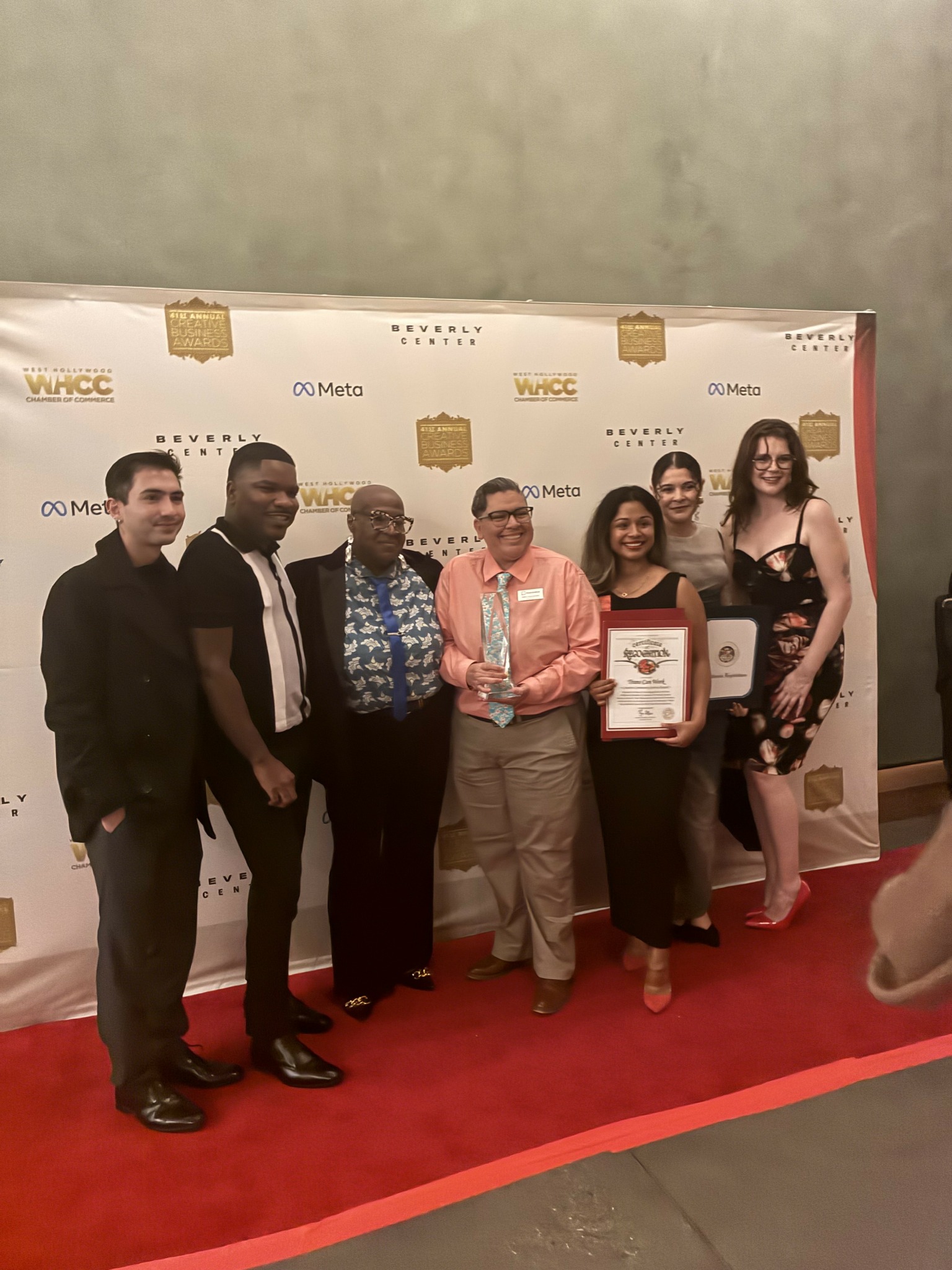
Hi Dr. Newman, thank you so much for making time for us. Receiving an Honorary Doctorate in International Law and Legal Studies is such a historic moment. When you first learned about the honor, what went through your mind — both as Toni, the individual, and as Toni, the advocate representing so many others?
When I first learned about receiving an Honorary Doctorate in International Law and Legal Studies, two very different emotions rose up in me at the same time — one deeply personal, and one profoundly communal.
As Toni, the individual…
My first reaction was honestly disbelief followed by a deep, quiet gratitude. I thought about my own journey — the challenges, the reinventions, the moments when I wasn’t sure I would even have a seat at the table, let alone be honored for my contributions to law, justice, and equity.
I felt humbled. I felt seen. And I felt a reminder that every step, even the difficult ones, had meaning.
As Toni, the advocate…
Almost immediately, my mind shifted to the larger “we.”
This doctorate isn’t just about me — it represents the communities whose stories and struggles shaped my voice. It represents Black trans people who have fought for dignity, workers fighting for equity, and every marginalized person whose brilliance is too often overlooked.
I thought: If this can happen for me, what doors can it open for others? How can I use this honor not as a finish line but as a platform?
The overarching feeling
Pride, yes — but also responsibility.
Moments like this remind me that visibility is powerful, and that every recognition comes with an obligation to continue lifting up the people and movements who made it possible.
You’ve described this recognition as something you share with every trans woman of color who has fought to live authentically. What does this milestone mean for the broader community you’ve spent decades uplifting?
This milestone is so much bigger than a personal achievement — it’s a testament to the resilience, brilliance, and unapologetic truth of trans women of color everywhere.
A Collective Victory
For decades, trans women of color have been on the frontlines of social change while rarely receiving recognition, respect, or safety.
So when an institution grants an Honorary Doctorate to a Black trans woman, it signals something powerful:
that our leadership is not only valid, but essential — that our insights in law, justice, and human rights matter on a global stage.
This honor says to every trans woman of color who has ever been dismissed or underestimated:
Your life, your struggle, your excellence deserve to be acknowledged.
A Shift in Visibility and Legitimacy
Visibility alone has never been enough. What matters here is legitimacy.
A doctorate in International Law and Legal Studies affirms the intellectual and strategic contributions our community brings to movements for justice.
It challenges outdated narratives and opens pathways for our stories, our advocacy, and our expertise to shape policy and culture.
Fuel for the Next Generation
I think about the young trans woman who is just beginning to find her voice — who might be navigating rejection or uncertainty.
If she sees me standing in this moment, I want her to know something clearly:
You are worthy. You belong everywhere decisions are made. Your dreams are possible.
This milestone becomes a signal fire for the next generation: that they can lead, they can influence law, they can shape the world.
A Reminder of Our Responsibility
And for those of us who’ve been doing this work for decades, this recognition reinforces our commitment.
It reminds us that progress comes from persistence, coalition-building, and refusing to shrink ourselves.
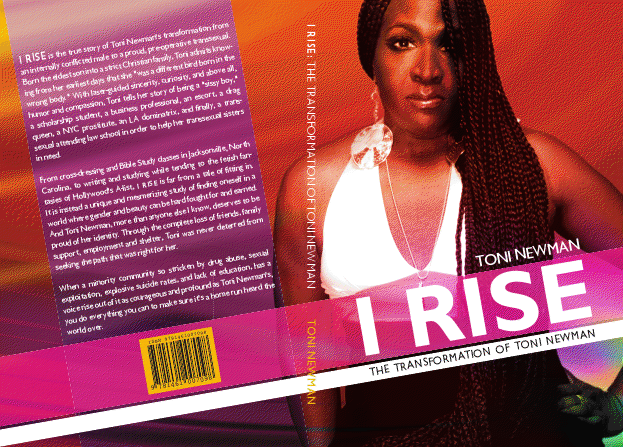
Your memoir, I Rise, has inspired so many with its honesty and resilience. How has your personal journey shaped the way you lead, advocate, and show up for marginalized communities today?
My personal journey has shaped everything about the way I lead and advocate — because I lead from a place of lived truth, not theory.
Honesty as a Leadership Principle
Writing I Rise required a level of transparency that stripped away any illusion of perfection.
When you’ve told the world the truth about your struggles, your survival, and your growth, you no longer fear vulnerability.
That honesty now guides how I show up in rooms of power, with my teams, and within community.
It keeps me grounded, empathetic, and unafraid to have the hard conversations that drive change.
Resilience as a Framework for Advocacy
My journey taught me something essential: resilience isn’t about being unbreakable — it’s about choosing to rise again and again, even when the world tells you not to.
So in my advocacy, I don’t just fight for policy shifts; I fight for the dignity, stability, and humanity of those who are constantly asked to endure more than most people can imagine.
I bring that understanding into every coalition I build and every system I challenge.
Seeing People Beyond Their Circumstances
Growing up without privilege, navigating homelessness, and rebuilding my life taught me that people are far more than their struggles.
Today, when I advocate for marginalized communities — trans people, Black folks, workers, immigrants, people living in poverty — I see their potential first, not their pain.
I lead with the belief that every person deserves access to opportunity, safety, and respect, regardless of where they start.
A Commitment to Breaking Cycles
My story is one of breaking cycles — of refusing to accept that where I began determined where I could go.
So my leadership today is focused on creating pathways for others:
pathways to employment, to leadership, to safety, to joy.
I want my life to be proof that transformation is possible — both individually and collectively.
Showing Up With Purpose, Not Ego
When you’ve rebuilt yourself from the ground up, you understand that leadership isn’t about titles or accolades.
It’s about service.
It’s about impact.
It’s about opening doors wider than they were opened for you.
My memoir wasn’t just a story — it became a compass.
And it continues to guide how I fight, how I speak, and how I love my community forward.
You’ve held leadership roles across nonprofits, public institutions, and national organizations. Is there a moment from your work in health equity, LGBTQ+ inclusion, or economic justice that you feel especially proud of?
There have been many powerful moments across my work in health equity, LGBTQ+ inclusion, and economic justice — but one that stands out to me is the day I saw the real, human impact of creating employment pathways for trans and nonbinary people.
A Moment That Brought Everything Full Circle
Years ago, during my time working in workforce development, a young trans woman came up to me after a hiring event we hosted. She told me it was the first time she ever felt safe and seen while looking for a job.
Two weeks later, she reached out to say she’d been hired — not out of pity, not because someone wanted to check a box, but because she finally had access to an environment that valued her talent.
The joy in her voice… that was a moment I’ll never forget.
It reminded me why this work matters: because when people gain economic stability, their entire lives shift. Housing shifts. Healthcare shifts. Dignity shifts.
Changing Systems, Not Just Stories
I’ve been honored to sit at policy tables, to shape national programs, and to build LGBTQ+-inclusive strategies in the health and public sectors. But the proudest moments for me are always the ones where systems change meets real people’s lives.
Whether it was:
- helping expand access to culturally competent HIV prevention and care
- guiding institutions to build trans-inclusive healthcare policies
- or leading multi-year initiatives that opened sustainable employment pipelines for LGBTQ+ and BIPOC workers
…the moments that stay with me are the ones where someone says,
“Because of this program, I can breathe a little easier.”
Those are the victories that matter.
Why It Means So Much
I know what it means to fight for stability, to be overlooked, to feel shut out of opportunity.
So when I see someone from a marginalized community finally getting what they deserve — a job, healthcare, safety, respect — I feel a profound pride.
Not in my individual role, but in what we achieved together.
As Chair of the Board for TransCanWork and Director of The Coalition for Justice and Equality Across Movements at NMAC, what issues are you most focused on right now — and what progress do you hope to see in the near future?
In both of my roles — as Chair of the Board for TransCanWork and as Director of The Coalition for Justice and Equality Across Movements at NMAC — my focus is on building structures that create long-term safety, opportunity, and equity for marginalized communities. But the work shows up differently in each space.
At TransCanWork: Advancing Economic Power for Trans Communities
- Expanding Inclusive Employment Pipelines
Right now, I’m focused on scaling partnerships with employers who are truly committed to hiring, retaining, and advancing trans and nonbinary employees — not just performing allyship.
Economic justice is foundational: you cannot talk about safety, health, or dignity without talking about stable employment.
Near-future progress I want to see:
- More Fortune 500 companies adopting measurable trans-inclusive hiring and promotion practices.
- National expansion of workforce training programs designed by and for trans people.
- Stronger protections against workplace discrimination, especially for Black and brown trans workers.
- Improving Workplace Culture, Not Just Access
A job offer is only the first step.
I’m focused on shifting internal cultures so trans people don’t just get hired — they thrive.
At NMAC’s Coalition for Justice and Equality Across Movements: Strengthening Cross-Movement Solidarity
- Ending HIV Through an Equity Lens
My work centers on how racism, transphobia, and economic inequality continue to drive HIV disparities.
We’re building coalitions that unite LGBTQ+, racial justice, public health, labor, and immigrant-rights movements to address HIV as not just a medical issue, but a social justice issue.
The progress I hope to see:
- Greater investment in Black and trans-led HIV programs.
- National adoption of policies that ensure culturally competent, stigma-free healthcare.
- Meaningful leadership opportunities for people living with HIV, especially those most impacted.
- Building Power Across Movements
One of my priorities is ensuring that marginalized communities aren’t forced to choose between movements — because our lives don’t exist in separate categories.
I’m working to strengthen bridges between:
- HIV justice
- LGBTQ+ rights
- Economic justice
- Racial equity
- Criminal justice reform
My goal is simple: when one community is under attack, every movement shows up.
What Gives Me Hope
I’m seeing more leaders and institutions recognize that justice requires collaboration, not silos.
I’m seeing more trans people — especially Black and brown trans women — step into positions of power.
And I’m seeing a shift toward solutions that don’t just address symptoms, but transform entire systems.
Your work often sits at the intersection of race, gender identity, HIV prevention, and civil rights. How do you navigate such complex, overlapping systems while keeping your advocacy rooted in humanity and hope?
The future I’m working toward is one where trans people have economic security, full bodily autonomy, equitable healthcare, and the freedom to live without fear.
For young LGBTQ+ leaders — especially trans women of color — who look to your story for guidance, what wisdom or encouragement would you want them to carry with them as they carve their own path?
The first thing I want every young LGBTQ+ leader, every young trans woman of color, to know is this:
Your existence is not a question mark — it is an exclamation point.
You are here with purpose.
- Your truth is your strength, not your weakness
You don’t have to shrink yourself or sand down your edges to be accepted.
The world may try to convince you that your story is “too much” or your identity is “too complicated,” but the truth is this:
Your lived experience gives you insight, compassion, and clarity that cannot be taught.
Your authenticity will open doors that fear would keep closed.
- Leadership doesn’t start with titles — it starts with courage
When I look back at my journey, my leadership didn’t begin when someone gave me a job or a board seat.
It began the moment I decided to stand in my truth despite the risks.
Every time you advocate for yourself, every time you speak up for your community, every time you refuse to disappear — that is leadership.
- You deserve joy, not just resilience
A lot of us learn early how to survive, how to fight, how to push through.
But I want young trans women of color to know:
You deserve joy. You deserve softness. You deserve a life that is more than struggle.
Seek out joy. Protect it fiercely.
It will keep you going when the world feels heavy.
- Build your circle — no one rises alone
Find the people who see you, who affirm you, who challenge you, who hold you accountable and lift you higher.
Community isn’t just support — it’s strategy.
Your power multiplies when you build with others.
- Don’t let anyone define your destiny
I am living proof that your beginning does not determine your future.
People may underestimate you. They may doubt you.
But their limitations are not your destiny.
Dream broadly, move boldly, and remember that you have every right to sit at the table — or to build a new one entirely.
If I could leave them with one message, it would be this:
You are worthy. You are powerful. And the world needs the brilliance only you can bring.
Carry that truth with you everywhere you go.
This new recognition reflects decades of service, courage, and community impact. As you look ahead, what’s next for you? What mission or project feels most urgent or inspiring right now?
Receiving this recognition is deeply meaningful, but it doesn’t signal the end of a journey — it signals a new chapter. And in this chapter, my focus is on scaling impact, building power, and creating systems that outlast any individual leader, including myself.
What’s Next: Elevating Trans Economic Power Nationwide
One of the most urgent priorities for me is expanding economic opportunity for trans and nonbinary people — especially Black and brown trans women who are disproportionately shut out of stable employment.
I want to take the work I’ve done locally and nationally and turn it into something even bigger:
- A national network of trans-led workforce pipelines.
- Strong, sustained partnerships with major employers committed to real, accountable inclusion.
- Leadership development programs that prepare trans people not just for jobs, but for executive roles, board seats, and policy influence.
Economic power changes everything — housing, health, safety, dignity — and this is where I’m putting a significant part of my energy.
Strengthening Cross-Movement Justice Work
In my role at NMAC, I’m committed to building coalitions that don’t just talk about intersectionality — they practice it.
The urgent mission is this:
to unite movements that have traditionally worked in silos — HIV justice, LGBTQ+ rights, racial equity, immigrant rights, and economic justice — into one powerful force for systemic change.
We will not end HIV, we will not end violence, and we will not end discrimination unless our movements are aligned and acting together.
Shaping Policy Through Lived Experience
I plan to continue expanding my work as a national voice on:
- trans rights and public safety
- culturally competent healthcare
- economic justice
- anti-discrimination policy
- coalition-building across movements
Not from the lens of theory, but from lived experience — mine and the communities I represent.
Institutions listen differently when we speak our truth with clarity and credibility.
This doctorate gives me another platform to push policy that actually protects and uplifts our people.
And personally? I’m focused on legacy.
I’m thinking about how to build systems, programs, and pathways that will continue long after I’m gone.
I’m thinking about mentorship — about preparing the next generation of leaders.
And I’m thinking about joy, sustainability, and the importance of leading from wholeness.
What inspires me most right now is the possibility of transforming not just individual lives, but entire systems — so that future generations of trans people don’t have to fight the same battles we did.