
We caught up with the brilliant and insightful Zhilei Feng a few weeks ago and have shared our conversation below.
Alright, Zhilei thanks for taking the time to share your stories and insights with us today. Can you talk to us about a project that’s meant a lot to you?
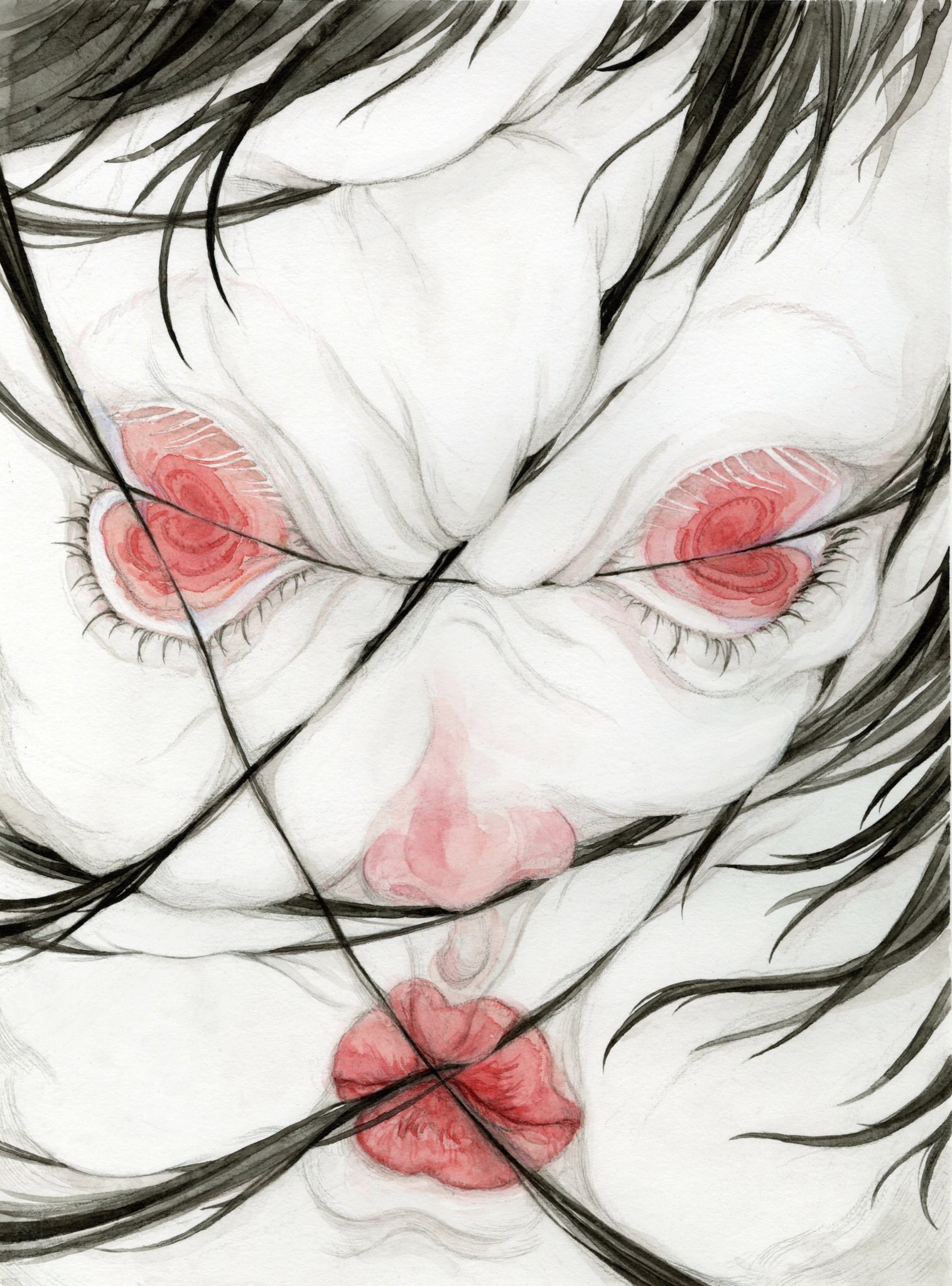
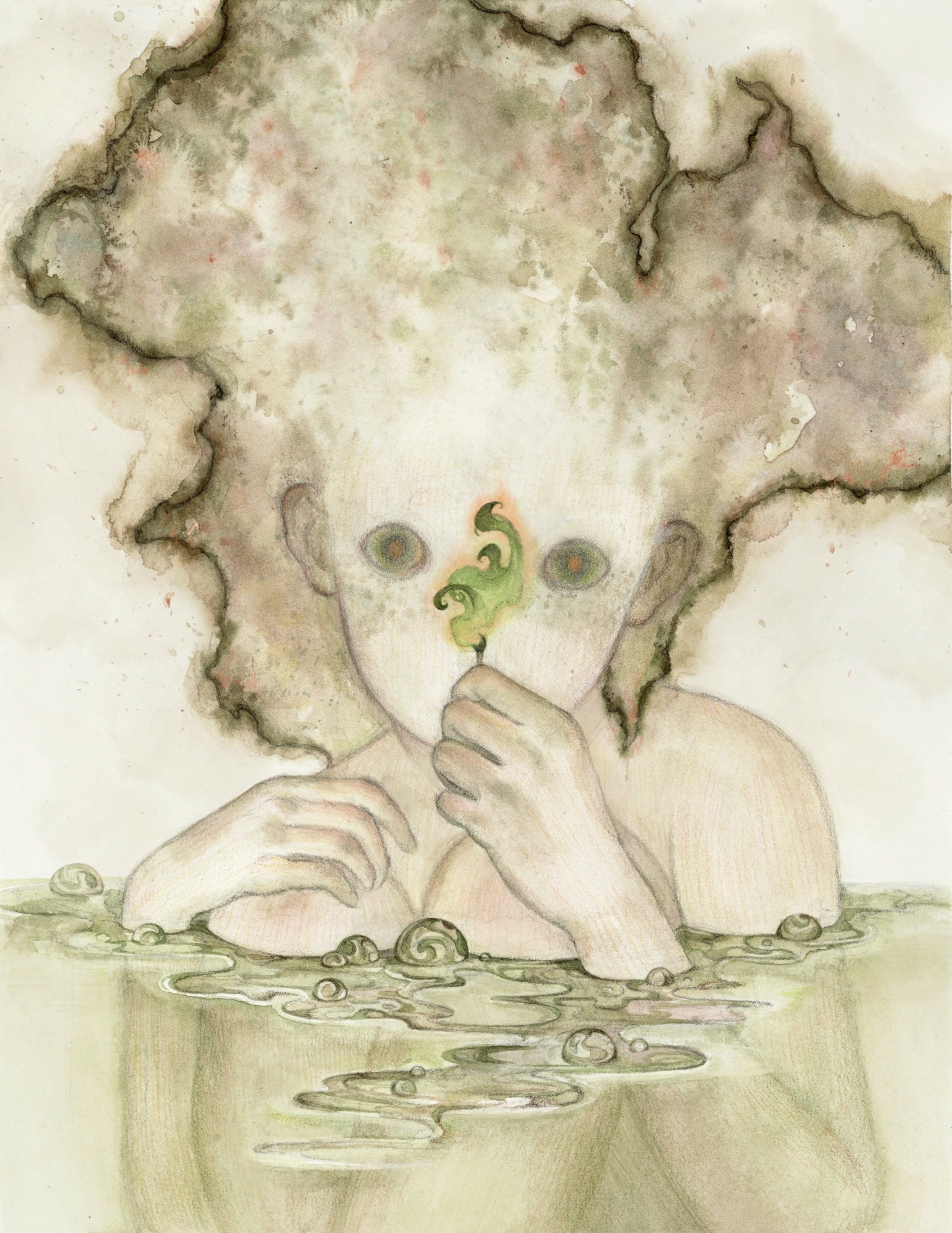
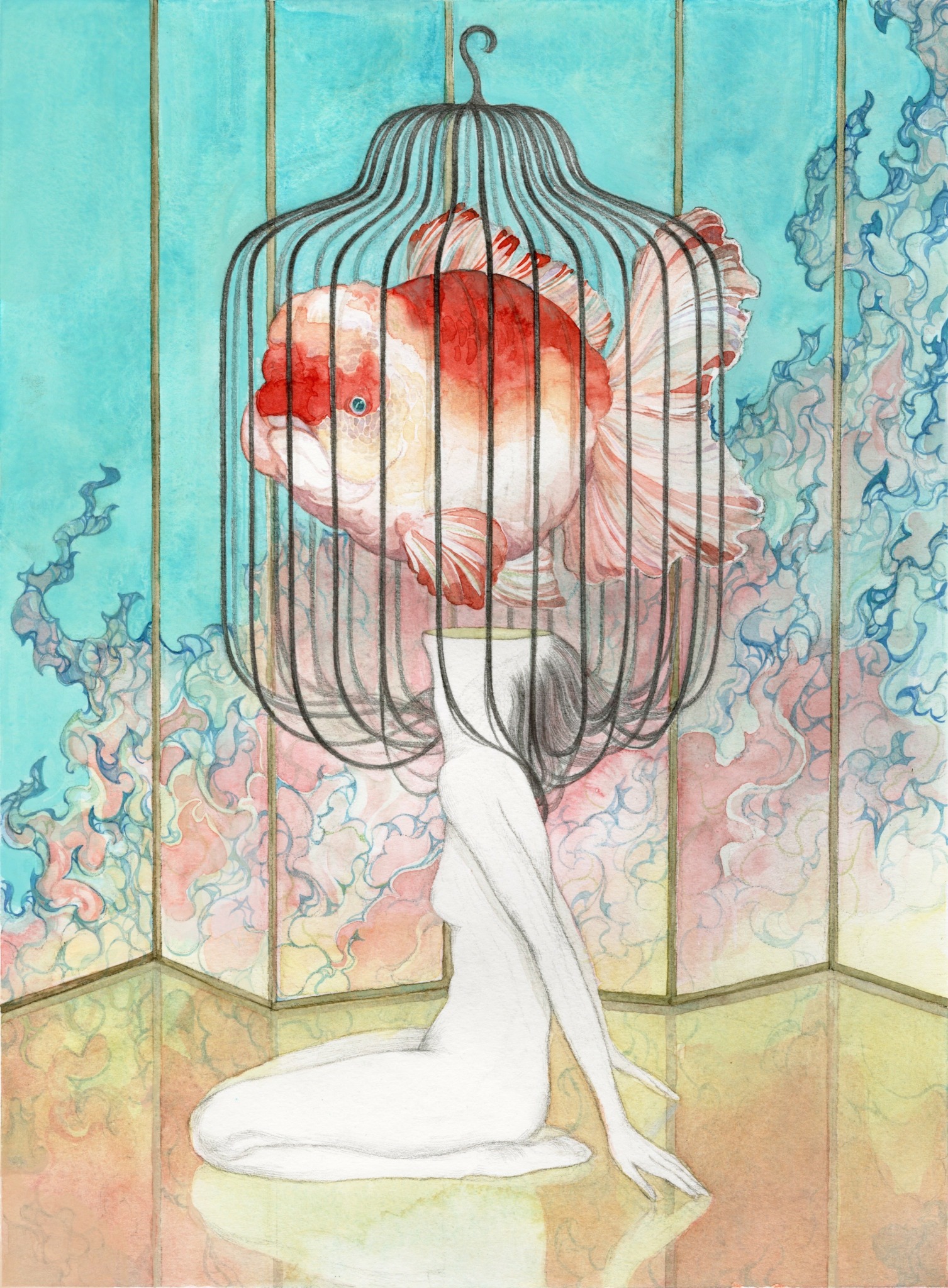
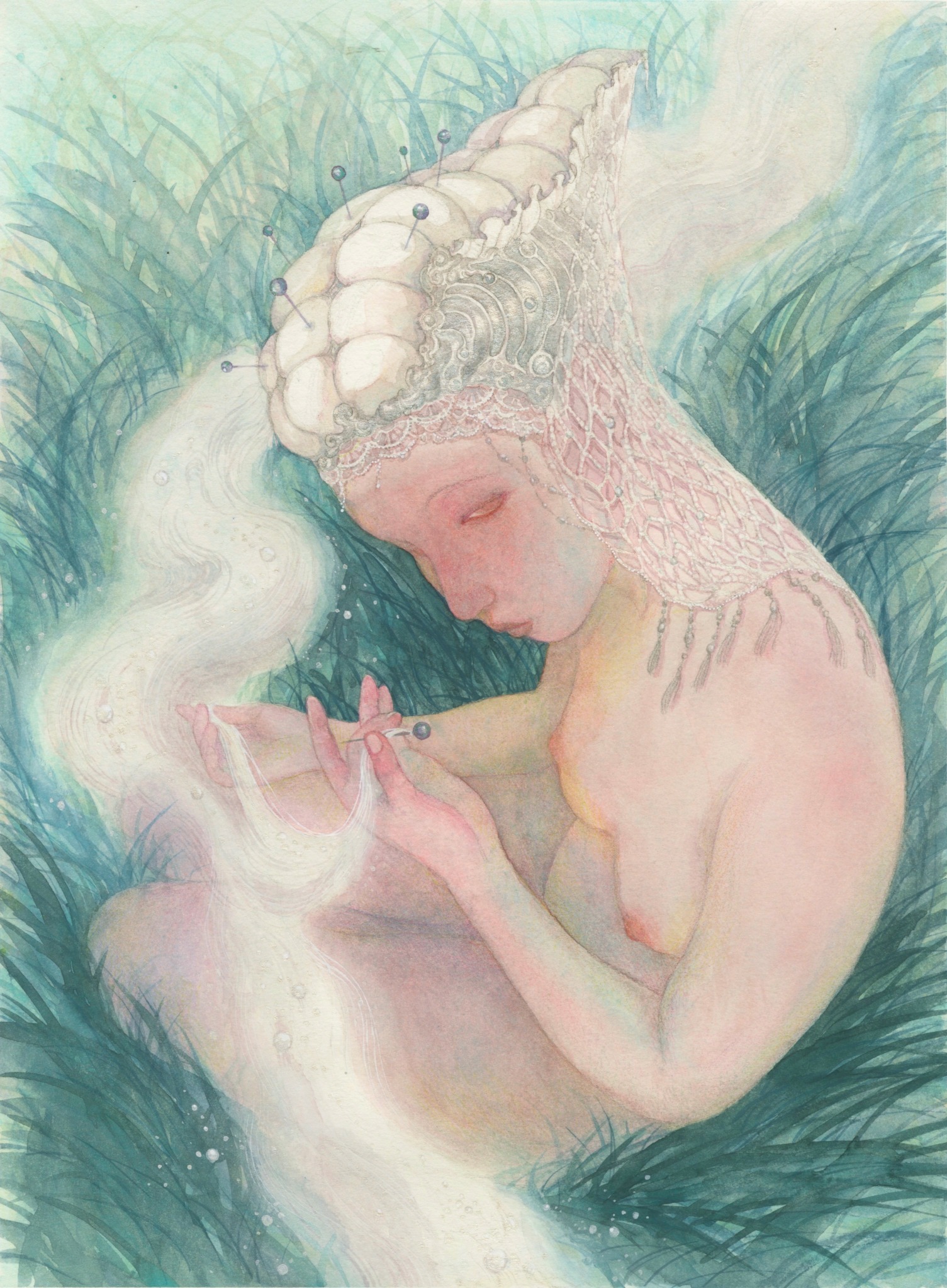
One of the most meaningful projects I have done is the HAIR project. I started it based on the inferiority and anxiety of my hair when I was a child. I often felt inferior and uncomfortable with how my hair looked, and these emotions shaped a deep part of my identity. This theme is entirely personal, and I had a hard time thinking about how to make audiences relate to it. As an artist who does artworks that focus more on self-expression, sometimes it is hard to make others understand my works. Still, as an illustrator, I know the necessity of building bridges with my audience —allowing them to see themselves in the work.
So I began researching and interviewing people: family, friends, peers, and online communities, through which I discovered that they have similar experiences. There is an unlying relationship between hair, human emotion, mental health, and physical illness. Throughout my research, I figured out how to make this series of illustrations more meaningful. It is no longer a project that focuses on my personal story but reflects a common situation for everyone. I ended up creating illustrations for several themes based on this topic, including hair loss, appearance anxiety, inferiority, and such.
The HAIR project became an opportunity for me to use art as a means of connection, empathy, and healing, not only for myself but for anyone who has felt the weight of these struggles. Turning those raw feelings into art was my way of relating with anyone else who shares the feelings. It wasn’t always positive or pretty, but that’s what made it real.
Zhilei, before we move on to more of these sorts of questions, can you take some time to bring our readers up to speed on you and what you do?
I grew up in an artistic environment where my whole family is passionate about making art. My parents are sculptors and painters, and my hometown is Foshan where ancient Chinese ceramic and paper cutting originated. As a result, I started playing with clay and pigment when I was little. Growing up in an artistic and cultural environment, I gradually formed my visual language, which contains many classical Eastern elements. I am also a big fan of sci-fi movies, especially those with aliens and monsters. I like seeing how these non-existent creatures are designed, reflecting how far human imagination can go.
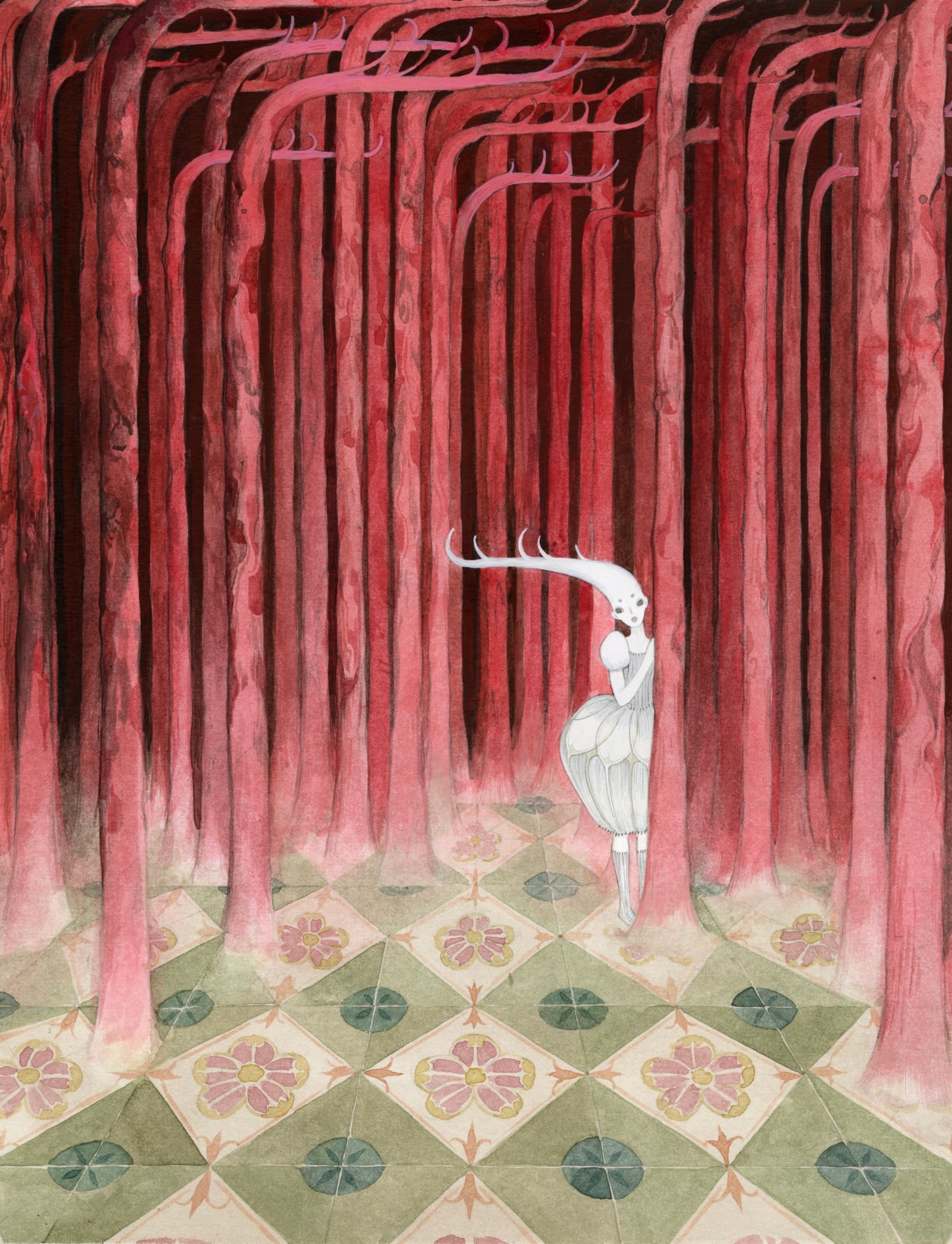
In 2021, I attended the School of Visual Arts and decided to take my step in illustration. The reason for my decision to put myself in illustration is its flexibility. There are many different forms of illustration, making it a playground for me to explore all kinds of materials and styles. I also got chances to know professional artists who inspired me and broke my limited understanding of illustration. I had a lot of freedom to draw what I liked, allowing me to use all my imagination to create my visual world that is wet, surrealistic, mysterious, and quiet. Although illustration is commonly viewed as a way to convey storytelling, I make my artwork in a way where people can get drawn into my world and get their own understanding out of it.
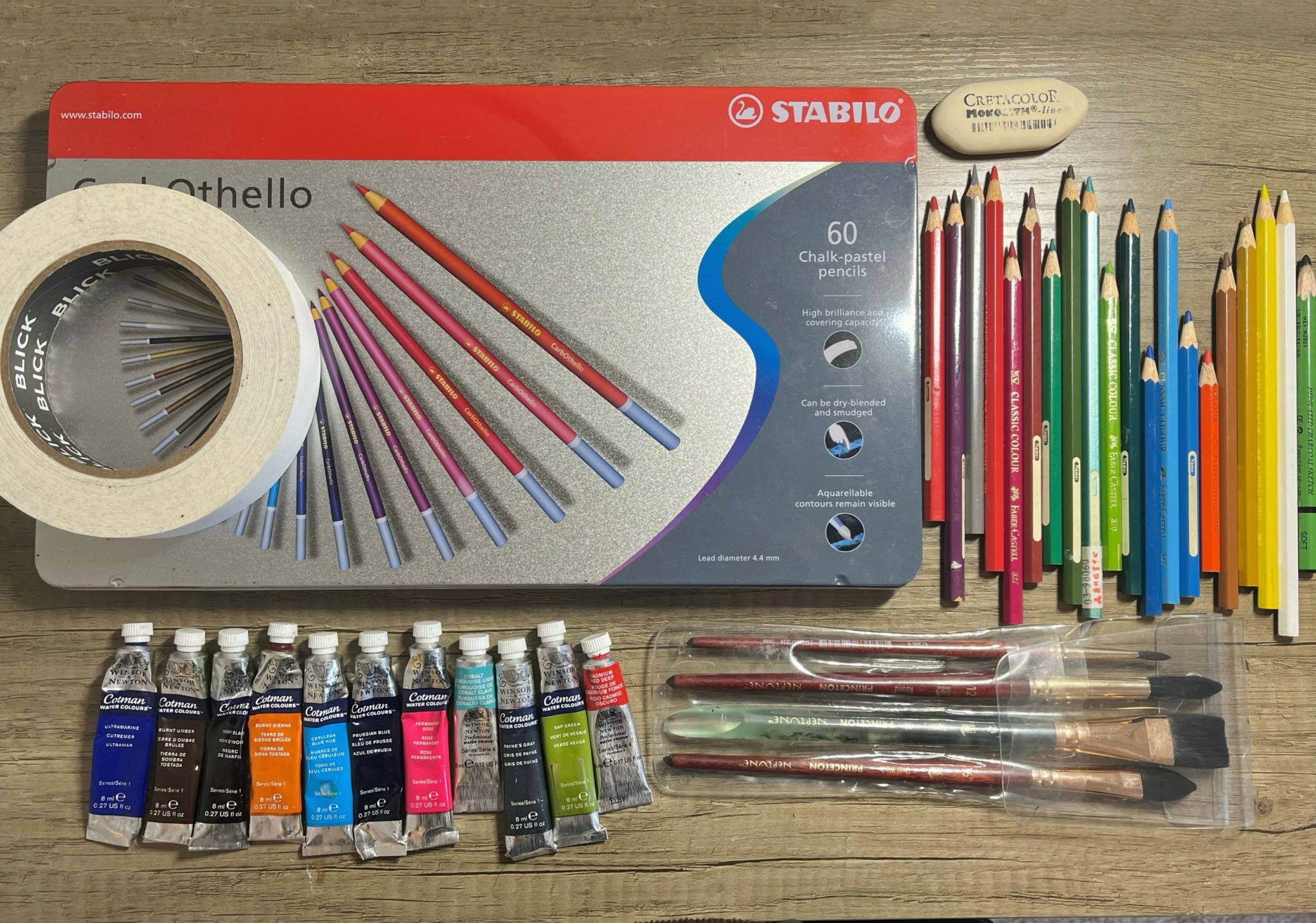
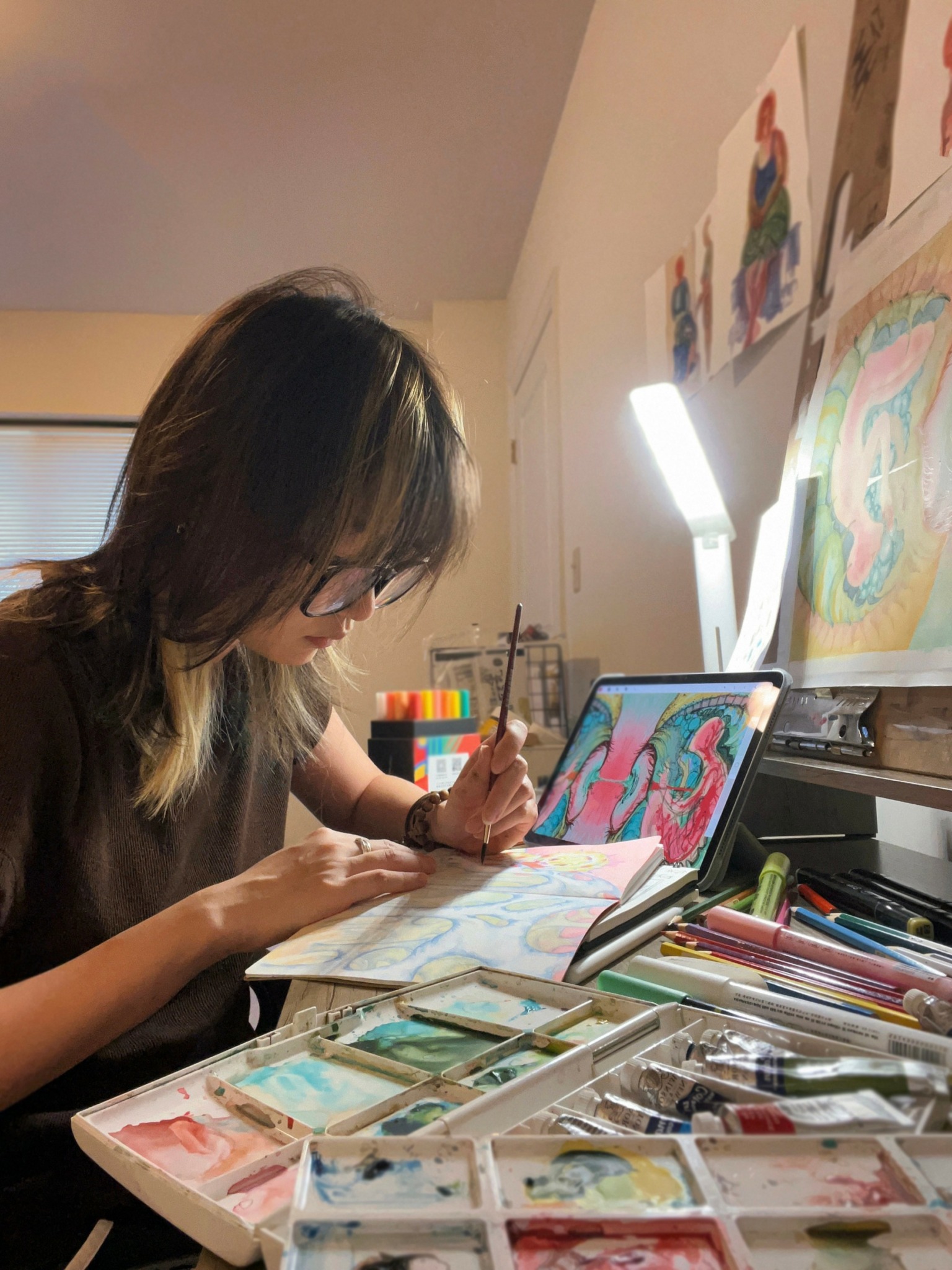
Studying in an art school allowed me to try different techniques under professional guidance; it was when I fell in love with traditional mediums. Different from making art with digital programs, more elements need to be considered when creating art traditionally: paper, size, pigments, water, brush, texture, light, and such. All of these compose the birth of an illustration, a one-way process that cannot start over by hitting a ‘return’ button.
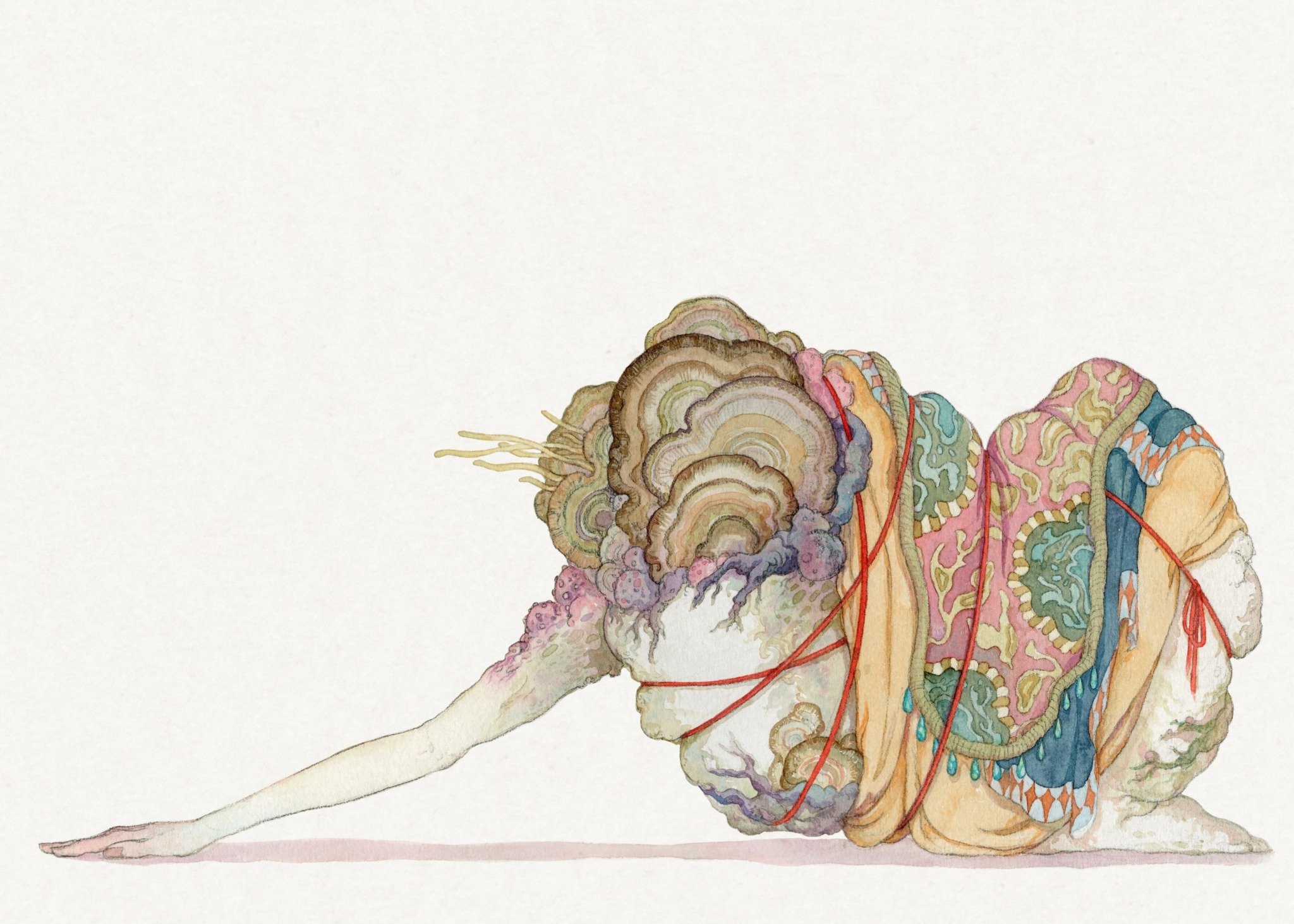
One of my favorite materials is watercolor, which I feared using because of its irreversibility. Using watercolor is taking the risk of making ‘mistakes,’ a risk of ruining a whole image with one single wrong step. However, It is the feeling of ‘losing control’ that makes me addicted to this medium. I can always find details in my works that are left unconsciously, like water traces, spots, and brushstrokes, which were considered mistakes, but reflecting the time when I was getting along with those art pieces. I think they are the key that highlights my works’ vividness and uniqueness. The ability to use a variety of creative media like charcoal, silkscreen printing, acrylic, and ceramics allows me to flexibly choose the most suitable art medium according to the theme and needs of different projects and make sure the work is always presented in the best possible form.
Through my journey from the artistic environment of my childhood to the immersive studies at SVA and now MICA, I’ve embraced the challenges and freedoms of both traditional and contemporary techniques. My art is a reflection of my background, blending classical Eastern influences with a fascination for imaginative realms. Each medium I explore, from watercolor’s unpredictable beauty to the precision of other materials, adds depth and personality to my illustrations. As I continue to evolve as an artist, I remain committed to exploring new ways to connect with viewers and enrich their experiences through my unique visual language.
For you, what’s the most rewarding aspect of being a creative?
The most rewarding aspect of being an artist is the ability to perceive the world in a way that goes beyond surface-level appearances. With a unique aesthetic sensibility, artists can look at everyday objects and see more than their basic functions or value—they see design, inspiration, and potential. For example, while an ordinary person might see a tree as just a plant, an artist sees it as a composition of colors, lines, and emotions. It becomes an idea, a source of creativity that can be captured and transformed into art.
This ability to find beauty in the ordinary makes life richer and more interesting. The world becomes a constant source of inspiration, where even the most mundane moments can spark new ideas or artistic visions. What’s most rewarding is this ongoing process of discovery—of turning the seemingly simple into something extraordinary.
Additionally, there’s a deep sense of fulfillment in bringing those visions to life and sharing them with others. Art not only allows for self-expression but also creates a connection between the artist and the audience. When viewers engage with your work, they might see the world through your eyes, feel the emotions you’ve poured into your creation, and walk away with their own interpretations. That ability to evoke thoughts, feelings, and inspiration in others is incredibly rewarding and meaningful as an artist.
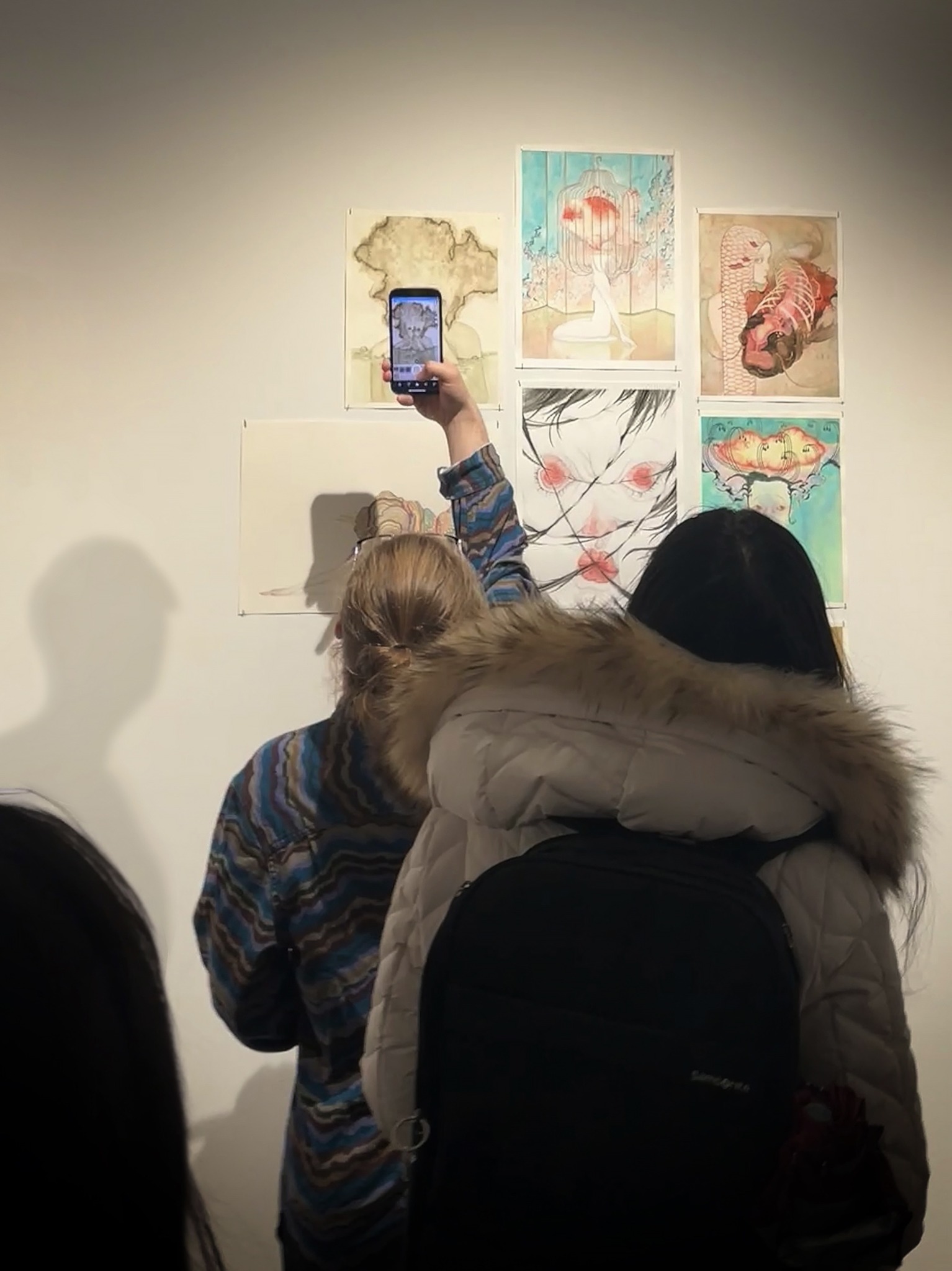
We’d love to hear the story of how you built up your social media audience?
Building a solid network on social media platforms and presenting your artwork to the audience is one of the most essential things artists must do. promoting artwork is attached to an artist’s career.
The first time my artwork got good exposure was on a Chinese social media platform, where people shared posts about pets, foods, arts, and lifestyles, just like Instagram. At the time, it was a rough sketch of a monster that first arose in my social media publication. People were drawn to its unique design and language. That post became a turning point for me, I began to create a series of stylized monster design drawings.
During the process, I set myself to keep a new post weekly to keep viewers interested. I also included the mediums I used and the drawing process to support the specialty of the post; it also creates more connection with the audience. This is especially important because you want to let them know what to expect from your work so they’ll stay engaged and follow you for more. Through observation, I can see what group of people my works attract the most; then, during the next post, I will use a more specific hashtag and topic that targets the audience that more likely wants to see my artwork.
Using this method, my social media account has reached 9k followers within one year. In conclusion, my advice for anyone starting to build their social media presence is simple: first, maintain a consistent posting schedule with content that resonates with your audience. Second, put out information that can be useful and build more connections with the audience. Lastly, use social media functions and activities, like hashtags, topics, etc., to gain more exposure to the matching audience group. And above all, make good art with all of your heart!
Contact Info:
- Instagram: zhileifeng22_art