

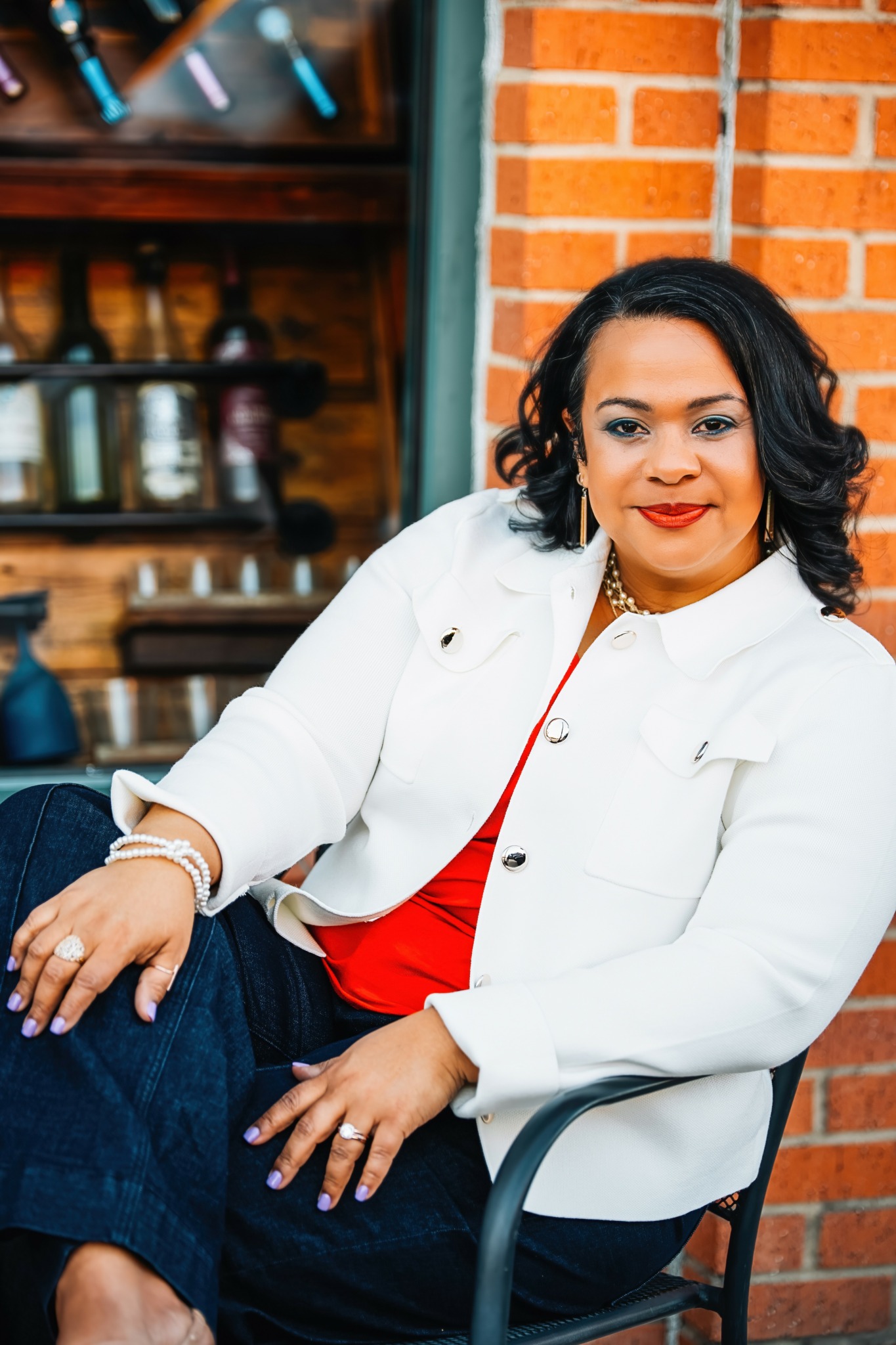

We were lucky to catch up with Yvette Lopez recently and have shared our conversation below.
Yvette, thanks for taking the time to share your stories with us today Is there a lesson you learned in school that’s stuck with you and has meaningfully impacted your journey?
The most important lesson I ever learned happened in a college advisor’s office, and it almost broke me.
I sat across from someone who held my academic future in her hands, and I left that meeting having agreed to things that derailed my entire plan. Looking back, I can’t even tell you exactly how it happened. She wasn’t cruel. She wasn’t wrong. She was simply doing her job, and to her, I was just one of hundreds. A number. I walked out of that office having surrendered my own voice without even realizing it.
And my GPA after that first semester at the University of South Florida reflected it: 1.75.
What followed was a series of letters. One informed me that I was no longer eligible for the full scholarship I had received because I hadn’t met the requirements to keep it. The other – no longer the policy today – warned that if I could not raise my GPA to a minimum 2.0, I would be expelled and barred from attending any public institution in the State of Florida again, in my lifetime.
The thing about that moment is that every instinct in me wanted to blame her. But I stopped myself, because the honest truth was harder: I had given away my power. I was the one with a stake in the outcome. I was the one whose time and money were on the line. And I hadn’t done the work to advocate for myself, so I had no one to blame but myself.
That realization changed everything.
I memorized the college catalog (yes this was before the internet). Not skimmed – memorized. I mapped every policy, every exception, every pathway. I reverse-engineered a plan and executed it with the kind of precision I didn’t even know I had yet.
By the time I graduated, my GPA was a 3.4 with honors. If you understand how averages work, you know that climb is mathematically brutal. But I was motivated by something more than grades. I was motivated by the vow I had made to myself: never give away your power again.
What I didn’t expect was what happened in the process. Word got around. Office staff started sending other students to me. I’d direct them to the exact page, subsection, and paragraph of the the University policy, strategize a plan for their issue, and walk them through exactly what to do. I was helping people map their degrees, choose their courses, and protect their time and money. Without knowing it, I had built the earliest version of what I do today.
The lesson wasn’t about GPA. It wasn’t even about advocating for yourself, though that matters enormously. The lesson was this: when you do the work to understand the system, you stop being subject to it, and you start being a resource within it. Your failure, fully owned, becomes someone else’s roadmap.
I’ve never forgotten that. Every framework I build, every client I walk through a plan, every student I’ve helped navigate a system that wasn’t designed to welcome them, it all traces back to that advisor’s office, and the choice I made to stop blaming and start learning.


As always, we appreciate you sharing your insights and we’ve got a few more questions for you, but before we get to all of that can you take a minute to introduce yourself and give our readers some of your back background and context?
I didn’t choose this work. This work chose me. Through every detour, credential, and door that seemed like it had nothing to do with the others.
I’m a Florida-barred attorney, certified mediator, trained in Lean Six Sigma methodology, and Gallup-certified CliftonStrengths Coach. I’m the founder of Development Culture LLC, a coaching and consulting firm, and the founder and president of Dev Culture Inc., the 501(c)(3) nonprofit behind Latinos in Grapevine. But what I actually do is harder to put in a title. I help mission-driven organizations and leaders achieve greater impact with limited resources, by fixing the relationship between their systems and their people.
My path wasn’t linear, it was layered. Federal service across five agencies. Legal training. Community organizing. Executive advising. Mediation. At some point I stopped seeing those experiences as unrelated and recognized them for what they were: a complete toolkit. The through line was always the same: I am obsessed with figuring out how things actually work, and then helping them work better.
Lean Six Sigma gave me the language for process. The law sharpened how I think – carefully, thoroughly, with attention to what’s stated, what’s implied, and what’s at stake. Federal service taught me how to navigate bureaucracy without losing myself inside it. Coaching gave me the language of human potential. And community work reminded me that none of it means anything if it doesn’t reach the people who need it most.
Through Development Culture LLC, I work at the intersection of operational design and human development, because most organizations can’t afford to separate the two.
Most consultants fix systems or people. We fix the relationship between them. Using Lean Six Sigma process design alongside Gallup-certified strengths coaching, we eliminate the friction that drains both operations and people simultaneously. The result: organizations that run leaner, teams that show up more invested, and leaders who stop managing and start multiplying.
The work looks different depending on who’s in the room – sometimes it’s one-on-one coaching, sometimes it’s redesigning how an entire organization operates, sometimes it’s sitting at a mediation table helping people find their way back to each other. But the intention is always the same. Every engagement is built around one belief: the right people, doing the right things, create unstoppable momentum, because they’re finally doing work that means something to them.
Most coaches speak the language of inspiration. I speak the language of infrastructure.
I bring something no certification fully captures: I have lived inside the systems I now help others navigate – as the immigrant kid, the only woman in the room, the only Latina, the one who managed scarce resources, the one who had to collaborate creatively, and someone who has had to reinvent herself many times. I know what it feels like to be capable and overlooked, and I know the specific work it takes to close that gap, not by becoming someone different, but by finally becoming fully yourself.
I’m also bilingual, bicultural, and deeply grounded in both professional excellence and accountability. My top CliftonStrengths – Strategic, Arranger, Achiever, Individualization, Input – mean I don’t offer generic solutions. I build custom ones, designed around the unique wiring of the person or team in front of me.
I became the person I needed when I was lost. That’s not a tagline – it’s the whole story. Every framework I’ve built, every program I’ve designed, every person I’ve sat across from in a coaching session or a community workshop traces back to that truth.
Your next level isn’t hidden from you. It’s already inside you, waiting on the right conditions to emerge. Sometimes those conditions are a system. Sometimes they’re a conversation. Sometimes they’re simply someone who sees what you can’t yet see in yourself.
That’s the work. And it never gets old.

We often hear about learning lessons – but just as important is unlearning lessons. Have you ever had to unlearn a lesson?
I never wanted to fit in. That was never the goal.
But for a long time, I believed something must be wrong with me because I didn’t.
That’s a different wound than wanting to belong and being rejected. It’s quieter and more confusing, because you’re not chasing acceptance, you’re just watching everyone around you operate by a set of rules that never quite applied to you, and wondering why the gap exists. Teachers, systems, workplaces, even well-meaning people in your life will find a way to communicate, directly or indirectly, that your way of seeing things is inconvenient. That your intensity is too much. That your questions are disruptive. That success looks a certain way, and whatever you’re doing isn’t quite it.
So you don’t try to become them. But you do start to wonder if something in you is fundamentally off.
My unlearning didn’t happen in a single moment – it happened in layers, every time I sat down with a new assessment. Myers-Briggs first, then the Enneagram, then CliftonStrengths, and others along the way. I was always drawn to them, almost compulsively, and I’ve thought about why. I think it’s because each one did the same thing: it confirmed what I already sensed about myself but didn’t yet have the language to defend. Every result was less a revelation and more a validation, a mirror that said, you are not broken. You are specific.
And specificity, I came to understand, is not a flaw. It’s a fingerprint.
Then I discovered that the chance that any two people share the same top five CliftonStrengths in the same order is one in 33.4 million. One in 33.4 million. And that’s just one framework. Layer in Myers-Briggs, the Enneagram, lived experience, culture, language – the combinations become almost incomprehensible. And yet we spend our lives being measured against the same standards, expected to think the same way, pursue the same markers, and arrive at the same destination, as if any of that math makes sense.
The world doesn’t have a sameness problem. It has a framework problem. We don’t lack diversity – we lack the systems to honor it.
What I had to unlearn wasn’t a desire to fit in. It was the belief that not fitting in meant something was wrong with me. It didn’t. It meant I was paying attention. It meant I was built for something the existing boxes couldn’t hold.
I see it everywhere now. The immigrant who downplays their accent instead of leveraging their fluency. The employee who suppresses their instinct to question because the culture rewards compliance. The leader who mimics someone else’s style because they were never shown that their own way was valid.
The lesson I had to unlearn was that deviation from the norm is not a deficit to correct. It is a difference to deploy.
That’s not just a philosophy. It’s the architecture behind everything I build.

Are there any books, videos or other content that you feel have meaningfully impacted your thinking?
I could give you a list of the usual names. I won’t.
Not because those books aren’t valuable – some are – but because the voices that have shaped how I think aren’t always the ones on the bestseller display at the airport. They’re the ones who said something true when the popular conversation was still catching up.
The through line across everything I read, watch, and listen to is the same question I’ve been asking my whole life: why do we keep insisting that everyone should look, think, and succeed the same way?
Steven Furtick’s Do the New You hit me not as a religious text but as a systems challenge – the idea that most of us are running outdated programming about who we’re supposed to be, and that transformation isn’t addition, it’s replacement. You don’t layer a new identity over an old one. You rebuild.
Mel Robbins’ Let Them is deceptively simple and quietly radical. The permission to stop managing how other people see you – to let them misunderstand, let them disagree, let them leave – is one of the most operationally freeing ideas I’ve encountered. It clears the noise, so you can focus on what’s actually yours to carry.
Ginny Clarke speaks to something I’ve watched happen in every professional space I’ve ever been in: the gap between talent and opportunity, and how much of that gap is structural rather than personal. Her work on executive presence and the hidden rules of advancement matters deeply to me, especially in the context of communities that are never handed the rulebook.
Matt Gottesman has built an entire philosophy around an idea I live by: the niche is you. Not a category. Not a demographic. Not a title. You – with all the dimensions that don’t fit neatly into a single lane. His work gives permission to people who have always operated at intersections to stop apologizing for it.
Stedman Graham has been saying for decades what many are only now beginning to understand – that identity is the foundation of everything. Not brand. Not title. Not credentials. Who you know yourself to be. That’s the infrastructure everything else is built on.
Jay Jay Douglas is one of those voices that finds you when you need it. His content sits at the intersection of healing and accountability in a way that doesn’t coddle and doesn’t shame – it just tells the truth plainly, which is rarer than it should be.
What I notice about this list is that none of these voices are telling you to become someone else. Every single one of them, in their own way, is making the same argument: the work is to become more fully yourself – with more clarity, more strategy, and less of other people’s noise drowning out your own signal.
That’s not just what I read. That’s what I teach.
Contact Info:
- Website: https://www.developmentculture.org/
- Instagram: https://www.instagram.com/development.culture/
- Facebook: https://www.facebook.com/DevelopmentCultureLLC/
- Linkedin: https://www.linkedin.com/in/yvettelopezchapman/
- Twitter: https://x.com/DevCultureOrg
- Youtube: https://www.youtube.com/@DevelopmentCulture
- Other: https://www.latinosingrapevine.org/

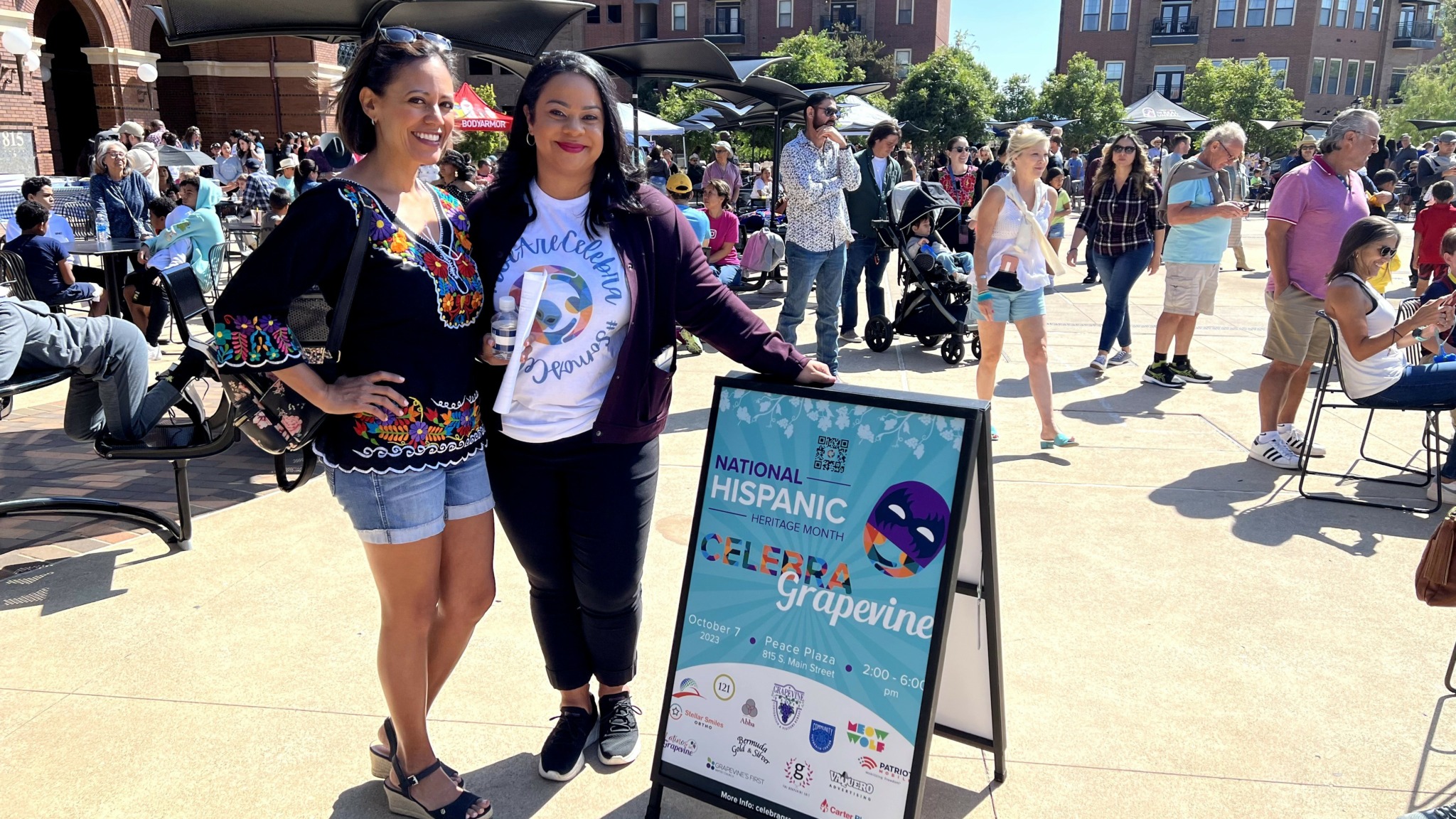
Image Credits
Misty D Photopgraphy
Creative Photography by Amanda
Aye Creator