

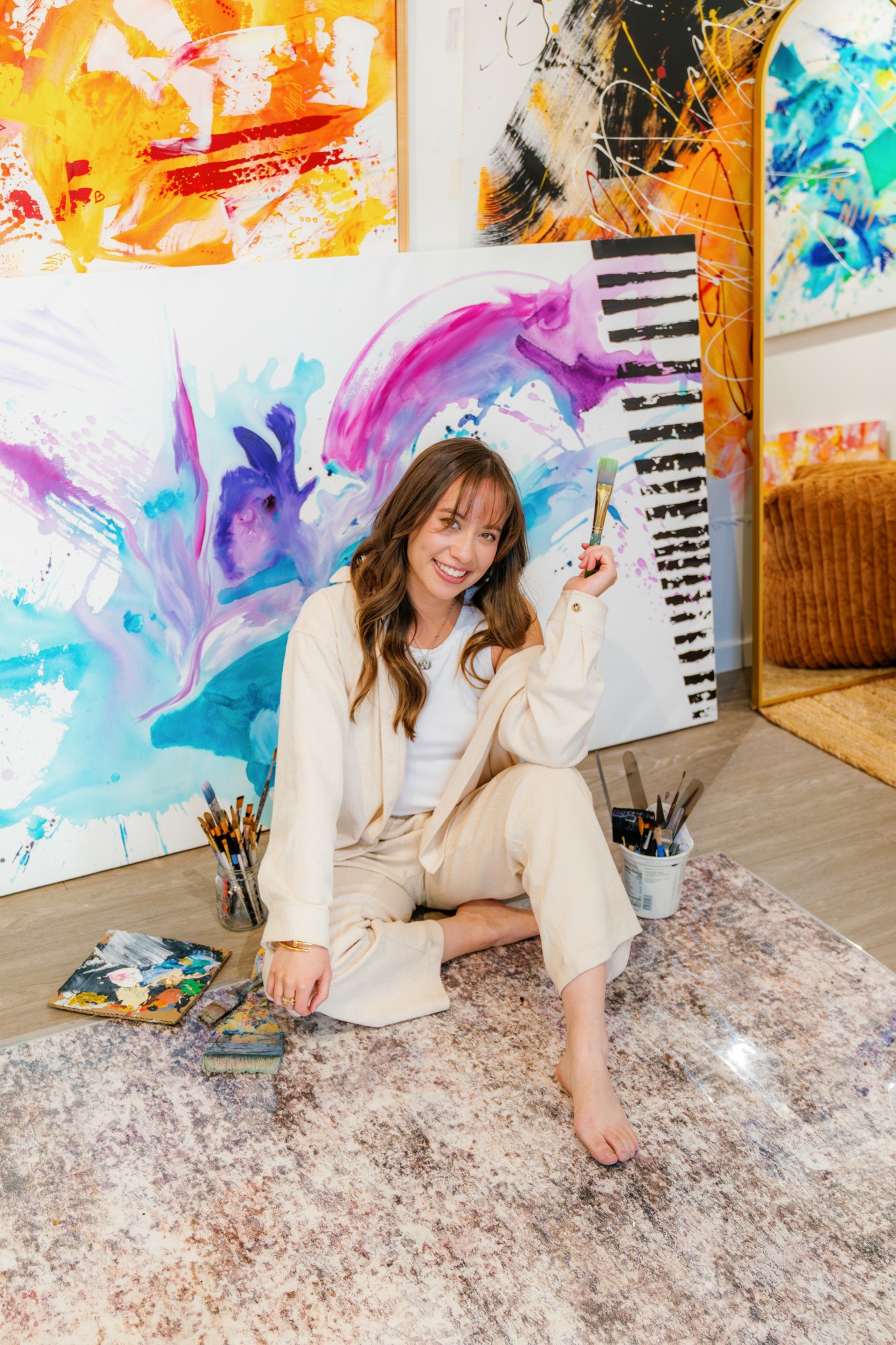

We recently connected with Wendy Trattner and have shared our conversation below.
Wendy, looking forward to hearing all of your stories today. I’m sure there have been days where the challenges of being an artist or creative force you to think about what it would be like to just have a regular job. When’s the last time you felt that way? Did you have any insights from the experience?
Yes. I wouldn’t trade it for anything.
After I graduated from MIT, I did work in the startup world for a while, making a decent salary and living a pretty cushy lifestyle. But I made sacrifices when I decided to pursue art full-time, and honestly, I still miss some of it. The stability and structure of a 9-5. The teamwork that balanced out my weaknesses. There’s a specific kind of loneliness to being a solopreneur that nobody really warns you about.
What I don’t miss is working for other people — and feeling like I wasn’t expressing myself or getting to bring my full self to work every day. I had never really explored the depths of my creativity and my passions. Now I can’t imagine going back.
I learn something new about myself every single day. And creating meaning through my own art is the most fulfilling thing I can imagine doing with my life.
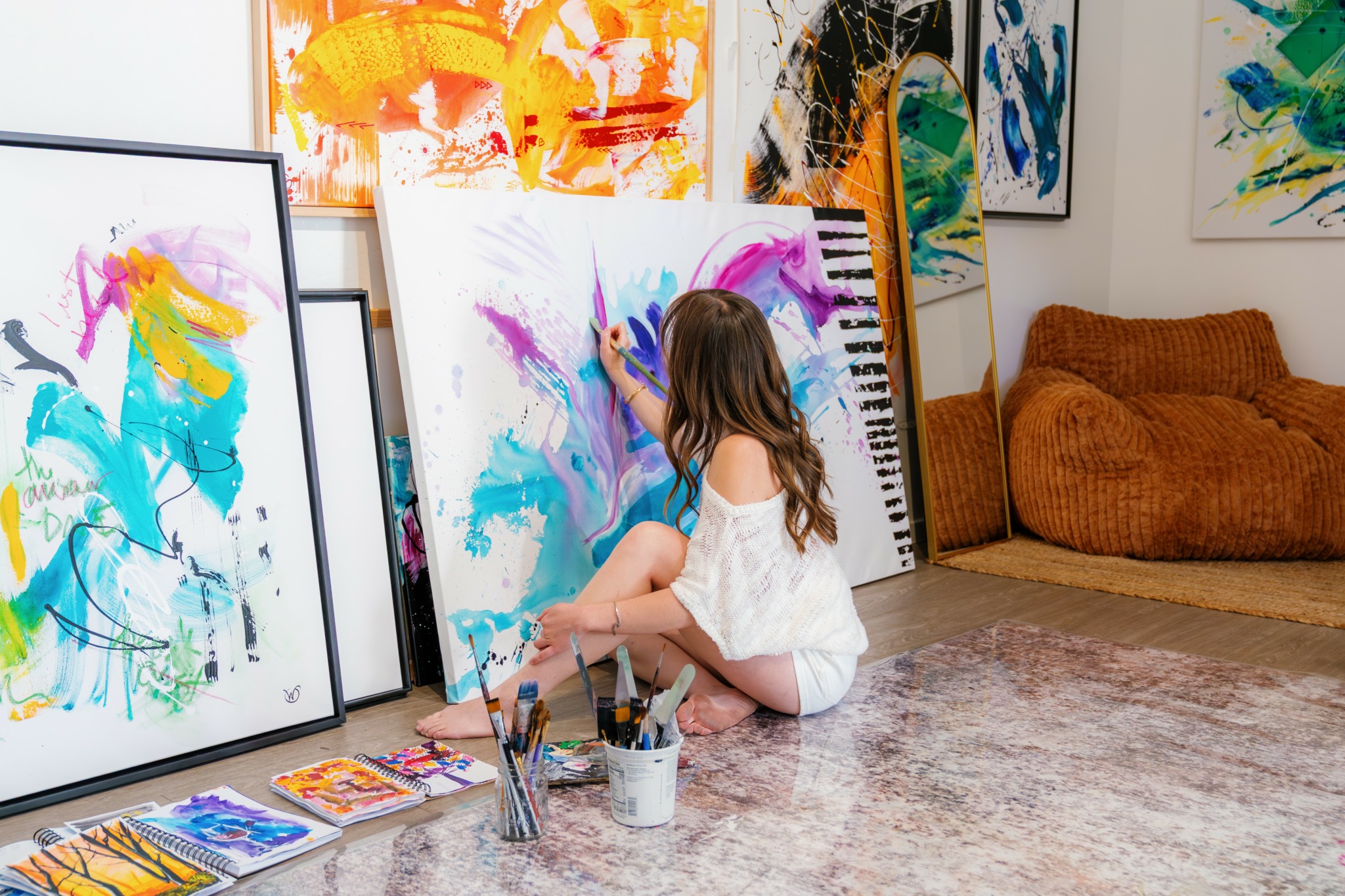
As always, we appreciate you sharing your insights and we’ve got a few more questions for you, but before we get to all of that can you take a minute to introduce yourself and give our readers some of your back background and context?
I’m an abstract painter based in Scottsdale, Arizona, and I’ll be honest with you: I didn’t end up here by accident. I ended up here because making art felt like the only way to make sense of a life that started with immense loss.
When I was seven years old, my father killed my mother. I lost both of my parents that day — one to death, one to what followed. That kind of trauma either breaks you or becomes the engine of everything you do. For me, it became the engine. A lifelong drive to create beauty in a world that showed me very early how brutal it could be.
That drive took me to MIT, through a Mechanical Engineering degree, through years in sustainability tech startups — and eventually, straight into painting full time. Because I realized that no salary or career title was going to scratch the itch I had to express my feelings through art.
My engineering brain contributes to my art. My work layers physics equations, thermodynamic formulas, burnt journal pages, and hand-torn book pages directly into the canvas. But underneath all of that structure is something much more raw: a need to channel genuine feeling into something that lasts. I try to create beauty from complex emotions, especially the bad ones.
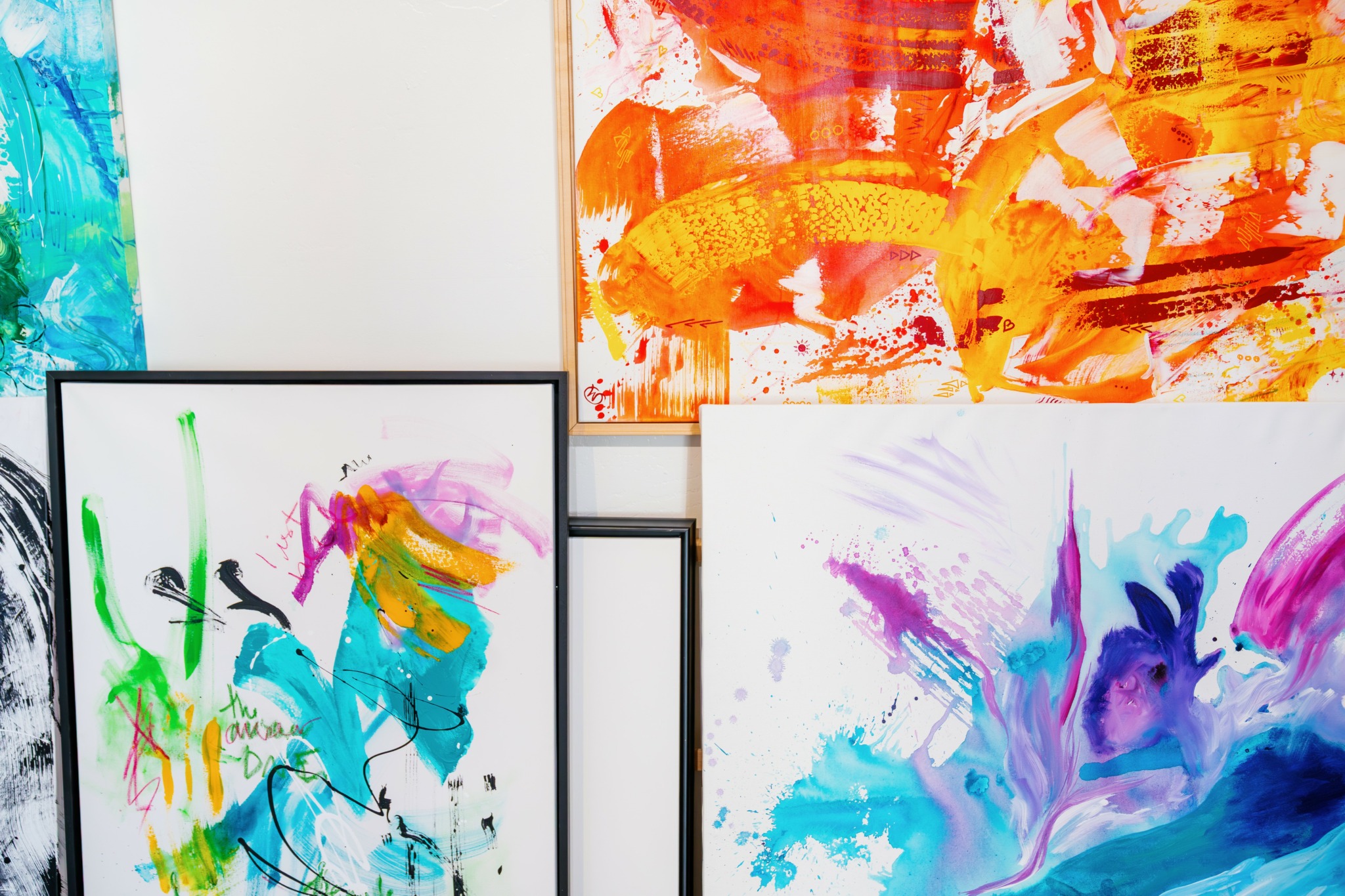
I paint across three distinct bodies of work: bold and dark, bright and colorful, and zen black-and-white neutrals. I sell originals, take commissions, and offer prints. In three years I’ve built gallery representation, exhibited international art shows, and completed commissions for luxury home owners and entrepreneurs.
What I’m most proud of isn’t any of that. It’s that I chose — over and over again — to express my feelings rather than bury them. And that somewhere along the way, that choice turned into a career, a brand, and a body of work that is completely mine.
My work gives collectors something real: a piece that makes them feel something they didn’t expect to feel. Not decoration. A painting that starts a conversation in a room and keeps you thinking. That’s what I’m here to make.
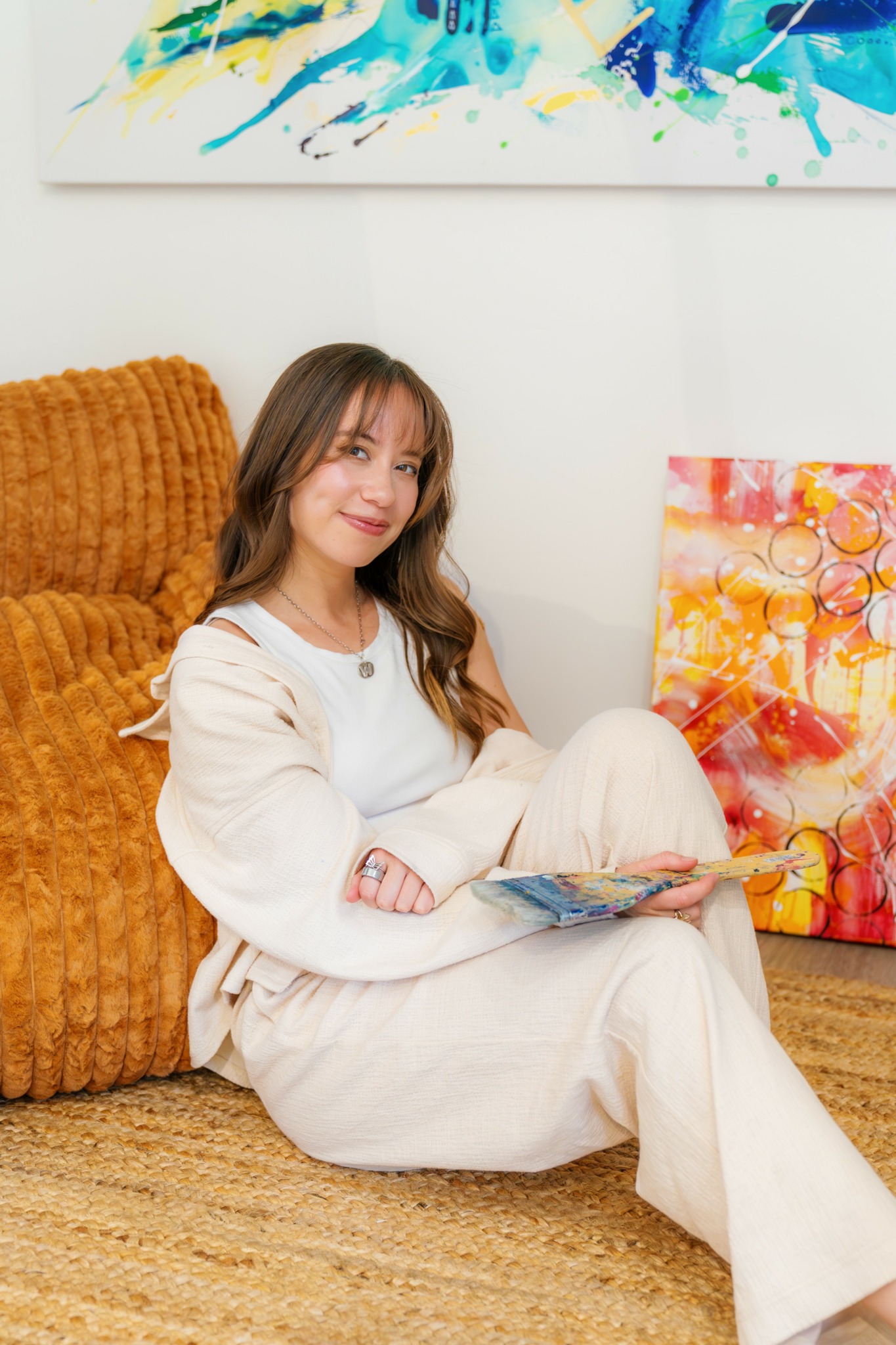
Is there something you think non-creatives will struggle to understand about your journey as a creative?
Two things. Money and abstract art. Let me take them one at a time.
On money: people act like entrepreneurship is uniquely risky compared to a “real job.” But nothing is certain. Big companies do layoffs. Stability is an illusion wherever you are. The difference with being an artist is that your income is actually within your control, and it has everything to do with mindset. Most artists never learn how to build a business, or worse, they think doing so would compromise their integrity. It won’t, if you don’t let it.
The key for me is separation. I keep creative days and business days distinct: different headspace, different energy, different goals. When I’m painting, I’m not thinking about sales. When I’m in business mode, I’m focused on marketing, connecting, and growing. Keeping those two things from bleeding into each other is what makes both work.
The best sales I’ve ever made came from being completely authentic, sharing honestly and deeply about what my work means to me. People who love art genuinely value that. You don’t have to choose between soul and sales.
On abstract art: I’ve had people tell me a toddler could do it. When I started painting I didn’t get it either, for a long time. Then I tried it. And I immediately discovered how easy it is to make ugly abstract art, and how genuinely difficult it is to make something that feels “resolved.”
“Resolved” is the word I like to use. It’s when a painting hits that perfect balance — color, texture, motion, white space — and everything just clicks. There are infinite choices, like a puzzle. Subconscious brushstrokes blending with intention. Emotion and beauty meeting in exactly the right place. When it happens, it’s a dopamine hit unlike anything else.
Abstract painting is the ultimate act of self expression and intention. Not despite its difficulty — because of it.
Let’s talk about resilience next – do you have a story you can share with us?
Last year I moved from San Francisco to Scottsdale and basically started over from scratch. New city, new studio, no friends, no local collectors. The people who had bought my work were mostly back in the Bay Area or scattered across other cities. I didn’t know anyone here.
My commission backlog finished up. And then — nothing. Five months with no sales. A brutal Arizona summer where it was over 110 degrees most days and I couldn’t even go outside. I was stuck inside, isolated, second-guessing everything. I got depressed. I lost motivation. I genuinely wanted to quit.
But I had an art show already booked in Reno, and something in me refused to show up as anything less than my best. Not because I felt confident (I didn’t). But because I decided I was going to give it everything anyway, regardless of what the last five months had looked like.
It was the best show I’d ever had. I sold more than I ever had at a single show, including some of my largest pieces.
A few months later, I landed the biggest commission of my career. By a lot.
Both times, it happened right at the edge, when I was closest to giving up. I’ve stopped believing that’s a coincidence. It’s become something I hold onto now: the breakthrough tends to come exactly when you’re most convinced it won’t.
I can’t give up. It may be hard. It may be uncertain. But I will keep going.
Contact Info:
- Website: https://wendytrattner.art
- Instagram: https://instagram.com/wendytratt
- Linkedin: https://www.linkedin.com/in/wtratt/
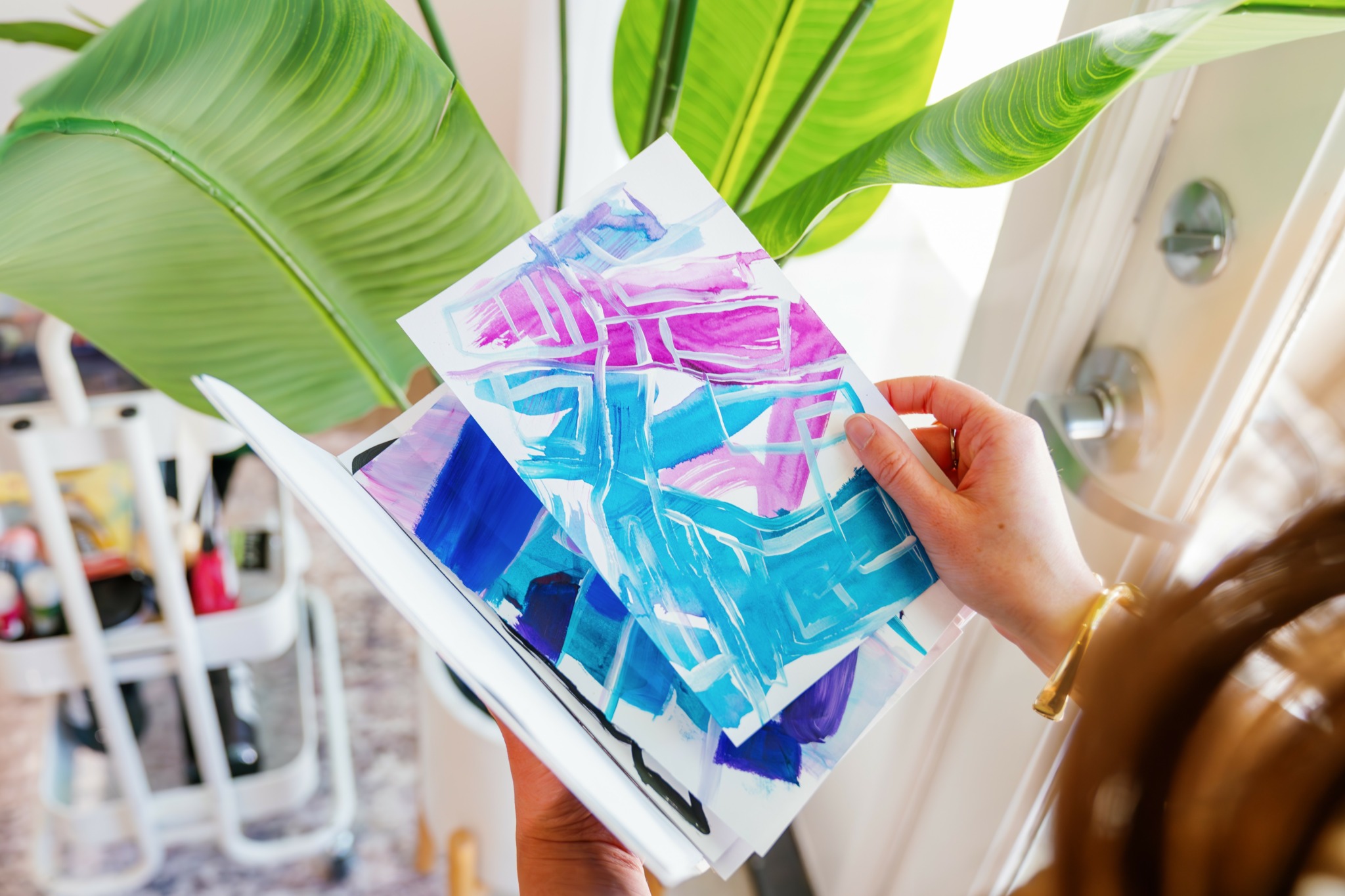
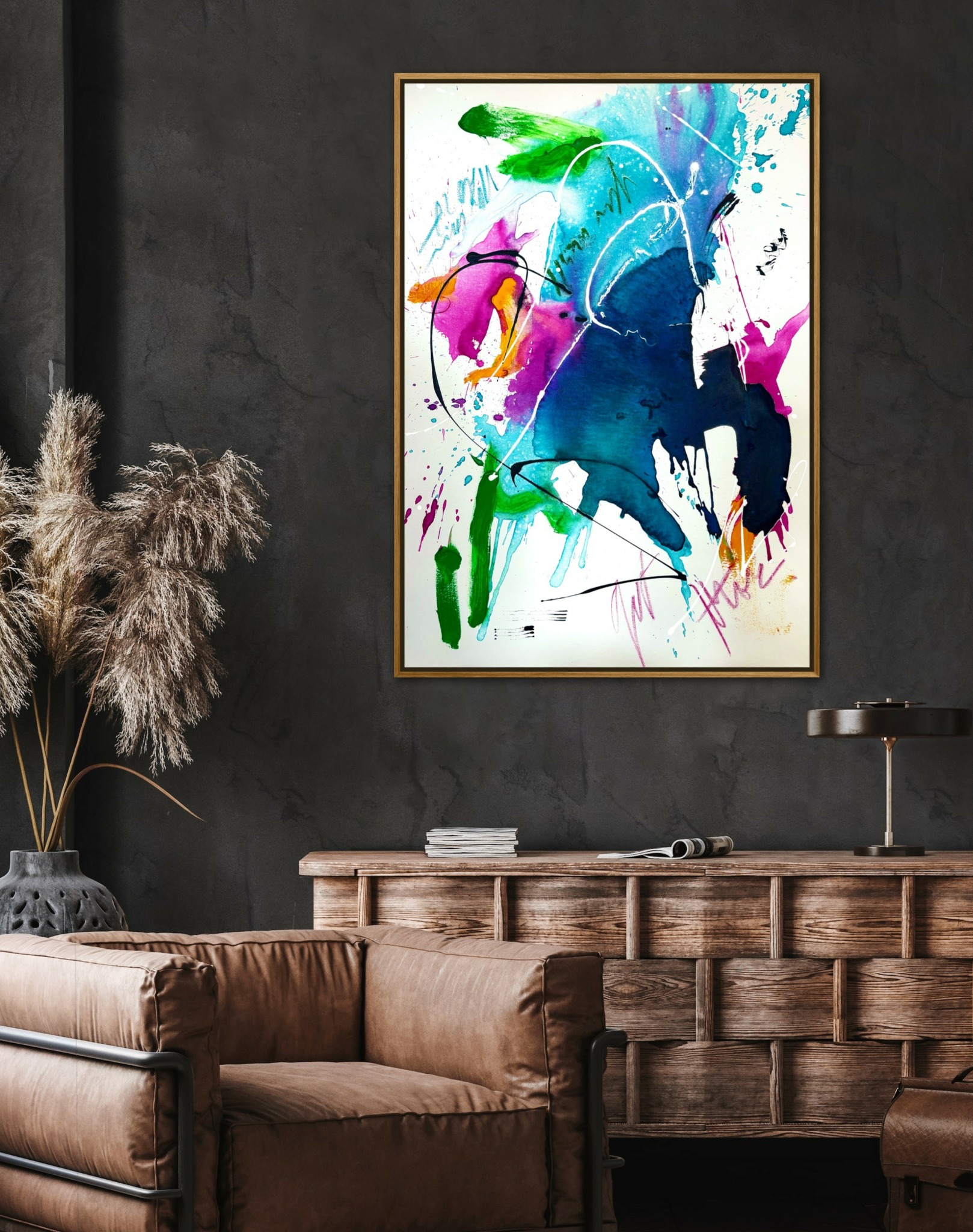
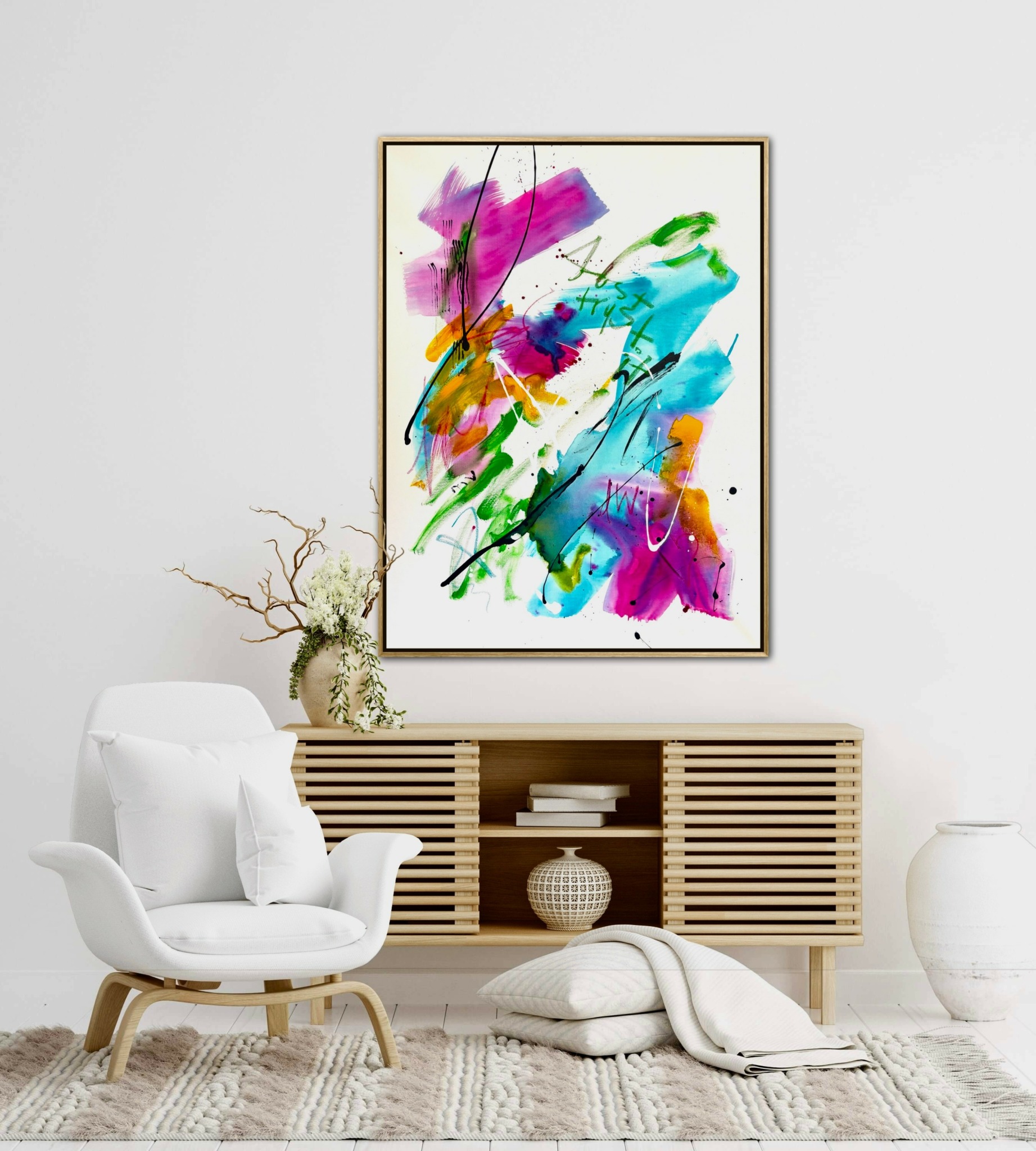
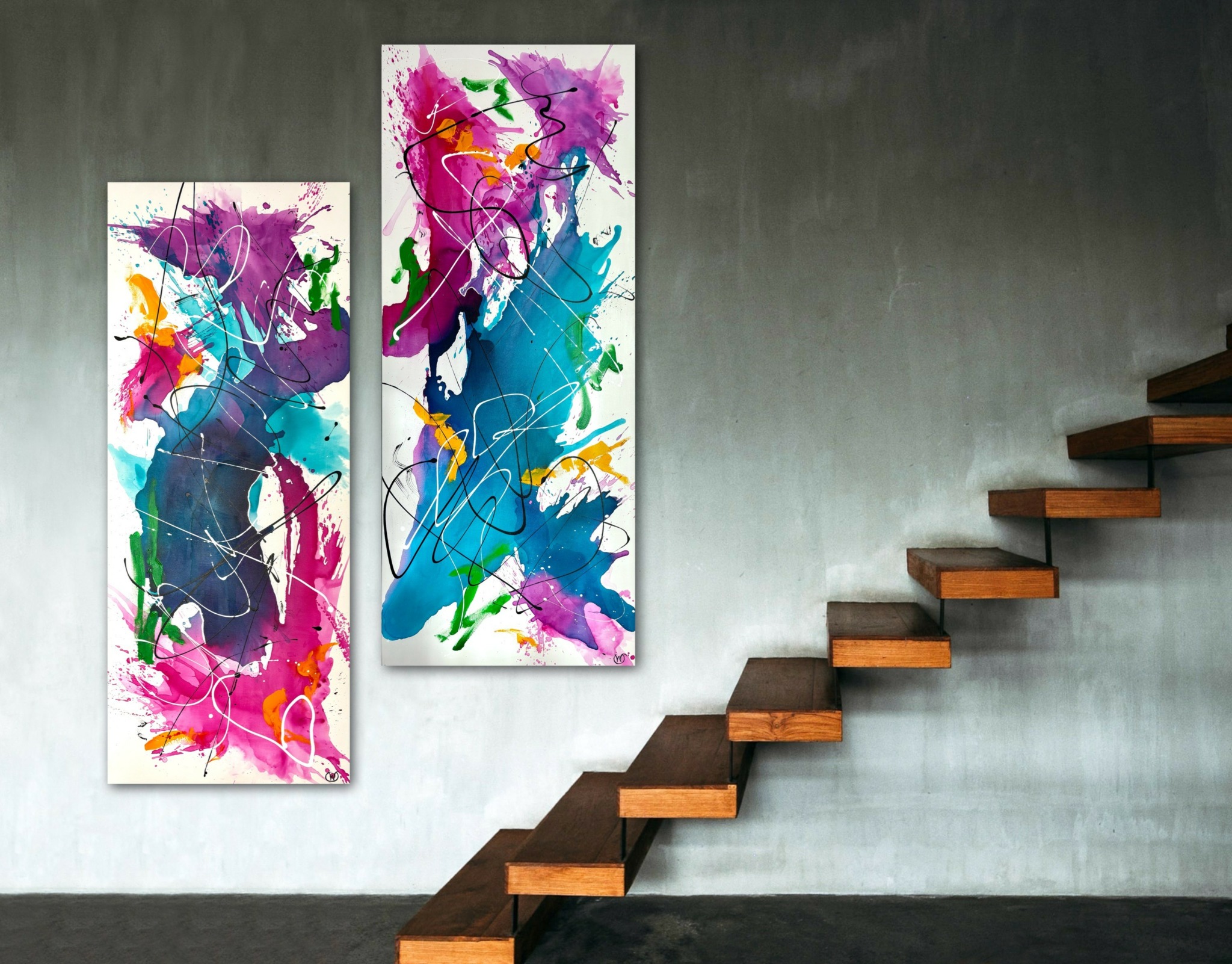
Image Credits
Rachel Fischer