

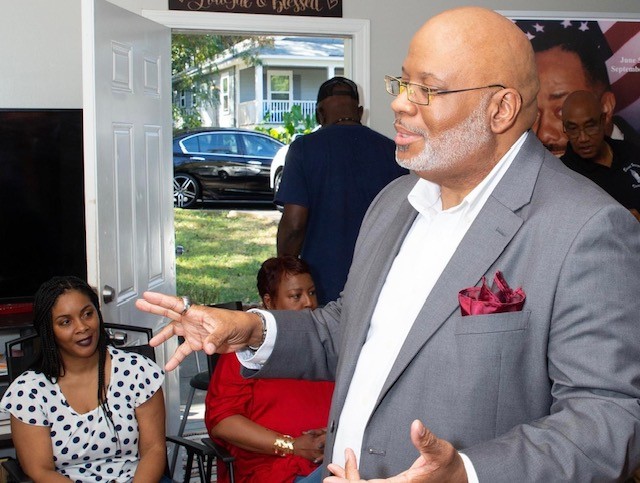

We caught up with the brilliant and insightful Wendell Fields a few weeks ago and have shared our conversation below.
Wendell, appreciate you joining us today. What’s the kindest thing anyone has ever done for you?
One of the kindest things that anyone has ever done for me was when my former employer, View Point Health in Lawrenceville Georgia, acknowledged me with my efforts in serving individuals to develop their self-directed journeys in recovery. Not only did they recognize me with the helping the clients but also, how I helped them to become a better company. It is one thing to be recognized for the service that you do for the clients, but it is another thing when you are recognized by your coworkers for helping them become better. I have devoted and have been steadfast in my pursuit of helping all that has come into my path to become better. Although I might be diagnosed with Depression and Anxiety, I will not allow my diagnosis to define me, nor will I allow it to say what I can do in life. They provided me with heart felt treasures, a golden mental card that reads, “An amazing coworker is hard to find, difficult to part with and impossible to forget!” The other treasure was a plaque that reads, “Never Underestimate the Difference You Made and The Lives You Touched!” It helped me to lift my head and encouraged me to set my eyes on new territory to help others in a different capacity, Crisis Intervention Services.


Wendell, love having you share your insights with us. Before we ask you more questions, maybe you can take a moment to introduce yourself to our readers who might have missed our earlier conversations?
Why sure! Hello, my name is “Wen-dell” Fields. And I am a person in long term recovery. What that means for me is that I have not used alcohol in over 32 years. Also, I am a person in long term recovery from depression and anxiety symptoms. I have been working on my recovery for 5 years now. Ladies and gentlemen, there is a difference between not drinking and working a recovery plan of action on the regular. Because of being intentional with my recovery, with mental health and substance use, I am a person who has focus, meaning, and potential. I have a better development of character. I have a better reach in connecting my community. This has led me to respond to our cultural norms differently, effectively, and caused the enhancement of various values and traditions. Recovery had made me a better person, father, coworker, and community activist. I have over 30 years of experience of helping people with mental health and substance use challenges. I have over 15 years of experience of helping people through the Georgia Crisis and Access Line’s Mobile Crisis Response Services in Georgia. Both companies have been under the leadership of the Georgia Department of Behavioral Health and Developmental Disabilities.
This focus on my recovery has helped me to become a passionate and compassionate person with myself and others. It has led me to become intentional about discovering who I am and what I am about. Recovery is like a starship that is commissioned to explore the deepest parts of space and discover life on different worlds within me. These worlds involve being honest, being vulnerable, developing resiliency, to forming more confidence within me. Recovery has afforded me to become courageous in developing new ways of establishing peace and stability for myself. It has cultivated a newness of life in my mind, heart, and soul. And with this newfound gift, I hope to help others develop their sense of wholeness through the multifaceted pathways of recovery.
I was conceived in love but tempered in the fires of molestation, being bullied, and forged in low self-esteem, low self-worth, and the unending thoughts of not being good enough nor measuring up. Born 2 pounds and 10 ounces to a mom who was going through complication i.e., Eclampsia a condition in which one of more convulsions occur in a pregnant woman suffering from high blood pressure, often followed by coma, and posing a threat to the health of the mother and baby. I was killing my mom. The doctor must go to my grandmother and asked, “Who do you want to live, your daughter or your grandchild?” My grandmother said, in faith, “Both will live!” And so it was, BOOM! As homage to the doctor, I was named after him. That doctor’s name would make history as being nominated for the position of U.S. Surgeon General under President Bill Clinton. MD Henry Wendell Foster was the doctor’s name. He did not win the nomination due to it being reported that he performed too many abortions. I can say that he did not abort me.
I got into the business of mental health and substance use through a persistent and annoying sister of mine asking and reminding me to fill out a job application for the State of Georgia. To appease her, I fill it out halfway and submitted it. I just got home from being kicked out of a university for my grades not being up to par. With that, I got a phone call from the organization, and they went over the application with me. What I did not know was that the person on the other end of the conversation was completing the application that I did not fill out completely. The next thing I knew, I was being hired to work fulltime in a state facility. Boy, I tell ya, that job brought out skills in me that I did not think I had. From cooking to cleaning to managing a canteen, to grocery shopping, to coordinating outings for clients, to giving daily reports, and even more.
One of the amazing products that I have to offer is a bestselling book that has been featured on Amazom.com and Lisa Nichols’ Motivating the Masses Bestseller’s Campus List, There is No Health Without Mental Health Anthology, Men and Mental Health Let’s Talk About It. This creative work was inspired by Venessa D. Anderson after her brother died by suicide. She got 14 men to come together to produce an anthology about the struggles, triumphant, and the ongoing victories of men managing a mental health condition. I tell ya, this book has so many points of views that are entertaining and educational. We have one guy who wanted to be a pimp like his father and all the underlying of becoming one. They share how the mindset effected his decisions and how mental health issues developed. We have another gentleman who shares his story of being molested, abandoned, and was forced to live with his father in an abandoned and broken motorhome (RV) that laid on the side of the road. He shares how he survived through hard times and how he would have to take bird baths in a bucket. I am able to share about my story of being born 2 pounds and 10 ounces and the complications of small weight and small size. Yes, the molestation and its effects on my life and the development of mental health issues. So many amazing stories of resiliency, vulnerability, and courage.
Services that I provide include Life and Recovery Coaching services i.e., Substance Use and Mental Health Coaching, Anger Resolution Blueprint Services, Suicide Prevention and Awareness Training, National Alliance on Mental Illness (NAMI) In Our Own Voice (IOOV) and Share Your Story with Law Enforcement (SYSLE) Presentations, Respect Institute of Georgia Recovery Presentations, Motivational Speaking Engagements, and crisis intervention services
.What problems you solve for your clients and/or what you think sets you apart from others. With the skills, talents, and passion that I have, I help individual with developing purpose, meaning, and focus. I help people with character development, values, and one’s own sense of conviction. I believe in that person and helps them to connect with their community and be a powerful agent of change and influence for the next generation. Helping that person to become the best that they can be with self-directed actions and mindsets. We help people to engage, become educated, and help them to collaborate with their community to influence the culture.
What are you most proud of? I am most proud of my parents. My mother taught me how to be kind and compassionate with others. She a nurse practitioner and she had a diagnosis of bipolar disorder. She showed me that though she had a disorder, she did not allow it to define who she was nor what she could do. She was tenacious and resilient about life. I am proud of my father, a Veteran of the United States of America Army. He taught me how to respect others and how to demonstrate power in a quiet way. Also, he taught me how to change your life around the use of recovery. It changed the family’s mindset and behaviors.
What are the main things you want potential clients/followers/fans to know about you/your brand/your work/ etc.
We are a company that grows in equipping humanity to go beyond the limits of mind, spirit, and soul to experience abundant life. We are a company that has passion, humor, and swag to help others.
Please provide as much detail as you feel relevant as this is one of the core questions where the reader will get to know about you and your brand/organization/etc
The following are the services that I provide:
-Anger Resolution Blueprint Services
The purpose of the Anger Resolution Blueprint is to help individuals resolve anger both internal, negative internal dialogue, and external expressions. This process goes beyond learning how to mange aggression by focusing on what kind of thinking drives anger, why some people react instead of responding and how self-centered fear is the foundation of unresolved anger. The process then guides people to create awareness and change internal dialogue thereby helping them experience healing through self-forgiveness.
-Certified Addiction Recovery Empowerment Specialist (CARES) Services.
promote long-term recovery from substance use disorders by providing experienced peer support and advocating for self-directed care. We envision a recovery-oriented system of care that supports self-directed pathways to recovery by building on the strengths and resilience of individuals, families, and communities. Peers can Advocate for recovery for themselves, the peers with whom they work, their recovery community, and for a Recovery Oriented System of Care (ROSC). Run recovery groups using “Partners for Change Outcome Management System” (PCOMS), an evidence-based practice found on the SAMHSA’s “National Registry of Evidence Based Practices and Programs (NREPP)”. Conduct individual recovery check-ins by supporting peers in self-directed care and assessing a peer’s ‘recovery capital’ using Motivational Interviewing (also on NREPP) skills to enhance the relationship.
-Certified Peer Specialist (Recovery Coach)
A Certified Peer Specialist (CPS) is an individual who is trained and certified to provide ongoing support to individuals and their families receiving mental health and/or substance use recovery supports and services. CPSs work from the perspective of their lived experience to help build environments conducive to recovery. They promote hope, personal responsibility, empowerment, education, and self-determination in the communities where they serve. CPSs are trained to assist others in skill-building, problem-solving, setting up and maintaining self-help mutual support groups, and building self-directed recovery tools. A critical role of the CPS is willingness to self-identify their lived experience, using it as a tool for helping others in developing recovery goals and specific steps to reach those goals.
Suicide Prevention and Awareness Training
-Question, Persuade, and Refer (QPR) Training
What does QPR mean?
QPR stands for Question, Persuade, and Refer — the 3 simple steps anyone can learn to help save a life from suicide.
Just as people trained in CPR and the Heimlich Maneuver help save thousands of lives each year, people trained in QPR learn how to recognize the warning signs of a suicide crisis and how to question, persuade, and refer someone to help. Each year thousands of Americans, like you, are saying “Yes” to saving the life of a friend, colleague, sibling, or neighbor. You will learn the following:
o How to Question, Persuade and Refer someone who may be suicidal
o How to get help for yourself or learn more about preventing suicide
o The common causes of suicidal behavior
o The warning signs of suicide
o How to get help for someone in crisis
-Youth Mental Health First Aid (YMHFA)
LEARN HOW TO SUPPORT THE YOUNG PEOPLE IN YOUR LIFE Youth Mental Health First Aid teaches you how to identify, understand and respond to signs of mental health and substance use challenges among adolescents ages 12-18. You’ll build skills and confidence you need to reach out and provide initial support to young people who are struggling. You’ll also learn how to help connect them to appropriate support. AFTER THE COURSE, YOU’LL BE ABLE TO: • Recognize common signs and symptoms of mental health challenges, including anxiety, depression, eating disorders and attention deficit hyperactive disorder (ADHD). • Recognize common signs and symptoms of substance use challenges. • Understand how to interact with a young person in crisis. • Know how to connect a young person with help. • Better understand trauma, substance use, self-care and the impact of social media and bullying. YOUTH MENTAL HEALTH FIRST AID For more information, visit MHFA.org
**Learn how to respond with the Mental Health First Aid Action Plan (ALGEE):
A ssess for risk of suicide or harm.
L isten nonjudgmentally.
G ive reassurance and information.
E ncourage appropriate professional help.
E ncourage self-help and other support strategies.
-Counseling on Access to Lethal Means (CALM)
Reducing access to lethal means, such as firearms and medication, can determine whether a person at risk for suicide lives or dies. This course focuses on how to reduce access to the methods people use to take their lives. It covers how to: (1) identify people who could benefit from lethal means counseling, (2) ask about their access to lethal methods, and (3) work with them—and their families—to reduce access.
While this course is primarily designed for mental health professionals, others who work with people at risk for suicide, like social service professionals and health care providers, may also benefit from taking it.
Handouts for this course include the following:
The Basics of Firearms
What Clients and Families Need to Know
Clients Who Need Lethal Means Counseling
Firearms Laws Relevant to Lethal Means Counseling
What Clinicians Can Do
Connect Suicide Postvention
-Developed by NAMI New Hampshire, the Connect Suicide Postvention program increases the capacity of a community or organization to respond effectively to a suicide death in order to prevent additional suicides and promote healing for survivors of suicide loss. The shock and grief of a suicide goes well beyond immediate family and friends and can ripple throughout the community affecting friends, co-workers, schools, and faith communities.
Connect postvention training uses a holistic, socio-ecological model that examines suicide in the context of the individual, family, tribe, community, and society.
Connect has developed specific best practice protocols for social services, mental health and substance abuse, education, law enforcement, emergency medicine, faith leaders, and others. These protocols were created through statewide stakeholder groups and then reviewed by national suicide prevention experts. Connect training activities and materials are based on these protocols and were created in consultation with experts in training and suicide prevention, and then tested and evaluated
.
Christian Life Coach Services
-Christian life coaching is a relatively new field still working out its professional identity. As such, there is no formal definition as to what a Christian life coach does. However, life coaches in general are marketed somewhat akin to personal trainers. A person with a specific goal or who is going through a particular change in life may employ a life coach to help guide and encourage him through the transition, just as a personal trainer may help a client with a fitness goal. Life coaches can also help clients who feel stuck and in need of new direction. They might specialize in business and in helping clients adopt new work techniques. They may specialize in relational difficulties and help clients overcome personal quirks. Or they might specialize in health and help clients learn new living habits. In essence, a life coach is someone who walks alongside a person for a season of life and coaches him through it. A “Christian life coach” would be a Christian who is employed as a life coach or one who includes Christian spirituality in coaching.
National Alliance on Mental Illness (NAMI) Presentation Liaison for In Our Own Voice (IOOV) and Share Your Story with Law Enforcement (SYSLE) Services
-Services to assist individuals with connecting with a NAMI Affiliate to learn about how to craft your recovery story and helps to spread the message of hope with recovery.
Respect Institute of Georgia Presentation Liaison Services
-Services to assist individuals with connecting with a Respect Institute personnel to help with crafting of the individual’s personal recovery message that helps with developing supports, education, and advocacy for recovery.
Crisis Intervention Liaison Services
-Providing linkage to help individuals and their families with mental health, substance use, and developmental disabilities crises
We’d love to hear a story of resilience from your journey.
My resilience can be funny at times. For me, everyday is a challenge to do and be my best. With this feelings of depression and the thoughts that go with it , it is sometimes difficult to always have a happy-go-lucky disposition. At times, the feelings of sadness, emptiness, and loneliness comes in waves and of different levels of intensity. They sometimes last for days. Other times for a day or so. During those times, I sometimes isolate myself from others. Also, I become easily frustrated or irritable at the small things. I don’t want to yell or fuss with people, so I isolate myself. My sleep is usually off and I become tired easily and I lack the energy to do the smallest of tasks. It can be just draining. The slow thinking and concentration can wreak havoc on me. And don’t let a mistake happen. The feelings of worthlessness, guilt, fixation on the past failures and self-blame just flows. Getting out of the bed can be a chore. The thoughts of who really cares about you or you are not worth nothing. But due to the call of desiring to help others, being a father to my son, helping my church community, and being around family and friends, I get out of that bed, take my shower, eat, take my medications, dress and step out of that door to the land of opportunity that gives me purpose, character development, a connection to community, and be an agent of change for the culture.


Have any books or other resources had a big impact on you?
There are many resources that have impacted my entrepreneurial thinking and philosophy. Those being the Bible, the Autobiography of Malcolm X by Malcolm X and Alex Haley, Dr. Myles Munroe’s the Burden of Freedom, and the Pursuit of Purpose and so many of his books, Dr. Travis Jennings book Lifeguard, and John Maxwell with Leadership books. My favorite person is Kevin Hines and his storytelling ability. He jumped off the Golden State Bridge to take us life through suicide. But he survived it and goes around the world sharing his journey of recovery and survival. These people gave back to their communities. They empowered them to be more than what they were. They provided hope, strength, and love of mankind and challenged us to be and do better. Besides that, there is my mom, dad, and sister.
Contact Info:
- Website: www.wendellfields.com
- Instagram: @wendblew
- Facebook: /Wendell Fields.5
- Linkedin: Wendell Fields
- Other: Amazon.com Books Coauthor of the Bestselling Book, There Is No Health, Without Mental Health Anthology. Men and Mental Health, Let’s Talk About It