

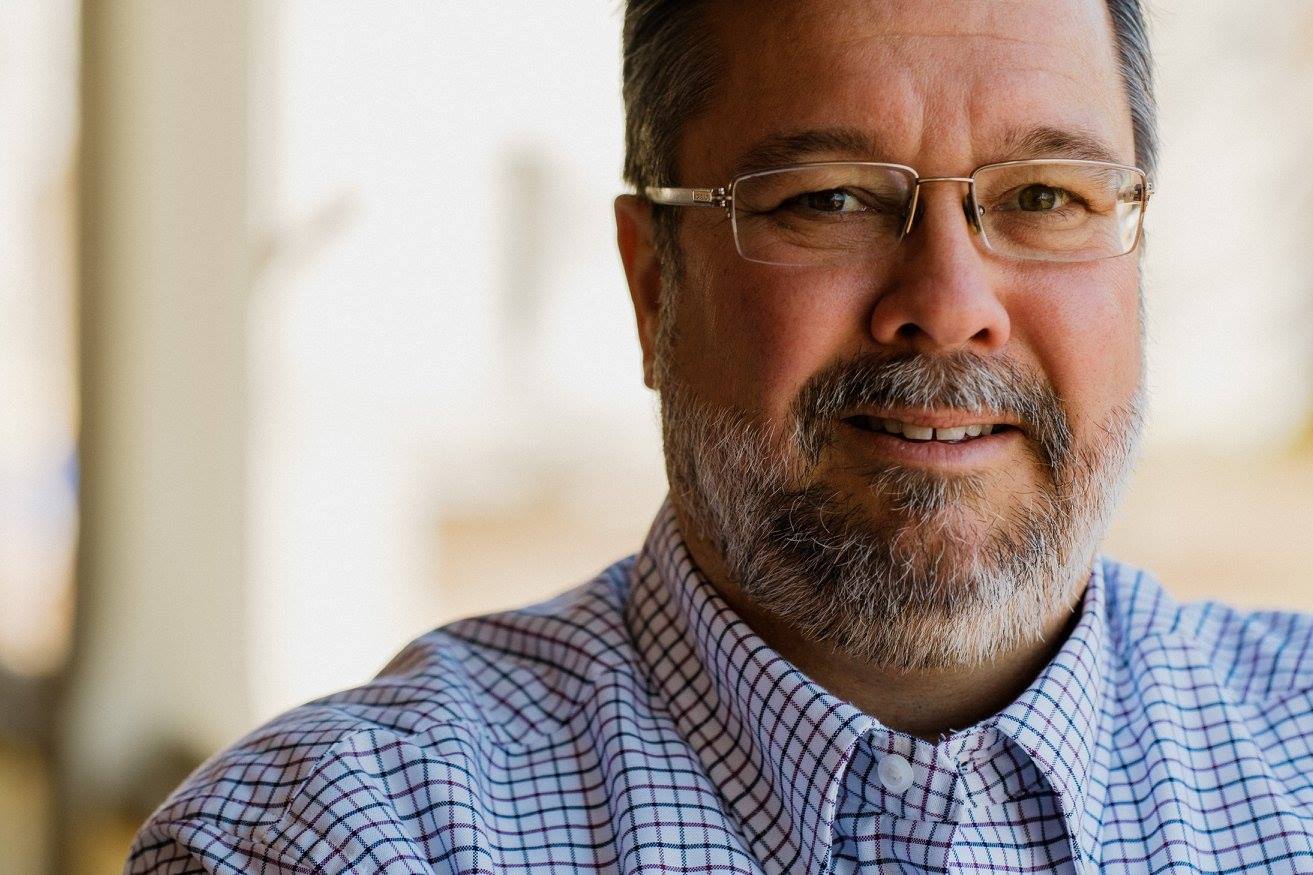

We caught up with the brilliant and insightful Wayne M Andrews a few weeks ago and have shared our conversation below.
Wayne, thanks for joining us, excited to have you contributing your stories and insights. What did your parents do right and how has that impacted you in your life and career?
My parents gave us the world — one museum, one concert, one cultural site at a time. Long before I understood what any of it meant, they were quietly teaching us that the arts were not a luxury or an afterthought, but an essential part of being alive and paying attention to the world around you.
They also taught us to work hard and to think forward — to consider how the effort we put in today shapes what becomes possible tomorrow. Those two lessons turned out to be inseparable from the first. Because that is exactly what artists do. They work with discipline and vision, and they make things that didn’t exist before.
I am not an artist myself, but I found my way into that world because of what my parents showed me early on. Supporting artists, it turns out, demands its own kind of creativity and strategy — especially in rural communities, where resources are limited but the need is just as real. The arts are an economic engine. They attract talent, draw visitors, and signal to businesses that a place has vitality and identity. A thriving studio, a beloved community festival, a celebrated local figure — these things build pride and create a sense of place that no marketing campaign can manufacture.
What my upbringing gave me was the understanding that artists are entrepreneurs. They take risks, build audiences, and create value from imagination and craft. That energy — that spirit of making something meaningful out of limited resources — is what engages me every day in my work as Executive Director of the Yoknapatawpha Arts Council. My parents didn’t make me an artist. They did something just as important: they made me someone who believes, without reservation, in what artists make possible.
Awesome – so before we get into the rest of our questions, can you briefly introduce yourself to our readers.
Growing up, attending cultural events wasn’t occasional — it was a way of life. Museums, performances, festivals, historic sites. My parents treated the arts as essential, not optional, and that framing never left me. What reinforced it was school. I was fortunate to attend public schools that still had robust arts programs, and I want to be clear about what that meant: every lesson that coaches and parents celebrate about youth sports — teamwork, discipline, leadership, dedication, learning to fail and try again — those lessons live just as fully in the arts. A theatre ensemble, a school band, a visual arts class — they teach you the same things. I was lucky enough to experience both, and the combination shaped how I think about everything.
The real turning point came in college. I was working at a television station, thinking seriously about my future, when I was assigned to produce a segment on an upcoming Latino Festival. What I found there stopped me. Pulling that story together required marketing instincts, logistical thinking, talent relationships, and storytelling craft — all at once. And the event itself crackled with energy. Something clicked. I didn’t just want to cover events like that. I wanted to build them.
So I started. I began raising funds, booking artists, and producing concerts for my own community. That first step opened a door that kept opening. I went on to work with major festivals and iconic institutions — Memphis in May, the Orpheum Theatre in Memphis — gaining a real education in what it takes to produce at scale and serve a community through the arts at the highest level. That path eventually led me to lead the King Biscuit Blues Festival in Helena, Arkansas, one of the three largest blues festivals in the country. Each experience added a layer: producing, managing, fundraising, community engagement, navigating the beautiful complexity of bringing artists and audiences together in places that matter.
But one experience changed the way I think entirely. Working with Tim Ransom and the Ransom Group introduced me to something I hadn’t had language for before: brand development rooted in story. Tim’s approach was to look at any product — even a brand new one — and ask: what is the story here? What are the assets? What is the history, even the history yet to be written? Why this, why now, and why does it matter? That discipline transformed how I work with artists. It isn’t enough to help someone make work. The work has to have a story, a strategy, and a plan for sustaining itself. Those questions — *why this artist, why this project, why now* — are ones I ask every day.
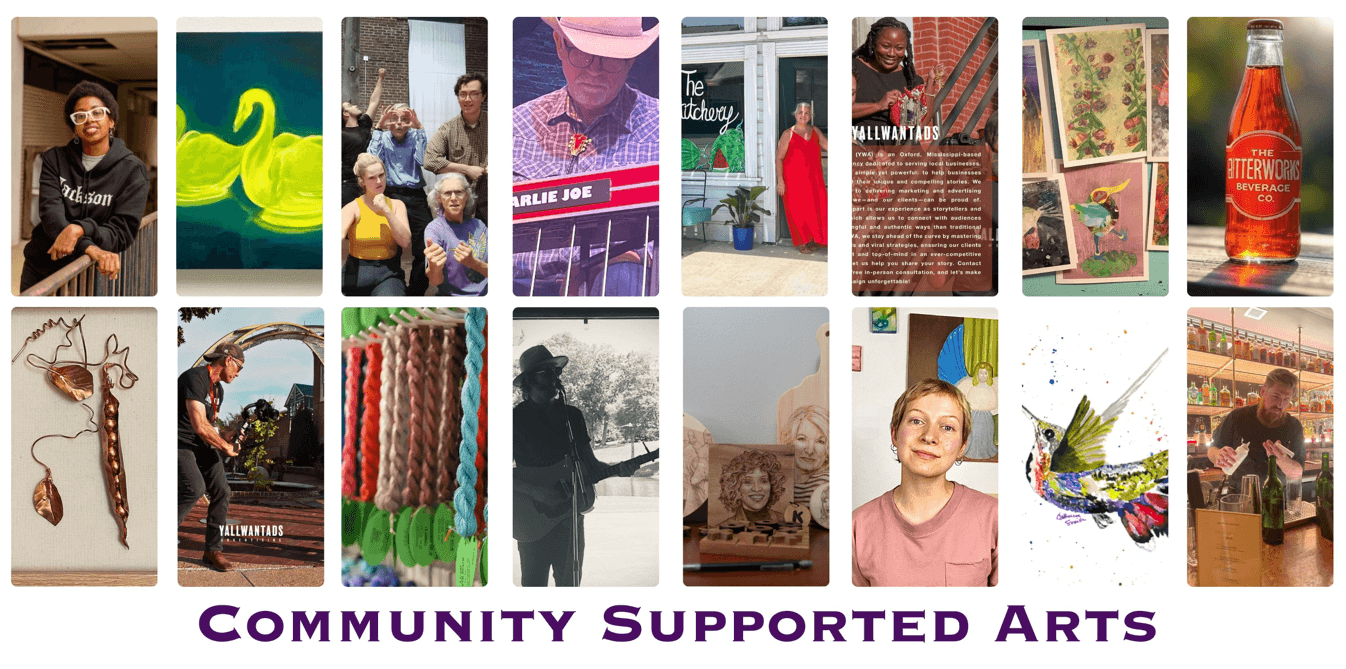
That thinking shaped the Arts Incubator program, which I consider one of the things I am most proud of in my career. The Incubator was built on a simple but powerful idea: artists are entrepreneurs. They take creative and financial risks. They build audiences from nothing. They sustain practices that require both imagination and business sense. What they often lack isn’t talent — it’s access. Access to legal support, marketing expertise, business planning resources, and professional connections. The Arts Incubator was designed to close that gap, providing not just space but the full ecosystem an artist needs to build a brand and generate sustainable income.
What sets this work apart — what I believe sets the Yoknapatawpha Arts Council apart — is that we don’t treat the arts as a cultural amenity. We treat them as infrastructure. Artists are economic drivers. They attract talent to a region, bring in tourism, signal to businesses that a community has vitality and identity worth investing in. In rural communities especially, that signal matters enormously. A thriving studio, a signature festival, a celebrated local figure — these create the sense of place that no economic development brochure can manufacture on its own.
What I want people to know about this work, and about this organization, is that it is built on lived experience at every level — from a child being taken to his first performance, to a college student discovering the power of a well-told story, to a professional who has had the privilege of working at the intersection of art, community, and economic possibility for decades. Every program we build, every artist we support, every event we produce is grounded in the belief that the arts are not a reward for a thriving community. They are how a community thrives.
Is there something you think non-creatives will struggle to understand about your journey as a creative? Maybe you can provide some insight – you never know who might benefit from the enlightenment.
For a long time, the arts were treated as a reward. Invest in them if there’s money left over. Fund them when the budget allows. Celebrate them when it’s convenient. Civic leaders — school boards, mayors, governors — largely viewed the arts as a quality-of-life amenity, something you offered a community once the real work of economic development was done.
What they weren’t measuring was how the arts were generating the economy they were trying to build.
The establishment of the National Endowment for the Arts was a turning point — a federal declaration that Americans value the arts as part of our national identity, not as decoration but as substance. That investment inspired states to follow, and what followed wasn’t simply a commitment to producing high-quality art. It was a commitment to preserving the voices, traditions, and regional talents that define us — the music, the writing, the crafts, the stories that make one place distinct from every other. Without intentional support, those things disappear quietly, and communities lose something they can’t easily name until it’s already gone.
The struggle for non-creatives is seeing the full picture. The model most communities have relied on — tax incentives to attract outside businesses, hoping those businesses bring growth — has largely failed to deliver. You can offer a company every financial incentive imaginable, but if the people they need to hire don’t want to live there, the strategy collapses. What makes people want to live somewhere? Livability. Culture. Food, land, community, and the sense that the place has an identity worth being part of.
That’s what the arts build. When I talk to civic leaders about a local dance company, I’m not asking them to care about dance concerts. I’m asking them to see the full ecosystem around that company — the evenings out it creates, the dinners before the show, the downtown foot traffic, the creative professionals who stay in a community because it offers them an outlet for their talent and a sense that their work is valued. Retaining a skilled, creative workforce is one of the hardest challenges any rural community faces. The arts are one of the most powerful tools we have for doing it.
Creative placemaking — leveraging the voices, skills, and traditions of a region to build identity and attract residents and investment — isn’t a soft strategy. It’s one of the most honest and durable economic development models available. My work, at its core, is helping communities see that. The artist and the entrepreneur are not opposites. They are, more often than not, the same person — and the community that understands that has a significant advantage over the one still waiting for a tax incentive to save it.
Are there any resources you wish you knew about earlier in your creative journey?
Every field has its foundational resources — the organizations and tools that, once you discover them, make you wish you’d had them from the beginning. For anyone working in arts administration or building arts-based community programs, two stand out above everything else.
The first is **Americans for the Arts** (americansforthearts.org). Their Arts and Economic Prosperity study is, simply put, the most powerful tool available for making the case that the arts are an economic driver. Small arts organizations rarely have the capacity to conduct the kind of large-scale economic research that moves civic leaders and funders — the data that answers, with hard numbers, what a dollar invested in the arts actually returns to a community. Americans for the Arts does that work and makes it available. Having access to that research transformed how I approach conversations with decision-makers. Instead of asking them to believe in the arts, I can show them what the arts produce — jobs, tax revenue, tourism dollars, business activity, neighborhood vitality. The argument shifts entirely when the data is in the room.
The second is **Fractured Atlas** (fracturedatlas.org). Where Americans for the Arts makes the economic case, Fractured Atlas builds the infrastructure. Their work developing models for arts incubators, fiscal sponsorship tools, and artist support resources gave me frameworks I could adapt and apply locally. For a small organization trying to build systems from scratch, having proven models to learn from — rather than reinventing every wheel — is invaluable.
Together, these two organizations do something that small arts councils simply cannot do alone: they aggregate knowledge, build advocacy tools, and identify trends across the full national landscape of arts and culture. What that means in practice is that the work we do locally in Oxford doesn’t have to exist in isolation. We can connect our programs to national data, benchmark our impact against comparable communities, and build local data collection systems that tell our specific story while fitting into a much larger picture.
If you are early in this work, find these resources now. The data exists. The models exist. The case has already been made at scale. Your job is to bring it home — to your community, your funders, and the civic leaders who are still waiting for someone to show them the numbers.
Contact Info:
- Website: https://www.oxfordarts.com
- Instagram: https://www.instagram.com/yacartscouncil/
- Facebook: https://www.facebook.com/yoknapatawphaartscouncil
- Other: https://southdocs.org/mississippi-creates-music/
Image Credits
photo by Danny Klimetz