

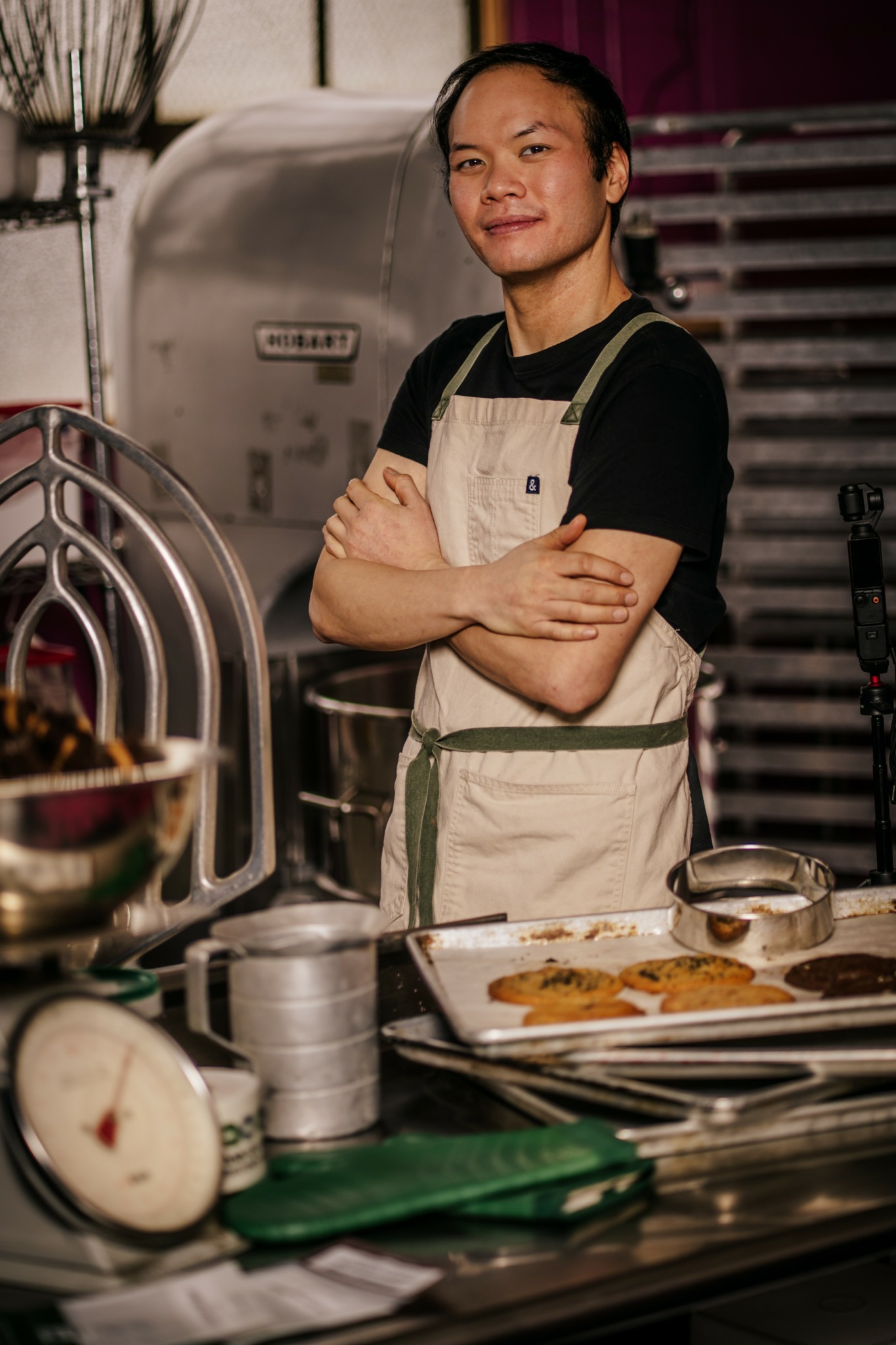

We were lucky to catch up with Vince Vu recently and have shared our conversation below.
Vince, thanks for taking the time to share your stories with us today Being a business owner can be really hard sometimes. It’s rewarding, but most business owners we’ve spoken sometimes think about what it would have been like to have had a regular job instead. Have you ever wondered that yourself? Maybe you can talk to us about a time when you felt this way?
I’m happier as a business owner in a way I never was in a “normal” job.
What’s interesting is that I don’t actually spend much time wishing I could go back. When I worked in tech, I was often working against my own definition of fulfillment. A lot of my energy went toward performative work – optimizing for optics, growth metrics, or someone else’s idea of success. I was building things for other people, inside systems that didn’t reflect my values, and trying to contort myself to fit roles that never quite felt honest.
Owning my own business is harder in very real, physical ways. The days are longer. The stakes are higher. But the work is aligned. Every decision I make – what I bake, how I show up in community, how I talk about identity and belonging – actually matters to me. I’m not pretending to be someone else or translating myself into a corporate version that feels safer or more palatable.
There are exhausting moments, of course. Late nights, financial stress, the constant responsibility that comes with building something from scratch. But even then, I don’t catch myself wishing for my old life back. What I feel instead is tired and grounded.
The biggest insight for me has been this: fulfillment doesn’t come from comfort or stability alone. It comes from agency. From working for myself, on something I believe in, and being able to be fully myself while doing it. This business allows me to be the kind of change I always wanted to see – slow, human, and rooted in care – and that’s something I never had in my previous career.
That tradeoff is one I’d make again, every time.

Vince, love having you share your insights with us. Before we ask you more questions, maybe you can take a moment to introduce yourself to our readers who might have missed our earlier conversations?
I’m Vince, the founder and baker behind Anh Ơi Bake Shop, a Vietnamese-American bakery based in Seattle. My path here wasn’t traditional. I spent over a decade working in tech, marketing, and government, building products and narratives for other people’s companies. On paper, it was a successful career – but creatively and emotionally, it left me disconnected from myself. Baking started as a way to ground myself again. It was something physical, sensory, and honest. Over time, it became the clearest way I knew how to tell my own story.
Anh Ơi is a bake shop rooted in memory, identity, and third-culture experience. I make cookies, cakes, and seasonal bakes that blend Vietnamese flavors with familiar American formats – not as novelty, but as reflection. Vietnamese coffee shows up alongside chocolate. Coconut, banana, pandan, and condensed milk sit comfortably next to butter and sugar. The products are approachable, but the intention runs deeper: these are bakes for people who grew up between cultures, or who understand that food can hold emotion, history, and longing all at once.
What sets my work apart is that it’s not just about flavor – it’s about meaning. Every product is designed to feel thoughtful and personal, not mass-produced or trend-driven. I care deeply about process, quality, and storytelling, but also about accessibility and warmth. I don’t want Anh Ơi to feel precious or exclusive. I want it to feel like an invitation. A place where people see themselves reflected, even if they don’t have the language for why.
I’m most proud of building something that allows me to be fully myself – creatively, culturally, and publicly – while also creating space for others. Anh Ơi isn’t just a bakery; it’s a growing platform for community, collaboration, and shared identity. For anyone encountering my work for the first time, I want them to know this: everything I make is intentional, rooted in care, and offered with the hope that it helps someone feel a little more seen.

How did you build your audience on social media?
I built my audience by being honest about what entrepreneurship actually feels like, and by being open about the identity questions that sit underneath it.
From the beginning, I used narrative, video-driven storytelling to document my process. I talk about the stress, the fear, the financial uncertainty, and the emotional weight of building something personal from scratch. I share real numbers and real timelines. I talk about the days when I’m overwhelmed or discouraged. I rarely post big wins or sell-outs, not because they don’t matter, but because they aren’t the truest part of my experience.
A huge part of that honesty is talking about being a third-culture kid – someone who grew up between cultures and never fully fit into either. I speak openly about how awkward and unresolved that can feel: not being “Vietnamese enough,” not being fully American either, and constantly negotiating how much of yourself to translate, soften, or explain. Entrepreneurship brought all of that to the surface. Building Anh Ơi forced me to reconcile identity, culture, ambition, and visibility in ways I hadn’t before.
I think people responded because I wasn’t trying to resolve those tensions for them, or for myself. I wasn’t offering a neat success story or a clean narrative about belonging. I was showing the discomfort, the uncertainty, and the learning in real time. That vulnerability built trust in a way polished branding never could.
For anyone just starting to build a social presence, my advice is this: don’t perform confidence if you don’t feel it. Share the questions, not just the answers. Let your work and your identity be imperfect and in progress. Especially if you exist between worlds, there are people out there quietly waiting to feel less alone. When you speak honestly, they find you.

Okay – so how did you figure out the manufacturing part? Did you have prior experience?
Yes, I manufacture everything myself.
When I started Anh Ơi, I seriously considered working with a co-packer. On paper, it made sense: more scale, fewer long nights, and less physical strain. I spoke with a few options and learned a lot about what outsourcing production would look like. There are real advantages to that path, and it’s absolutely the right choice for some brands.
But I realized pretty quickly that it wasn’t the right fit for me.
I didn’t come into this with a manufacturing background in the traditional sense, but I’ve always been very hands-on and process-driven. As I developed the recipes, I became deeply invested in how the product feels at every stage – how the dough behaves, how flavors develop over time, how small adjustments change the final experience. That level of care and iteration is hard to translate to an external partner.
More importantly, I’m a bit of a control freak – and in this case, that’s a feature, not a flaw. The experience matters to me as much as the output. I want every batch to feel intentional, and I want the ability to pivot quickly: to tweak a recipe, adjust production volume, respond to feedback, or experiment with something new without weeks of lead time or minimum order constraints. I found that co-packers, by necessity, prioritize efficiency and standardization, which made it difficult to meet my expectations for quality, flexibility, and meaning.
Manufacturing everything myself has been harder, slower, and more physically demanding, but it’s also where the soul of the brand lives. The biggest lesson I’ve learned is that how something is made becomes part of what it is. For Anh Ơi, keeping production in-house allows me to protect that integrity, even if it means growing more intentionally and at a different pace.
That tradeoff is one I’m comfortable with – for now – and it’s shaped not just the product, but the values of the business itself.
Contact Info:
- Website: https://ohanhoi.com
- Instagram: @ohanhoi


Image Credits
Dougal Brownlie