

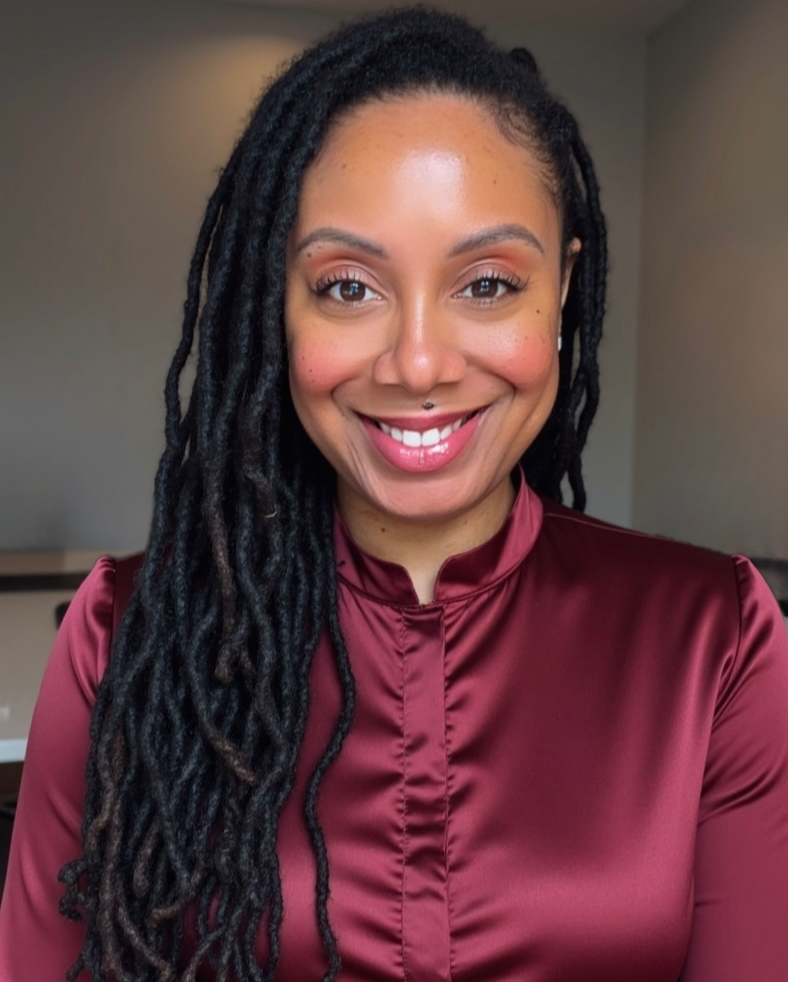

Alright – so today we’ve got the honor of introducing you to Victoria Shedrick. We think you’ll enjoy our conversation, we’ve shared it below.
Victoria, thanks for taking the time to share your stories with us today If you had a defining moment that you feel really changed the trajectory of your career, we’d love to hear the story and details.
One defining moment in my professional journey came when I finally acknowledged my own limitations and learned to honor myself with the same grace I had always encouraged my clients to give themselves.
For years, I had taught others to assess their capacity, respect their boundaries, and care for their emotional and physical well-being. Yet I realized that I had not fully practiced what I preached. After more than twenty years of holding space for others, I had quietly taken on more than my body and nervous system could carry.
Burnout revealed itself quietly. It showed up as exhaustion, diminished motivation, and the feeling of constantly pouring from an empty cup. I knew I was still serving my clients with integrity and excellence, but I also knew that something had to change.
With great intention and care, I planned my transition out of full-time direct client work. I supported my clients through that process and stepped away for a season. I took six months to rest, reflect, and restore. During that time, I learned that once you are called to this work, it never truly leaves you. My therapist’s heart was still very much alive and beating, but it was asking to serve in a different way.
I realized I no longer desired high-volume practice. Instead, I felt drawn to work more deeply and intentionally with those who are often overlooked: fellow therapists, physicians, social workers, and helping professionals who quietly carry burnout, secondary trauma, and emotional exhaustion while continuing to care for everyone else.
Serving those who serve others became a new calling for me.
That realization led to the creation of The Quiet Practice, a boutique, trauma-informed practice built around honoring capacity, sustainability, and quality over quantity. By maintaining a small caseload, I am able to provide deeply personalized, attentive care while remaining grounded, present, and balanced.
This experience taught me that longevity in this field is not about doing more. It is about doing meaningful work in ways that honor your humanity. When we give ourselves permission to rest, reset, and realign, we are able to return to our calling with renewed clarity, compassion, and purpose.

Victoria, love having you share your insights with us. Before we ask you more questions, maybe you can take a moment to introduce yourself to our readers who might have missed our earlier conversations?
I’m Dr. Victoria Shedrick—therapist, writer, speaker and educator.
My journey into mental health began with a deep desire to have a lasting impact on children. What started as a calling to serve at-risk youth evolved into something deeper: I realized that the “problem” was rarely the child—it was the environment. And that meant the adults in their lives needed care, healing, and support too.
That realization shaped my career.
Over the years, I’ve received extensive training in trauma-informed modalities and have served children and families in foster care, worked in executive leadership within nonprofit and community agencies, and ultimately founded my own practice, Key Counseling, Coaching, and Consulting. Through this work, I’ve been honored to support hundreds of women in their mental health journeys, with a special focus on trauma and women’s wellness.
One of the populations I’ve cherished serving most has been female veterans—strong, resilient women whose stories deserve compassion, respect, and skilled care.
Today, my practice has expanded to include immigration evaluations, with a continued commitment to serving marginalized communities through culturally responsive, trauma-informed work. I also provide clinical supervision, allowing me to pass the torch to the next generation of therapists.
In addition, I serve as an adjunct professor in a clinical mental health counseling program—shaping, teaching, and mentoring future clinicians. Teaching is part of my legacy. It allows my impact to extend far beyond the walls of my office.
If you asked my clients what I’ve given them, I believe they would say this:
I made them feel seen.
I gave them space to cry.
Sometimes, I helped them laugh.
I encouraged them to trust themselves.
To feel what they feel.
To sit with it.
To move through it with compassion and grace.
I believe healing is not linear. There is no timestamp. No perfect process. No “right” way to grow.
And I am not a “perfect” therapist.
I am a present one.
An honest one.
An authentic one.
I show up as myself and walk alongside my clients through some of the hardest moments of their lives.
What I’m most proud of is not just what I’ve built—but how I’ve pivoted.
From children to adults.
From nonprofit leadership to private practice.
From women’s mental health to evaluations and consultation.
From clinician to educator.
From therapist to writer.
Writing has become another expression of my calling—allowing me to share wisdom through books, e-books, and digital resources in ways that are relatable, accessible, and grounded in real life.
I am proud of my versatility.
Proud that I don’t limit myself to one lane.
Proud that I honor every gift I’ve been given.
I am more than just one thing.
And I am grateful to share every gift.
My hope is that my impact will live far beyond my work—
in the lives I’ve touched,
the therapists I’ve trained,
the stories I’ve told,
and the healing I’ve helped nurture.
Even after over 20 years, I feel I’m just getting started, and now have new ways to serve others that align well with my other God-given gifts and talents.
Learning and unlearning are both critical parts of growth – can you share a story of a time when you had to unlearn a lesson?
For a long time, I believed that doing more was the same as excelling — that constant productivity equaled success. Over the years, and through life experience, I’ve had to unlearn that notion. I’ve come to see that doing less, and embracing the art of simply being, is far more valuable than the relentless pursuit of achievement. I’m still practicing this daily, giving myself permission to rest, to pause, and to understand that moments of stillness are productive in their own right. I no longer subscribe to hustle culture or feel the pressure to constantly meet lofty goals. Having proven myself in my field, I now focus on showing up authentically, knowing that being fully myself — without overextending — is more than enough.

Any stories or insights that might help us understand how you’ve built such a strong reputation?
When I first started in private practice, I only had a few clients. It wasn’t about building a big business or hitting numbers; it was about being fully present with each person who came through my door. That focus on genuine connection laid the foundation for everything that followed.
Over time, my practice grew organically. Many clients found me through word of mouth, often Black women looking for a therapist who could truly understand their lived experiences. After finding that trust and understanding in our sessions, they would recommend me to friends, colleagues, or family. That sharing not only grew my practice but helped normalize therapy in communities where it’s often stigmatized.
I believe my reputation was built on creating something rare: a safe, culturally attuned space where clients feel seen, understood, and valued. It wasn’t about marketing tactics or clever strategies — it was about showing up authentically, honoring my clients, and providing a level of care that they couldn’t find anywhere else.
Contact Info:
- Website: https://www.thequietpracticetherapy.com
- Instagram: https://www.instagram.com/keycounselingcc
- Facebook: https://www.facebook.com/keycounselingcc
- Linkedin: https://www.linkedin.com/in/drshedrick
- Youtube: https://youtube.com/@dr.v_speaks
- Other: https://www.etsy.com/shop/DrVandTheGentleShift
Image Credits
Victoria Shedrick