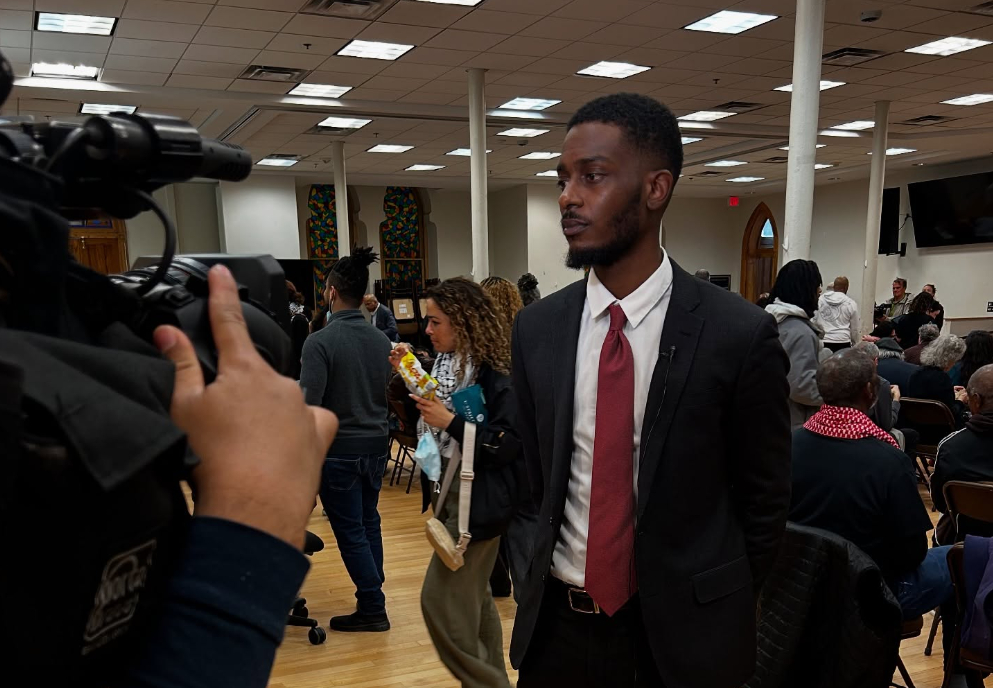

We caught up with the brilliant and insightful Ty Hobson-Powell a few weeks ago and have shared our conversation below.
Ty, thanks for joining us, excited to have you contributing your stories and insights. Do you think your parents have had a meaningful impact on you and your journey?
My parents did a lot right, but the biggest thing is they raised me to treat life like a shared project, not a solo climb. They didn’t just teach me how to get ahead. They taught me that if I am not bringing somebody with me, if I am not making the ground more stable for the people around me, then I am not really moving forward.
My mother is the first reason I see the world that way. She is an immigrant health care worker who became American in 2000. Watching her build a life here taught me that care is not a slogan. Care is work. It is long shifts, patience, and a refusal to stop seeing people as human even when the system treats them like numbers. That is where I learned that public policy is personal, and that the decisions made in boardrooms and government buildings land directly on bodies, families, and futures. It is also where I learned that a society that runs on underpaid care labor is not just unfair, it is unstable. If we say we value life and dignity, then we have to build systems that actually fund and protect the people who keep communities alive.
My father shaped my politics in a different way, by carrying history into the room without needing to announce it. He was raised Chase City, a small town in Mecklenburg County, Virginia. When your parent comes from that, you grow up understanding that progress is contested. That rights are not handed down, they are fought for. That a lot of what people call “normal” is actually the product of who has power and who gets left out. That lesson is part of why I do not buy the myth that the market naturally delivers justice. If it did, the South would not have needed federal intervention to do what was right, and working families would not have to beg for basics today.
I trace my beginnings to a one bedroom apartment in Southwest DC in the 1990s. That is not just a detail, it is the foundation of how I think. When you come up in tight spaces, you learn proximity. You learn that people are your first safety net. You learn that community is not aesthetic, it is survival. Growing up in DC also taught me to see power up close. You can’t live here and pretend politics is some distant thing. You watch it shape neighborhoods, housing, schools, policing, and who gets to breathe easily. You learn early that decisions are being made about you and your neighbors, and that if you are not organized, you are being managed.
Service and family were never optional in my house. It was just what you do. You show up. You look out for people. You do not turn away when somebody is struggling. That ethic is the root of my democratic socialist perspective. I believe the values that carried my family, care, solidarity, mutual responsibility, are the values we should scale up. Not just inside our homes, but through policy and institutions. In my view, freedom is not a private luxury. Freedom is having health care, housing, wages, and time. It is being able to live without constant precarity. It is knowing that if you get sick, if you lose a job, if you have a kid, your life is not going to collapse. That is what a just society owes its people.
9/11 happened while I was a second grader in DC. Experiencing that here changed my wiring. It made it impossible for me to think I could live disconnected from the global system around me. I understood, even as a kid, that what happens across borders can change your street overnight, and that American power is not theoretical. It shapes lives everywhere. It is why I care about foreign policy, militarism, and the way fear gets used to justify surveillance and endless war. It is also why I believe democracy has to be real. Not just voting every few years, but ordinary people having power over the systems that govern their lives.

Great, appreciate you sharing that with us. Before we ask you to share more of your insights, can you take a moment to introduce yourself and how you got to where you are today to our readers.
My name is Ty Hobson-Powell, and I am a Washingtonian. I was raised in Southwest DC and Uptown during at a time when the city was still wrestling with disinvestment, political transition, and rapid change. Growing up here meant understanding early that policy is not theoretical. It determines whether your block feels safe, whether your school is resourced, and whether your neighbors can afford to stay. I did not “discover” community organizing in a classroom. I came to it because I saw how decisions made by a small number of people shaped the daily lives of everyone else.
I started organizing as a teenager. What began as advocacy rooted in frustration matured into structured strategy. I learned quickly that passion alone is not enough. You have to understand process, media, institutions, and coalition building. Over time, I moved from simply showing up to protests to shaping messaging, drafting communications, coordinating campaigns, and helping align community voices with legislative pressure points. I became as invested in narrative architecture as I was in turnout numbers. If people cannot see themselves in the story you are telling, they will not fight for it.
The value I provide in organizing spaces is strategic clarity. I bridge grassroots energy with institutional navigation. I understand how to frame issues in ways that resonate beyond ideological silos, while remaining grounded in equity and structural analysis. I think about scale. How does a local level issue connect to federal funding streams. How does a local safety concern intersect with national political narratives. How do we protect communities from authoritarian overreach while also delivering tangible improvements in daily life. My work consistently sits at that intersection of communications, organizing, and governance.
What sets me apart is that I operate comfortably in multiple arenas. I can stand in front of a crowd and speak plainly about injustice. I can sit in a strategy meeting and map out a legislative pathway. I can draft messaging that aligns with a candidate’s platform while ensuring the language remains accountable to residents. That dual fluency matters. Movements stall when they cannot translate urgency into action steps. I focus on that translation.
I am particularly proud of building platforms that amplify community voice in ways that are sustainable rather than symbolic. Whether that means helping design key advisory structures or shaping campaigns that push back against federal encroachment into local autonomy, my emphasis is durability. I want systems that outlast headlines. I want to build a culture of people who feel empowered long after a rally ends.
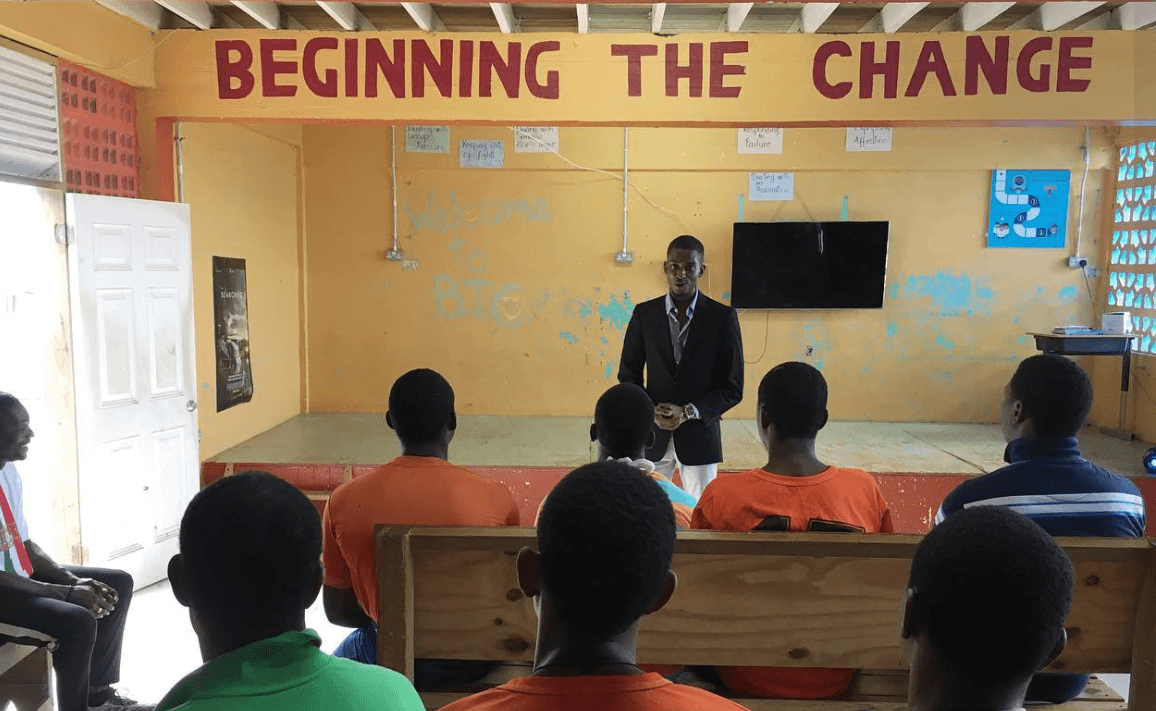
How’d you build such a strong reputation within your market?
If I have a reputation as a solid figure in organizing, it is not because I am the loudest person in the room. It is because I am consistent and I am real. People know that what I say publicly is what I believe privately. There is no gap between my politics and my practice. That authenticity is my currency in this life.
In organizing spaces, credibility is everything. Communities can tell when someone is posturing for attention or protecting a grant cycle. They can also tell when someone is grounded in principle. I built my reputation by refusing to soften my analysis to make it more palatable to funders, institutions, or political insiders. When Gaza, the Congo, and Sudan were left in chaos while conflict entrepreneurs stoked the flames of suffering, I did not treat those crises as isolated tragedies. I called out the interconnected system that sustains them. I spoke plainly about how western greed, resource extraction, arms sales, and consumption patterns create the conditions for instability and then profit from the aftermath.
That willingness to name the structure, not just the symptom, is what sets me apart. Many people are comfortable condemning violence in the abstract. Fewer are willing to interrogate the economic and political architecture that makes that violence profitable. I am. I do not believe in selective outrage. If we are serious about justice, we have to examine how our own systems are implicated in global suffering. That analysis makes some people uncomfortable, but it resonates with organizers who are tired of surface level conversations.
I am also able to speak freely because I do not have a funding source muzzling me. That matters more than people admit. There are many individuals who carry the title of organizer or activist but are constrained by the institutions that finance their platforms. When your budget depends on not upsetting certain interests, your rhetoric adjusts. Your demands narrow. Your courage becomes conditional. I do not operate that way. My independence is a strategic asset. It allows me to tell the truth as I see it, even when that truth challenges powerful actors.
People trust me because they know I am not for sale. I am not calibrating my stance based on who is in the room. I am not trimming my politics to fit inside polite boundaries. I say what is real and I do what aligns with it. That does not mean I am reckless. It means I am principled. I understand systems. I study power. But I do not dilute my analysis to protect access.
At the end of the day, my reputation rests on authenticity and coherence. I connect local organizing to global systems. I name the economic incentives that drive conflict. I refuse to participate in selective silence. And I maintain independence so that my voice belongs to the communities I organize with, not to donors or gatekeepers. In a landscape crowded with branding and performance, being unbought and unfiltered is not just a moral choice. It is a strategic one.
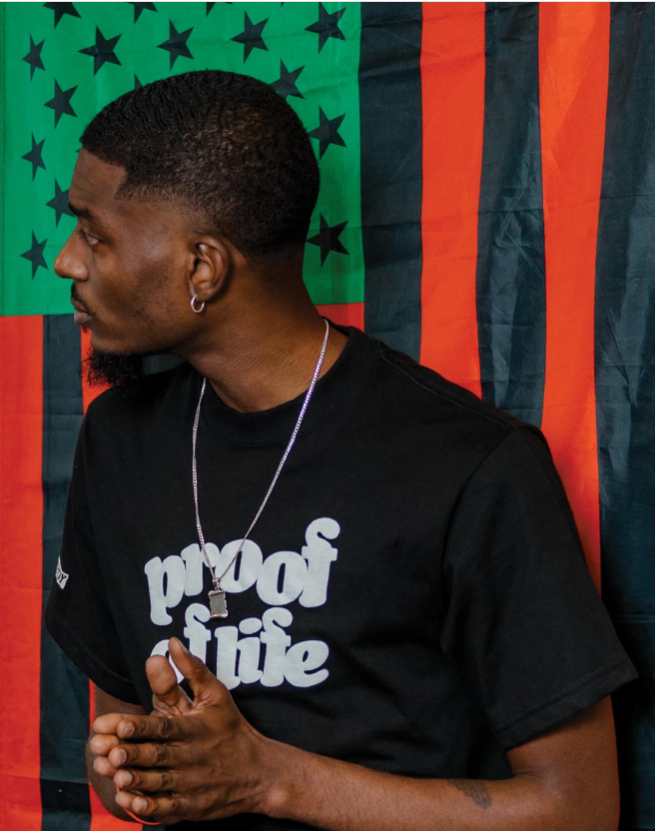
Have you ever had to pivot?
I spent my childhood accelerating. I graduated high school at 13. By 15, I had a B.A. By 16, I pledged Kappa Alpha Psi. At 17, I had earned my M.A. My teenage years read like a résumé written in permanent ink. Every year produced another line, another credential, another reason for adults to shake their heads in disbelief and call me exceptional. When you move that quickly, applause becomes oxygen. Achievement becomes measurement. Measurement becomes identity.
I learned early how to perform competence. I learned how to occupy rooms built for people twice my age. I learned how to collect milestones the way some people collect memories. But somewhere along the way, I began to confuse velocity with purpose. I started measuring my life in paper accomplishments instead of lived moments. Instead of asking whether I was present, I asked whether I was ahead. The social contract is subtle but suffocating. It tells you that your worth is cumulative. That you are only as valuable as your output. That prestige is proof of meaning. It rewards acceleration and calls it destiny. It whispers that rest is laziness and that reflection is indulgence.
In my twenties, I began to feel the hollowness of that logic. I had done everything early. I had stacked the degrees. I had checked the boxes. But the question lingered. Who was I if I stopped producing credentials. Who was I outside of the metrics.
The pivot was not dramatic. It was quiet and internal. I realized that life is not a competition against time. It is a gift. A fragile, communal gift. And I did not want to spend it chasing validation from systems that measure human beings by profitability and status. I began to unlearn the reflex to equate value with material accumulation or professional accolades. I started asking different questions. Am I present with the people I love. Am I building something that increases collective dignity. Am I aligned with my principles when no one is watching. Am I living in a way that honors the fact that most of us are taught to survive in systems that were not designed for our flourishing.
That shift carried political implications. Once you reject the idea that your worth is tied to accumulation, you begin to question the entire architecture that insists on it. You start to see how capitalism trains us to internalize scarcity and competition. You notice how we are encouraged to climb individually instead of rising together. You recognize that a society obsessed with productivity forgets how to practice care. My pivot was a refusal to participate in that lie. I stopped chasing achievements for their own sake. I started investing in community, in relationships, in organizing, in moments that could not be quantified. I learned to value stillness. I learned that laughter with friends has more substance than a line on a résumé. I learned that solidarity feels better than status.
I do not regret the acceleration. It shaped me. It sharpened me. But I no longer measure my life by how early I arrived. I measure it by how deeply I live. By whether I am contributing to a world where people are valued beyond their output. By whether I am building spaces where joy and justice coexist. Life is not a ladder. It is a shared inheritance. And the most radical thing I have done is decide that my worth, and the worth of everyone around me, cannot be reduced to paper.
Contact Info:
- Instagram: @TyHobsonPowellDC
- Linkedin: https://www.linkedin.com/in/tyhobsonpowell/