

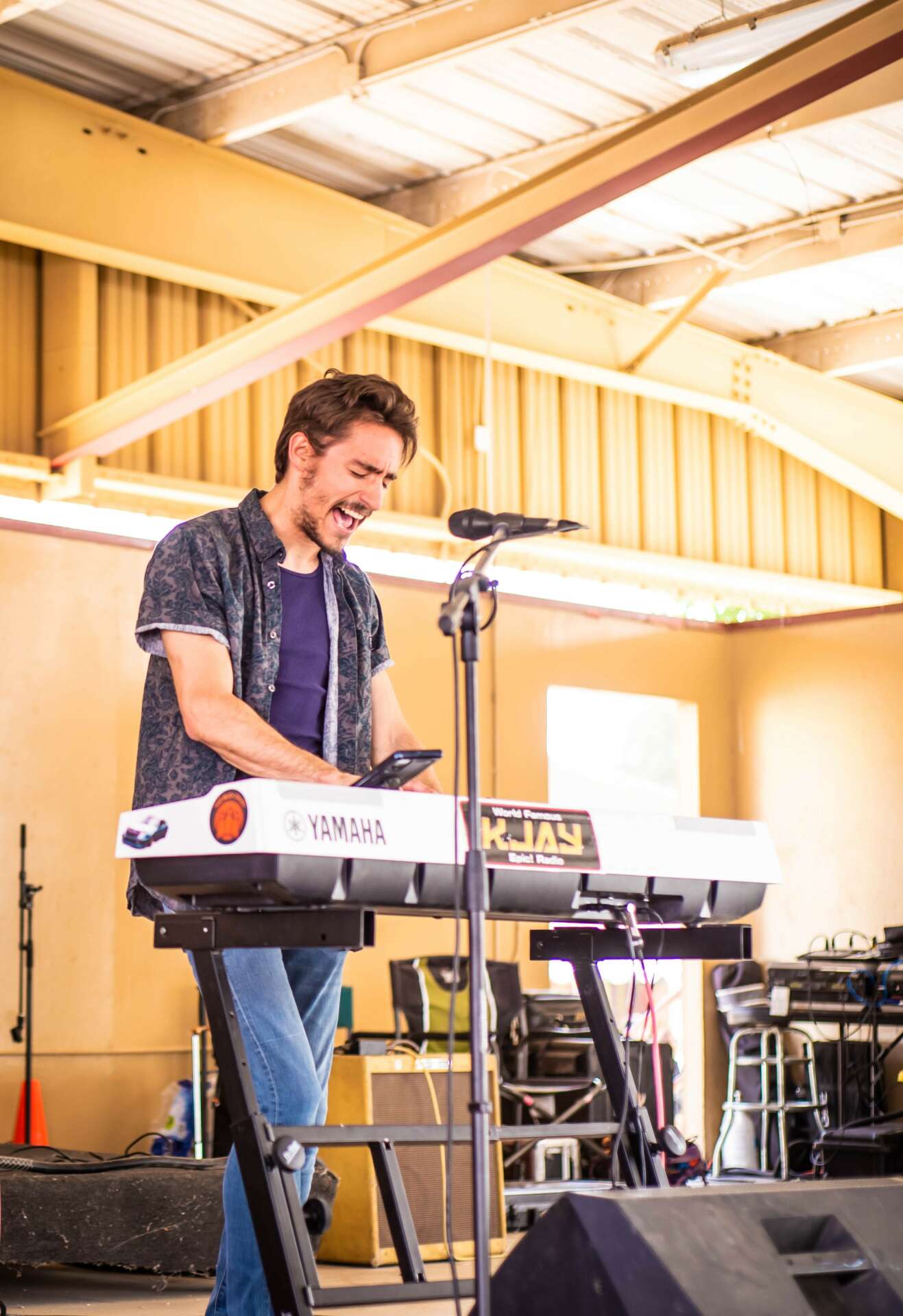

We caught up with the brilliant and insightful Troy Prine a few weeks ago and have shared our conversation below.
Troy, thanks for taking the time to share your stories with us today Learning the craft is often a unique journey from every creative – we’d love to hear about your journey and if knowing what you know now, you would have done anything differently to speed up the learning process.
One of the most beautiful things to me about music is that you can approach it so many different ways and achieve so many different outcomes from your own journey. I always find it interesting how learning certain instruments lend themselves toward specific avenues of technique, theory, and composition, even among classmates or colleages who already have similar influences and musical upbringings. I liken playing an instrument to picking a class in Dungeons and Dragons – whichever path you choose will have certain areas of focus that make you very adept in certain situations, but unless you multi-class, you may end up missing out on some vital skills needed to take on the final boss. Set your sights on the prize, and don’t be afraid to go outside of your comfort zone if it means making strides toward the finish line. For me, every new skill or idea I discover for one instrument can always be reimagined or repurposed onto another instrument, which always helps me break tradition and think outside the box. I’d much rather be a “Jack-of-many-trades” than be the immaculate master of just one.

Troy, love having you share your insights with us. Before we ask you more questions, maybe you can take a moment to introduce yourself to our readers who might have missed our earlier conversations?
The “Troy Story Band” was certainly an idea born out of necessity – the songs we play today could easily have been attached to a completely different group of performers, if only they’d have been able to humor me and my vision. Now that this band is its own thing, I have complete creative freedom and the final say in pretty much all decisions big or small, though not without ample peer-consultation. (I’m only a dictator when it comes to things like song tempo or which chord voicings to use. Y’know, the really important stuff.) When I first learned about “typecasting” in the world of acting, it was this thing I felt like I understood, but never really dwelled on. It must have had more of an impact on me than I thought, because I’ve striven my hardest to not be musically typecast in anything that I do. As the years have gone on, I’ve refined my tastes and my sensibilities to the point where I can fairly easily tell if I’m going to enjoy working on a project or see the potential in it. However, I tend to give everything a chance, even if its far outside of my wheelhouse. Even in my own songwriting, I try to push the envelope and not get stuck in any one style or genre for too long. By happenstance, I’ve composed a samba and a polka (in the same song), surf rock, southern rock, a waltz, jazzy big band swing tunes, some pop-rock, reggae, punk, and singer-songwriter tunes – each one more or less rooted in 12 bar blues, but more often than not with some kind of twist or deviation that even makes fans of progressive music turn their heads. I live for those little moments of subverting the listeners’ expectations. If I can get a “say what?” or a “what the —-?” from the audience, then I consider it a job well done.

How can we best help foster a strong, supportive environment for artists and creatives?
I would love to live in a world (or a part of the world, maybe?) where live music is valued to the extent that individuals can make a living off their craft. I’m hard pressed to remember meeting anyone from Southern California or beyond who writes or performs music full time – everybody either has a main gig, a side gig, or they’re the walking, talking embodiment of a struggling musician, and it doesn’t seem to be getting any better. Sorry to get dour for a moment, but it’s something that really gets to me sometimes. When I see someone insanely talented get off stage and head towards their beat up old piece of junk car that’s on its last legs, it kind of makes me wonder if it’s all worth it. So, if there was a way for people to ‘put their money where their mouth is’ (whether that be by tipping artists, or having venues pay entertainers what they’re worth instead of paying in “exposure”), that’d be terrific news for me and everybody I work with.

For you, what’s the most rewarding aspect of being a creative?
Seeing/listening to the final product come together is such a euphoric feeling. Last week, I had the pleasure of listening back to the final mixes on the music we’ll be releasing on New Years Day, and it was almost like a huge weight that had been dragging me down for years suddenly disappeared. When you’re as much of a perfectionist as the rest of your team will let you be (haha), you do need to make some concessions, but in the end, the think tank will most often come up with something better or at least on par with the ideas you had to throw out. The collaborative process of working on these songs has been eye-opening, and I only hope I can get out of my own way long enough to let other musicians’ visions shine through. At the end of the day, its still all my music, but there’s no denying it took a lot of help to get it recorded, wrapped, and out for public consumption. Hey, if I could become proficient with every instrument and every aspect of the music business, I would, but there’s only so much time in a day and only so many IQ points a community college dropout like me can put to use at one time.
Contact Info:
- Instagram: https://instagram.com/troy_story_band?igshid=M2RkZGJiMzhjOQ==
- Facebook: https://www.facebook.com/tstory22?mibextid=ZbWKwL
Image Credits
Jennifer Bayers