
We were lucky to catch up with Travis Helms recently and have shared our conversation below.
Travis, appreciate you joining us today. Can you talk to us about a project that’s meant a lot to you?
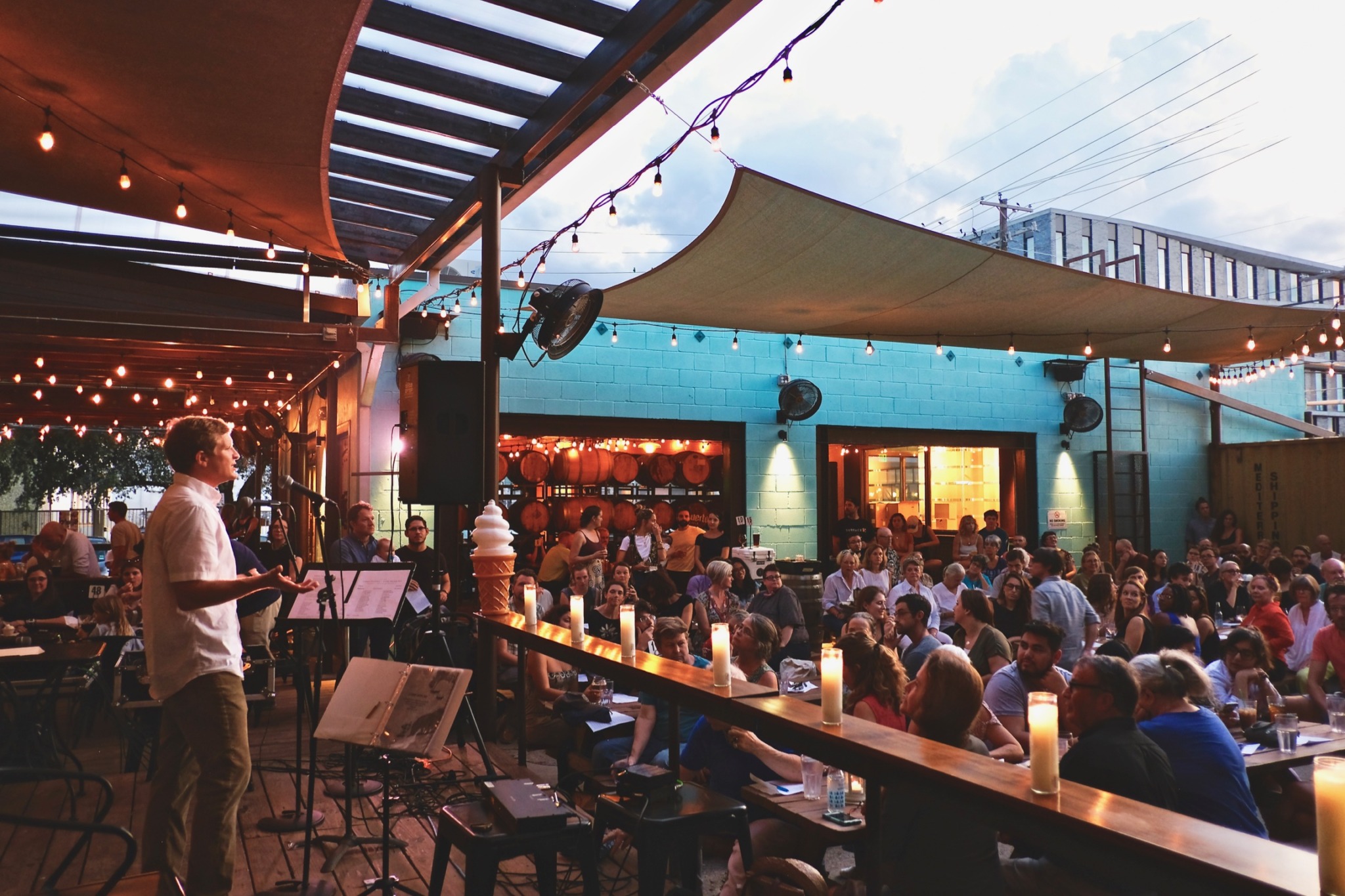
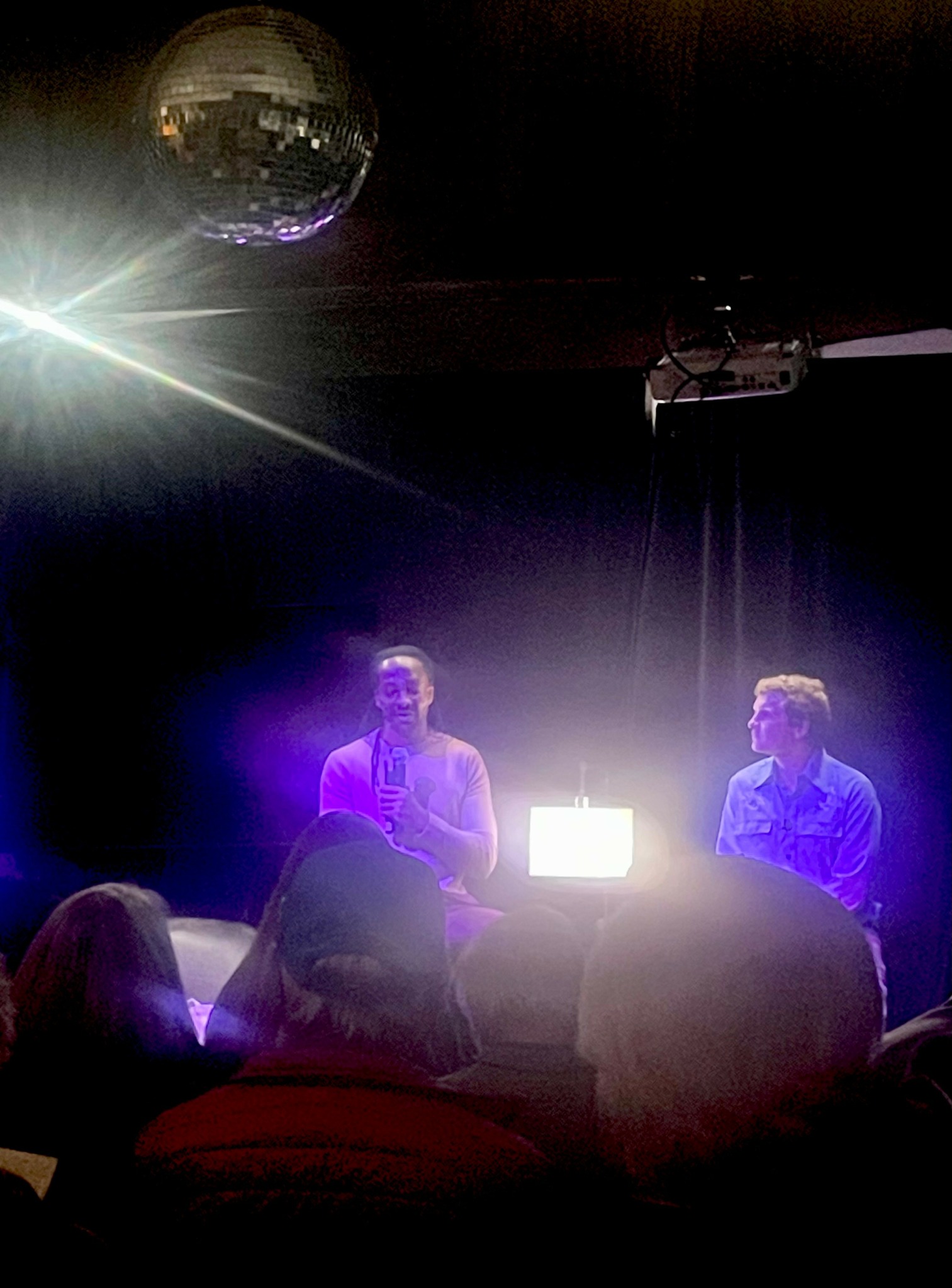
In 2018, I was having coffee with a dear friend — a poet and highschool English teacher, who tends to approach questions of meaning from a Buddhist framework. I had recently been ordained as an Episcopal priest and received a PhD in poetry and theology from a fancy university in the UK. We were discussing our shared love of poetry, and how empty and transactional poetry readings can sometimes feel — as if one is either passively receiving poems as an audience member, or unloading them on audiences from the podium. We began to wonder what it might look like to build a new kind of poetry reading series. What it might look like to artfully, lovingly, non-dogmatically fold aspects of sacred ritual into the format of a poetry reading. And from that conversation, LOGOS Poetry Collective was born.
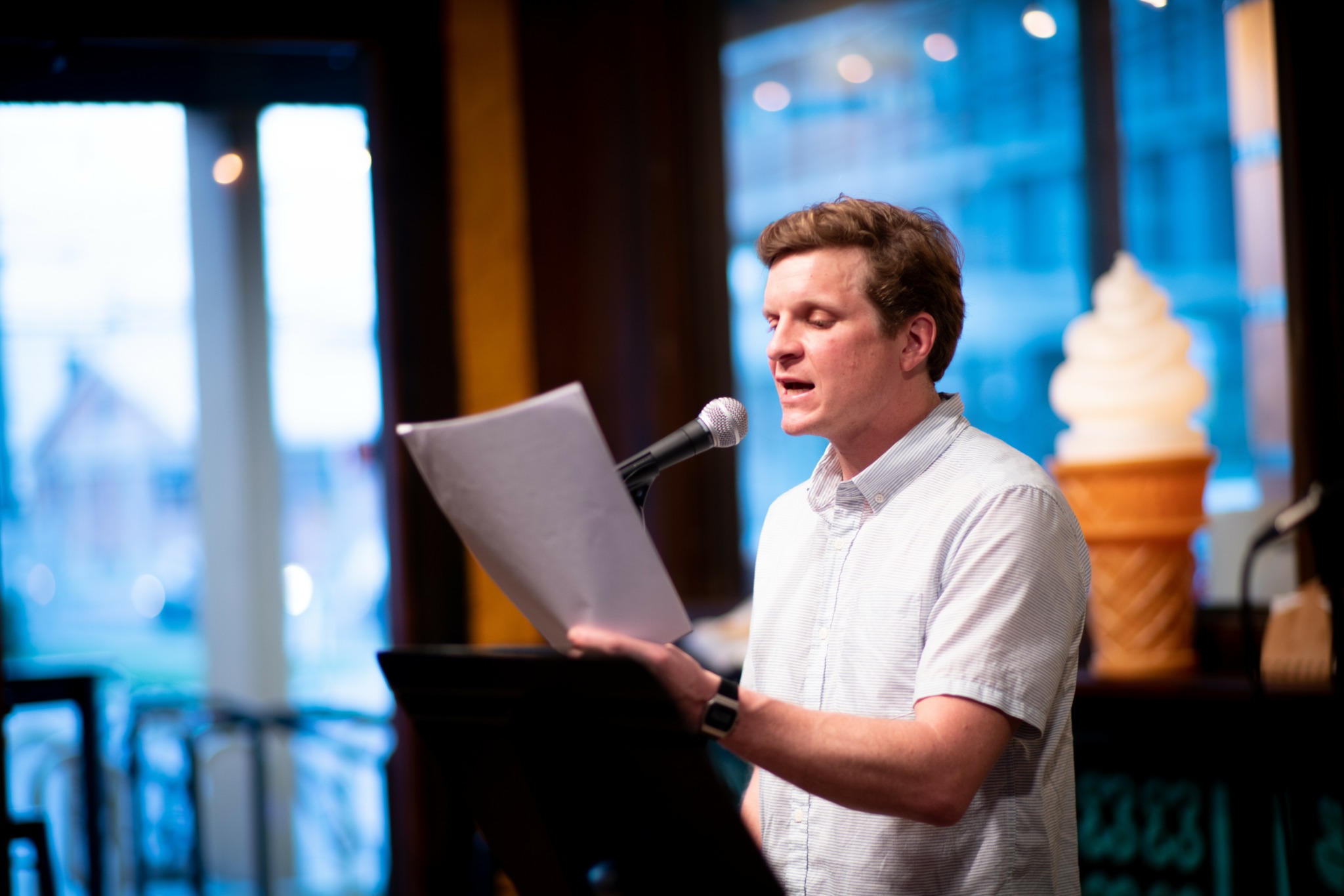
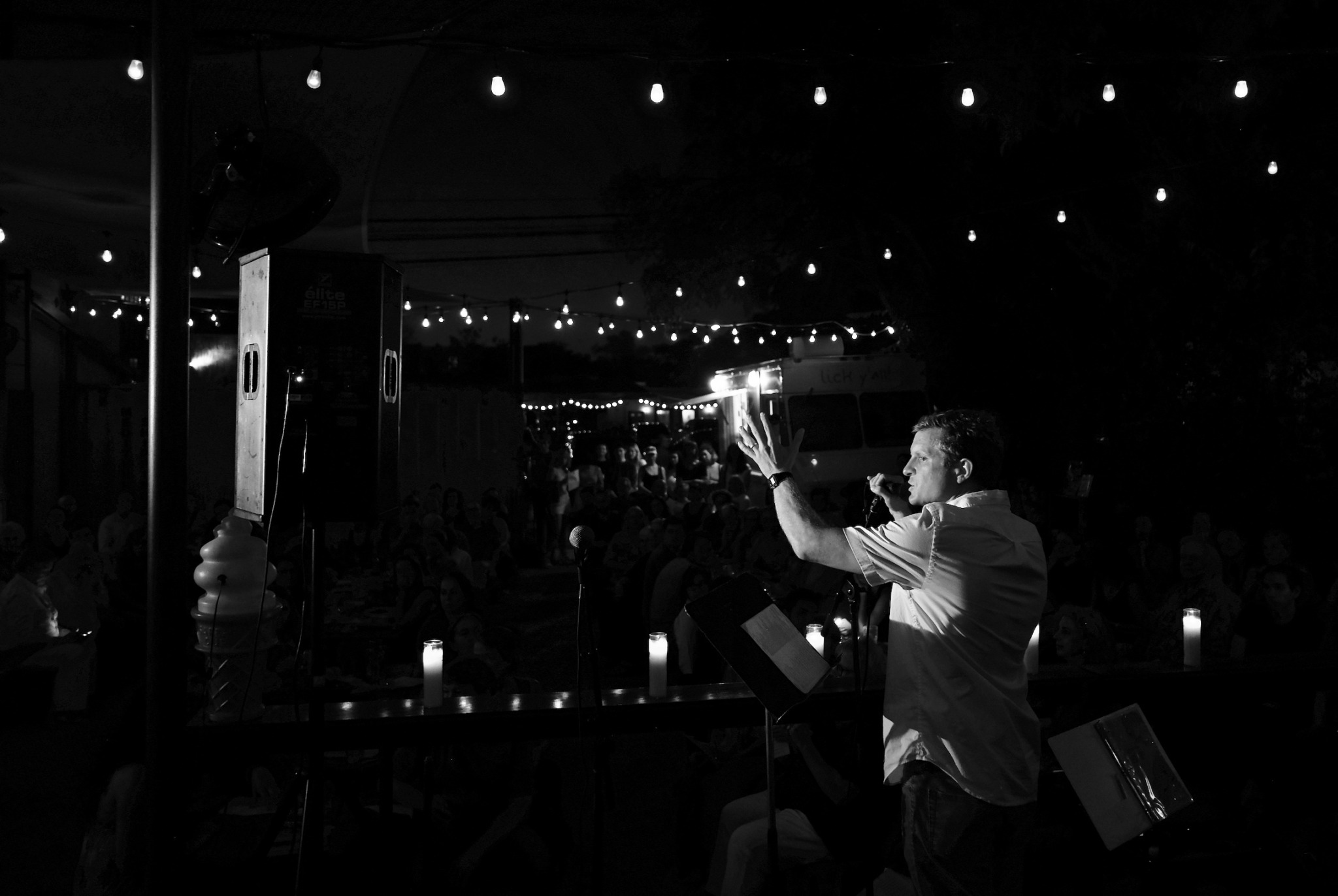
We began hosting monthly readings in a special “ritually-inflected” format, in an east Austin, TX brewery called Lazarus (the brewery was owned by a pastor, and the beer had names like Walks on Water pale ale and Double Predestination 2xIPA). I envisioned LOGOS as a space for community and connection — for people who were craving meaningful conversation, and who were hungry for experiences of the transcendent (call it god, the sacred, wonder, or quantum weirdness — whatever name we use to describe the deeper reality that undergirds and is woven into this one, but we can’t explain away with rational analysis) but who would never step on a church campus. People started attending. Lots of people. The project grew. We would feast on poetry, and a “communion” of beer and tacos after. In time, during the pandemic, the project scaled to include in-person and virtual programming, and has now featured multiple U.S. Poet Laureates and a dozen Pulitzer prizewinners.
From the seed of a conversation, a beautiful celebration of community took root and blossomed.
Travis, love having you share your insights with us. Before we ask you more questions, maybe you can take a moment to introduce yourself to our readers who might have missed our earlier conversations?
Writing has always been at the core of my personal sense of vocation and identity. I can remember sitting, bored, in a high-school English class and opening my American Literature textbook and reading a poem by T.S. Eliot. I finished the poem and was shaking. Someone who had been dead for forty years had somehow been able to communicate a truth to me that felt alive, and vital. Since that moment, all I have wanted to do was create that sense of resonance with others: to use language in such a way that helps others see the world in all of its beauty and wonder. That helps others feel connected, and less alone.
Growing up in the deep south, I was also exposed to many forms of theology that felt toxic. Sitting in churches as an adolescent, I was told that I inherited sin as an infection — and that god had to sadistically kill his son to pay a price I couldn’t pay. My heart told me that god was love; but the preaching I was being exposed to felt grounded in shame and fear. Ultimately I got a PhD in poetry and theology, and then became ordained, in order to find a more life-giving way of understanding who god is and how to live.
My writing and my ministry now are all about finding ways to share with others the beauty conveyed in the great creation poem that opens the book of Genesis: that humans are made radiantly “in god’s image” and “worthy of love and belonging” (as social scientist Brené Brown says).
My day-job as a priest in Jackson Hole, WY includes leading a nontraditional, deconstructed church community called CAMPFIRE — for people who identify as spiritual but not religious, and that congregates in a saloon. But the heart of my sense of vocational identity is writer. I’m currently work a book of poetry and nonfiction project that is part grief memoir, part theology of the imagination. I also regularly lead workshops around spirituality and the imagination. Whether on the page or in retreat settings, my passion is helping people get in touch with the divine spark within them.
Are there any resources you wish you knew about earlier in your creative journey?
Perhaps the most important resource I have found on my creative journey is meditation — which is to say, finding a way to cultivate inner trust. There are so many writers and thinkers who have helped me cultivate a sense of self-trust, and deeper freedom, on the page and in my life. Books like Rick Rubin’s The Creative Act: A Way of Being, Brené Brown’s work, Ralph Waldo Emerson’s essays and Rob Bell’s podcasts. Recently, I read a beautiful book by Lacy Phillips called How To Manifest. The premise is that it is largely our subconscious beliefs around self-worth (or a lack thereof) that prevent us from realizing the visions our hearts hold. A few weeks ago, I was having a conversation with the award-winning poet Roger Reeves, and he said to me something to the effect of, “Travis, what you need to learn is how to be free to make mistakes on the page — to bring your whole self to your writing.” His point was that perfection is not the goal; and that in fact, it is in our imperfections that our true uniqueness and originality is to be found.
How can we best help foster a strong, supportive environment for artists and creatives?
One of the most elements in society the artist and creative have to navigate is the collective, subconscious belief that our worth it tethered to our productivity. The media, and the capitalist ecosystem in general, say that what we create only has value if it can be sold. I believe this is a holdover from the Protestant work ethic, among other things; but we have to be free to fail, to take risks, and make mistakes if we ever want to innovate. The ability to fail and ask for help is a necessary strength for the artist to develop; just as curiosity and humility — the willingness to say “I don’t know, but I’m doing my best to figure it out” — are two of our least valued virtues as a society. We need more risk-taking, more courage, more imagination, more willingness to fail, if we are going to reach our full potential as creators.
Contact Info:
- Website: https://www.wtravishelms.com/
- Instagram: @wthelms
- Facebook: @wthelms