

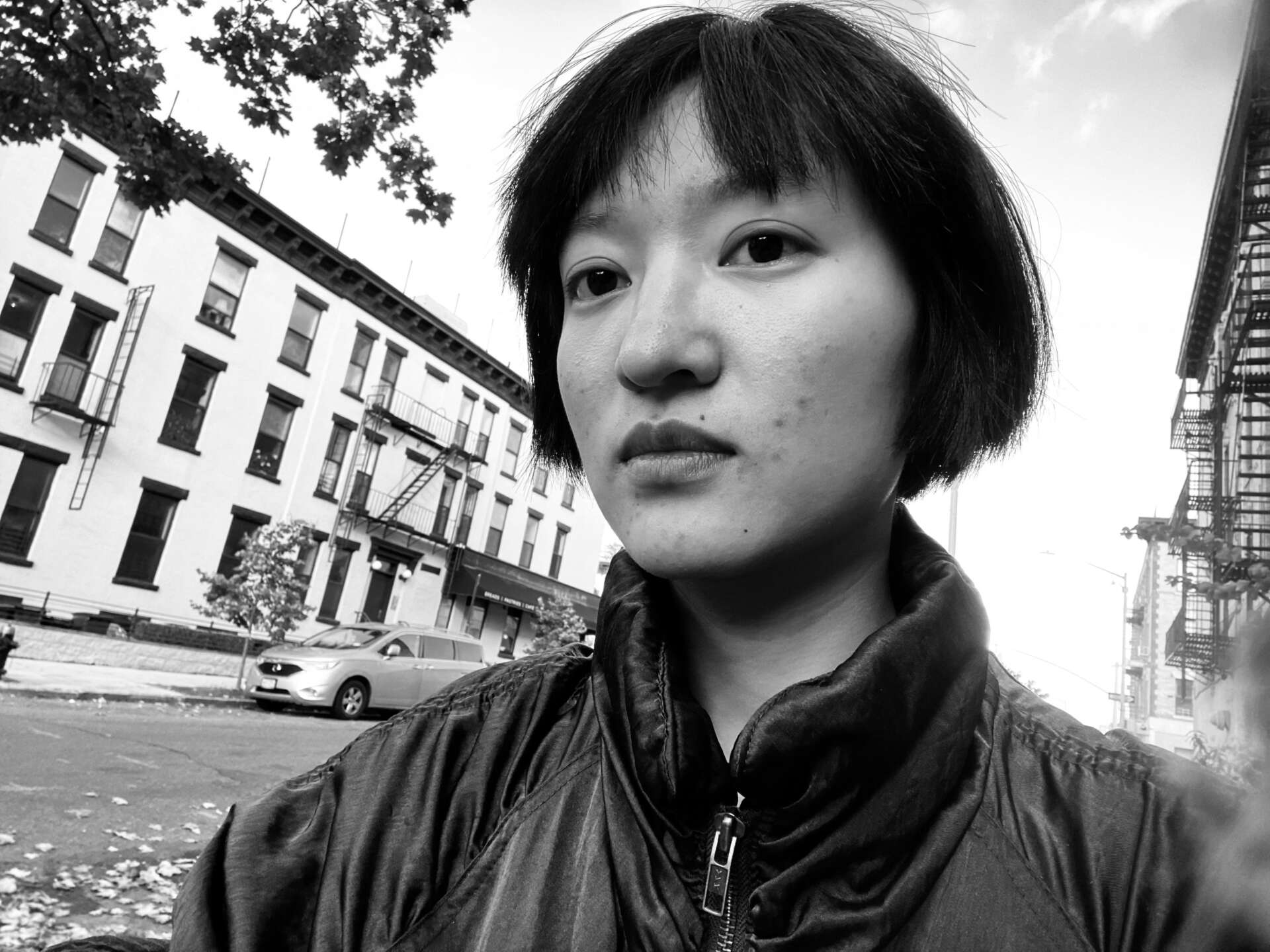

Alright – so today we’ve got the honor of introducing you to Ti Xu. We think you’ll enjoy our conversation, we’ve shared it below.
Ti, thanks for taking the time to share your stories with us today What did your parents do right and how has that impacted you in your life and career?
I am lucky to have parents who understand my creative pursuits. Where I grew up, there are contemptuous attitudes towards pursuing art as something more than a hobby, which is a compromising option reserved for kids who don’t do well enough in regular studies to get into prestigious schools. My parents defended my choice before I became aware that such discriminations exist. My mom in particular has been very supportive in words and action. When I was six, she began to take me out to parks so I could draw. A few times she took me out of school on business trips with her. We went to botanical gardens, historical sites, and local fairs. I still keep the drawings from those trips, which encapsulate guilty but fond memories. I got some of my mother’s rebellious spirit, like the way I am comfortable with being an outsider or not fitting in, and how I follow my thinking.


As always, we appreciate you sharing your insights and we’ve got a few more questions for you, but before we get to all of that can you take a minute to introduce yourself and give our readers some of your back background and context?
It’s funny to look back on my life and try to figure out what counts as “the starting point” for my career now. Officially I started pursuing illustration as a career in the fall of 2021, when I decided to apply for a graduate program in illustration and began putting together a portfolio. But like most others, I began to draw long before I knew the word “illustrator.”
My earliest creative experience dates back to kindergarten when I put paper twine around my neck as a bow, a rudimentary mimicking of a pink bow on a princess from one of my picture books. What looked like a strangling hazard in the eye of my teacher back then was an instrument for imagination for the 3-year-old me. From time to time I still remind myself of this aspect of visual art: an instrument for imagination to soar, to imply something much more than what lies before the eye.
I received general art training during high school and later got admitted to a design program for undergrad. The training before college was centered around rendering techniques, and product design during college. Outside of class people generalized my endeavor as “doing art”, but I saw the former as technical training for no clear purpose other than to stand out among other candidates, and the latter as a creative means to a rational goal. Even though I didn’t see myself as a visual creative back then, upon reflection I see the long-term influence of these experiences on what I do as an artist now.
Alongside my domains (first as a middle school student who had to tackle both regular and artistic studies for exams, then as a potential product designer), I have always been in the habit of doing life drawing. Before I could write my name (in Chinese), my mom discovered that I stopped making noises when I doodled. She excavated this early sign of artistic gift with great enthusiasm and encouraged me to take a sketchbook to the park and draw anywhere I could sit. Being a shy person all my life, surprisingly I got used to performing my creative process in front of people at an early age. Overcoming the “stage fright” was certainly not crucial to becoming a functioning artist, as our immediate delivery is the result rather than the process. But that training for composure at drawing in public still supports me to put down fresh feelings whenever I like. I always travel with drawing tools. It felt like an activity without a purpose, until I seriously considered commercial art as a career.
The transition from product design to illustration seemed abrupt to others but natural to me. Apart from designing the object, a big part of product design is storytelling that justifies how the product fits into the lives of targeted users. I gradually became aware that my interest in the storytelling part outweighs that in designing. When I compare products to illustrations, I see that images can be shared faster and on a wider scale, and to me, it is a more instinctive vehicle for storytelling than product design.
As I draw more and more, my preferences and strengths become clearer. I love portraying organic beings, specifically plants, birds, and youth. For me, they provide the most possibilities for dynamic shapes and compositions. Genre-wise I like telling a story through a sequence of images, namely comics. I feel the process invigorated when it is driven by a story. I quit overthinking and things tend to fall naturally into place.
The fear of staring into a blank sheet of paper not knowing what to draw is experienced by many artists in their beginner stage, even when they have no lack of passion for drawing or life. The tricky part is the transfer process from a spark of idea to an image. When I set myself to work on an illustration piece, the transfer process has always been unique to each project, and the unpredictability has always brought the initial “blank paper fear” to me.
But things are quite different when it comes to sequential storytelling. Many times I find myself drawing panel after panel before I have a clear idea of where the story is going. For personal fun projects I even skip the drafting part and just do the thing on paper in one go. Weirdly, I find myself the most confident and creative when my safety nets (an erasable draft, option to undo) are removed. The exploration in comic format helps me to build a connection between the invisible inner space of my mind and the visible forms.
As an artist, I do comics, book illustrations, and editorial illustrations. Several things stand out across my portfolio regardless of genre. The fascination for intricate patterns, the approach of avoiding using direct photo references, the way I incorporate perspectives and depth on a 2D surface, and the story-driven core. I’d like my work to have complexity in depth and textures, and harmony in color and composition. I design a hierarchy so people don’t take in everything all at once and instead make a closer examination of the details. I study photo references separately and don’t start to apply the form of what I see to my work until I have a good grasp of it from every angle, holistically. The images have to live in my mind before I feel comfortable expressing them in my visual language. I hold onto the belief that to create a fantasized world, I need to study the real world well.
I want to talk about the influence of my earlier practice of product design. I received training in imagining things in three dimensions and also considering the role the object plays in the full user experience. So when I tackle an image, I see it as a capture of an experience much richer and more convincing so that people can imagine themselves in it.
At the same time, I don’t want a two-dimensional world that is a mapping of the three-dimensional world. The 2D world has its properties, things the artist can do that can’t be done in 3D. It allows him or her to conceal what he/she doesn’t have to show and leave room for imagination. In this light, I am acknowledging that I am working on a 2D surface, creatively things I can do. Being well-versed in my objects and able to deform them stylistically helped a lot in reinforcing the creative potential of 2D.
The most distinctive thing about my art is the story-driven core, which both allows me to fully visualize my imagination and gives an extra layer of meaning to the visuals. For any project, even if its nature is not narrative, I approach the blank canvas with a rough idea of a story, in direct words, what is going on. A touching image does not necessarily have to start with a story, the sensation it evokes in viewers can be purely aesthetic and plain in narrative. But for me, I find it more enjoyable to start with an idea for a narrative than a visual form.
At this stage of my career, I find it hard to define what is the signature of my body of work. I embrace traditional painting as well as digital tools, comics as well as single images, and motion graphics. I like creating stuff from imagination but also capturing the sensation I experience there and then with on-scene drawing. In general, storytelling stands out among my interests but I know that my practice in all other directions is nourishing the whole of my creative mechanism.


Any resources you can share with us that might be helpful to other creatives?
I wish I had been exposed to drawing for animation a decade earlier than I did(4 years ago). I find one aspect of animation training that is particularly inspiring for visual artists in general. One is creating the form in service of the narrative purposes. Animation as an art form is exciting because it gives the illusion of a wholesome imaginary world in a way closest to how we experience the real world: perceiving space and time through a two-dimensional view. And yet the flood of visual inputs can be overwhelming if not harnessed properly. The challenge of simplifying the complicated and random aspects of the real world and making it feasible to create and digestible for the audiences is inherent in the medium. Animators are trained to balance between abstraction and legibility(and visual charm). From animation masters I see different levels of abstraction working equally well in building a convincing experience. Comparatively, illustrators have a much wider range of freedom, as narrative purposes might not be the ultimate artistic goal for each individual or project.
However, training for making clear the message your drawing delivers can foster illustrators’ ability to communicate effectively and efficiently. I experienced this enlightenment myself when I participated in animation workshops, focusing on the process from storyboarding to animatics and animating characters respectively. After I had gotten used to thinking in 2D, the training for key roles in animation posed bigger questions to me: what if the scene in my painting is “real” in space and time? I learned from the animators and storyboarder’s approach to simplification, which, when properly used, helps viewers understand the picture better.


What do you find most rewarding about being a creative?
The most rewarding aspect of making art is about the thrill of expressing something you can’t in other languages. For many years I have been keeping records of life moments that matter to me in the form of comics, and became aware that there is no replacing the images with text. They capture things deep and true about my current mindset. When I look back on this kind of visual record from the past, I see that the level of skills does not affect the authenticity.
At the same time, mastering art as an expression enables me to explore and extend my imagination. Even though I have some rough ideas to guide the creative process, I only get to see it in full flesh after the work is done. The process is challenging and intriguing at the same time. For single images, I start by sketching the idea in the roughest form, then imagine more on top of that. It’s never a linear path. At some point, the image begins taking its initiative and excludes what doesn’t “fit in”, no matter what the initial idea was. For comics, short or long, I start working on images before the story is clear. A dozen ideas can be inspired by one image, even an immature one. That’s the cool thing about making art, you have an idea of where you’d like to go, but you don’t get to see everything from the beginning.


Contact Info:
- Website: https://visualgrocery.com/
- Instagram: ti_xu_art
- Linkedin: linkedin.com/in/ti-xu-43250a227