


Alright – so today we’ve got the honor of introducing you to Tara Gilboy. We think you’ll enjoy our conversation, we’ve shared it below.
Tara, thanks for taking the time to share your stories with us today How did you learn to do what you do? Knowing what you know now, what could you have done to speed up your learning process? What skills do you think were most essential? What obstacles stood in the way of learning more?
I have loved to write ever since I was a little girl. I was always the kid who was happiest inside reading rather than out playing with friends. I learned to write over a lifetime of practice, both reading and writing. I often tell my writing students that the most important thing you can do as a writer is be a reader. If you read every day, you develop a natural feel for story, absorbing its beats and structure, the rhythms of its language. I can always tell when reading a student manuscript if that student reads a lot. If not, the manuscript feels more like watching a television show than reading a novel. Reading a lot is the closest thing to “talent” that I think there is.
That said, I also studied a lot and completed a master’s degree in creative writing at the University of British Columbia. It was there that I developed my confidence as a writer and completed my first novel. I also learned that if I wanted to write well, I needed to stop trying to “show off” when I write. I learned that writing well is not about fancy language and important themes: it is about creating characters that readers care about and sending them on a journey, which is a great deal more difficult. Completing my master’s degree was a very humbling experience, and learning to write well is a lifelong journey, one that never ends. I think, as with most creative pursuits, my biggest obstacles to learning were time and money. Creative writing classes are expensive, and finding time to write while teaching full time is often difficult. Knowing what I know now, I think I could have sped up my learning process if I had had more confidence in my abilities as a writer. It is always self-doubt that has slowed me down and caused me not to prioritize my writing time the way I should have.


Great, appreciate you sharing that with us. Before we ask you to share more of your insights, can you take a moment to introduce yourself and how you got to where you are today to our readers
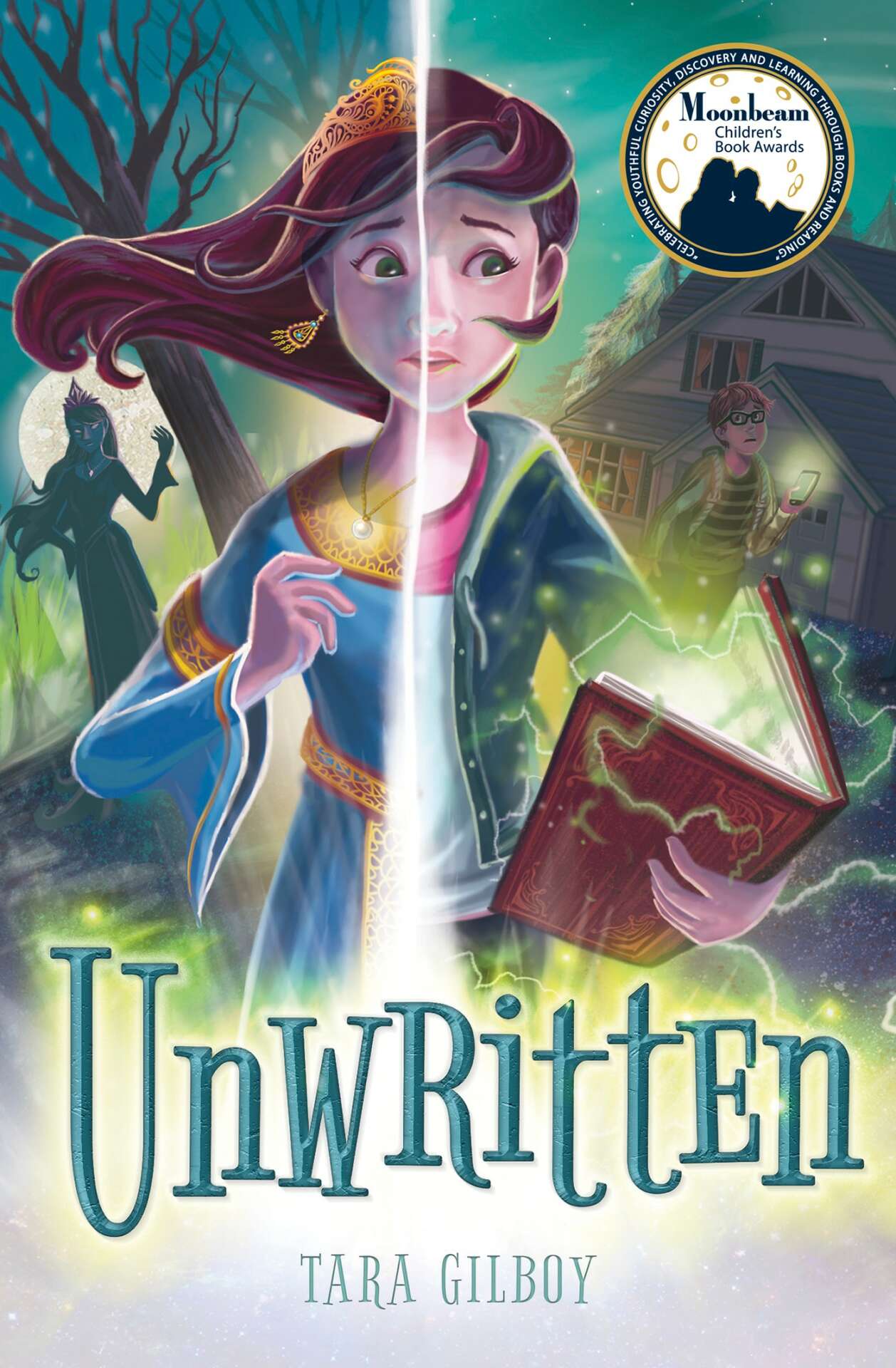
I am an author and creative writing teacher for San Diego College of Continuing Education. I’ve written two middle grade fantasy novels, Unwritten, and its sequel, Rewritten. Unwritten is about a girl named Gracie who finds out she is a character from a story, an unpublished fairy tale that she’s never read. Her parents took her out of the story and into the real world, as a baby, to save her life. When she disobeys her mother and seeks out her story’s author to find out the truth about who she is, things begin to go terribly wrong for her….
I think all people who love reading have, at some point, wondered, “what if I was a character in a storybook?” Unwritten is my exploration of that question. I was so lucky that I also got the opportunity to continue Gracie’s journey in Rewritten. Right now, I’m shifting gears and working on an adult novel that is based on a southern California cold case from the 1960s.
I’ve wanted to be an author for as long as I can remember, pretty much ever since I learned to read. As I got older, though, writing started to seem like an impossible dream. At that time, I didn’t know any writers and had never met an author in person, so actually publishing a book and becoming an author didn’t seem like a real possibility. I decided to be a high school English teacher, and when I went back to college in my twenties, that’s what I initially planned. I knew deep down, though, that I wanted to be telling my own stories, not writing academic papers about things others had written. I signed up for a creative writing class my second year at university and never looked back. After graduation, I went on to complete a Master of Fine Arts in Creative Writing at the University of British Columbia, where I completed my first novel.
Though I found an agent for that manuscript, it was ultimately never published. In the meantime, though, while I was receiving rejection after rejection from editors, I was working on another novel, which would become Unwritten. Unwritten came out in October 2018, about ten years after I signed up for that first creative writing class.


What’s a lesson you had to unlearn and what’s the backstory?
I spent a lot of time in school studying writing, and it was very helpful to me to understand the “rules” of creative writing, but in some ways, I’ve found that my journey as a writer after I finished graduate school has been about “unlearning” the rules I studied. It sounds silly, but I found myself focusing too much on plotting and outlining, so that my stories began to feel a bit cold. I wasn’t letting the stories and characters breathe: I was planning too much and not connecting with my characters, not allowing them to evolve and reveal themselves to me. I was also putting a lot of pressure on myself to “write well” and not having fun with writing the way I used to do when I was a kid. I think when authors are having fun writing, it comes through on the page. If an author is not having fun, the book probably isn’t going to be as engaging for the reader either. I am grateful that I studied all the “rules” of creative writing, and I definitely need them when I am revising my work, but in my early drafts, it works best for me to dispense with the rules altogether and let my characters evolve naturally. This has become so important to me that every summer I now teach a writing class on creativity: we don’t talk at all about “nuts and bolts” or “writing rules” but instead focus on living creative lives and having fun with writing, allowing it to be a creative outlet and not something that we struggle with or beat ourselves up about. I am a firm believer in giving ourselves permission to write absolutely terrible first (and second) drafts.
For you, what’s the most rewarding aspect of being a creative?
I love being a writer because it shapes the way I view the world. I am always moving through life looking for story ideas, jotting things down. Being an author forces me to pay attention to the world, to notice the small things, to think deeply about people and places. One of my favorite parts of novel-writing is the research process. I get to go down so many rabbit holes and discover new things I never would have stumbled upon had I not been researching a story. For example, I recently needed to write a scene where my characters were attending a rodeo. I had never been to a rodeo before, so I had to find one and go to it so that I could write a realistic scene set there. It’s something I never would have done otherwise, and I felt like I understood one of my characters a lot better after attending it.
When I was first starting out as a writer, publication was my main goal, probably because I felt like I needed it to feel validated as a writer. Now, after publishing two novels, I’ve realized that while publication is nice, it is not nearly as satisfying as the journey itself. Discovering stories, creating characters, getting those ideas down on paper, and seeing the story through to completion is the greatest reward, regardless of whether the story is published or not.
Contact Info:
- Website: http://taragilboy.com/
- Instagram: https://www.instagram.com/taragilboywriter/
- Facebook: https://www.facebook.com/taragilboy.Unwritten
- Twitter: https://twitter.com/taramgilboy
- Youtube: https://www.youtube.com/channel/UCpfzBxe3kkvXqoxnX3V6njw