

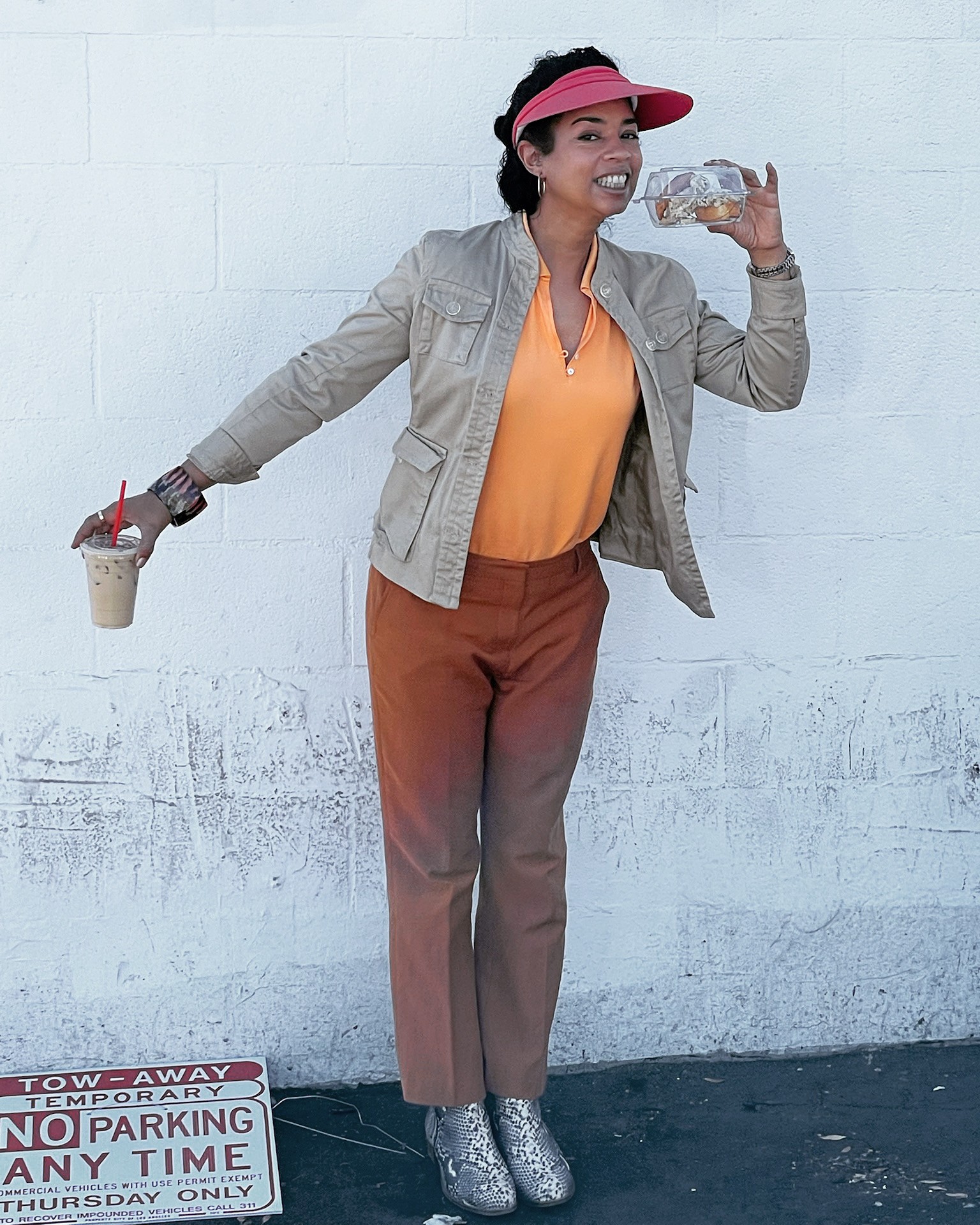

We were lucky to catch up with Tanya Young recently and have shared our conversation below.
Tanya, thanks for joining us, excited to have you contributing your stories and insights. So, let’s start with a hypothetical – what would you change about the educational system?
The American education system could be improved to prepare Native American students for a more fulfilling and historically accurate life on the continent we know as Turtle Island.
Much of the news and lore in the Americas treats Indigenous peoples like a footnote to the progress of colonization. The loss of Cherokee, Muscogee and Potawatomi lives and lands predates the Civil War. Besides some vestigial names of towns and states, the forced displacement of is rarely mentioned. Our project GODSEYE invite Native kids and families to enjoy stories of folks who look and live like them. We wash out storyworld with all the colors and bitter sweetness that is the Indigenous experience.
As an urban-dwelling Native American, I was in college when I found my way to a Native American scholar Thomas Biolsi in my school’s Anthropology Department. He acknowledged the blood quantum controversies regarding White-passing and Afro-Indigenous Native Americans. I was enchanted by the course he taught.He took me to my first Powwow and Native American restaurant. From there I collaborated with the American Indian Community House and Diana Gubiseh-Atala on stories and documentaries.
Many folks of Native American descent end up deracinated, denied and isolated from their tribal heritage. So it is very powerful to seek and find community.
I was in college volunteering on my first real election campaign when I met my creative partner on the GODSEYE project Billy Sparks. He was full of North Carolina Eastern Band Cherokee swagger, having organized FARM-AID with Willie Nelson and being an Army Veteran, opposition researcher and wicked singer-songwriter himself. We had lunch at Au Bon Pain in the lobby of our campaign office building on Times Square and he gave me an eagle feather in Cherokee solidarity. It is so crucial to connect with co-workers in high-stakes, competitive environments where backstabbing and undermining are real. He saved my *ss in profound ways then.
A real change in how mainstream folks think of Native Americans is needed. I was working in the New York City Hall with a former & future Mayor when weeks of organizing a press conference with tribal leaders went out the window the morning of. When I expressed my shock and horror at the snub of Indians who were already on the steps of Tammany Hall to my supervisor, he told me, “Grow up! You’re sick a fucking Barbie doll!” That experience taught me the high disregard for Native communities. When the next day’s tabloids made clear the Mayor had blown off tribal leaders to play tennis, I was appalled and quite frankly ashamed to be Native. That fail taught me to tuck my ancestry away because the job folks ain’t give a damn about it. Or my work. Or me.
Fast forward to 2023, I was stunned this week when a Potawatomi co-worker had zero idea what the Missing & Murdered Indigenous Women (MMIW)crisis is. Homegirl is taking the train at 4:00 and 5:00am and walking the drug & mayhem- ridden streets of Hollywood before sunrise. She, like many of us, lives at constant risk but had no idea about this ongoing calamity. We gotta build everyday awareness so Native women have extra discernment and maybe move differently in the streets.
In Southern California, LatinX City Council members were caught using anti-Indigenous slurs on hot mics in chambers. I definitely have experienced co-workers on production sets trying to start conflict by using anti-Indigenous slurs at me and in my presence. But as the Black American Civil Rights movement has taught us, we got to “keep our eyes on the prize.”
When I was producing an HBO series about Native American high school poets, we reconnected in Santa Fe where Billy had flourished under the regime of the late Governor Bill Richardson. Some of the teens I worked with there had no idea that Native tribes were mixed with Black as well as White blood. Billy told me of his Indigenous advocacy work with the University of Santa Fe and along the border with Mexico then.
Years later, here we are with our delicious, good-for-the-world animation project GODSEYE to give our audience a taste of the affirmation of identity and community we share.
As always, we appreciate you sharing your insights and we’ve got a few more questions for you, but before we get to all of that can you take a minute to introduce yourself and give our readers some of your back background and context?
First Nations Storytellers tills the community soil to help all Indigenous writers & actors create wellness.
We birthed our organization during COVID-19 lockdown when so many of else felt overwhelmed and in mortal danger. Like in Boccacchio’s Decameron, the representation of collective death hung over our heads for months like a fog of plague. My imagination and Indigenous heritage got to writing plays and creating art in our local community center for seniors and youth.
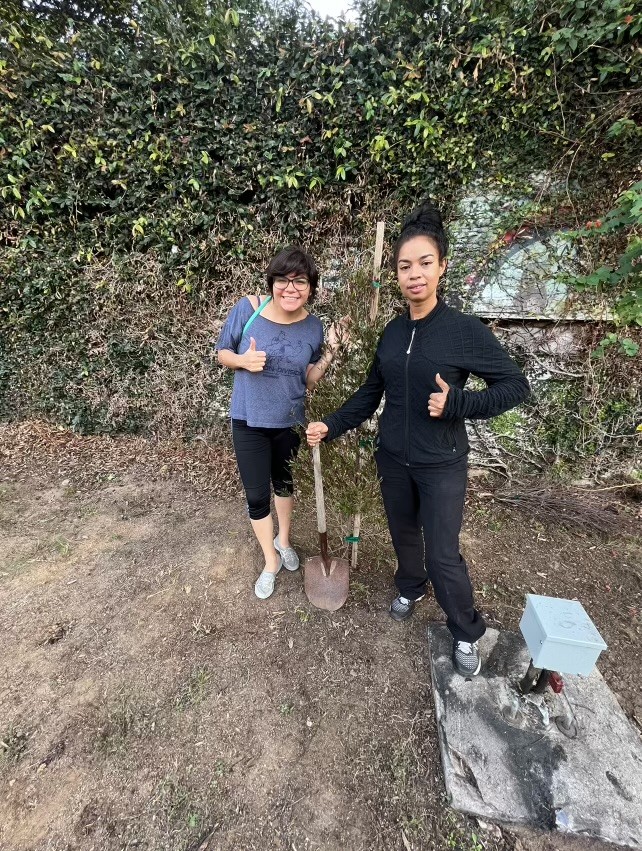
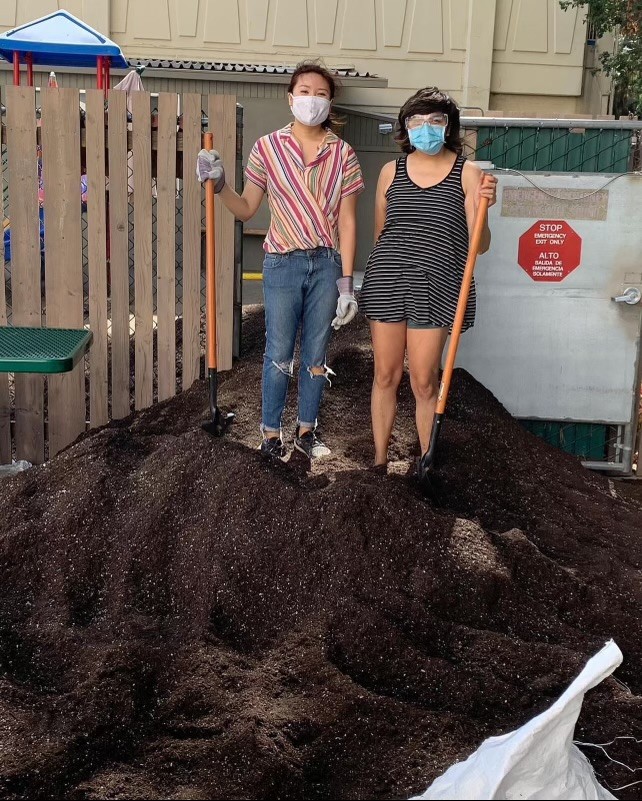
I reached out to the LA Garden Council for guidance about how the best improve and protect our community garden work up the block from the sketchy “Pretty Woman” motel. The Council set us Christina Gonzales. Together, we planted Yucca, cactus and tiger aloe. Months later, we had to continually extract human feces from our trees and hypodermic needles from our tallest cactus. Gardening in Hollywood can be daunting with all the vandalism, littering and street crime.
For our mental health, Vice President Christina Gonzales (Chumash/Tongva/Gabrielino) and I routinely ventured out to clean up, plant and reclaim this Hollywood greenspace for seniors and the community.
We have garnered the support and participation of Marine veterans and other seniors living in the historic Montecito Residence where Clark Gable and Ronald Reagan once lived. Through vigilance and elbow grease, we were able to work with LAPD’s Officer Mata to improve safety at the local community center by ridding the garden of drug and sex trade from which police recovered a bayonet.
First Nations Storytellers has evolved into a satellite project of the USC + LAC Edible Healing Garden. The Healing Garden (in partnership with and presented by USC’s Violence Intervention Program) have created one hospital-housed community garden to help increase food equity, provide nutrition and gardening education, and improve cultural diversity and inclusivity in the greater Los Angeles area for the medically underserved. This first garden intends to be a healing environment that also addresses nutrition insecurity in the pediatric population at LAC+USC by empowering kids and families with nutrition knowledge, food sovereignty, and access to nature.
First Nations Storytellers is collaborating with the Healing Garden to infuse kids’ story and gaming worlds with Indigenous history, tribal culture, STEM, literacy, gardening, mental health and nutrition education.
As Indigenous folks, we suffer the loss of our Native languages and encounter so much “lateral violence” or bullying, from within and outside our community. This is defined as non-physical, aggressive, hostile, and/or harmful behavior between schoolmates, neighbors, commuters and coworkers. Truly, our collaborative story and education work is designed as medicine to the struggle of the modern world.
Starting in December 2023, I will be participating in the first cohort of the Two-Spirit Storytelling as Medicine Project. My unique voice and perspective will contribute immensely to their mission of promoting awareness, understanding, and holistic wellness within the Two-Spirit community. This is a project of Wombat Mental Health Services in collaboration with the Los Angeles County Department of Mental Health Stakeholder Engagement Unit Underserved Cultural Communities (UsCC) Mental Health Services Act (MHSA).
I will be part of a group of twenty passionate storytellers working towards creating a transformative narrative around mental health and wellbeing. These narratives will be presented in various forms, including painting, oral storytelling, art therapy, folk stories, poetry, film, and a final showcase titled “Truth – The Two-Spirit Storytelling as Medicine Project” scheduled for May 2024.
First Nations Storytellers will produce our first animated episode of GODSEYE in Cherokee & English in January 2024 with the talent of our animator Nazareth Zerai. Nazareth is an upcoming concept artist and illustrator debuting her work in our new series GODSEYE. Using her experience in previous production work for private clients, she hopes to elevate GODSEYE so its potential may change the outlook of Indigenous people and their contributions to the world. She explains, “I’m Ethiopian not Native American, yet I still feel so closely to the message of ‘God’s Eye’ because I have witnessed my tribe, the Tigray, be oppressed by their leaders and receive hardly any attention or aid from the outside world. All suffering is valid and should be recognized just as much as the contributions of those suffering should be, too. I believe that this series can spark empathy within and motivate us all to look towards lifting each other up when we are in our deepest struggle. “
Also in 2024, we will publish episodes, books and games for kids ages 6 to 11 and their families. Our plan is to integrate learning about each tribe across the Americas known to us as Turtle Island.
Together, First Nations Storytellers and the Healing Garden will present at the 2024 Food As Medicine Global Conference. The conference will be held online May 18 – 19, 2024, to support more equitable access and create an eco-friendly event. Christina and I will present along with Nutritionist Katherine Chen. Our presentation will be live-streamed to attendees and recorded for viewing on the online community site after the conference.
Presentation Details:
Session Type: 45-Minute Presentation
Presentation Title: Cultivating Food Sovereignty and Health Justice: Uniting Urban Agriculture and Medicine
Date & Time: Saturday, May 18, 2024 1:15 – 2:00 PM PDT
Location: Virtual – Live Streaming
How’d you meet your business partner?
See my earlier discussion of meeting Billy and Christina.
We’d love to hear the story of how you built up your social media audience?
I really think that building your presence on social media begins with participating in other peoples social media. So many of my friends, write books and think they can just post that they have a book without having done the work of creating a relationship with not only potential readers, but also fellow authors, booksellers, Whatever the consumer for your brand is. So my advice really is to start early even if it’s strange or uncomfortable for you. And watch, like, share and comment well in advance of you dropping product or holding an event. The social media is like a rolling river. There’s a lot going on and you need to practice your stroke to find your place in it. It can be a jarring experience, but better that you get your feet & fins wet before you’re actually looking to do business in it. In social media, every viewer, comment or sale is a victory!
Image Credits
Tanya Young