

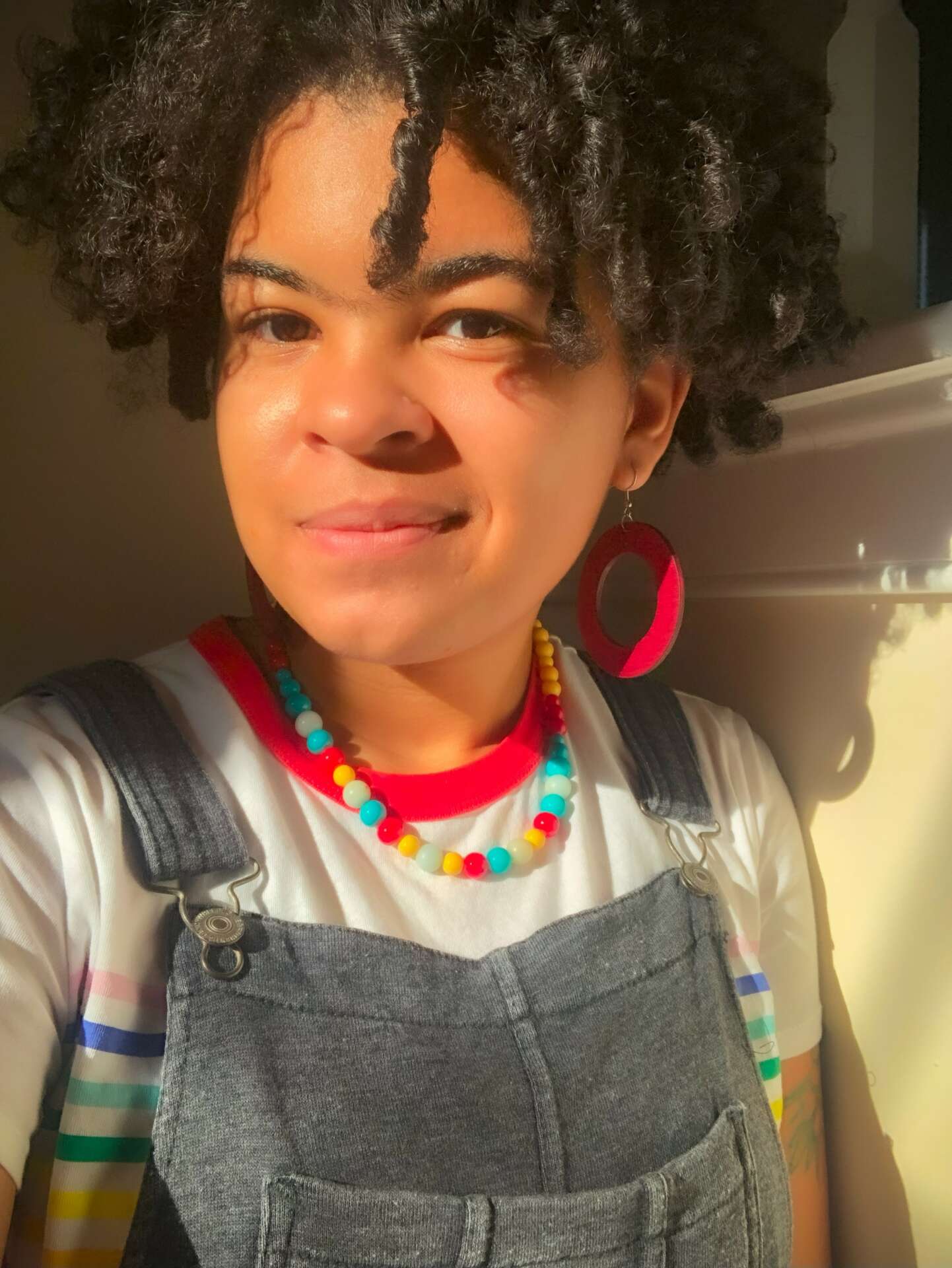

We caught up with the brilliant and insightful Taina Cunion a few weeks ago and have shared our conversation below.
Hi Taina, thanks for joining us today. We’d love to hear about the things you feel your parents did right and how those things have impacted your career and life.
Reading was highly encouraged when I was little, even outside of school requirements, because my parents put an emphasis on learning and exposing ourselves to new things. Even as my brother and I got older, my parents encouraged us to try whatever. They worked hard so that we would have the privilege to go for careers and lives of our own, doing the things that we wanted to do. They have been supportive throughout the whole way. In high school, as I struggled to find something I could do with art, they were there not only as cheerleaders, but also as coaches, therapists, agents, and more.
One summer I had gotten the idea to sell my art at a farmer’s market. My parents were there every Sunday sitting behind my table for the entirety of the sale day. They were my hype-men, chatting with people to get them interested in my work, and then pushing me to get out of my comfort zone to advocate for myself. My brother joined in when he could, passing out business cards to whoever would take them. It was an amazing experience not only since it led to my first children’s book collaboration, but also because it was just another of many examples of my family supporting me wholeheartedly.
I do not believe I would be where I am today if it hadn’t been for the amount of support I received from my parents. The arts can be a very unforgiving field at times, and so many parents will try to encourage their children to seek out careers that are far more profitable or stable. My parents instead seem to just as if what I am doing makes me happy. As long as I say yes, that is good enough for them.

Awesome – so before we get into the rest of our questions, can you briefly introduce yourself to our readers.
I realized in high school that comics were the way that I wanted to tell stories. There’s so much that can be done within the world of comics, and what has stood out to me the most has been the potential to develop stories featuring Black and Latino characters a younger me would have loved to have seen. I started by creating a fictional world based on Latin American folklore I discovered through research in books, online, and the ghost stories my grandmother will tell me. I realized though through the worldbuilding for my upcoming comic Ghosts of San Dolores that I really enjoy the process of doing research. It wasn’t until I discovered non-fiction comics such as “Guantanamo Voices”, “Incognegro”, and “Wake: The Story of Female-Led Slave Revolts”, that I began to imagine how comics could help to illustrate difficult topics into understandable context for readers. Comics can entertain but can also be used to inform. I carry this desire to inform people through my mental health zine-work for Your Path Counseling Center. Each zine has a topic that strives to offer understanding and resources to people going through anxiety, depression, loneliness, body image, self-worth, and more. I also carry this desire for representation & understanding through my non-comic work such as my editorial work and children’s books I have developed. My style can range from cartoony to more realistic depending on the tone needed. I work digitally with Procreate and Photoshop but also enjoy creating traditional pieces using watercolor, ink, pencils, and acrylic.

Looking back, are there any resources you wish you knew about earlier in your creative journey?
I wish I had realized sooner just how easy it can be to reach out to people for help. I sometimes struggle with making connections, whether they are peers or people with higher authority than me. The fear is always “Oh this will be annoying” or “I don’t want to bother them”. Having to reach out to people for freelance work has forced me to put that fear aside. There have been some misses: cold emails that go unanswered, dead conversations, etc, but there have also been opportunities opened for me because I put myself out there. At the Maryland Institute College of Art, one of the requirements in a Senior level class is to reach out to a professional in the field and ask them for advice. I managed to get in contact with a few people in the Comics Industry who were willing to have a real conversation about the business. Since those conversations, I feel more confident about what the next steps are for myself after graduation. If you are interested in a particular field or company, just shoot them an email introducing yourself. I am still very new to this, so I can drop the ball on reaching out at times, but it’s a good thing to remember. You might be surprised by what happens when you reach out to other creatives in your field.

For you, what’s the most rewarding aspect of being a creative?
The thing I am always looking for when I am working on a project is the “aha” moment when I really get into the zone and everything just feels as though it is going right. The closest similarity in feeling I can describe it as would probably be that moment when a person is working on a puzzle, putting the pieces together, and they look at the assembly in progress to see that “yes, the image is coming together”. There’s still more work to do but you can see how much you’ve done and where it’s going to end up. In short, the process of working is the most rewarding part for me personally. It can be a double-edged sword though. Continuing with the puzzle analogy, imagine if you were working on a puzzle, but you lost of few of the pieces, or there were so many blue pieces and you’re not sure if they are meant to be the sky or the ocean, and it’s been 2 days and the puzzle is nowhere close to being complete. The process can also be a struggle but that’s probably what makes it so satisfying when the “aha” moment happens.

Contact Info:
- Website: http://tainalaylacunion.com/
- Instagram: ty_cunion_art