

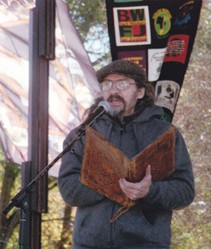

We caught up with the brilliant and insightful Stephen Wing a few weeks ago and have shared our conversation below.
Hi Stephen, thanks for joining us today. Can you talk to us about how you learned to do what you do?
The only way to learn how to write is by reading. I made it through college by picking courses that required reading — fiction, mostly, pleasure reading for me. When the deadline came for choosing a major, one look at my transcript revealed that I had long ago become an English major.
People who enjoy reading never tire of it. But some are not content with reading and are inspired by what they read to become writers — to contribute their own words to the ongoing river of literature. That was me. So rather than study English Literature to become a professor, I chose English Composition.
My teachers meant well, but after graduating I found I had to un-learn much of what they taught me. They seemed to assume that writers plan their works in advance, consciously building in levels of symbolism and patterns of resonance, in order to facilitate reverse-engineering by English majors assigned to analyze literature. Maybe some writers do this, but I never could.
It was a big surprise when I realized I had become a poet. I’d studied the poets assigned in class, learned to analyze their symbolism, rhyme schemes, historical context and poetic technique, but all that seemed to get in the way of what they were trying to convey. Poetry seemed to exist inside a glass case under floodlights, in a world of its own, rather than as a living part of the world I knew. The poems I wrote for Creative Writing class were like word games I was playing just for fun.
Until one day a poem popped into my head that no one has assigned me to write. I had graduated from college and headed off on a hitchhiking trip, and the poem I wrote was about hitchhiking. It was a terrible poem, but it was about something that meant a lot to me, and I realized that I could write poetry about the things I really cared about. From then on my teachers were the poets I read, who seemed to have vastly different ways of constructing a poem. Some were aesthetic marvels, some were deeply meaningful, and my favorites somehow achieved both — Walt Whitman, William Butler Yeats, Ezra Pound, Galway Kinnell, Gary Snyder, Robert Bly, to name a few.
I went through various phases of imitation as I discovered more and more poets I admired. Going through old poetry recently, I was astounded to find I had written so much in rhyme. Discovering the poets of Latin America was a major breakthrough, helping me disengage from intellect and deepen my imagination. But I grew disillusioned with their surreal leaps of association — just another poetic technique, after all. I wasn’t content just to express myself, I wanted to communicate: to use words that everyone knows, in ways that drew attention not to my technique but to what I was trying to say.
So many matters of life and death are crying out for attention while people are drowning in distractions! I can’t in good conscience write purely to entertain people. But what I write must be enjoyable to read, or I won’t have an audience. This is the challenge. Again, the poets who have mastered it are my teachers.
Awesome – so before we get into the rest of our questions, can you briefly introduce yourself to our readers.
I was a missionary kid, so my siblings and I grew up understanding our purpose in life is some form of service to the world. Each of us has taken that in a vastly different direction. I discovered early on that it wasn’t hard to get my writing published if I was not overly concerned with getting paid. That gave me many opportunities to hone my craft. I volunteered my language skills for a number of political and environmental causes, writing articles, editing activist publications, even getting into page design back in the Age of Print. Meanwhile I was writing poem after poem, experimenting and exploring, including poetry on those same issues.
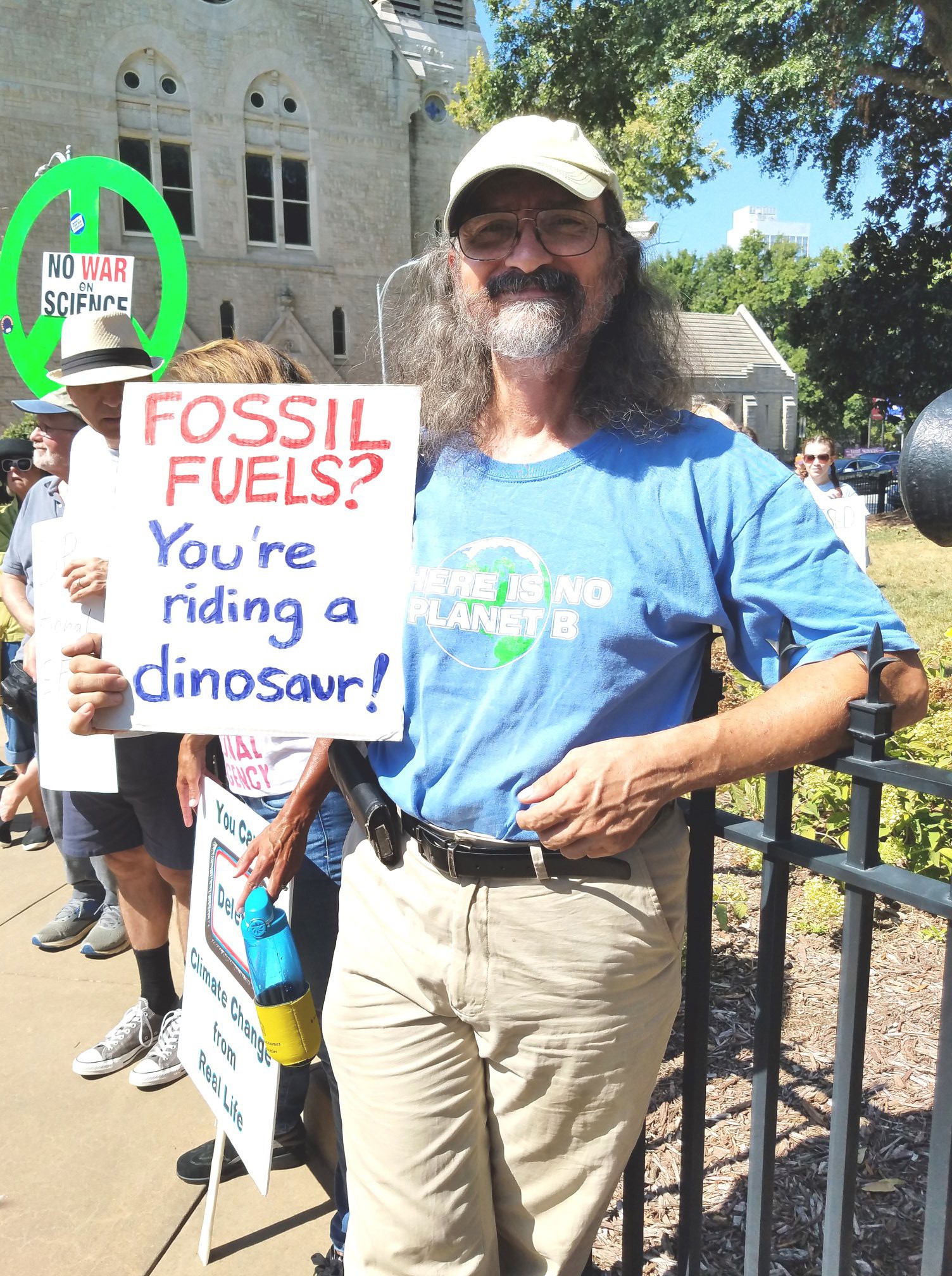
Some writers are celebrities, but by far the majority work behind the scenes; just about every cultural artifact in our society starts out as some writer’s work, from song lyrics to websites to commercials to movies and TV. The global emergency we now face is largely the result of writers catering to our society’s love for distraction, entertaining us like worldly, sophisticated children instead of exposing us to the grown-up choices required to avoid catastrophe. My poetry, fiction, and nonfiction writings have focused less on reaching a popular audience than on trying to wake people up from the trance of nonstop entertainment.
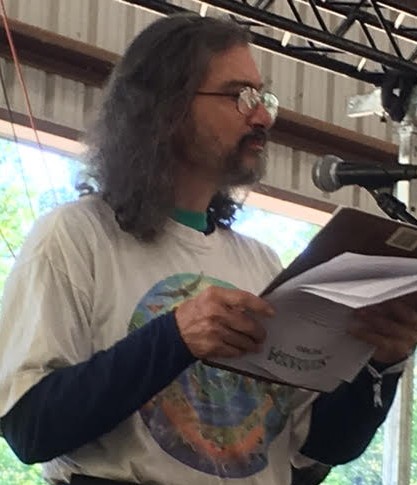
Luckily, for 20 years I was able to work in the publishing industry writing promotional copy, mostly about books, at a company that specialized in transformative literature — spiritual, holistic, progressive. So I was one of those writers laboring behind the scenes, but rather than serving the distraction industry, my paid work focused on snapping people out of the trance. Now that I’ve retired, I’m able to put my skills to use more directly in the service of transformation. I’ve written two novels of a projected trilogy and published three books of poetry, all intended to re-connect people with their origins in the natural world through the power of imagination, and I have more in the works.
Let’s talk about resilience next – do you have a story you can share with us?
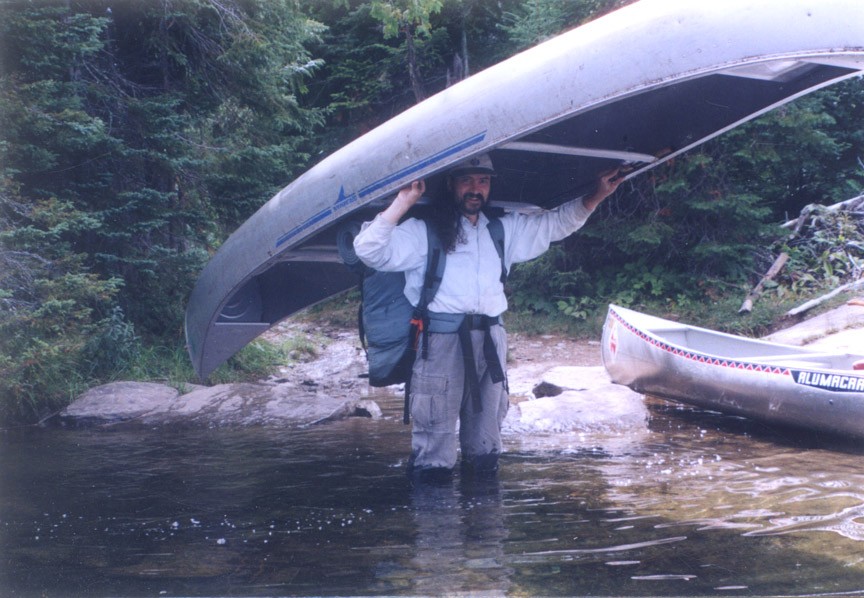
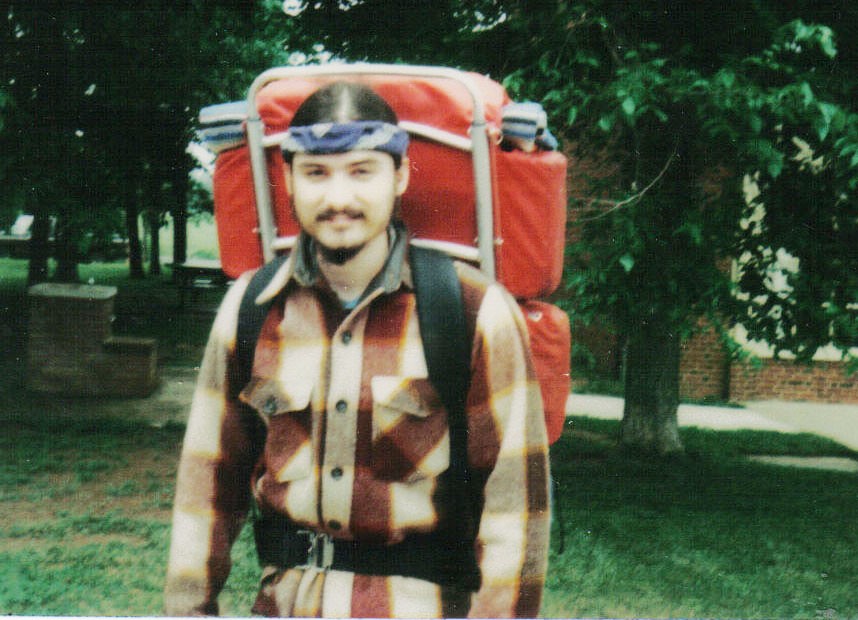
During my college years I discovered hitchhiking. This is a mode of travel which requires no investment other than resilience, runs on no fuel except faith, and offers rewards far beyond simple transport from Point A to Point B. The universe is full of life lessons, each embodied in a living body that has journeyed through life and gathered a unique body of experience to share. Those who are willing to teach are self-selecting; the others obliviously drive on by. Progress toward my destination was out of my hands, so I learned to open myself to whatever the universe had to teach me that day. I found great joy in relaxing into this state of mind — and when someone stopped to offer a ride, it got even better.
Each trip had a deadline, however, since I was on a school break. When I graduated, I gave myself the gift of an entire autumn to travel west and see the country. This turned into a 12-year odyssey full of planned destinations and accidental discoveries, visiting old friends and making new friendships that lasted just a few miles or halfway across the continent. I worked at odd jobs when I could, but stayed on the move to keep my overhead low. The adventure ended abruptly when I met a lady in Atlanta; the second time I stopped to visit, I never left. Years later I collected all my hitchhiking poems in a book called “Crossing the Expressway,” which I consider my spiritual testament. The ability to combine intention with spontaneity that I learned from hitchhiking still serves me in good stead.
Are there any books, videos, essays or other resources that have significantly impacted your management and entrepreneurial thinking and philosophy?
The work of Gary Snyder has had a huge impact on me, especially his prose writings, though he is most renowned as a poet. He brings together an expertise in world mythology, particularly Native American, his experience with Zen meditation, a vast knowledge of the natural world, the insights of deep ecology, and the keen, attentive perspective of a poet. His essays range over all of that territory, marking out patterns, tracing underground connections, weaving vast divergences into a holistic web of diversity. The collections “Earth House Hold,” “The Real Work,” and “Practices of the Wild” are mainstays of my library.
Joanna Macy is another deep ecologist who draws from that perspective a holistic understanding of how people can break free of the paralysis of grief and depression and fear and rage that prevents so many from stepping up in defense of the Earth and our collective future. Piling up information about the converging crises that besiege us only reinforces the barriers to action we have cemented around ourselves. Her books “Active Hope” and “Coming Back to Life” offer a detailed prescription for awakening from the cultural trance. Each of us, she says, base our lives on one of three stories. “Business as Usual” denies that any problems exist which science, technology, and market economics cannot solve; “The Great Unraveling” insists that we are barreling toward disaster and can do nothing to stop it; “The Great Turning” recognizes that millions of people around the world are working for change in myriad ways. and if enough people join them we can collectively change direction and build the world we envision for our children. Her menu of group exercises give us a practical handle on doing the work of change one individual at a time.

Contact Info:
- Website: https://www.stephenwing.com/
- Facebook: https://www.facebook.com/stephen.wing.165
- Linkedin: https://www.linkedin.com/in/stephenwing/
- Other: https://www.stephenwing.com/workshops/earth-poetry-manifesto/ https://www.stephenwing.com/blog/