

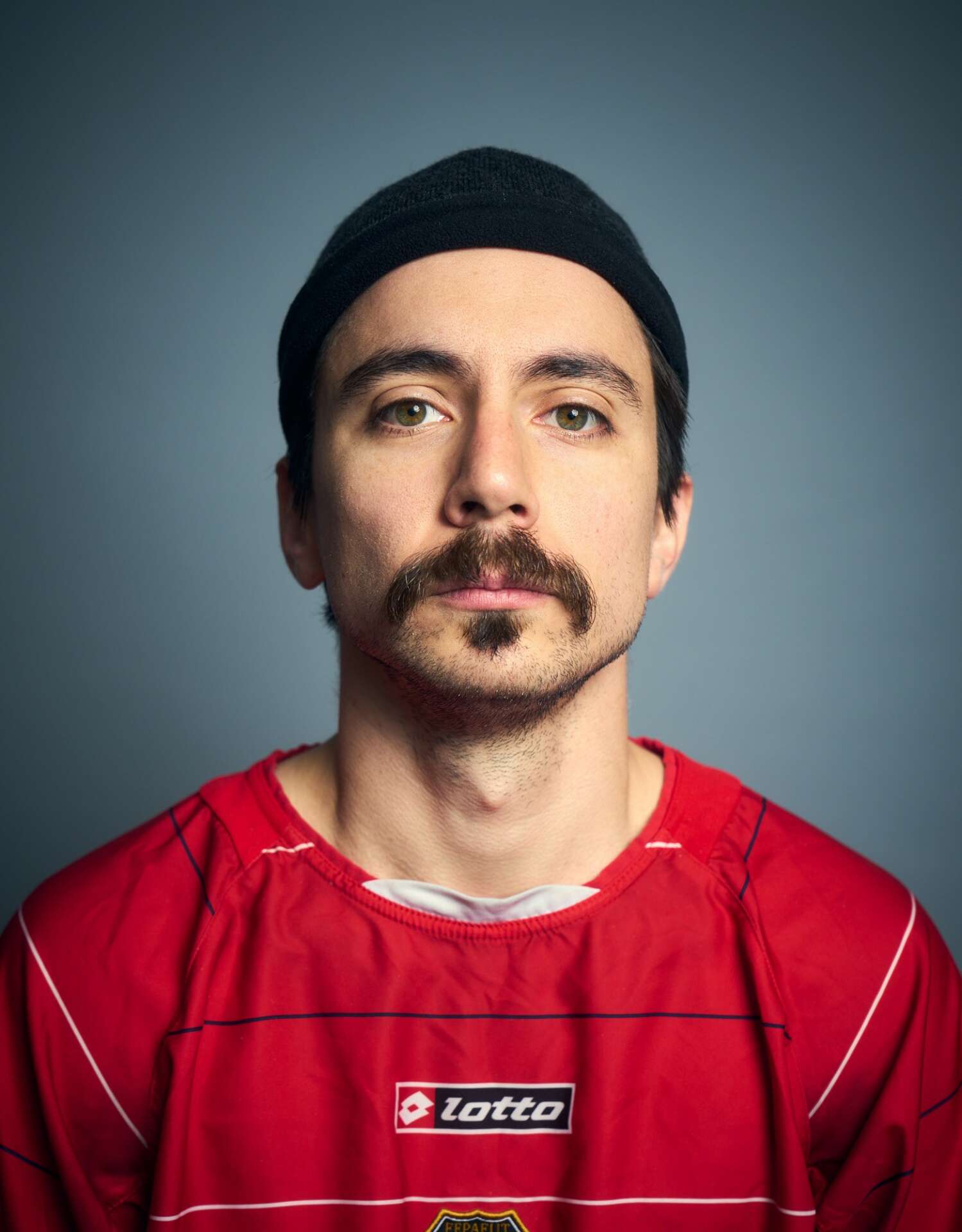

We were lucky to catch up with Stephen Cervantes recently and have shared our conversation below.
Stephen, appreciate you joining us today. Can you talk to us about how you learned to do what you do?
When I graduated from film school in 2013, I realized how little I actually knew (through no fault of my professors). In the context of going to school, I was simply trying to get by and check boxes by simply completing my assignments, not realizing that I could have fun with them and make them completely my own, even if they weren’t impressive or fit a particular paradigm. There was also a social element to it. I wasn’t crewing on film sets because I didn’t enjoy many of the roles – or the sort-of grunt work involved in a lot of below-the-line tasks – but that’s precisely how I would have gotten a head start on learning the craft. I needed the humility and willingness to make a fool of myself, but I didn’t have that yet.
After years of working at post-production houses as an assistant editor, I eventually fell into filming and editing recipe videos for social media. Honestly, this was one of the last fields of media I’d hoped to be working in. But when the pandemic hit, I got laid off and (fortunately) was able to spend time with my newborn daughter and a camera I had bought with a stimulus check to film her birth. The months that ensued – with camera in hand and a subject (my daughter) that I found extremely interesting – turned out to be like a second round of film school, only this time, there was nothing expected of me. No assignments to complete, no boxes to check… just a lot of free time, confinement, and a storytelling sensibility that had been reset by the simplicity of recipe video-making techniques. What resulted was an abundance of new work – mostly under a minute and costing no money – that taught me that consistency in one’s practice might be a little more important (at least for me) than trying to make the perfect piece of work that could take years and tons of money to ever finish.


Stephen, before we move on to more of these sorts of questions, can you take some time to bring our readers up to speed on you and what you do?
I make a living as a video editor, but consider myself an independent filmmaker – specifically an artist interested in visual narrative. On the technical side of things, I am mainly interested in story development and working with actors. I don’t consider myself a director of photography and am not overly-concerned with how things look, since I like to use the little energy I have as a mostly-solo filmmaker towards telling the best story possible through narration and performance. When I have the privilege of working with a client that allows me to essentially do “whatever I want” – that is, they don’t have strong brand guidelines and are asking me to take the lead, creatively – it’s usually because they trust my narrative instincts and my desire to search for the the most interesting means of telling their specific story. I usually aim to take what I’d call a “kaleidoscopic” approach to a brand and their material, where I take the wholistic image of what I perceive the brand to be, smash it into a million pieces, and then try and put it back together in a way where I – and hopefully the viewer – can imagine the subject in a new light.
What’s a lesson you had to unlearn and what’s the backstory?
I have always had a hard time coming up with concepts for a film, or ideating in general. When I began a somewhat consistent practice of meditation, I realized that everything I typically regarded as childish or not worthy of pursuing were precisely the materials that were available for my use and enjoyment. Once I started exploring these previously-disregarded sources of inspiration, I felt like I was off to the races, creatively. Simply put, the thing worth pursuing – at least in my experience – was right under my nose the whole time.


What’s the most rewarding aspect of being a creative in your experience?
The extreme privilege of being able to have some semblance of an artistic lifestyle – which oftentimes feels deceptively quite pitiful – for me, feels like I can brush my hand through some imaginary matter where all of my metaphysical concerns reside. When I show up to do my work, my anxieties, my deepest joys, my longings, and my existential questions all make themselves available for me to confront them and, by no means, do away with them, but actually learn to live alongside them. This is what makes me feel like I’m actively living and not just letting life pass me by. And on my best days, when work is actually made, I can watch it – and rewatch it – and come away with more questions to continue making work about, and thus, continue to live a good life.
Contact Info:
- Website: www.stevoc.com
- Instagram: https://www.instagram.com/misterstevohi/
Image Credits
Corey Nickols