

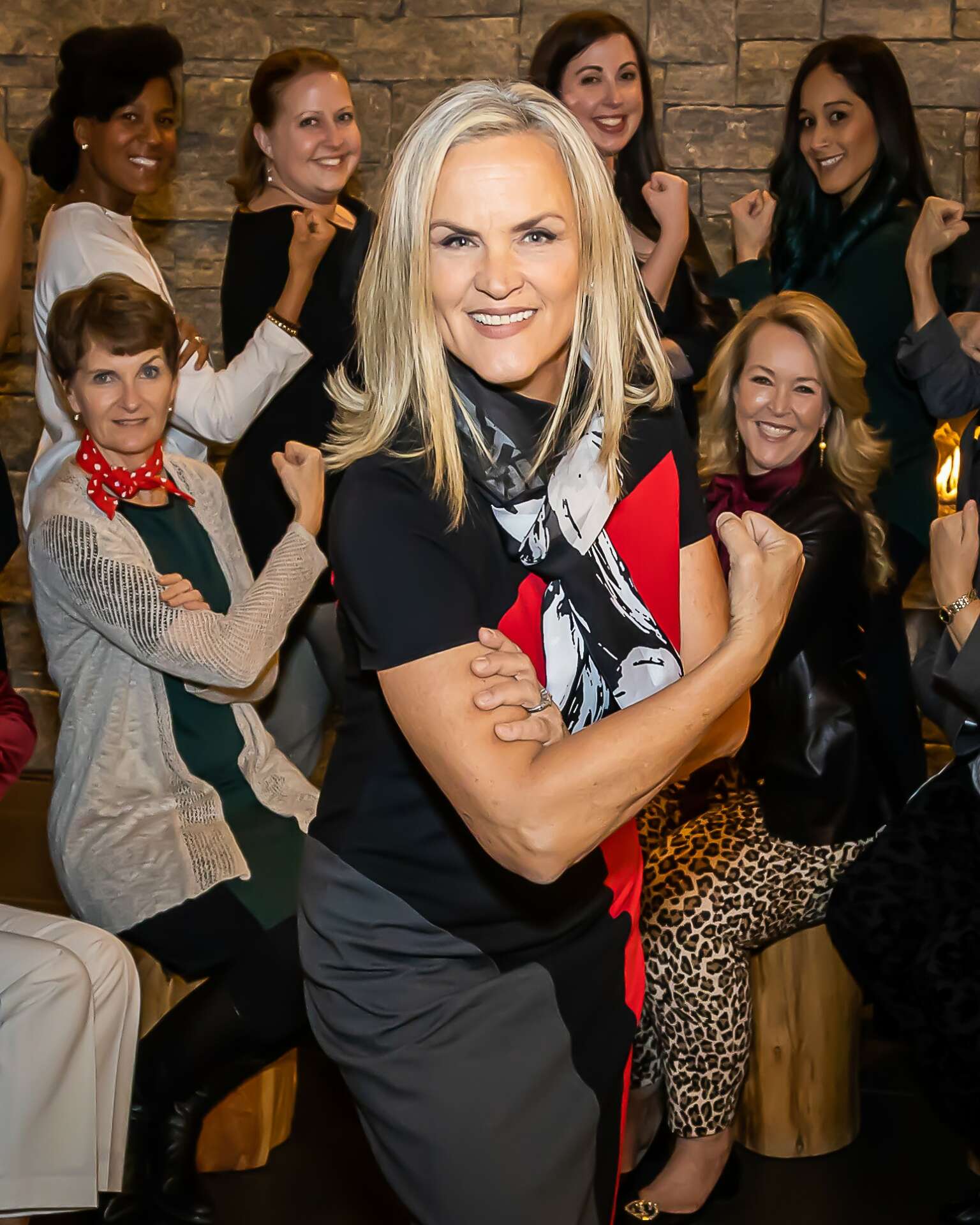

We recently connected with Stephanie Brown and have shared our conversation below.
Stephanie, appreciate you joining us today. Alright, so you had your idea and then what happened? Can you walk us through the story of how you went from just an idea to executing on the idea
When I came up with the idea behind Rosie’s List (free eMarketplace featuring verified veteran and military family-owned businesses), the only thing I knew about e-commerce was my expertise as a shopper. I had done my market research on e-commerce sites and even found a veteran developer who believed in my vision to help build it. I was ready to rock and my sense of urgency was off the charts! Fortunately, a wise person encouraged me to stop and ask myself some questions. That simple process shifted my thinking and ultimately expanded Rosie’s List into what The Rosie Network is today – a national award-winning non-profit empowering tens of thousands of military-affiliated entrepreneurs and small business owners around the world.
Let’s face it, Ideation is the all-fun phase of the start-up process when the possibilities are as limitless as your imagination. At some point, however, you have to jump off that cliff and start building your aircraft. Many entrepreneurs get stuck in the ideation phase and are unwilling to take that leap mostly because of fear of failure. Let’s face it, failure sucks and our brains are hardwired to avoid anything that could cause us harm. It is perfectly natural. Others get bogged down in the details, they want all the data and everything has to be perfect before they take that first step. This is often referred to as process paralysis. Personally, I tend to charge full steam ahead, consequences be damned! I see a problem or opportunity and am drawn to developing a solution like a moth is drawn to a flame.
So how do you overcome that fear and manage the process? It is not easy, but having been an entrepreneur several times in my life and mentoring and speaking to thousands of budding business owners over the past decade, I’ve learned what works for me.
First, I love a good idea board (or wall). At the top of my board, I list my Big Hairy Audacious Goal (or BHAG). Then, I write my ideas – from humble to crazy – on sticky notes and put them on the wall under my BHAG. Once there is nothing else to add, I begin to organize them into groups from realistic to wishful thinking with the thought that while no idea is bad, some are more manageable and realistic in the beginning than others, but nothing gets tossed. I write down all the manageable ideas and lay out a ‘pro’ and ‘con’ for each. I call this my reality check. Trust me, this works whether you are just starting a business or expanding and existing one.
At this point, just looking at everything can feel overwhelming and that offers yet another challenge to overcome. How am I going to eat that elephant? As the old saying goes, ‘One bite at a time.’ For me, that means building a road map to my BHAG. This simply means being prepared, including planning for any detours that may come your way, such as a pandemic, and doing your research What does my market look like? Who is on the road with me and how will I get to my destination faster, cheaper and better? Who do I need on this journey with me? What are the potential pitfalls? You get the idea.
Finally, I set goals for myself based on my roadmap. These are easily achievable goals, not Guinness Book of World Records type of goals. They serve two purposes, they help me stay motivated by achieving even small successes (small bites of that big elephant), and keep me on track.
So whether you fall on the side of caution or courage, hopefully, this process helps keep you moving forward and building momentum!

Stephanie, before we move on to more of these sorts of questions, can you take some time to bring our readers up to speed on you and what you do?
I grew up in the military. My father served over 20 years in the Air Force, including two tours to Vietnam. Looking back on my childhood, I am eternally grateful for what that lifestyle afforded me. I lived overseas twice and experienced things, people and places that most Americans do not. While I hated leaving my friends every couple of years and seemingly always being the ‘new kid’ in school, I learned to become incredibly comfortable in new and unfamiliar surroundings, and am not afraid to walk up to a complete stranger and introduce myself.
When my father retired in California, he opened up a small music store where I often worked after school and on the weekends. The most important lessons about business, I learned in that store from my Dad. Of course, like many teenagers who think they know it all, I didn’t realize those lessons until much later in life. After 9/11, our country welcomed and honored the service and sacrifice our veterans make, but for Vietnam veterans, the experience was very different. I witnessed that first-hand with my father and the many Vietnam veterans who would come into his humble little music store. Music for my father was as much a therapeutic process as it was a creative outlet. He found healing in sharing that love of music with his fellow Vietnam veterans. I remember asking him why he would give away music lessons or sell instruments to veterans at or below cost, he asked me, ‘Stephanie, can we pay the bills?’ When I answered, ‘Yes, but…’ he said, ‘That’s all that matters.’ and went on to say something like: ‘When you build a business that’s all about money, you build nothing.’
I didn’t understand it then, but I do now. Building something that creates an impact on a community that you grew up, married and raised kids in? That is the true definition of success and it has been an honor to serve the community I love.

Can you tell us about a time you’ve had to pivot?
The COVID-19 pandemic hit many small businesses hard and The Rosie Network was no exception. Up to that point, we had been expanding our Service2CEO entrepreneurial training program through chapters around the country. The shut-down put an end to that real quick. Even the loss of our annual fundraising event put the organization at risk since many non-profits rely on in=person events to raise awareness and donors.
In addition, we received requests for advice from thousands of our network of small business owners. Managing that alone was far too big a job for our small but mighty team.
It was time to pivot. First, we partnered with Grow with Google, a sponsor, and took Service2CEO and our national alumni training program online using their tools and support. Boom! The floodgate opened. Suddenly, we were overwhelmed with applicants wanting to enroll. Within six months, we had quadrupled the number of veterans and military spouses we were serving. Given the impact the pandemic was having on small businesses, our program became that much more valuable and fortunately, our donor base grew.
To help our businesses pivot to the new environment, we worked with the SBA and some of our great advisors to develop a series of webinars on ways to identify and implement successful changes in the way our members were doing business.
Most of the members of our team are from the military community, so pivoting to whatever life throws at you is par for the course. I’m incredibly proud of all we took what could have been a deal killer for our organization and turned it into a win!

What do you think helped you build your reputation within your market?
In the early days of The Rosie Network, I didn’t give much thought to building my own personal reputation. My focus was on building something that would actually make a difference in the lives of those who serve, I certainly didn’t think that my reputation would play a role in the success of the business. Come to find out, our reputations are the most valuable thing we have as business owners and leaders.
But it is hard to build a reputation if you don’t put yourself out there.
I remember an advisor telling me years ago that I should expect to be doing a lot of public speaking. My first reaction was, ‘Are you crazy? Why? Who wants to hear from me?’ Sure enough, he was right. While I don’t seek out speaking opportunities, I receive lots of requests – from keynote opportunities, panels and print to TV interviews, podcasts and webinars. I’ve been invited to speak to Fortune 100 companies, at large conferences and by the U.S. Government. Again, I would ask myself, Why? What do I know?
The answer to that question, I believe, is authenticity. I don’t have all the answers or any secret sauce, but what I do have is my passion to serve and I’m willing to share that in one of the most vulnerable ways possible – in front of strangers. Why? Because what I do is so much bigger than me and if I’ve built a reputation of being a fearless advocate for our military families, I wear that reputation with pride.
A good reputation is easy to destroy and hard to repair, so my advice is to put others above yourself and be willing to be vulnerable. Listen more than you speak and always be grateful.

Contact Info:
- Website: www.therosienetwork.org
- Instagram: https://www.instagram.com/therosienetwork/
- Facebook: https://www.facebook.com/TheRosieNetwork
- Linkedin: https://www.linkedin.com/company/the-rosie-network/
- Youtube: https://www.youtube.com/@TheRosieNetwork/videos
- Other: https://www.linkedin.com/in/thestephaniebrown/ You can also find me at www.milspousechamber.org