
Alright – so today we’ve got the honor of introducing you to Shoko Yasuda. We think you’ll enjoy our conversation, we’ve shared it below.
Shoko, thanks for joining us, excited to have you contributing your stories and insights. We’d love to have you retell us the story behind how you came up with the idea for your business, I think our audience would really enjoy hearing the backstory.
Before starting my business, I faced a dilemma. I wanted to stay at home with my son, but also yearned to work and engage with society. Growing up with a mother who had a full-time job, I often missed her presence, which led me to idealize stay-at-home moms. I envisioned always being available for my child. However, after having my first son, I realized that I desired and needed more than caring for him and managing the household.
Given the high cost of childcare in the US and the fact that I don’t have a degree here, it didn’t seem practical to find a “regular” job that would cover childcare expenses. The only viable solution I could think of was to create something for myself.
In my previous job, I gained experience working with small brands and had a sense of what it takes to run a business. Drawing on that knowledge and my interest in sustainable living, I came up with the idea for “Wrap for Life Bags” – reusable gift bags designed for multiple uses.
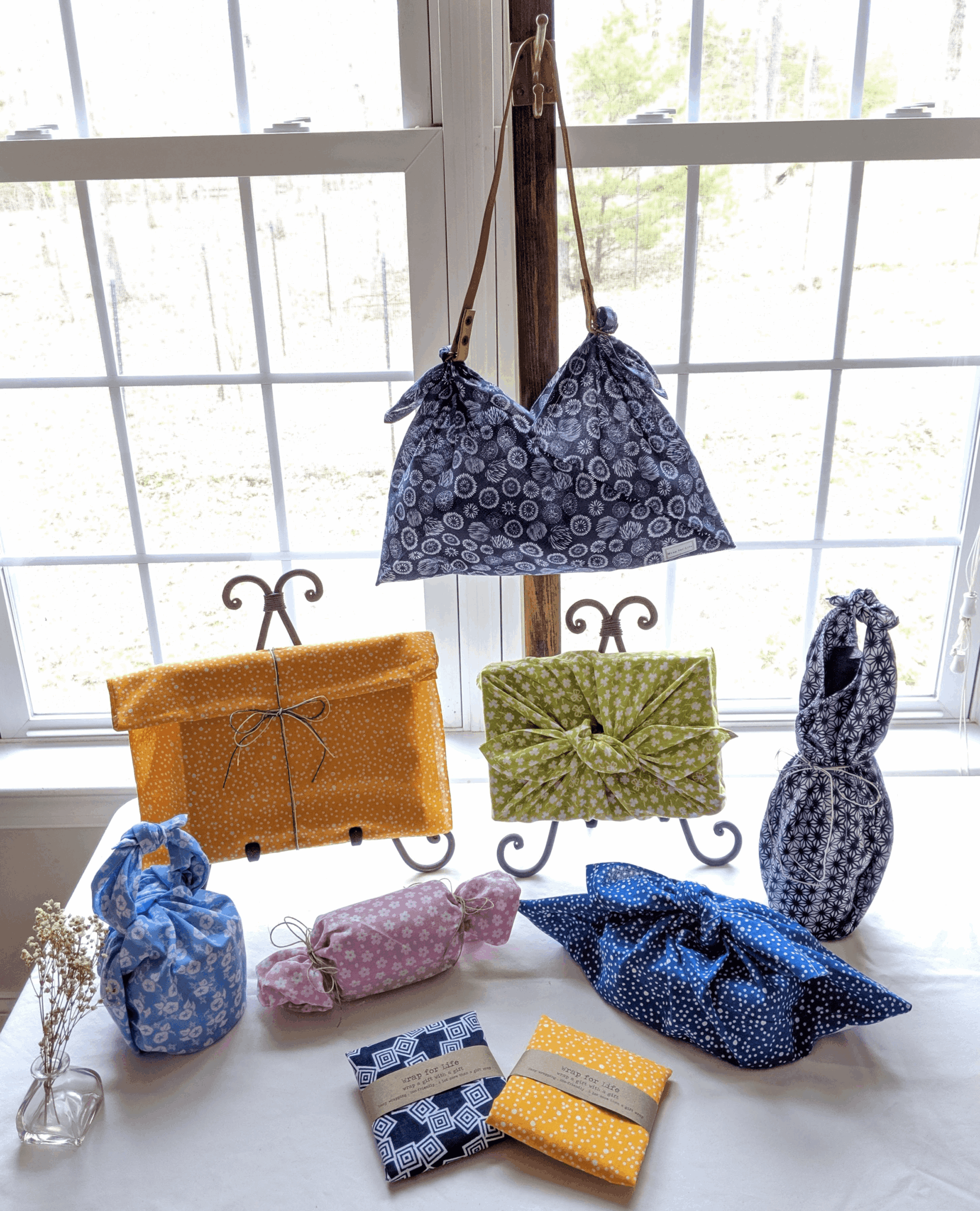
The inspiration came when I saw a huge pile of wasted wrapping paper at my son’s birthday party and began to think about how gift-giving could be made more eco-friendly. While furoshiki, traditional Japanese fabric wrapping, offers one solution, it requires some skills. I wanted to create a reusable fabric wrap that was simple and easy for anyone to use. This led me to the idea of adapting the traditional Japanese Azuma bag for gift wrapping.
Though Azuma bags have been used in Japan for a long time to carry items, they are not used for gift wrapping. However, I saw their potential for this purpose. The bag’s shape, with its two “flaps,” makes it easy to wrap a gift and create a simple, yet elegant, bow. It’s much easier than using furoshiki and provides a straightforward, sustainable alternative to traditional gift wrapping.
I created a prototype using a sewing machine I borrowed from my mother-in-law, experimenting with different ways to wrap a gift. Since the material was fabric, it was easy to manipulate, allowing to adapt it to fit various shapes and sizes. Additionally, I had the idea to turn the bag into a purse by adding a leather strap, inspired by furoshiki bags.
After using these bags myself, I realized they were incredibly versatile, not just for gift wrapping but also as a bento (lunch) bag, produce bag, travel organizer, and more. I was pleased with the results that I began giving them away to family and friends. The positive feedback I received encouraged me to take the next step, so I decided to start selling them on Etsy, at local farmers markets and events.
Shoko, love having you share your insights with us. Before we ask you more questions, maybe you can take a moment to introduce yourself to our readers who might have missed our earlier conversations?
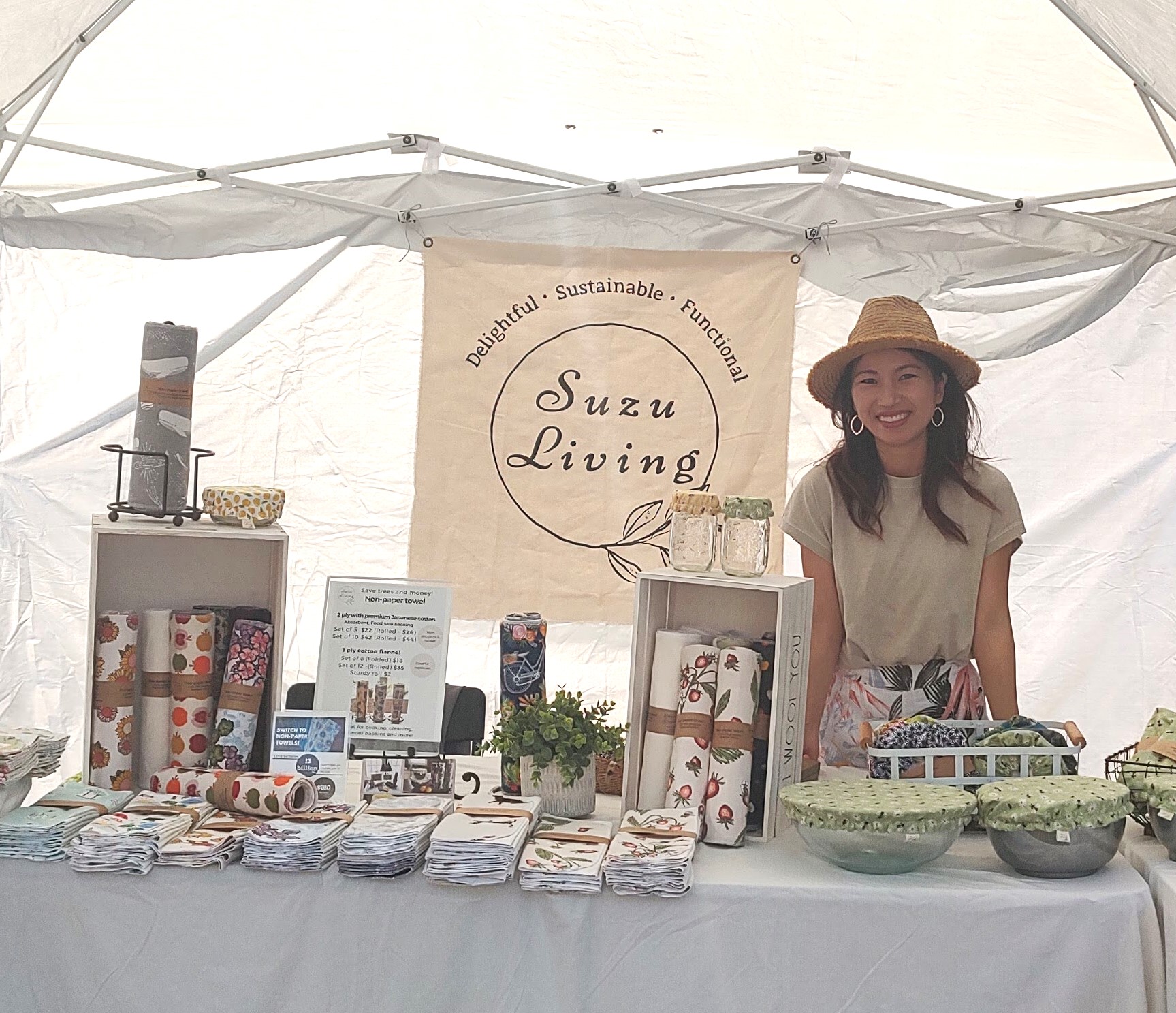
I’m the owner of Suzu Living, a mother of two boys, and a lover of good food, travel, and design. I was born and raised in Japan, and after college and my first job there, I moved to the U.S. in my early 20s. I’ve worked in a few roles here, including at a travel agency and a consulting company that helped small U.S. brands expand into Japan. After the premature birth of my first child, I decided to quit my job and become a full-time mom. Later, I started my own business.
Suzu Living a small business dedicated to providing sustainable living products. My mission is to create zero-waste items that blend Japanese and American cultures.
The idea for Suzu Living began after I saw a pile of wrapping paper and tissue paper waste at my son’s second birthday party. It made me wonder how we could make gift-giving more eco-friendly. Growing up in Japan, where traditional furoshiki (fabric wrapping) is commonly used, inspired me to create a sustainable solution: the Wrap for Life Bag.
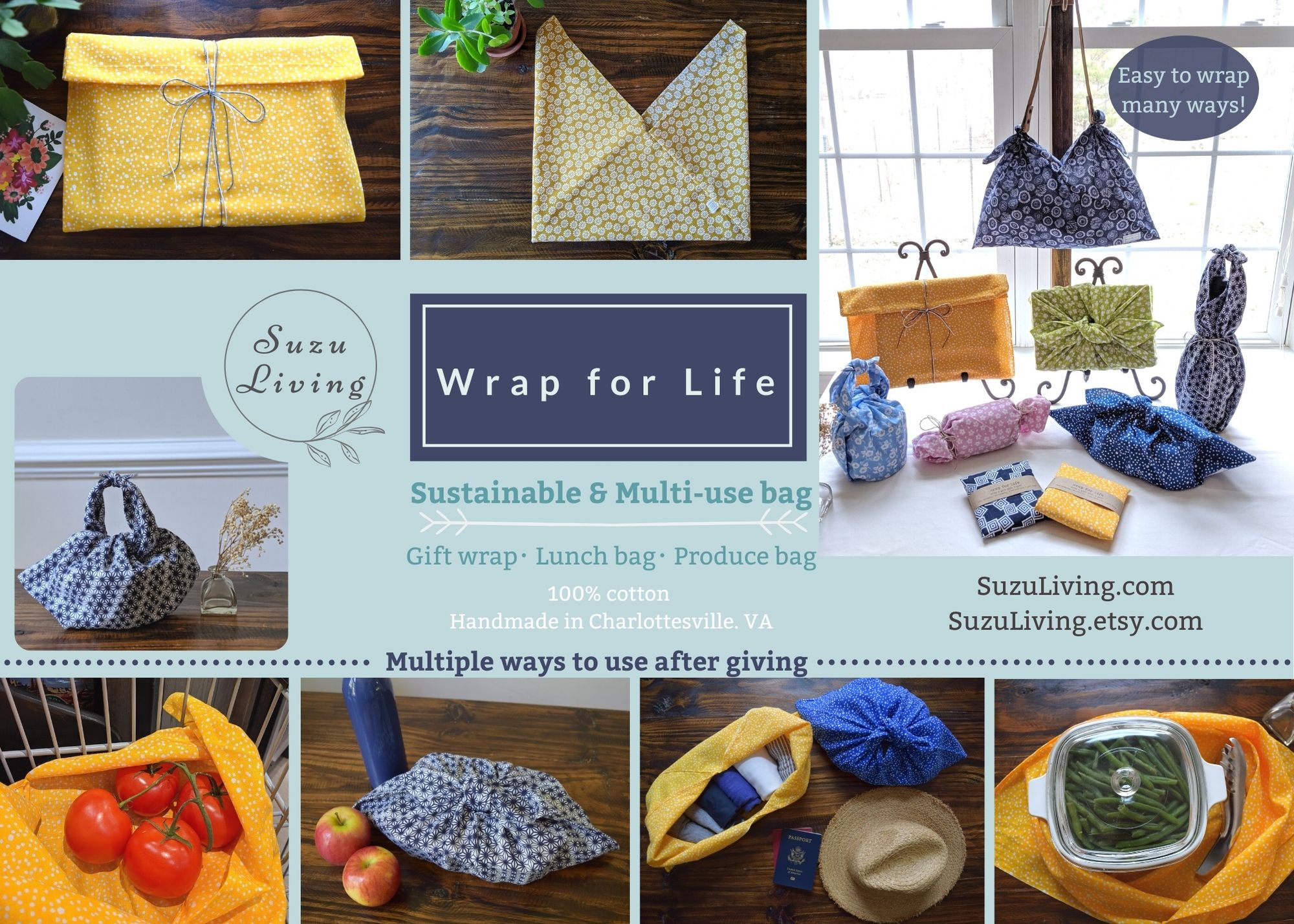
The Wrap for Life Bag is a simple, reusable fabric bag designed for gift wrapping. Not only does it make gift-giving easier and more sustainable, but it can also be reused by the recipient in a variety of ways.
A Little More About the Wrap for Life Bag:
Simple & Easy to Wrap
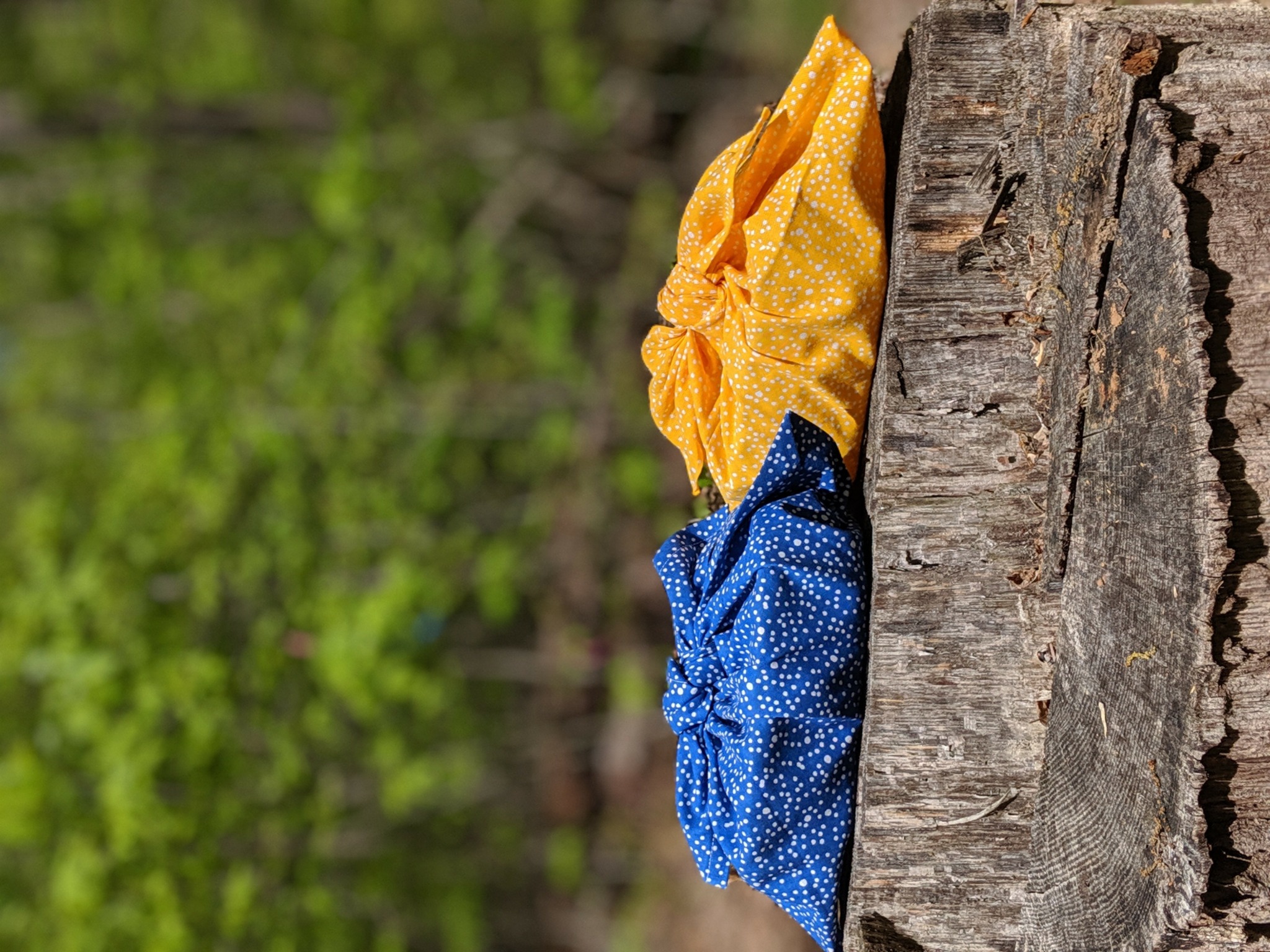
Unlike traditional furoshiki wrapping, which can be tricky without experience, the Wrap for Life Bag makes gift wrapping incredibly simple and stress-free. Just place your gift inside, tie the two flaps, and voilà – you have a beautiful, eco-friendly gift wrap. There’s no need for scissors, tape, or any complicated steps, making it a quick and easy solution for anyone.
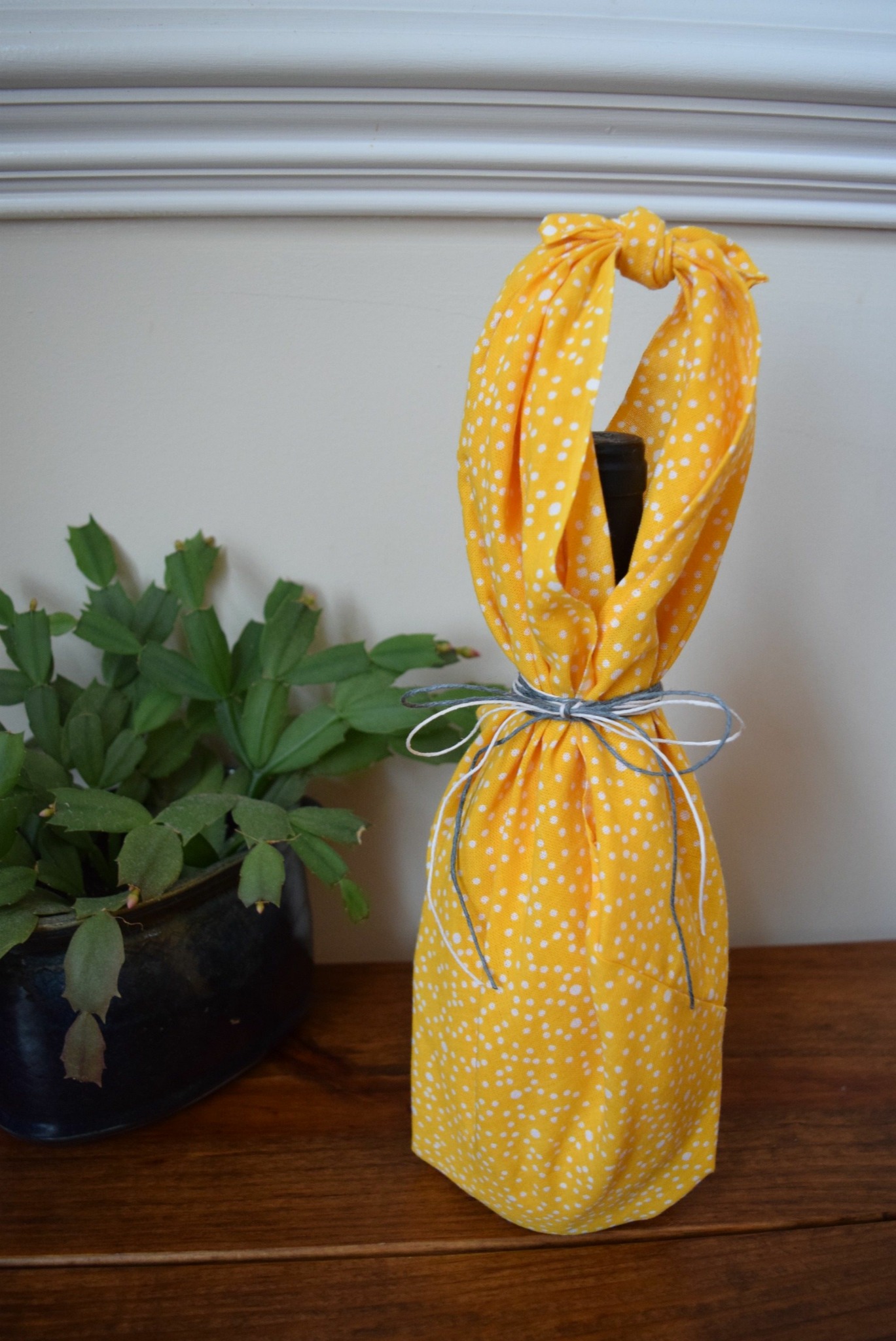
The Wrap for Life Bag is also versatile in how it can be used to wrap different shapes and sizes of gifts. Whether you’re wrapping a box, an oddly shaped item, or even a bottle of wine, the fabric bag adapts easily to fit whatever you need to wrap.
Multi-Purpose
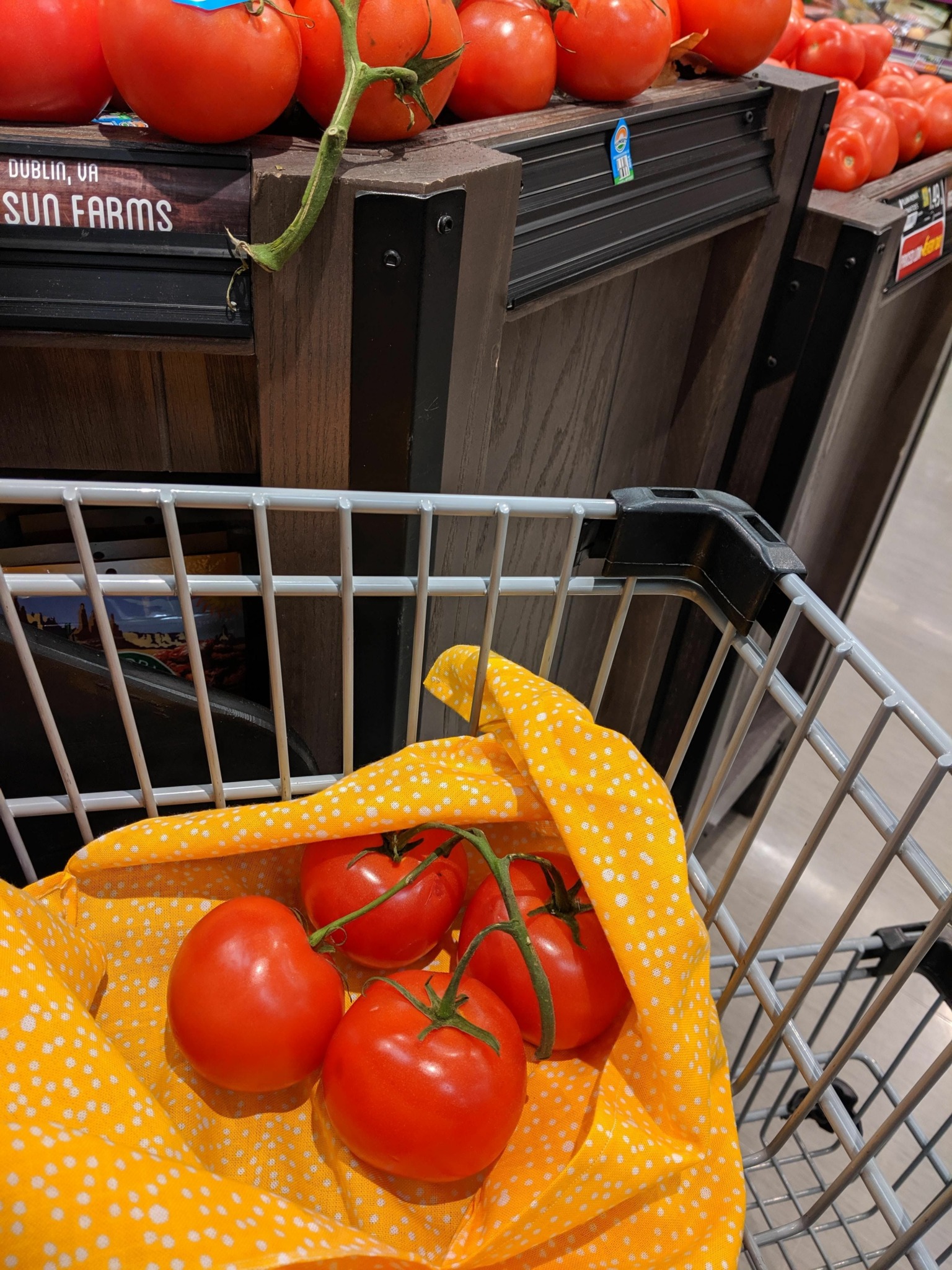
Once the bag has served its purpose as a gift wrap, the recipient can reuse it in many different ways. It can become a lunch bag, produce bag, travel organizer, or more. Personally, I often bring a couple of Wrap for Life bags to the grocery store to carry fresh produce, reducing my reliance on plastic bags. It’s a small, simple way to make a positive impact on the environment in everyday life.
The Wrap for Life Bag isn’t just for wrapping—it’s a sustainable, practical, and reusable solution for multiple needs.
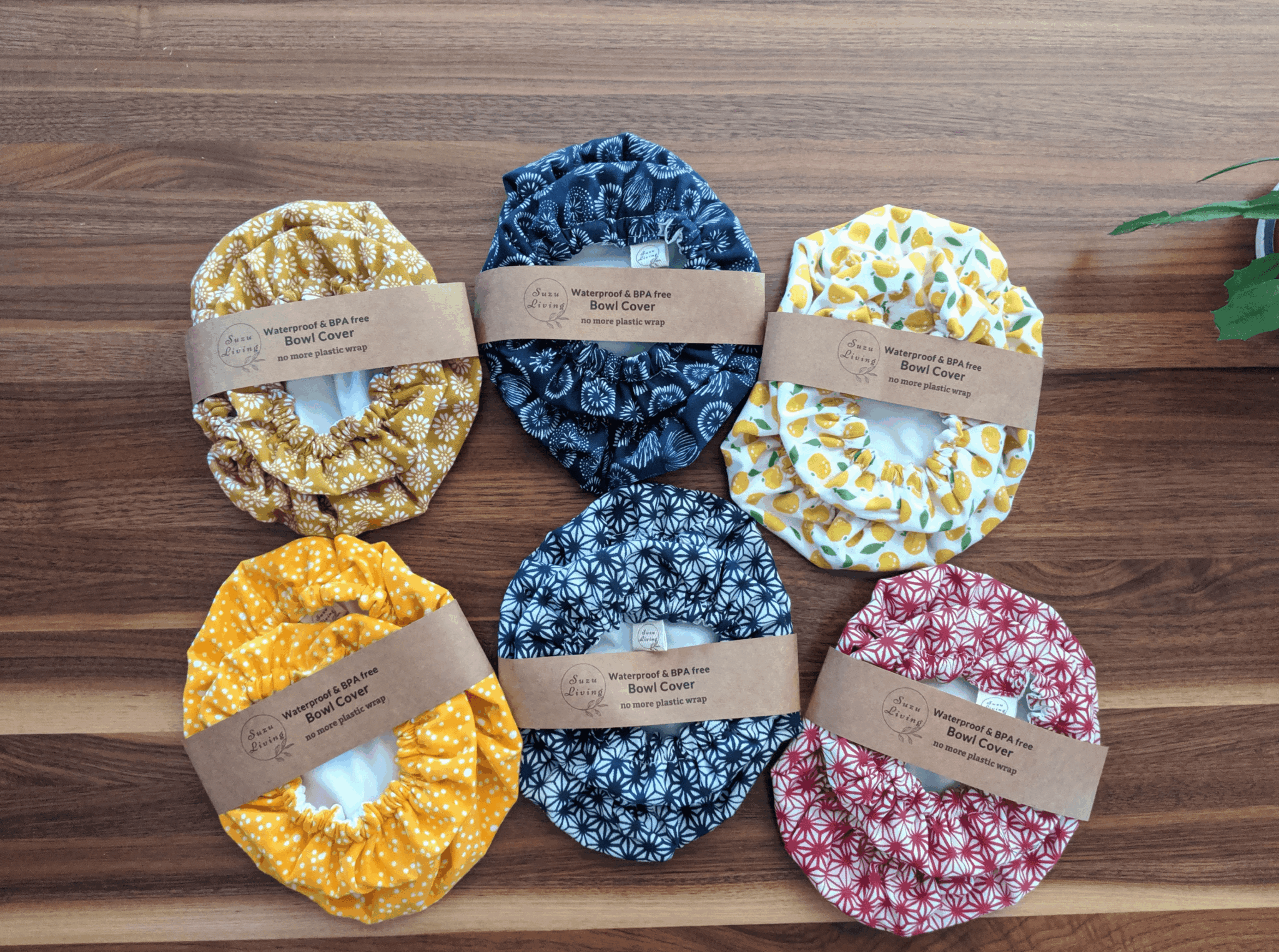
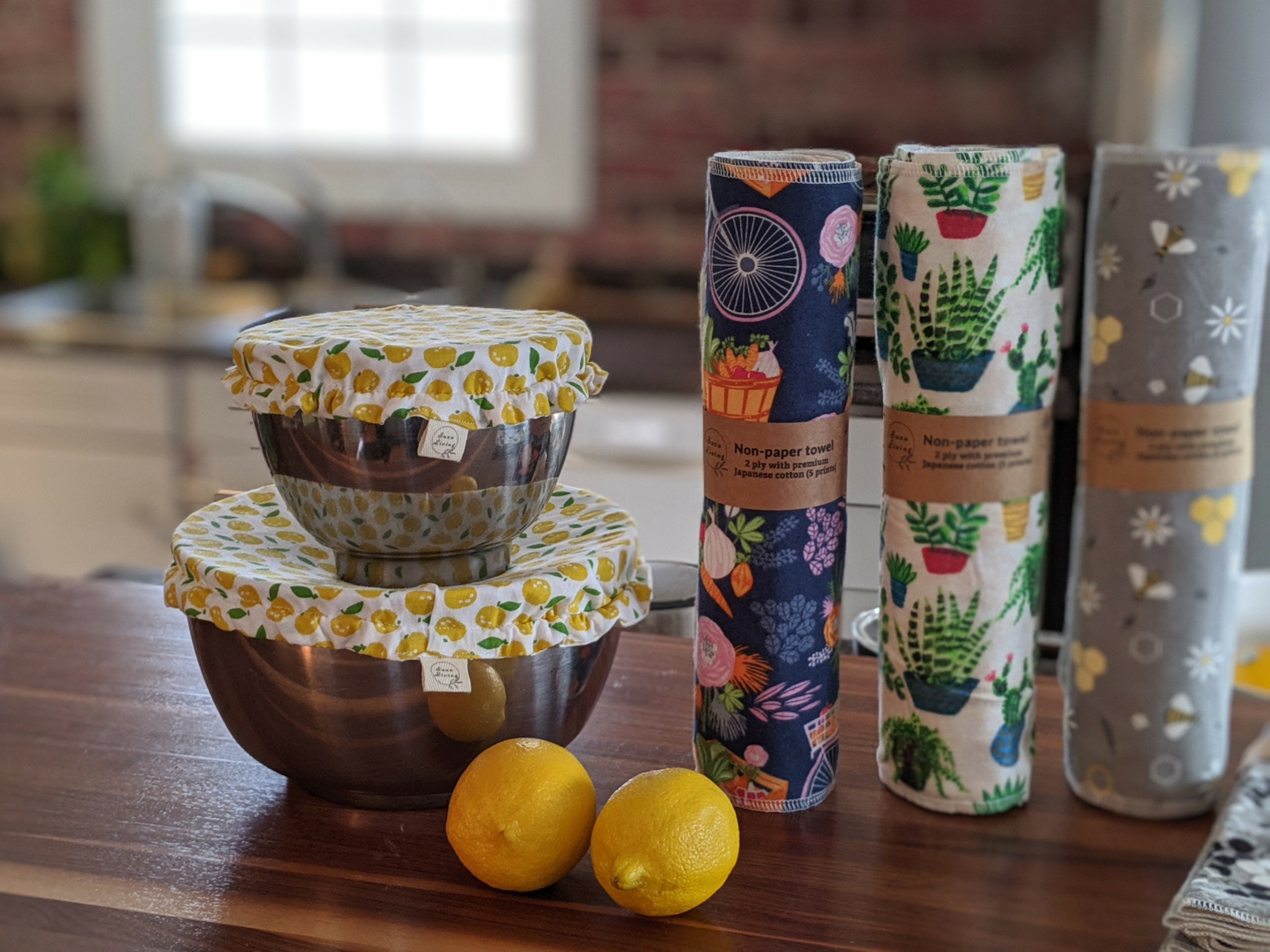
Learning more about the zero-waste lifestyle inspired me to expand beyond just the Wrap for Life Bag and create even more reusable, long-lasting products. Today, Suzu Living offers a range of eco-friendly items, including reusable bowl covers, non-paper towels, compostable pop-up sponges, upcycled Kimono items and more.
Suzu Living’s mission is to spread the idea of a less wasteful life style by producing and introducing enjoyable & delightful items that are reusable and easy to care for. Our goal is to bring joy to our customers while reducing the effort needed to reduce waste.
Can you talk to us about manufacturing? How’d you figure it all out? We’d love to hear the story.
Most of the items that Suzu Living offers are carefully made by hand.
About the fabric:
I source most of the fabrics from my hometown, Osaka, Japan. I was raised in a rural side of the Osaka prefecture in 80’s and 90’s. At that time, there were still many local small factories making Yukata (summer kimono) and Tenugui (Japanese tea towels) in my town. I grow up seeing those freshly dyed fabrics hanging to be dried along a side of a local, narrow river.
Sadly, those small factories disappeared with the rise of mass production and industrialization. However, I wanted to keep the essence of what I remember and found a company that still offers Japanese tea towels with traditional Japanese patterns. I use those tea towels to make Wrap for Life bags and bowl covers.
About manufacturing:
I had some basic knowledge of sewing, which I learned both at school in Japan and at home. Rather than outsourcing production to a factory, I decided to make the products myself. I didn’t have the funds to invest in large-scale production, so this was a more affordable and safe way to start my own brand.
While the items I create are simple to make, there’s always something new to learn. Sewing machines often encounter issues, and I’ve had to troubleshoot and fix them, relying on YouTube tutorials to figure things out.
Working with Refugee Communities:
Charlottesville, where I currently live, is home to a large refugee community. As an immigrant myself, I understand the challenges of adapting to a new country, so I’ve always wanted to support them.
I reached out to an organization called International Neighbors (https://internationalneighbors.org/), which helps refugees settle into the area, and find a way to work with refugee communities I’ve had the opportunity to teach a few Afghan women how to sew my items, and we work together on projects.
There are challenges for me to work with those community members especially with language barriers and culture differences. However, this gives me more purpose to establish my brand and joy to get to know people from a different culture. The woman I work currently with often shares Afghan food with me, and her three children teach me about Afghan customs and traditions.
Since my brand is still very small, the impact is small, but I’m hoping to expand my business more and be able to help those people in need by providing jobs and community that don’t require much English skills or a formal American education.
What do you think helped you build your reputation within your market?
I believe that my experience working at a Japanese company before moving to the U.S., along with my previous role working with American brand companies, has made a significant difference in shaping my approach and perspective.
I believe that Japanese people possess excellent qualities such as attention to detail, diligence, and hospitality. I try to combine those positive working ethics with friendly American-way of communication.
I believe the positive reviews my store receives on Etsy are likely a result of the detail-oriented and punctual work ethic I learned at a Japanese company. Additionally, the many returning customers at events and markets are a reflection of the meaningful (sustainable) and high-quality items I offer, as well as the joy of face-to-face interactions between makers and buyers.
In a world dominated by mass production, consumerism, and AI-driven technologies, I feel there is a growing appreciation for locally made products and genuine human connections. I love being able to foster this through my business, offering something personal and sustainable that brings people back to the value of quality, craftsmanship, and meaningful interactions.
Contact Info:
- Website: https://suzuliving.com
- Instagram: https://www.instagram.com/suzuliving
- Facebook: https://www.facebook.com/SuzuLiving/
- Youtube: https://www.youtube.com/@suzuliving7687