

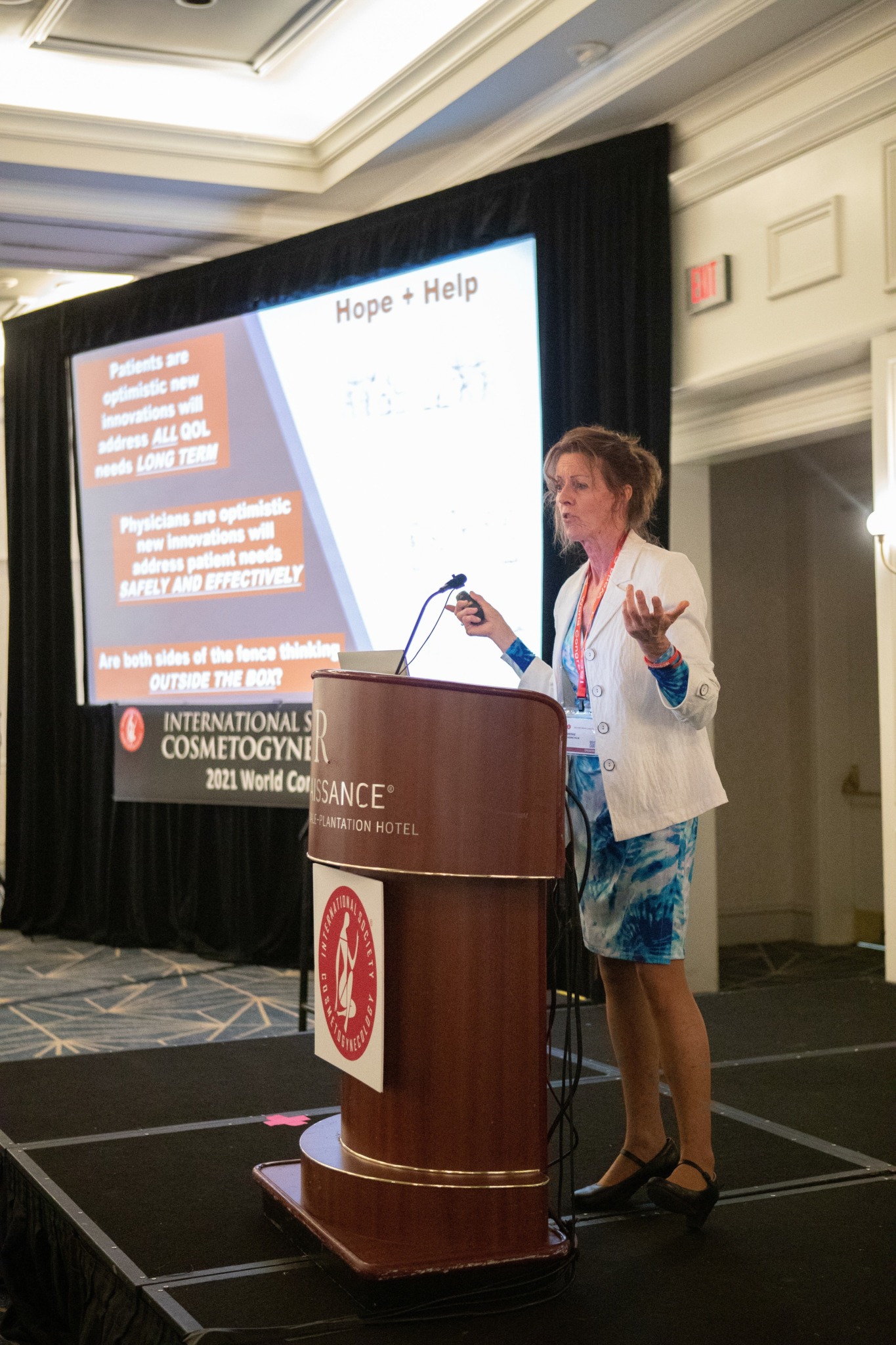

We’re excited to introduce you to the always interesting and insightful Sherrie Palm. We hope you’ll enjoy our conversation with Sherrie below.
Hi Sherrie, thanks for joining us today. How’s you first get into your field – what was your first job in this field?
Having lived a fair share of employment experiences, I did not set out to land in the stigmatized women’s below-the-waist health zone. Patient advocacy nonprofit sector includes aspects of engagement I had no interest in or bravado to dance with prior to this journey. I had no compulsion to author books or articles, engage in public speaking, build websites or social media. The only health needs I explored were my own or those of family members.
I have always worked a 60-hour week. There is no conscious thought regarding going to the bathroom; we simply head in, close the door, release what we need to, wipe, pull pants up, wash hands, and get back to work. On this particular day in December 2007, I recognized what felt like a lump in my nether region (had no clue initially exactly where the lump was). I recognized I had been feeling that lump for about three months, so I grabbed a hand-held mirror and took a look to visualize what was going on down below. In general, most women do not inspect their feminine zone. Females are taught from young on that this area is private and personal, and that we shouldn’t even inspect our own intimate health spaces.
I was surprised to see a walnut sized lump bulging out of my vagina. It looked like a tumor but since I had never read anything about vaginal tumors, I didn’t freak out. I emailed a good friend who was my primary care doctor, and she advised I come in for a pelvic exam after work.
Upon examination, she informed me I had pelvic organ prolapse (POP), that she would fit me with a pessary, and that if I wasn’t happy with the pessary, she would refer me to a good urogynecologist for surgical exploration. I had no clue what she was talking about; I had never heard any of those terms before. The pessary she fit me with (a silicone medical device inserted vaginally to support the organs in a woman’s pelvic cavity) worked well. It removed vaginal pressure I hadn’t recognized I was experiencing prior to device insertion. I went home and hit Dr Google to figure out what was happening to my body. In 2007, the data for POP prevalence was 3.3 million women in the US. I could not locate any global data at that time (current research indicates 50% prevalence, globally). The more details I discovered, the deeper I dug.
Five types of POP. Four grades of severity. POP has been medically documented for nearly 4,000 years dating back to the Kahun Gynaecological Papyrus circa 1835 BC. Childbirth and menopause are the leading causes, but multiple co-existing health conditions, lifestyles, and behaviors compound risk for all women. Impacts to females teens through end-of-life. The shocking factors go on and on. I knew within two weeks that addressing this massive shortfall in women’s health awareness was my destiny.
I was so angry; I had been very proactive with my health. Diagnosed with MS at the age of thirty, spinal tap indicated wheelchair bound within a brief time frame, I took a deep dive to find answers. It took three years to figure out how to “read my body” but once I did, I moved on comfortably, pretty confident I would never be in a wheelchair. I dug deep into diverse women’s health conditions as they came into my line of vision over time related to my health or a family member or friend’s health. Fast forward to my mid-fifties when the lump bulging out of my vagina got my attention and radically redirected my life trajectory. My primary professional positions had been long-term bookkeeper for a drug store chain and then a half-owner of a semi-truck body shop. Clearly no connection to the path I landed in.
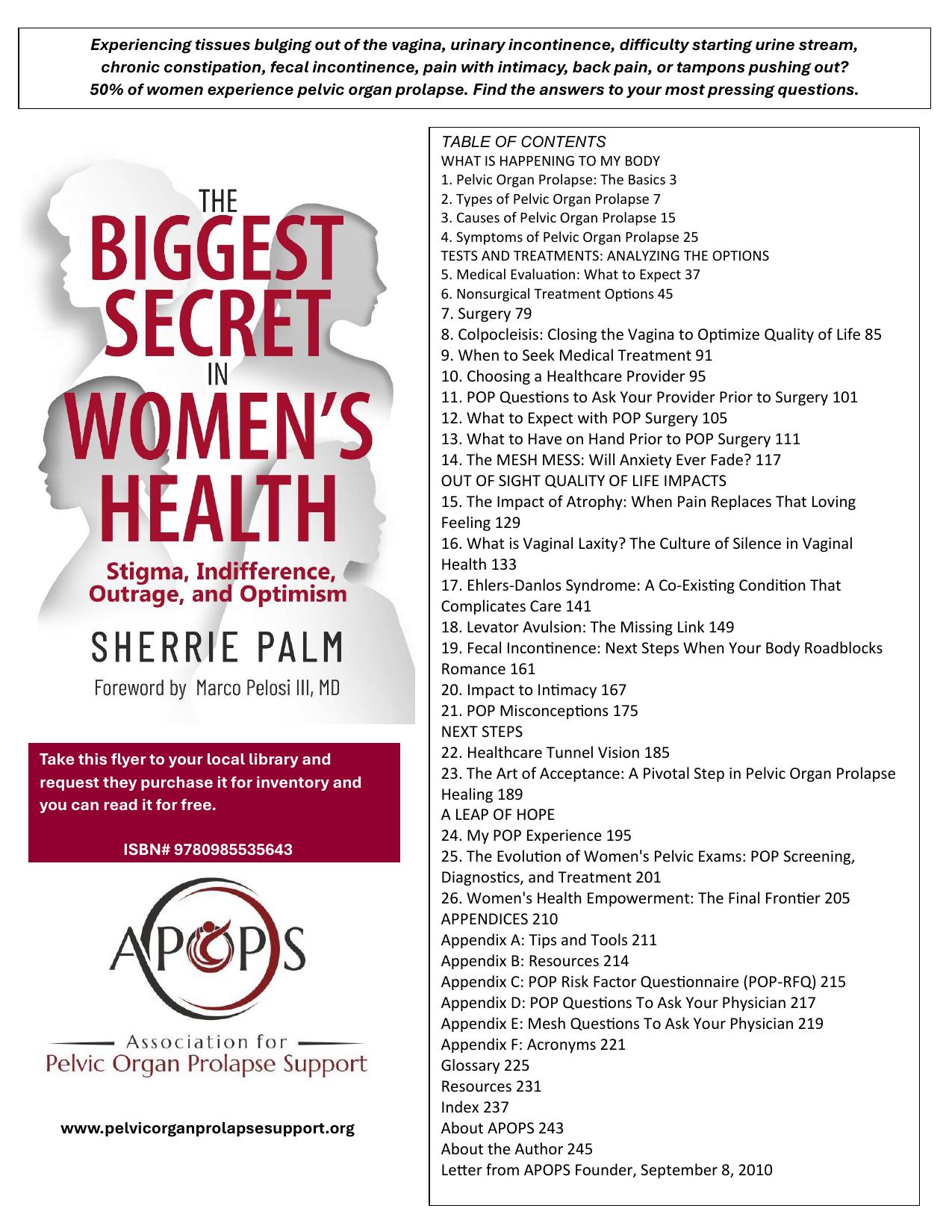
I recognized if I had no knowledge of POP, other women likely didn’t either. I felt it was critical given the 3.3 million women in the US figure, that all women know this stuff. I decided to write a book about POP to get the info into women’s hands.
No clue what made me think I could write a book.
Timeline:
*Diagnosed in December 2007, fitted with pessary, decided I was not happy with one more thing to do every AM/PM (insert/remove/clean, reinsert, similar to contact lens flow), moved on to explore surgery.
*Urogynecology appt January 2008.
*Surgery February 2008.
*Finished first book July 2008 (took notes prior to surgery, built the book during my 12-week heal curve, finished the book in July, found a publisher in October 2008, book was published in April 2009)
About 15 months into marketing that first book I recognized if I wanted to reach and help women effectively, I should found a nonprofit and jumped down that rabbit hole. Marquette University in Milwaukee has a great program in their law school to provide 501c3 assistance to guide nonprofit founding. I applied and was accepted.
Since then, the journey has been a continual learning experience, learning equally from studies, classes at the Nonprofit Center of Milwaukee (a now defunct organization), and women’s voices as I moved forward. Building Association for Pelvic Organ Prolapse (APOPS) from the ground up, rubbing the grains of sand together to build the bricks to build the walls and we are now putting the final shingles on our global roof, was and is a labor of love. We have patient/practitioner following in 184 countries. APOPS is 30,000 plus women teens through end-of-life sharing, educating, supporting each other regarding the often-embarrassing aspects of physical, emotional, social, sexual, fitness, employment quality-of-life ramifications of POP in our closed patient support forum (FB based). There are also 3400 women on our open FB APOPS page now starting to speak publicly about how their bodies misbehave. Given the stigma of POP symptoms, this validates our efforts to increase awareness and eradicate stigma are cooking.
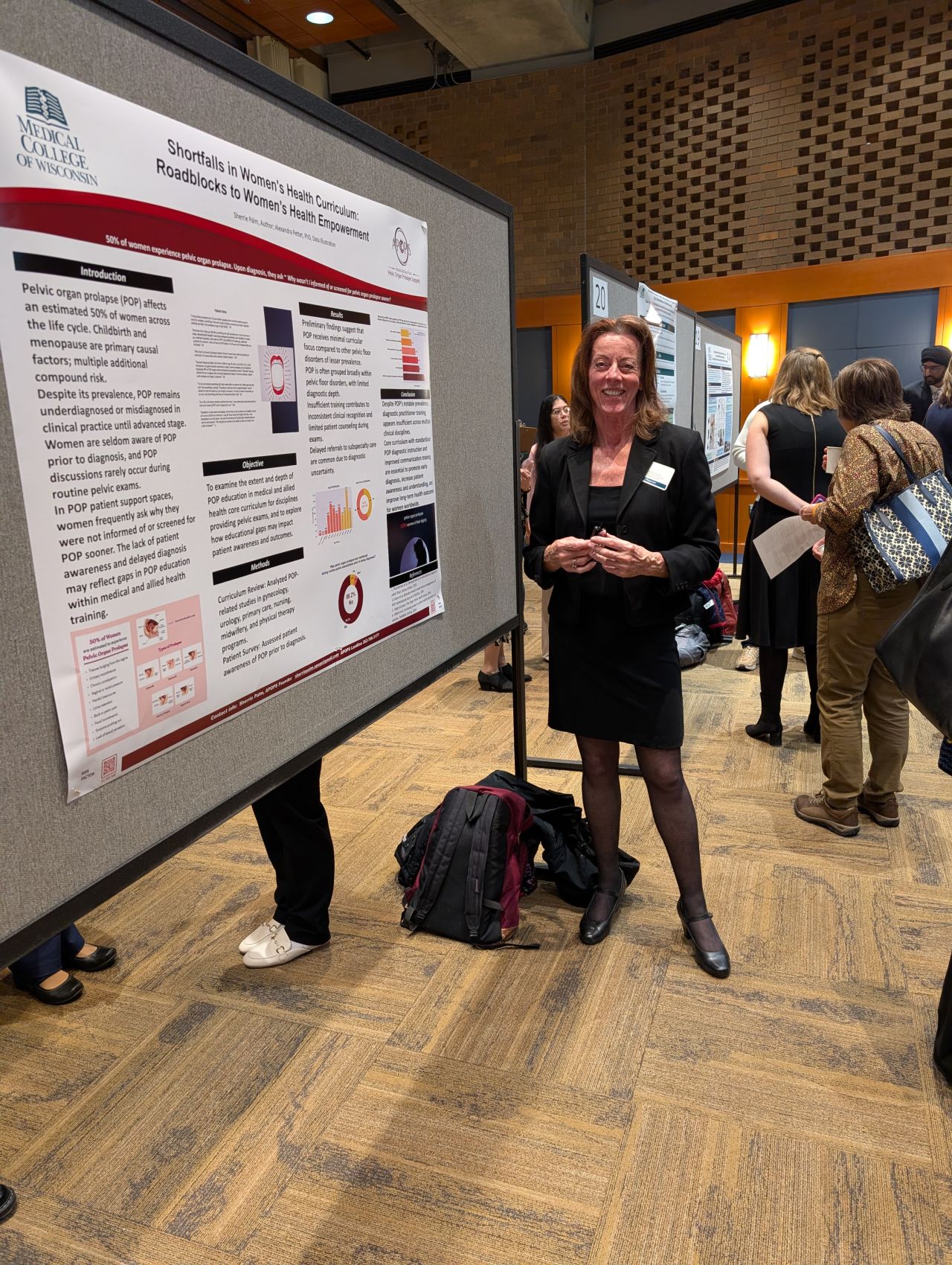
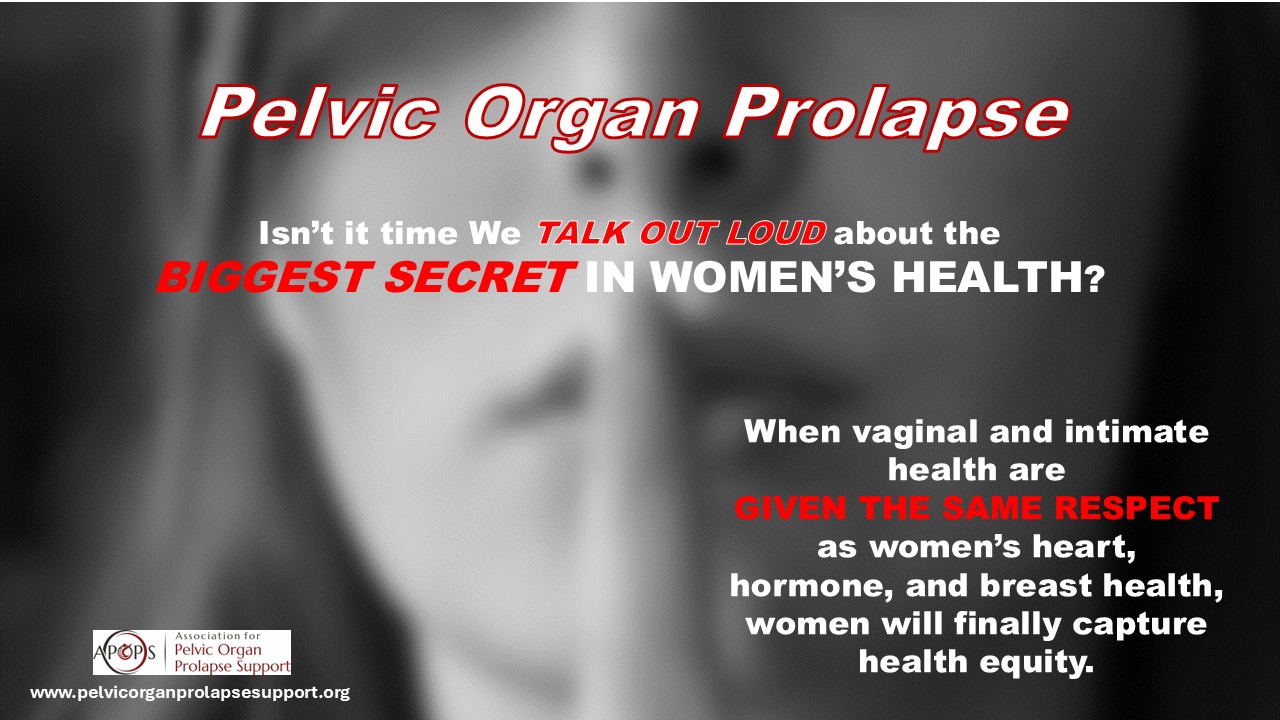
Pelvic organ prolapse is the biggest secret in women’s health. The most common question asked in our support forum is “why wasn’t I informed of or screened for POP sooner?” Given two of the most impactful life events women experience – childbirth and menopause – are the leading causes of POP, the question is incredibly valid. Curriculum provided to diagnostic practitioners servicing pelvic exams falls far short. We have so much more to learn; we have so much more to do.
I am as in love with my work and our following now as I was 15 years ago when I founded APOPS. Lots of life lessons along the path, most good, but I have also fallen on my face several times like most founders. I will be talking about POP long after I am buried in the dirt. I was simply born to do this. I never imagined this is where my life would lead me. And yes, many family and friends think I am a total nut-job talking about vaginas out loud all day every day.
This page on APOPS website provides a good backdrop in pelvic organ prolapse.
https://www.pelvicorganprolapsesupport.org/pop-faqs
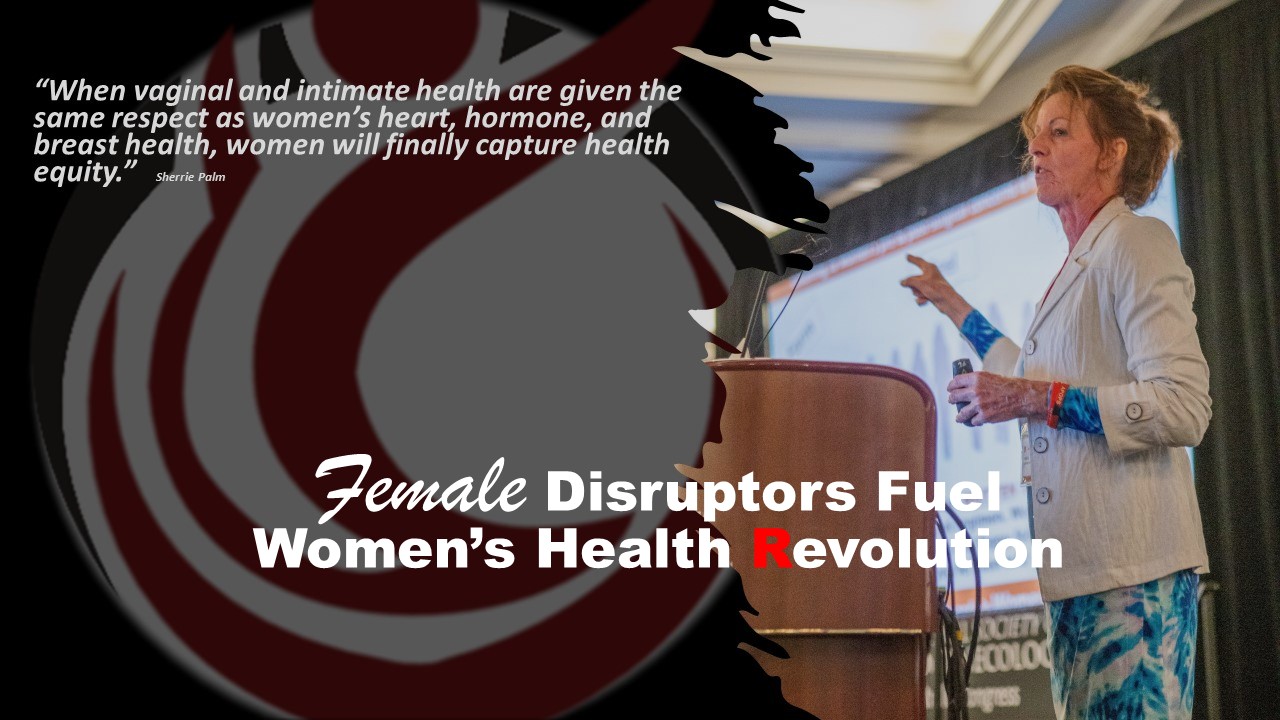
Sherrie, before we move on to more of these sorts of questions, can you take some time to bring our readers up to speed on you and what you do?
While I sell books (have written four about POP), my primary focus is on the nonprofit I founded for pelvic organ prolapse. That is not sales, it is patient advocacy related services, addressing shortfalls in the POP space such as awareness, appropriate screening, best practice, emotional support. APOPS provides POP education (books, articles, videos, nonprofit site). While there are now several FB pages dedicated to pelvic organ prolapse around the world, APOPS is the only global nonprofit (501c3 federally established). Our patient following in 184 countries includes women teens through end of life. About 150-200 urogynecologists, urologists, gynecologists, cosmetic gynecologists, physical therapists, midwives are also members. The information we provide is medically accurate, a beacon considering the misconceptions and misinformation tossed around the internet.
I am most proud of the women in our space who came into our forum to educate themselves about POP and have remained to pay it forward, educating other women who came in after them. Women supporting women, as it should always be.
Childbirth and menopause are the most common causes of POP. Women are rarely informed ahead of the curve about the considerable POP impacts to their quality-of-life. Symptoms include vaginal pressure and tissues bulging out, urinary incontinence – including coital incontinence and athletic incontinence, overactive bladder, fecal incontinence, chronic constipation, pain with intimacy, lack of sexual sensation, tampons pushing out. The value of woman-to-woman conversation is priceless. Don’t ask, don’t tell is far too common in the POP space. It just doesn’t make any sense that women’s health diagnostic practitioners are not provided appropriate curriculum to enable them to screen women and refer them to appropriate sub-specialists to fast track treatment. Women often suffer in silence with embarrassing and uncomfortable symptoms for years before they are given a definitive diagnosis. Far too often women simply “discover” POP by googling their symptoms and then find APOPS.
Of course stigma tied to women’s vaginal and intimate health are a part of the equation too. If we reflect back on breast health, prior to the mid-1970s you could not say the word breast in public settings. Could not say it on radio or TV. Could not insert the word breast in newspapers or magazines. Because of voices of a few brave women of celebrity talking out loud about their breast cancer journeys, breast stigma has been eradicated. Vaginal health and pelvic organ prolapse will follow this same trajectory; we are closing in. When I began my journey, there was NO dialogue on the internet about POP. Now you can find a considerable amount of studies, articles, and general information.
I have shared the details of my personal journey in my books, articles, podcasts, speeches, and will continue to do so in an effort to soften the stigma. Pelvic organ prolapse is health, nothing more, nothing less.
Let’s talk about resilience next – do you have a story you can share with us?
Coming into a highly stigmatized medical space with no medical credentials, no reputation, no tools, and little self-confidence, I struggled to be brave at the onset of my journey. I was raised to not trust white coat/white collar individuals. I come from a very blue-collar backdrop going back generations to loggers, truck drivers, sharecroppers. As a result I was terrified displaying APOPS nonprofit materials in my first booth in the industry space of a urogynecologic conference hosted by the American Urogynecological Society. I felt like the kid in school everyone whispered about.
But I’ve always felt so strongly that this information needs to be shared far and wide to not only educate women, but also to advance the status quo. All women should be POP screened during routine pelvic exams given the 50% prevalence.
I also feel very strongly that there needs to be a huge adjustment in curriculum provided in all fields of practice providing pelvic exams. This is going to be a huge hurdle to overcome given it entails adjustments at Medicare level, medical schools, and books included in medical curriculum in multiple fields of practice.
It’s a bit overwhelming to think about the adjustments we need to see to advance women’s health that are on APOPS vision to-do list. But APOPS is now recognized and respected by many in the subspecialty medical zones of women’s health, so I’m hopeful this moves forward quickly. The surge in FemTech over the past couple of years has certainly helped pull back the curtain on women’s stigmatized health conditions.
Training and knowledge matter of course, but beyond that what do you think matters most in terms of succeeding in your field?
If you want to know the reality of health, listen to the patient. The women APOPS serves can tell you anything you need to know about this common, cryptic, women’s health pandemic. While APOPS is well versed in POP types, causes, symptoms, and treatments, the subtle nuances of women’s personal physical, emotional, social, sexual, fitness, and employment quality-of-life experiences are what paint the big picture. Pelvic organ prolapse is a very diverse women’s health condition and given it impacts women teens through end-of-life, the unique decade-by-decade nuances paint a broader picture. Impact to intimacy-huge. Impact to fitness-huge. Impact to self-esteem-HUGE.
In any field of practice, if you are not tuning in to the needs of those you serve, it’s a pretty good chance you will fail in your efforts.
Contact Info:
- Website: https://www.pelvicorganprolapsesupport.org/
- Instagram: https://www.instagram.com/apops.sherriepalm/
- Facebook: https://www.facebook.com/sherrie.palm
- Linkedin: https://www.linkedin.com/in/sherriepalm/
- Twitter: https://x.com/sherriepalm/status/1854967352808382709
- Youtube: https://www.youtube.com/@sherriepalm-APOPS
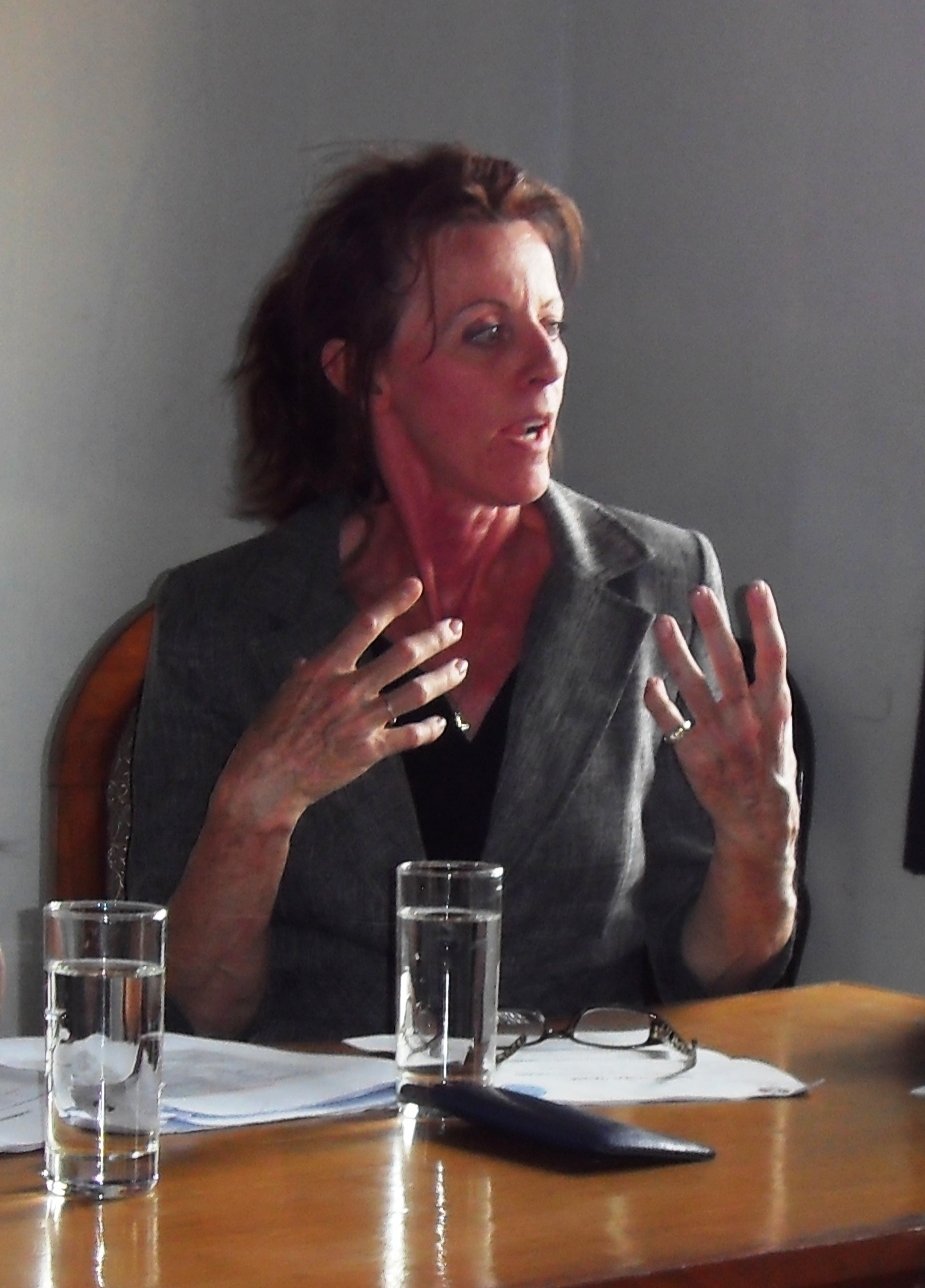
Image Credits
Sherrie Palm