Alright – so today we’ve got the honor of introducing you to Sharon Short. We think you’ll enjoy our conversation, we’ve shared it below.
Sharon, looking forward to hearing all of your stories today. Can you open up about a risk you’ve taken – what it was like taking that risk, why you took the risk and how it turned out?
About ten years into my publishing journey as a novelist, I found myself without agent representation, an editor, or a book contract. I’d enjoyed the publication of nine traditional mysteries, in two different series, all with one of the “big 5” publishers, all as paperback originals. But almost all of the authors who shared the imprint for my second mystery series were let go–en masse. My then-agent suggested I write a nonfiction book about retirement, although I was nowhere close to retirement and did not have a nonfiction platform. (I’ve wondered since if this was just a convoluted way of letting me go.) I parted ways with that agent, and then wondered… what now? The editor for my second mystery series had also left publishing.
But I found an idea–or perhaps an idea found me. Either way, I could not shake this idea. It consumed me–even though it was not a mystery, and was historical, which I’d never written. Developing that idea became my passion.
The risk was in leaving behind the genre in which I was most comfortable–traditional, cozy, contemporary mysteries. This was also, I realized, a much “bigger” book, in terms of scope, theme, and the level of writing it would demand, as well as the research it would require, than anything I’d ever considered.
But I knew this was “my” book, the one I had to write whether or not it ever found a publishing home. That novel was called “My One Square Inch of Alaska.”
Ultimately, I found a new agent with the novel, who succeeded in placing it with another of the “big 5” traditional publishers.
Since then, I’ve returned to writing mysteries and suspense. Now, however, these novels are also historical, deeper, and “bigger.” Trusting my idea, my gut instinct that My One Square Inch of Alaska was the novel I had to write, led me to a creatively much deeper writing craft. What’s more, it’s also led to publishing in hardcover as well as audio and ebook. I’m delighted, of course, that the novel-of-my-heart-and-soul, as I think of my Alaska book, led to more publishing opportunities. But I maintain that, even if the novel hadn’t found a publishing home, it was the novel I *needed* to write to grow as a human and as a writer.
As always, we appreciate you sharing your insights and we’ve got a few more questions for you, but before we get to all of that can you take a minute to introduce yourself and give our readers some of your back background and context?
I knew at a very young age, in my early elementary school years, that I wanted to be a writer. Reading was my escape from a chaotic childhood. Writing was my way of making sense of what often felt like (and, in some ways, still feels like) an overwhelming world.
My path has been long and slow. I credit encouraging teachers as a child and on into college. I have also made a practice of learning from other writers, at conferences, and from Writer’s Digest magazine, which I’ve been faithfully reading for more than 30 years.
I’m most proud of being “coachable.” This is a term often applied to athletes who are open to receiving feedback, criticism, and suggestions, and then taking this to heart and becoming a better performer. But I think this applies as well to creatives. This does not mean I agree with every bit of feedback, or give every suggestion equal credence. It takes time and practice and trust in one’s own instincts to know how to recognize feedback that will actually help one grow as a writer. But over time, I have developed this ability.
I believe that when creatives combine being coachable with determination and desire, they’ll find their way to achieving at least some, if not all, of their goals for getting their work out to the world.
On a more concrete level, I’m very proud of becoming a columnist for Writer’s Digest! I write a column called “Level Up Your Writing (Life).” Each column focuses on a specific craft topic, but also shows how writers can apply the technique to their lives as a writer. For example, my column might give specific tips on how to bring a setting to life in a piece of prose, but then challenge the writer to examine the setting(s) in which they write to get the most out of the experience.
What’s the most rewarding aspect of being a creative in your experience?
I take great joy in developing stories that bring characters, their journeys, and their world to life. That is not to say that each day as a novelist is a mountain-top experience. Most writing sessions, in fact, can be fraught with frustration. But once I fall into the “zone” of writing, it is indeed a joyous experience–even knowing that down the line I may need to completely revise, or even cut, what I’ve created.
Tied with this is another source of joy–the amazing, deep, and fulfilling relationships I’ve developed with several other writers. If these friends stopped writing, they’d still be my closest friends. (That said, I hope they don’t stop writing, because I love reading their work!) I cannot imagine the writing journey without these abiding friendships.
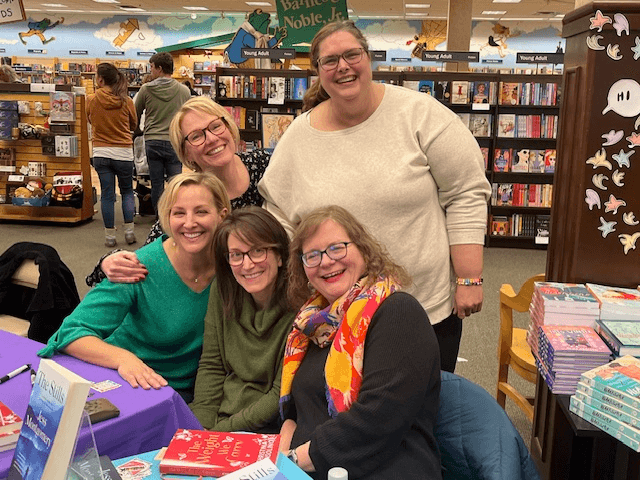
Is there something you think non-creatives will struggle to understand about your journey as a creative? Maybe you can provide some insight – you never know who might benefit from the enlightenment.
Often, those who are not creative writers envision that writing a novel or other creative prose is a linear process: just write sentence after sentence, give the piece a brief polish, and then, voila, you’re done! But for me, and for many creative writers, the process is much messier than that. There are bouts of brainstorming, sometimes determined outlining, then drafting–often not following the outline after all–then more brainstorming, revising, drafting and so on. Eventually, yes, one hopefully ends up with a full draft that is worthy of revision. But often, a piece requires multiple rounds of revision.
Sometimes, revising feels like rearranging the eggs in an already baked souffle.
Messy.
The messiness is part of both the joy and the frustration of creation.
Contact Info:
- Website: https://www.sharonshort.com
- Instagram: @sharongshortauthor
- Facebook: @SharonGShortAuthor