

We caught up with the brilliant and insightful Sasha Simmons a few weeks ago and have shared our conversation below.
Hi Sasha, thanks for joining us today. What was it like going from idea to execution? Can you share some of the backstory and some of the major steps or milestones?
Witavation did not start with a business plan.
It started with a dream.
In August, the name came to me in my sleep. Clear. Specific. Witavation. I woke up and wrote it down before I could overthink it. At the time, I was still fully employed. There was no public pivot. Just a quiet sense that something new was forming.
My plan was strategic. I was going to build it slowly. Thoughtfully. Behind the scenes. Soft momentum in 2025. A full launch in June 2026.
August through November became my runway.
Before anything was official, I invested. I hired a brand strategist to sharpen the positioning. Not just visuals, but voice and differentiation. What exactly is Witavation? Who is it for? What makes it necessary in an AI-influenced world?
I hired a business coach because vision without structure turns into hobby energy. We worked on offer clarity, revenue targets and market focus. I hired an editor for my book because I wanted intellectual property that anchored the brand, not just keynote titles.
During that season, I audited everything I had ever built. Talks. Articles. Frameworks. Corporate initiatives. I kept asking one question: What do people consistently thank me for?
The answer was always the same. Clarity in the uncomfortable moment before action. The pause where most people stall out.
That became the backbone.
By November, this was no longer abstract. The business was registered. The domain was secured. The media kit was built. The signature keynote, Holy WIT, This Is Uncomfortable, had shape. The website was in progress. Audience segments were defined. Colleges. Associations. Enterprise leaders navigating uncertainty and change.
Then it happened–the epic layoff of 2025, as I’ve coined it.
The layoff did not create Witavation. It accelerated it.
What changed was not the foundation. It was the urgency.
After I was laid off, the work shifted from brand building to operational execution. I mapped my CRM from end to end. Defined clear pipeline stages. Built outreach tracking. Set daily and weekly contact targets. I thoughtfully created client lists instead of waiting for referrals. Associations. Universities. Enterprise teams. Not random names, but strategic prospects aligned with my positioning.
I broke revenue goals into tangible activity. If this is the annual target, how many stages? How many calls? How many proposals? I stopped thinking like someone preparing for someday and started thinking like someone responsible for today.
There were also deeper shifts. I refined my pricing so it reflected outcomes. I strengthened ROI language so decision-makers could justify the investment. I clarified behavioral takeaways so clients understood this was not inspiration. It was a transformation tied to measurable change.
Visibility became disciplined. Consistent thought leadership. Frameworks rooted in lived experience. Not performative motivation, but practical clarity.
Looking back, the story is not about scrambling after a layoff. It is about preparation meeting disruption.
Witavation was conceived in August and built quietly between August and November. Legally formed. Strategically positioned. Structurally supported.
December removed the option of waiting.
The dream gave it a name. The runway gave it stability. The layoff forced execution.
And daily action is what turned it into a business.

Sasha, love having you share your insights with us. Before we ask you more questions, maybe you can take a moment to introduce yourself to our readers who might have missed our earlier conversations?
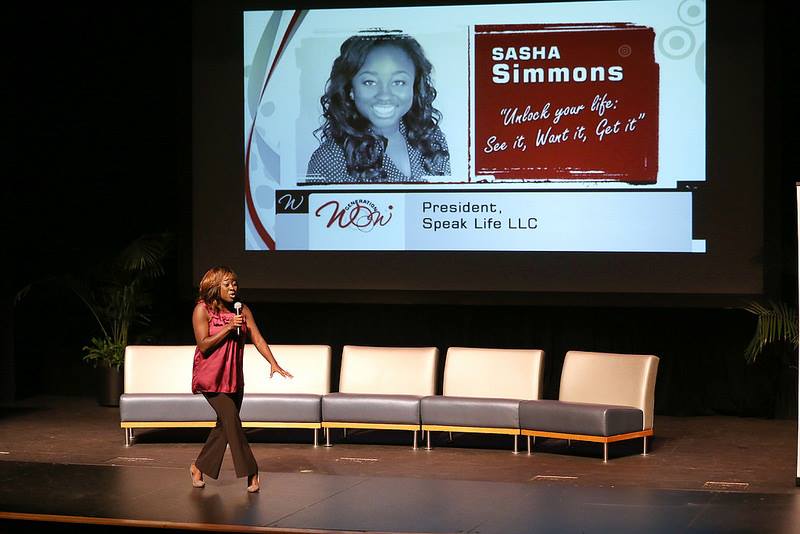
I am a leadership speaker and the founder of Witavation, a professional development company grounded in one central principle: clarity drives performance.
I have been speaking for 13 years. What began as part-time engagements alongside my corporate career became the through line of my professional identity. For more than a decade, I have stood in front of audiences ranging from frontline professionals to executive leaders, helping them think more clearly, communicate more effectively, and move forward with intention.
In my corporate career, I led a national brand evangelism program, responsible for telling the story of our work at scale. That role required more than presentation skills. It required strategic translation. I helped customers understand not only what we did, but why it mattered and how their leadership decisions directly influenced outcomes. The objective was always alignment, ownership, and forward momentum.
That experience shaped how I approach this work.
I do not see the stage as a performance platform. I see it as a leadership tool.
Across industries, I observed a consistent pattern. High-performing professionals were not limited by intelligence or opportunity. They were slowed by hesitation in critical moments. The difficult conversation. The strategic pivot. The visible leadership step that required both clarity and courage.
Witavation was built to address that gap.
The name reflects the ethos. Witavation is a blend of wit and motivation. The work is direct and grounded in reality as humor can disarm defensiveness and open people up to the truth. It allows hard conversations to land without shame. That balance of precision and personality is intentional.
Today, I deliver keynote speeches, leadership workshops and executive coaching centered on helping leaders and teams navigate uncertainty with structure and precision. My signature keynote, Holy WIT, This Is Uncomfortable, equips audiences to confront high-pressure situations with discipline rather than avoidance. I also partner with colleges preparing students for an AI-influenced workforce and associations supporting members through career transitions and reinvention.
The problems I solve are behavioral and organizational. Stalled momentum. Cultural misalignment. Change fatigue. Leaders who are capable yet internally conflicted about their next move. My work provides frameworks that strengthen decision-making, communication and personal accountability in environments where performance matters.
What differentiates Witavation is the integration of depth, discipline and distinct voice. I bring 13 years of speaking experience, years of corporate leadership and intentional investment in brand strategy and intellectual property. I understand executive expectations and measurable outcomes. At the same time, I bring a presence that is human, sharp and candid.
I am proud that this company reflects the full arc of my professional journey. It is not a reinvention detached from my past. It is the evolution of it.
For potential clients, I want you to know that I approach each engagement as a strategic partnership. My goal is not to deliver temporary inspiration. It is to create clarity that translates into sustained action.
For those following the brand, understand this: discomfort is not a signal to retreat. It is often a signal that growth is available. With the right structure and mindset, that tension becomes momentum.

Are there any books, videos, essays or other resources that have significantly impacted your management and entrepreneurial thinking and philosophy?
Yes. Books have played a significant role in shaping how I think about leadership, ownership, and execution.
The Four Agreements influenced how I manage myself first. The commitment to be impeccable with my word and not take things personally is not abstract philosophy. It is operational. It affects how I negotiate, how I handle feedback, and how I lead in high-pressure environments.
The Courage to Be Disliked challenged my understanding of approval. Entrepreneurship requires a tolerance for misunderstanding. That book reinforced the idea that contribution matters more than consensus. You will not build anything meaningful if your decisions are driven by the need to be universally liked.
From a strategic standpoint, The Lean Startup and Zero to One sharpened my thinking around innovation and positioning. They pushed me to ask better questions. Is this incremental or is it differentiated? Am I building something necessary or simply replicating what already exists?
The Power Broker and The Color of Law shaped my understanding of systems and power. They deepened my awareness of how decisions at the leadership level ripple outward and influence communities for generations. As someone who speaks about leadership and responsibility, that historical context matters.
I also value practical leadership texts like The First 90 Days and Trillion Dollar Coach. They are grounded in execution, relationships, and disciplined thinking. Entrepreneurship is creative, but it is also managerial.
Collectively, these resources have influenced not just how I run a business, but how I think. They have reinforced that leadership begins with self-management, and this principle is woven directly into Witavation.
Where do you think you get most of your clients from?
Word of mouth has been my strongest source of new clients.
After 13 years of speaking, I have found that nothing replaces firsthand experience. When leaders see the work live and feel its impact, they are far more likely to recommend it to a colleague, bring it into their own organization or invite me back.
Many of my opportunities have come from someone who was in the room or from a trusted referral within their network. That kind of introduction carries credibility that no cold outreach can replicate.
For me, referrals are not accidental. They are earned through clear outcomes, strong delivery and consistent follow-through. Trust has been, and continues to be, my most effective growth strategy.
Contact Info:
- Website: https://witavation.com
- Instagram: https://www.instagram.com/witavation
- Linkedin: https://www.linkedin.com/in/sashasimmons/