

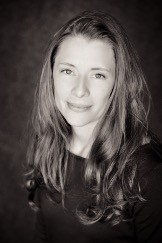

Alright – so today we’ve got the honor of introducing you to Sarah Reichert. We think you’ll enjoy our conversation, we’ve shared it below.
Sarah, thanks for joining us, excited to have you contributing your stories and insights. Can you talk to us about how you learned to do what you do?
I began writing at an early age. I come from a family of avid readers and I think being given the freedom to spend hours reading as a kid (increasingly larger and more complex books that my parents never discouraged) was integral in my education of how to tell a good story. It also helped me understand the nuances of character and interactions. Like learning a second language, I think storytelling is absorbed early on, and the more reading your exposed to, the easier it is for you to ‘speak’ that language.
I was in advanced classes for reading and writing (as advanced as Wyoming got) and competed and took medals in Young Authors. I wrote my first novel in high school. It was awful, but I was in love with the story and the characters. I wrote my second, equally awful novel in college and then shelved my writing to pursue my Anthropology degree. I never considered getting a degree in Literature or English. For me, books and writing were sort of sacred and I knew that the more I picked apart writing, the less I liked to read.
Later in life, when I took on the job of parenting, I knew I needed something for myself, to keep my mind engaged (Sesame Street is great, but I needed a bit more) and happy, so I started writing again. This time with more experience, more patience, and more respect for the process. I wanted the novel to be good, and I knew I’d had trouble with plotting and story arc before, so I invested in some books to help me approach the process with a more serious eye. I found a local writing group and took a few classes on Novel Writing. I attended conferences. I invested time in my writing in the moments I could between parenting. Before I knew it, my one novel turned into a series. And I found that every step of the process from the planning, to the writing, to the editing (especially the editing) was teaching me more about the whole of being a writer.
I looked into MFA programs, but the same issue popped up for me. Dissecting works, and delving deep into literary science, felt like stealing the magic away, and I worried that I’d start second guessing my own story telling ability or start to feel that the things I was writing weren’t worthy in the literary field. Writing, for me, has to be about your passion to tell a story first. Because if you don’t love the story, the characters, the journey they’re taking then you’re not going to write it on the level that matters. Trying to follow trends, or copy someone else’s writing style, robs the world of your unique voice. So I decided against it (plus it’s really expensive and I was a stay-at-home parent with no extra income).
I kept taking classes from my local writing group, kept challenging my previous writing and learning how to make the cuts that mattered even when they hurt. Being committed to the best version of your story is so much more important that being committed to the ego that wrote it. I still take classes, even ones that might be deemed ‘too basic’ because I think there’s always something to remind us, or spark us, or drive us to fix and grow and make our writing better the next time.
Now I teach classes to a youth group and it challenges me to ask more of myself and learn more for them, so that I can be a good resource for their own journey. I learn so much by teaching, more than I ever did on my own.
I’m really not interested in speeding up my learning, and I’m glad it was a tedious process at times. It’s through that struggle, that I learned the important stuff. It’s through the time it takes to fail and get back up, that I progress. So much of what we learn, that really matters, is done through trial, error and time. Especially when it comes to writing, your life experience makes you a better writer. You learn more about people, the world, the possibilities and intricacies. 30 year old me wrote better than 20 year old me. 40 year old me is even better than 30 year old me. It’s the journey and the living that make a good writer even better.
Persistence, resilience and a sense of humor will get you pretty much anywhere. Finding joy in even the hard parts of the process, appreciating the importance of every step and being flexible help you stick with it when things get tough. I think the greatest skill in writing and in life is to be curious. Instead of judging, shutting down, making defined assumptions about success and failures, keeping an open mind and being interested in how and why and what we can do next, is key to longevity in the art.
Time and money are probably the biggest obstacles that get in my way, like most artists. Self doubt is a huge one. Depression and anxiety are their own little road blocks. But, I try to address them all by being a little curious and a little ridiculous with joy for the writing part of it, and it’s worked out so far.


As always, we appreciate you sharing your insights and we’ve got a few more questions for you, but before we get to all of that can you take a minute to introduce yourself and give our readers some of your back background and context?
My name is Sarah Reichert and I write, often under the pen name S.E. Reichert. I’m a novelist, poet, blogger, and writing coach. I’m the Youth Coordinator at Writing Heights Writers Association and am also the Website Master for the WyoPoets organization. I am a Wyoming native and graduated from the University of Wyoming with a degree in Biological and Cultural Anthropology. I live in Fort Collins with my two daughters, two cats, and a spoiled pit bull. I have a small day job working at a yarn story, which is weird because I’m terrible at ‘fiber arts’ but I appreciate the clients and the process and science that goes into knitting.
I have a paranormal romance trilogy (The Southtown Harbor Series) out and was recently picked up by a small publisher for my second trilogy, set in Wyoming (The Sweet Valley Series). I have a couple of poetry anthologies out from coordinated efforts with other poets and my blog (“No Small Things” and “Wilderness of Soul”). My work has been featured in “Sunrise Summits: A Poetry Anthology”, “Rise: An Anthology of Change”, TulipTree Press, Haunted Waters Press, Kindred Republic, Blue Heron Press, Poetry Ireland Review, Ngano Press Studios, Sasee Magazine, Ravens Quoteth Press, and Pixie Forest Publishing.
Recently I’ve been taking on a large mentor role for young and emerging authors (of all ages). I want to see as many different, varied, and unique voices represented in our world. One of the best feelings is getting someone else to believe in what they write as something that matters to the world. Our writing exposes our humanity and our humanity connects us, so even if its not my genre or my style, I appreciate being able to support other writers who are on the journey towards getting their stories out into the world.
I’m most proud of being able to find the joy in all parts of writing, of being able to instill excitement and self-belief in my students, and to see the next generation blossom into their potential.


Do you think there is something that non-creatives might struggle to understand about your journey as a creative? Maybe you can shed some light?
I don’t like the term non-creatives. I think that every human being has the capacity and ability to be ‘creative’. For a long time, I think we segregated people into two camps of “right brained” and “left brained” (literal/figurative, science/art, booksmart/streetsmart) and it was a great disservice to the beauty of the brain. We all have both sides. And the truth is, creativity is integral to how we’ve progressed in the ‘hard’ sciences. It’s in curiosity and asking what if, that discoveries and solutions are made. In the same way creativity needs to be applied to formula and process to become tangible.
When we deem someone an “engineer” type, we’re telling them that they only think well within certain, prescribed parameters, that they only know formulas and facts that already exist. But the human brain is much more complex than that. It truly has no parameters. There exists, within us, an endless world of ‘what-ifs’ that is always at our fingertips. We just need to be open to the fact that some solutions will be silly, and strange, and off the wall, but they often lead to real solutions, to ‘inventive’ solutions. Everyone has the ability to break out of the box they’re in, if they have a little courage and stop worrying about if every idea they have is ‘worthy’. Be silly, be strange, Think seven layers out into the orbit and work your way back in.
I wish we could instill in our kids the power of daydreaming, of being bored, of being unstimulated to let our brain play more. I think sometimes it seems like that kind of work doesn’t lead to anything worthwhile…but all of the great scientists of the past, the great philosophical minds… weren’t constantly working towards straightforward answers, They were curious. So… if you think you’re ‘non-creative’, think about the last time you were curious about something (maybe it was dinosaurs when you were six, maybe it was what makes planes fly at 12…the expanse of the universe…whatever) we were all children and wonder-filled once. Try to get back to that whenever you can. Ask what-if, and don’t expect a neat little tidy answer. Give yourself the freedom to just…wonder more.
Looking back, are there any resources you wish you knew about earlier in your creative journey?
Oh man…I wish I would have joined my writing group earlier. I think that I wouldn’t have felt so alone or so strange in those first few years. I would have known that a lot of the problems, and issues and fears I had were normal. I also probably would have done a better job with the first few rounds of editing. Sometimes, I think when we’re looking at our first novel, its too precious and tender to be harsh with. I wish I would have had someone tell me, it’s okay to let it get torn apart so that it will come out better.
Contact Info:
- Website: https://www.sarahreichertauthor.com
- Instagram: @sereichert
- Facebook: https://m.facebook.com/people/SE-Reichert/100054546185833/
- Linkedin: https://www.linkedin.com/in/sarah-reichert-28a3a5264/
Image Credits
All photos were taken or created by me. The first author headshot was taken by Desiree Suchy and purchased by me.