
We recently connected with Sarah Kramer and have shared our conversation below.
Sarah, thanks for joining us, excited to have you contributing your stories and insights. Going back to the beginning – how did you come up with the idea in the first place?
Teaching forces you to really articulate what your work is about. As an audio journalism professor at NYU, I am always talking about the importance of listening. Listening is really the key to making great radio: listening to what’s going on will help you find a story, listening to your interview subjects will help you get good tape, and listening to stories critically will help you become a better editor and storyteller.
A big part of making art is about noticing what is around you. As audio artists, that means tuning into the sounds of the world. Sound is deeply connected to the human imagination — it’s the first sense that is turned on, even before we are born. Sound creates pictures in our mind. It also has a huge impact on our nervous system, and our emotions.
Last winter, I started to read about the work of R. Murray Schafer, a Canadian composer and writer who founded the field of “Acoustic Ecology,” the study of sounds in relationship to life and society. Schafer thought of the world as a giant musical composition that is going on all the time, with no beginning and no ending. If the world is a huge musical composition, we are simultaneously its audience, performers, and composers. We have to ask ourselves, which sounds do we want to preserve, encourage or multiply? Schafer framed noise pollution as an environmental issue which could be addressed like water pollution.
Schafer’s ideas, along with those of composer Pauline Oliveros, really resonated with me. So when artist Laura Nova asked me and Nina Porzucki to collaborate with her on a sound-walk in the M’Finda Kalunga Community Garden in the Lower East Side of New York City, I knew that I wanted the piece to explore the ideas of acoustic ecology.
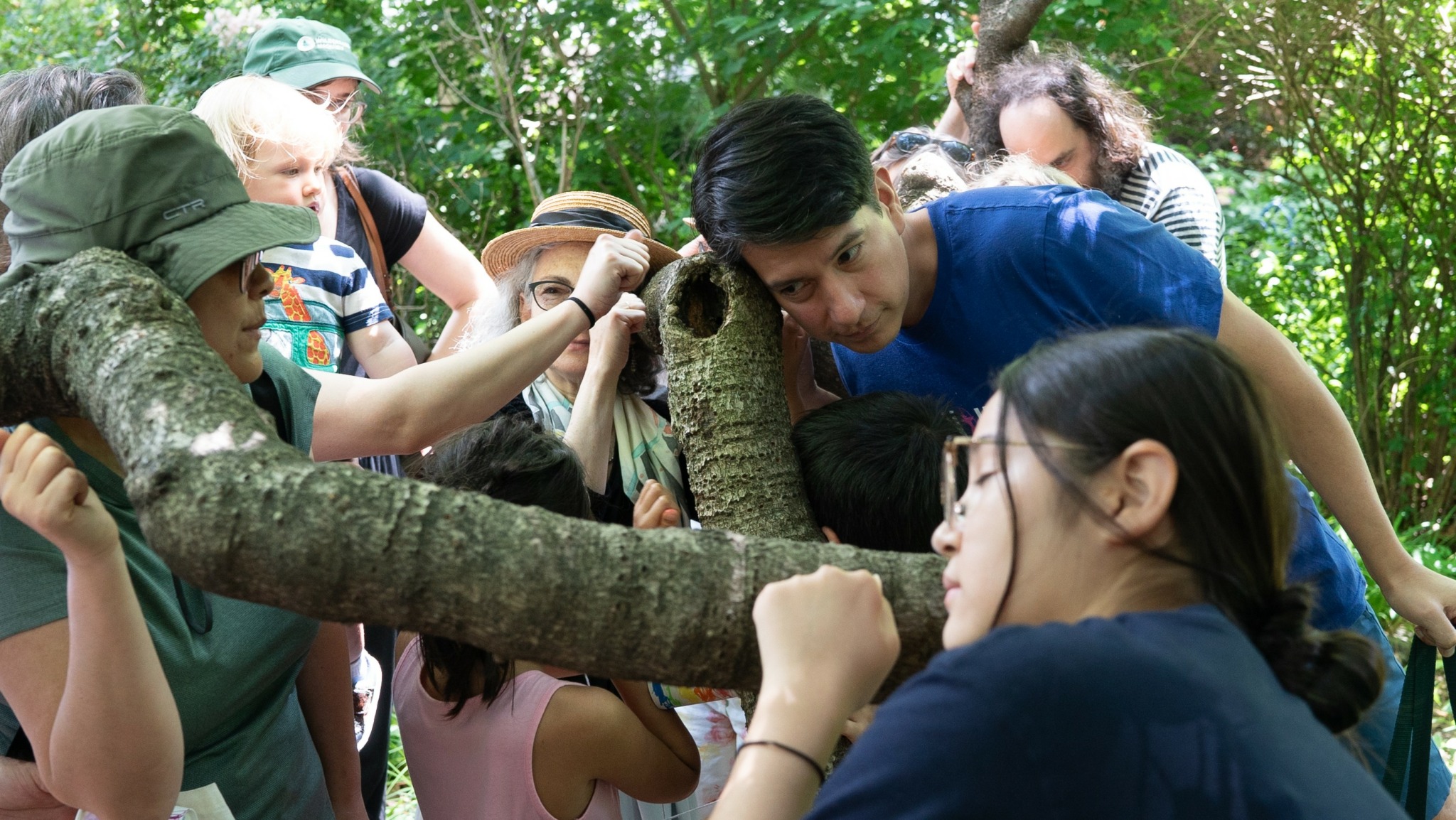
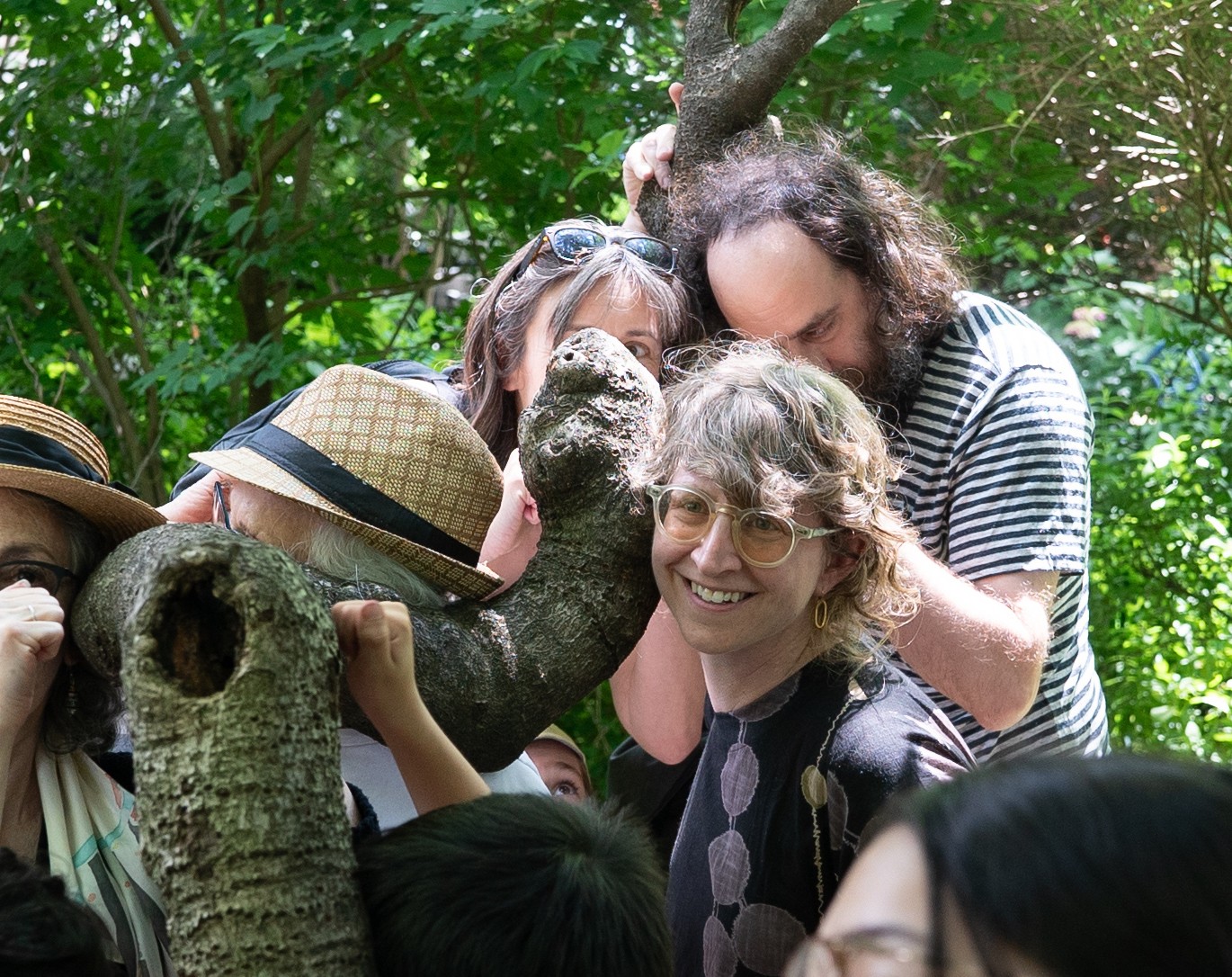
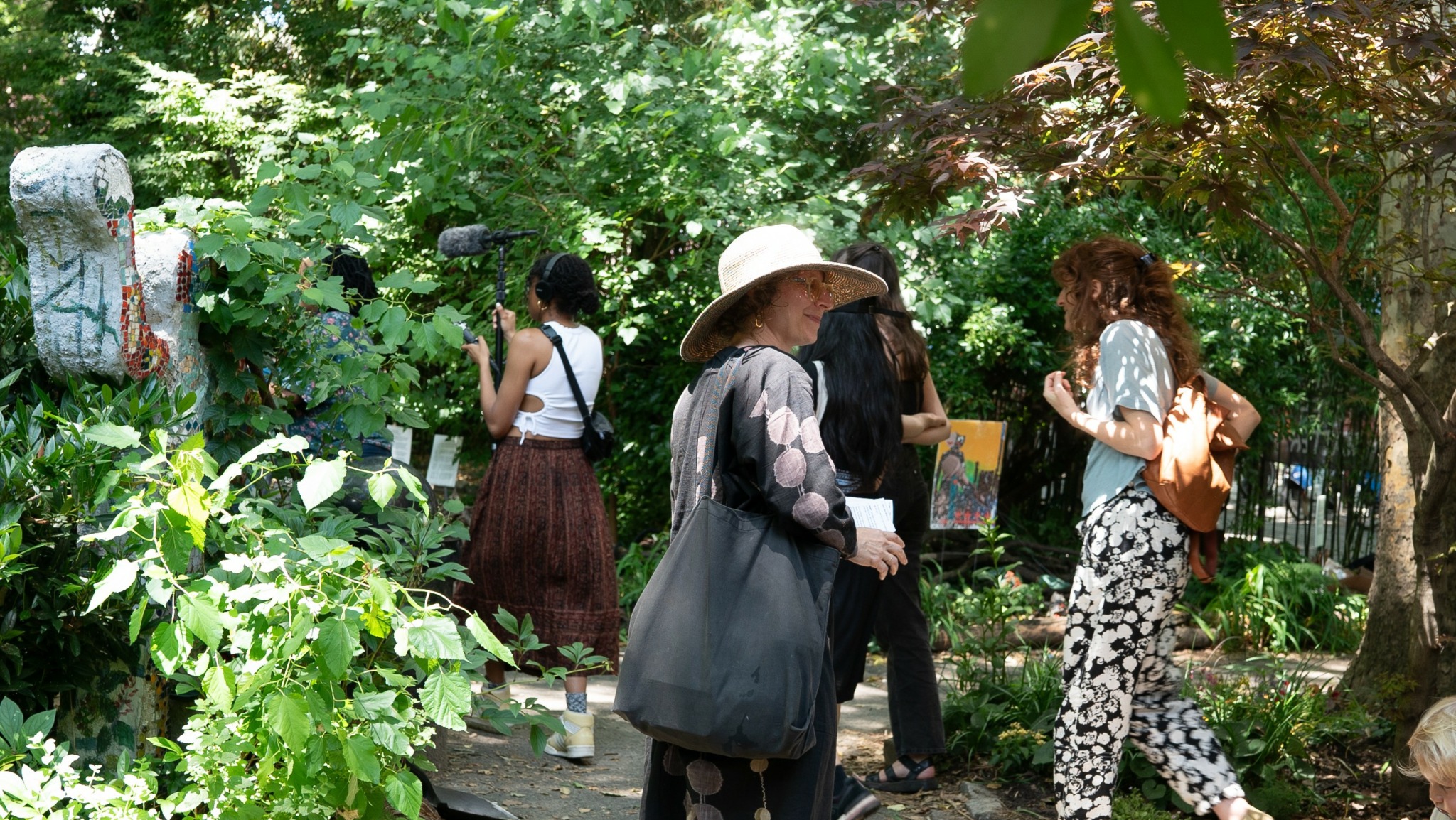
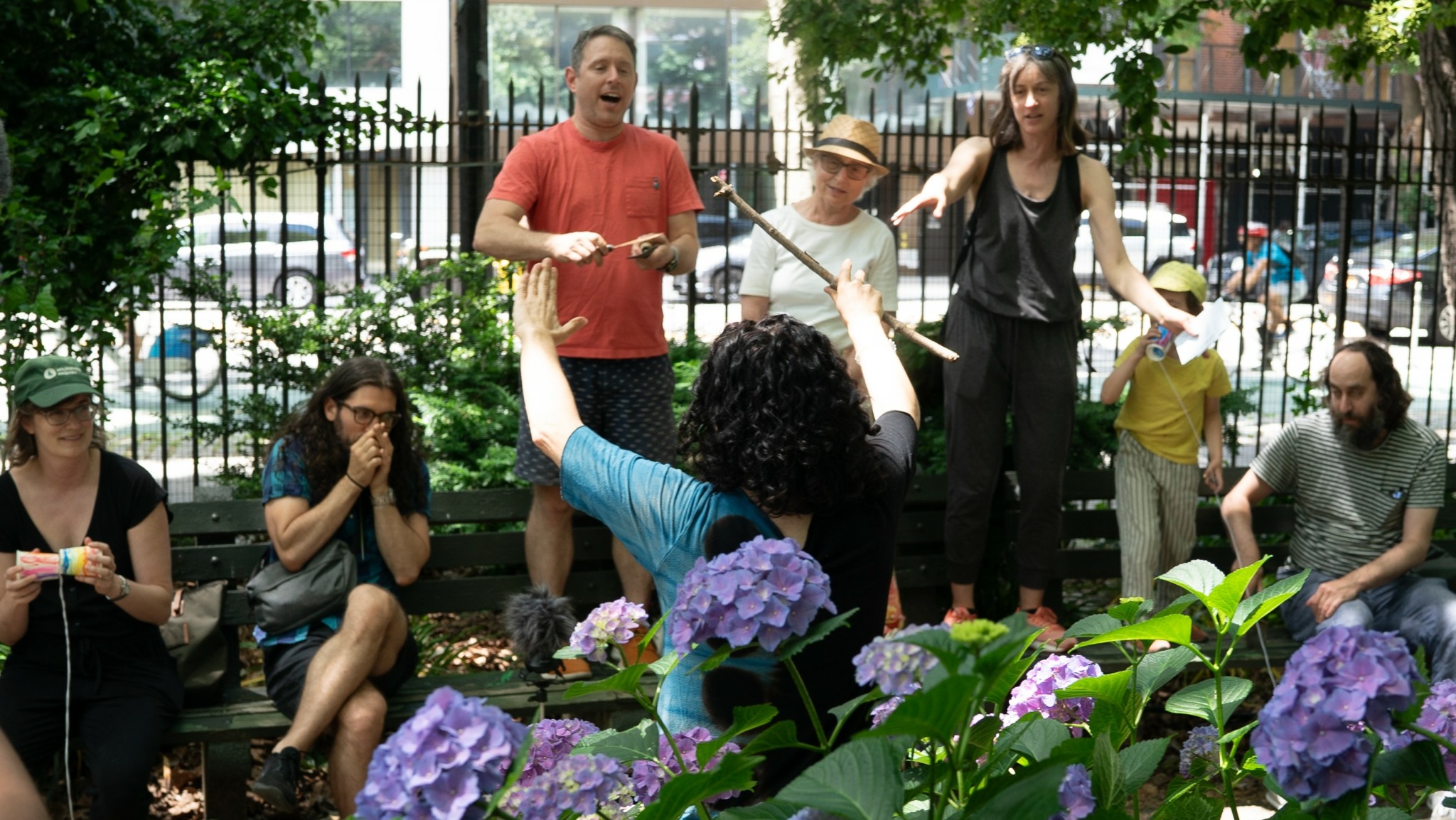
On June 15, 2024, we conducted “Sounds for the Tree Hotel (in three movements).” We tuned our ears to the music all around us, created listening devices, and composed a concert together with instruments we found in the garden.
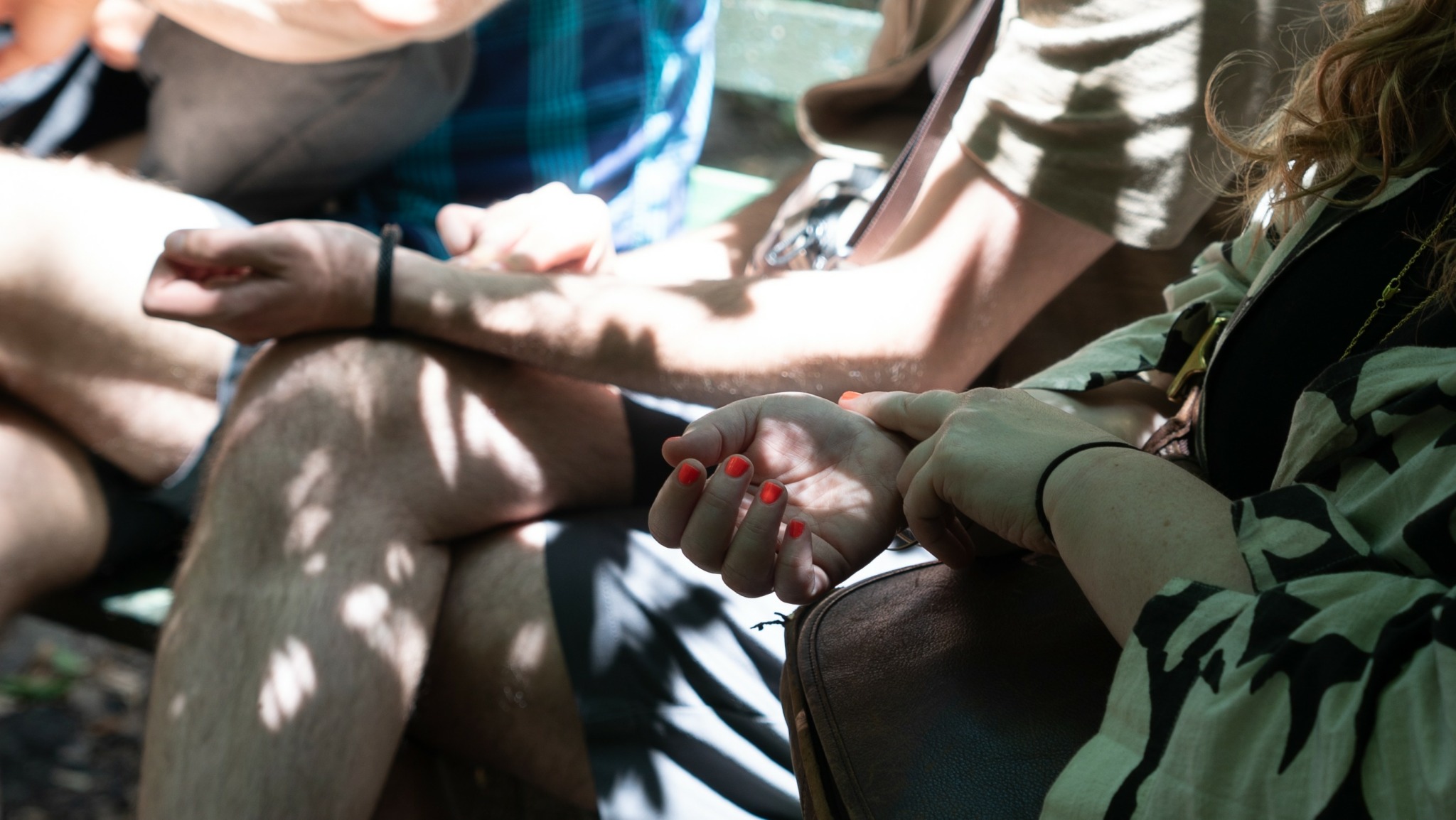
Participants shared sound memories, got sonically situated with prompts like, “What is the most distant sound you can hear?” “What’s the closest sound?” We moved through the garden tuning selectively into sounds made by humans, by nature, by technology. We took our pulse and talked about the impact the urban soundscape was having on our bodies. We also made music, tapping messages to each other through trees and engaging with the environment. It was fun!
Sarah, before we move on to more of these sorts of questions, can you take some time to bring our readers up to speed on you and what you do?
I’ve been working as an audio documentarian for two decades. I’ve worked in public radio, podcasting and audio tours. I started my career working at StoryCorps, an oral history project that collects stories from people across the United States. All of the stories are archived at the Library of Congress and a selection of them are also broadcast on NPR each week.
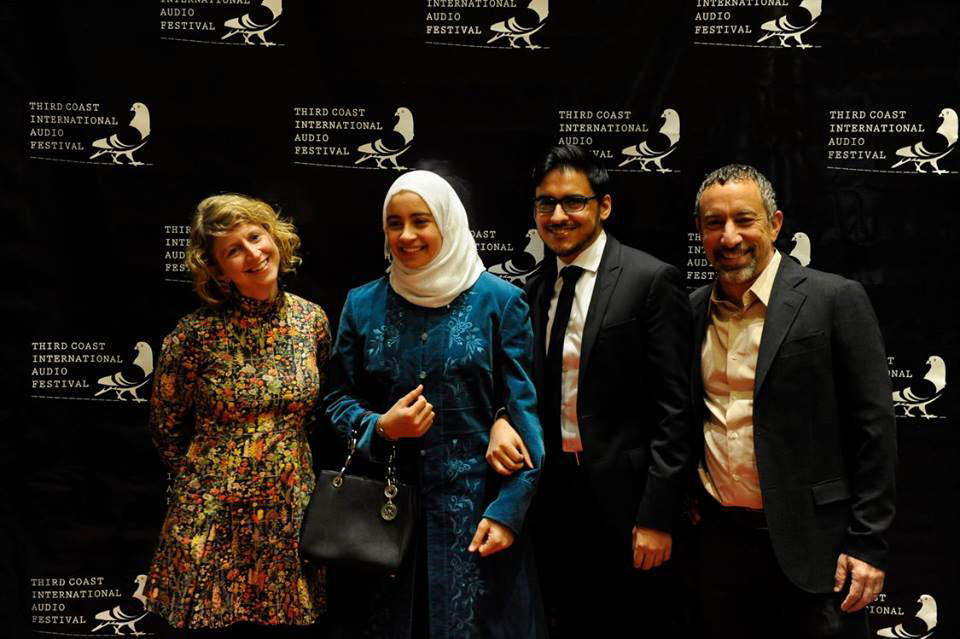
I went on to produce my own oral history project on a Fulbright fellowship to Morocco, where I also started to work as a freelance radio reporter. After returning to New York I worked at WNYC, where I created a weekly series called “Niche Market” that profiled speciality stores in across the five boroughs. At the same time I was an editor for a project called Feet in 2 Worlds, which trains immigrant journalists in audio reporting. I later spent eight years as a producer with Radio Diaries, an independent radio series that gives people tape recorders and works with them to report on their own lives and histories. There I produced many documentaries, including an award-winning audio diary about a teenager in Saudi Arabia who was struggling with the pressure to get married while pursuing her dream to become a scientist. I’ve also made many historical documentaries, on subjects ranging from an American-led prison uprising in Vietnam, to how the U.S. shrank by 1 square mile, a haunting 19th century typeface called “Jim Crow,” and more.
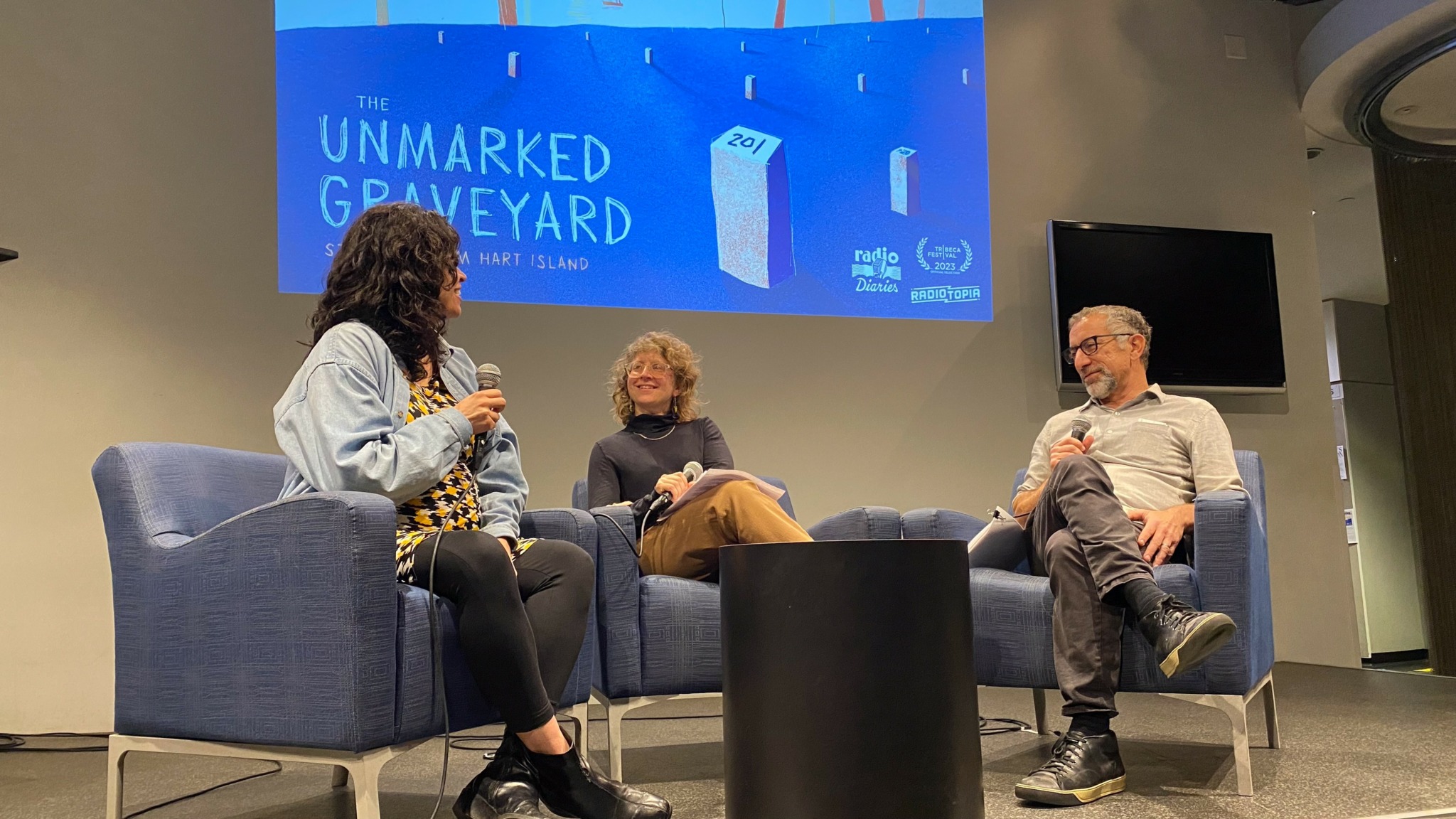
Now I work as a freelance story editor and producer, and I teach audio journalism to graduate students at NYU’s Arthur L. Carter Journalism Institute. I also produce live audio events at NYU featuring luminaries in the podcasting and audio field. And I produce audio installations and sound walks such as the one I described above, “Sounds for the Tree Hotel.”
As an editor I’ve worked with American Public Media, LAist, and other outlets. My strength as an editor is helping reporters tell complex stories with nuance and power. I push reporters and producers to do their best work. I ask hard questions and encourage teams to think deeply about all aspects of a story. I see my job as helping people tell the stories they want to tell, in the most powerful way possible. I feel strongly that characters should be three dimensional – not just props for a reporter’s ideas. I enjoy geeking out about story structure. Figuring out the puzzle of how to make a story work is my jam! I do my best to create a collaborative and supportive environment where everyone’s voices are heard and thoughts are considered. I have worked with producers who are new to audio, and veterans in the field. I take feedback well, and strive to always be learning and growing. I also have a good sense of humor. Hire me!
Diversifying the audio industry, in terms of who gets to tell stories, who listens to stories, and what kinds of stories are made, is important to me. I hope to be part of a movement that builds a more inclusive culture in the audio world.
What do you find most rewarding about being a creative?
The best part of being an audio journalist and artist is the opportunity to follow my own curiosity and learn more about the world and people in it. I love going to new places and talking to people. Most of my stories begin with the kernel of an idea. I wonder how…? I wonder why…? How did…? What is the story behind…? What is it like to be…? It’s such a privilege to get paid to explore things that I am interested in, create stories, and share them with others.
Looking back, are there any resources you wish you knew about earlier in your creative journey?
Luckily, there are many more resources that exist now for aspiring audio producers than there were when I was starting out! One of my favorites is a monthly list of audio opportunities called “All Hear” that is curated by a talented and generous audio producer in the U.K. named Talia Augustidis.
One of the great things about the audio community is that it is really a Community — people tend to be kind to each other and share resources. There are great organizations like AIR, Transom.org and others that helped me a ton as a young producer and still do today. I have come to really appreciate IRL events for the audio community, Audio festivals and live events took a hit during the pandemic but are starting to come back to life. Gathering together in person to talk craft and get inspired is really joyous and I am cooking up an idea to start a live event of my own in NYC.
Contact Info:
- Instagram: @skk_wire
- Linkedin: https://www.linkedin.com/in/sarahkatekramer/
- Twitter: @skk_wire